Find the Best Mini-Split Installers for Your Business
No obligation • Fast responses • Nationwide coverage

Why you can trust HVAC Firms
HVAC Firms is a leading United States resource for evaluating HVAC service providers. Our team researches companies, checks credentials, and reviews customer feedback to present clear, unbiased information. Listings and rankings are based on merit, and companies cannot pay to change our editorial content.
Search providers near you
Top Mini-Split Installers in Midwest City, Oklahoma Ranked
A ductless mini-split system is a versatile heating and cooling solution that provides targeted comfort without the need for extensive ductwork. For Midwest City homeowners, this means efficient, zoned climate control for specific rooms, additions, or older homes where extending traditional HVAC is impractical or costly. This guide will help you understand the process, benefits, and key considerations for installing a ductless system, empowering you to find qualified local professionals for your project.
Ingram Mechanical
325 Koloa Ave, Edmond, OK 73034
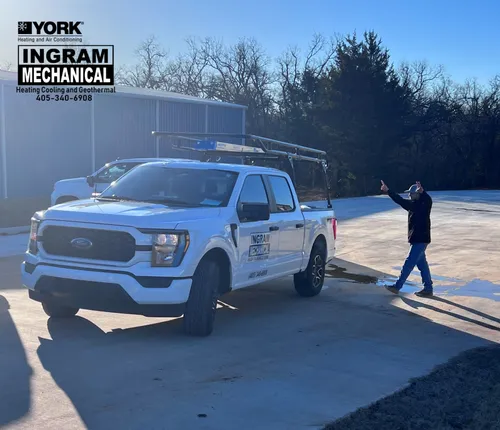
Ingram Mechanical is an HVAC company serving Oklahoma City, OK, offering a wide range of heating and cooling services. Their expertise includes installation, repair, and maintenance of air conditioners, furnaces, heat pumps, mini splits, and geothermal heat pumps. They also provide tankless water heater services and preventative HVAC maintenance. The company emphasizes doing the job right the first time and uses state-of-the-art diagnostic equipment to efficiently address HVAC issues. Ingram Mechanical has built a reputation for quality service and customer care through years of industry experience.

Hodge Heat and Air LLC
11200 Ashford Dr, Yukon, OK 73099
Hodge Heat and Air LLC provides residential HVAC services in Oklahoma City, OK. They specialize in the installation, repair, and maintenance of air conditioners, furnaces, heat pumps, boilers, mini splits, and geothermal heat pumps. The company offers HVAC tune-up services and is available around the clock to address heating and cooling needs. Their team consists of qualified professionals focused on delivering reliable HVAC solutions for home comfort.
Arthur's Air Conditioning and Heating, LLC
4845 SE 44th St, Norman, OK 73072
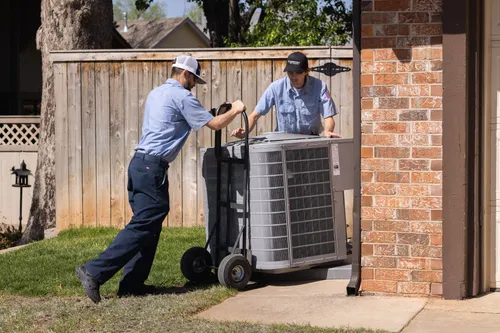
Arthur's Air Conditioning and Heating, LLC provides comprehensive HVAC repair, installation, and maintenance services in Oklahoma City, OK. Serving both residential and commercial clients, they handle air conditioning, heating, heat pumps, mini splits, thermostat installation, and indoor air quality improvements. Their licensed technicians bring over 22 years of experience and offer 24/7 emergency services to address urgent heating and cooling needs. The company focuses on energy-efficient solutions tailored to the local climate and offers a satisfaction guarantee along with special warranties on installations.
Hill & Company Service, Inc.
5125 NW 5th Pl, Oklahoma City, OK 73127
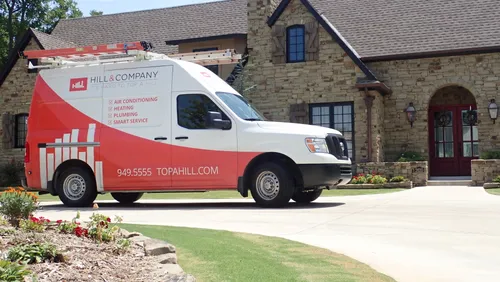
Hill & Company Service, Inc. is an HVAC and plumbing contractor serving Oklahoma City, OK. Since 1967, they have provided air conditioning, heating, and plumbing services including installation, repair, and maintenance. Their expertise covers ducted and ductless cooling systems, furnaces, heat pumps, and plumbing repairs. With decades of experience, they focus on delivering honest and timely service to keep homes comfortable year-round.
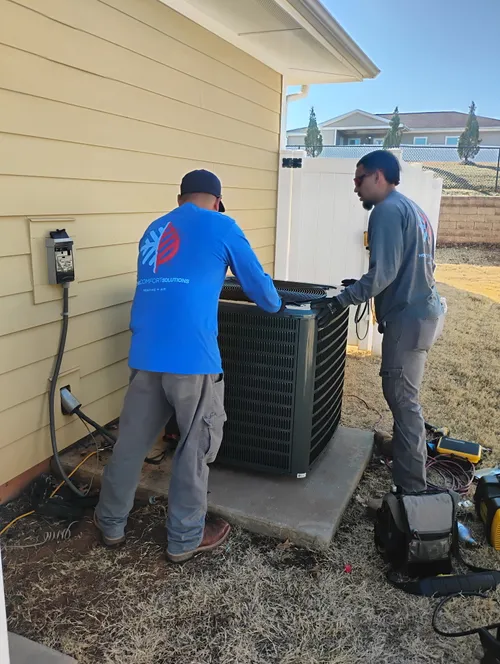
Home Comfort Solutions
2220 Pole Rd, Moore, OK 73160
Home Comfort Solutions is an HVAC company based in Oklahoma City, OK, offering a wide range of heating and air conditioning services for both residential and commercial clients. Their services include AC repair and installation, furnace and heat pump repair and installation, ductless mini-split installation, indoor air quality solutions, and HVAC system maintenance. They also provide 24-hour emergency service to address urgent HVAC needs. The company handles new construction HVAC projects and offers advanced capabilities such as zoning systems, air purifiers, UV lights, and radiant heating.
What is a Ductless Mini-Split System?
A ductless mini-split, often simply called a ductless system, consists of two main components: an outdoor compressor/condenser unit and one or more indoor air-handling units, commonly referred to as "heads." These are connected by a small conduit housing refrigerant lines, power cables, and a condensate drain, which is run through a small hole in your wall. This setup allows for independent temperature control in specific zones of your home, making it perfect for room additions, finished garages, sunrooms, or providing supplemental comfort to rooms that are always too hot or too cold.
The primary appeal of a ductless air conditioner and heater is its zoning capability. Instead of cooling or heating your entire house, you can direct energy only to the occupied spaces. This targeted approach is a cornerstone of energy efficiency, as it eliminates the energy losses associated with ductwork, which can account for more than 30% of energy consumption in a forced-air system, especially if the ducts are in an unconditioned space like an attic 1.
Ideal Applications for Midwest City Homes
Ductless mini-split installation is not a one-size-fits-all replacement for central air but is an excellent solution for specific scenarios common in our area.
- Home Additions & Remodels: Adding a new bedroom, office, or living space? Extending existing ductwork can be disruptive and expensive. A ductless system provides a dedicated, efficient climate solution for the new zone without impacting your home's main HVAC.
- Older Homes Without Ductwork: Many historic or older homes in Midwest City were built without any central air conditioning. Installing ductwork would require major renovations. Ductless systems offer a modern comfort solution with minimal structural impact 2.
- Solving Hot/Cold Spots: Does your upstairs bedroom never cool down in summer? A single-zone mini-split can provide powerful, supplemental cooling exactly where you need it, balancing your home's comfort.
- Garages, Workshops, and Bonus Rooms: Convert these spaces into comfortable, year-round areas with a dedicated heating and cooling system that operates independently from your main house.
Understanding System Types: Single-Zone vs. Multi-Zone
Choosing between a single-zone and multi-zone system is one of the first and most important decisions.
- Single-Zone Systems: This configuration involves one outdoor unit connected to a single indoor air handler. It's the most straightforward and cost-effective option, ideal for conditioning one specific room or area, such as a master bedroom suite or a garage apartment.
- Multi-Zone Systems: A single outdoor compressor can be connected to multiple indoor units (typically 2 to 5). This allows you to set different temperatures in each room or zone independently from a single outdoor unit. For example, you could cool a home office and a living room simultaneously at different setpoints. This is an efficient choice for whole-home comfort in a ductless property or for adding climate control to several key areas 3.
Key Considerations for Installation Placement
Professional installation is critical for performance, efficiency, and warranty validation. Proper placement of both the indoor and outdoor units is a science that impacts how well your system works.
Indoor Air Handler Placement: The most common type is the wall-mounted unit. It should be installed high on an interior wall for optimal air distribution, typically about 6-8 inches from the ceiling. Key placement rules include:
- Avoid direct airflow onto seating or bedding areas to prevent drafts.
- Ensure at least 6-8 feet of clearance in front of the unit for unimpeded airflow.
- Do not install above large heat-producing appliances like televisions or refrigerators.
- Consider alternative styles like ceiling cassette units (recessed into the ceiling) or floor-mounted models if wall space is limited or for specific aesthetic needs 4.
Outdoor Condenser Placement: The outdoor unit requires a stable, level base, such as a concrete pad, and should be positioned as close as practical to the indoor unit to keep the connecting refrigerant lines short (ideally under 16 feet for efficiency) 5. It needs ample clearance-usually 1-2 feet on all sides and at least 5 feet above-for proper airflow and easy access for future maintenance or repair 5.
Find the perfect mini-split installers for your needs
Get personalized recommendations and expert advice
The Professional Installation Process
A proper ductless mini-split installation is not a DIY project. It requires specialized tools, knowledge of refrigerant handling, and understanding of electrical codes. Here's what a professional installation entails:
- Site Evaluation & Load Calculation: A technician will assess your space to determine the correct BTU capacity needed, ensuring the system is neither undersized nor oversized.
- Mounting the Units: The indoor wall bracket and outdoor pad or mounting brackets are securely installed.
- Drilling the Line Set Hole: A small, clean hole (typically 3 inches or less) is drilled through the exterior wall to pass the conduit.
- Connecting the Line Set: The pre-charged refrigerant lines, drain tube, and electrical wiring are connected between the indoor and outdoor units.
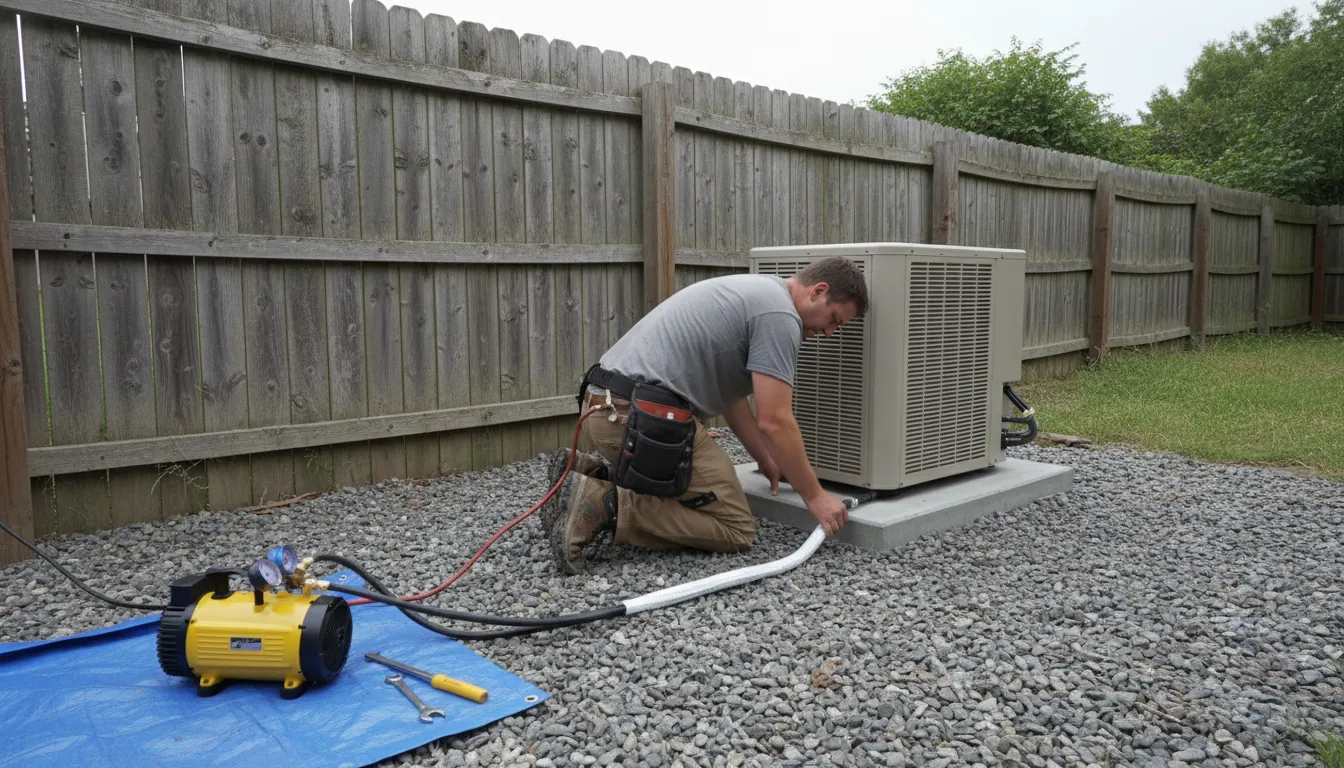
- Vacuuming and Charging: The system is evacuated with a high-powered vacuum pump to remove all moisture and air, which is crucial for longevity and efficiency. The refrigerant is then charged according to manufacturer specifications 6 7.
- Testing & Commissioning: The system is powered on and tested in both heating and cooling modes to ensure proper operation, airflow, and drainage.
Cost Overview for Mini-Split Installation
Costs for ductless air conditioning installation in Midwest City vary based on system complexity, brand, and efficiency. The following are general price ranges; a detailed quote from a local provider is essential.
- Single-Zone System: For a basic, efficient system cooling one room, homeowners can expect costs generally ranging from $3,000 to $5,000+, including professional installation 8.
- Multi-Zone System: Installing a system with 2-3 indoor zones typically ranges from $5,500 to $9,000+. Systems with more zones or higher-efficiency models (with higher SEER2 ratings) will be at the upper end of this range or higher 9 10 11.
- Key Cost Factors: The final price is influenced by the unit's brand and efficiency (SEER2), the number of indoor heads, the complexity of the installation (e.g., running lines over long distances), local labor rates, and any required city permits.
Benefits of Choosing a Ductless System
- Energy Efficiency: By eliminating duct losses and allowing for zoning, ductless mini-splits are often significantly more efficient than traditional window units or even central systems when cooling specific zones, potentially lowering energy bills.
- Flexible Installation: With only a small hole needed for the conduit, installation is less invasive than ductwork and preserves your home's aesthetics.
- Improved Indoor Air Quality: Ductless systems have multi-stage filtration that can reduce dust, allergens, and pollen circulating in your room, and without ducts, there's no ductwork to harbor and distribute contaminants 12.
- Quiet Operation: The loudest component, the compressor, is located outside. Indoor units operate at very low sound levels.
Frequently asked questions
Sources
Footnotes
-
What Size Mini Split Do I Need? - https://www.premiumhomesource.com/blogs/appliance-academy/what-size-mini-split-do-i-need ↩
-
Understanding mini split installation costs: A quick guide - Homeaglow - https://www.homeaglow.com/hub/content/mini-split-installation-cost ↩
-
Mini-Split Installation & Replacement in SW Oklahoma - https://robinsonairhvac.com/hvac/ductless-systems/mini-split-installation/ ↩
-
How Much Does a Mini-Split Installation Cost? - Taskrabbit Blog - https://www.taskrabbit.com/blog/mini-split-installation-cost/ ↩
-
Tips for Proper Ductless Mini-Split Placement - Climate Systems - https://www.climatesystems.net/blog/tips-for-proper-ductless-mini-split-placement/ ↩ ↩2
-
Ductless Mini Split Setup: An Ultimate Guide - Airflow Heating & Air - https://www.goairflow.com/blog/ductless-mini-split-installation/ ↩
-
How to Rough-In & Install a Mini-Split in New Construction ... - https://www.youtube.com/watch?v=Xcpc0rXq1NA&vl=en-US&t=187 ↩
-
Oklahoma City Ductless Mini Splits | Above + Beyond - https://www.pinkvantechs.com/air-conditioning/ductless-mini-splits/ ↩
-
Ductless Mini-Split Installation Cost in 2025: Full Breakdown - https://osborneheatingncooling.com/ductless-mini-split-installation-cost/ ↩
-
How Much Does It Cost to Install a Mini Split System? - https://elementairco.com/how-much-does-it-cost-to-install-a-mini-split-system/ ↩
-
Cost to Install Mini Split AC System in 2025 - https://dellahome.com/blogs/della-blog/cost-to-install-mini-split-ac-system ↩
-
Ductless mini-split installation: Cool 2025 Guide - Southern Air - https://www.southern-air.com/blog/ductless-mini-split-installation ↩