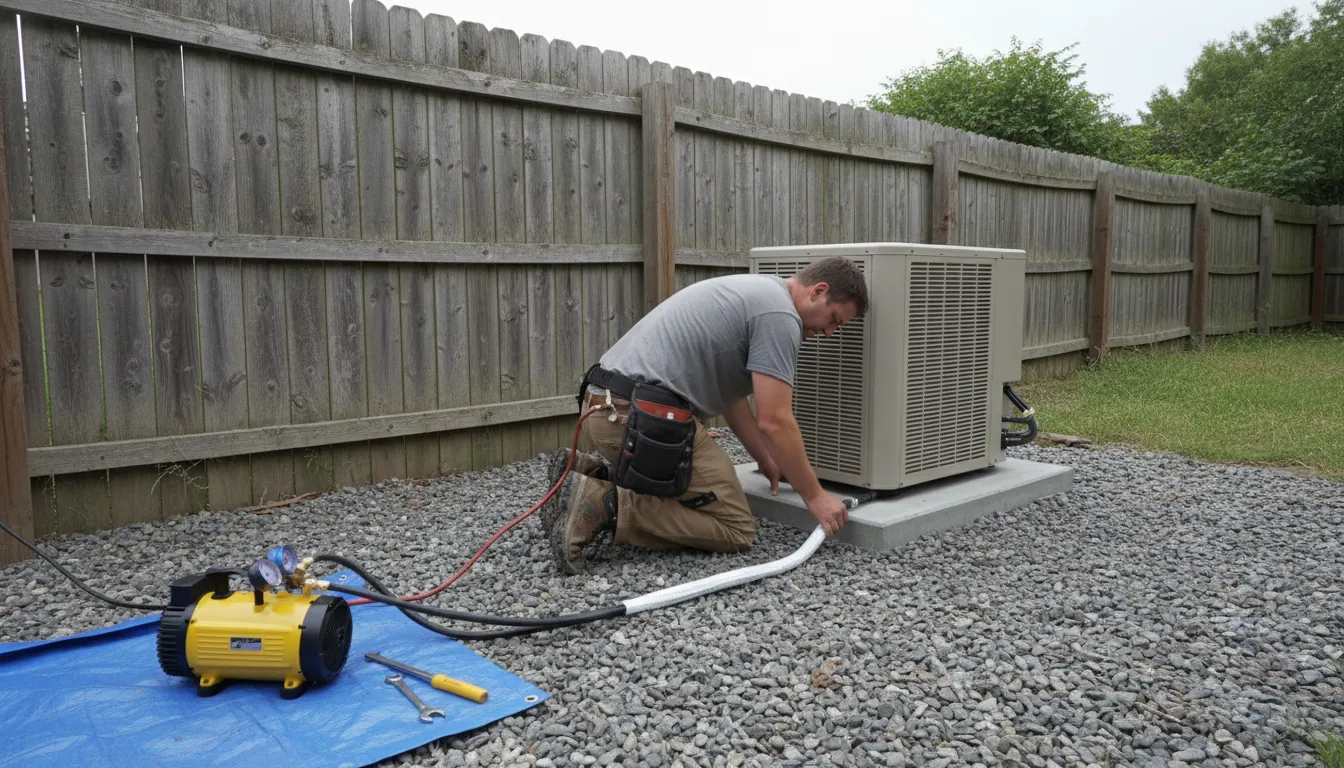
Find the Best Mini-Split Installers for Your Business
No obligation • Fast responses • Nationwide coverage

Why you can trust HVAC Firms
HVAC Firms is a leading United States resource for evaluating HVAC service providers. Our team researches companies, checks credentials, and reviews customer feedback to present clear, unbiased information. Listings and rankings are based on merit, and companies cannot pay to change our editorial content.
Search providers near you
Top Mini-Split Installers in Mentor, Ohio Ranked
Ductless mini-split systems provide a modern, efficient solution for heating and cooling specific areas of your home. These systems are ideal for creating comfortable zones without the need for extensive ductwork, making them perfect for room additions, sunrooms, or older homes. This guide will help you understand the process, benefits, and key considerations for installing a ductless system in Mentor, so you can find the right local expertise for your project.

Lakeshore Heating & Cooling
1017 Woodstock Rd, Eastlake, OH 44095
Lakeshore Heating & Cooling is a locally owned HVAC contractor based in Eastlake, Ohio, serving Cleveland and surrounding areas including Willoughby, Mentor, and Painesville. They offer a full range of heating and cooling services such as furnace, boiler, heat pump, and air conditioning repair and installation, along with thermostat and mini split system services. The company is known for handling all major brands and providing tailored solutions to improve home comfort and energy efficiency. Lakeshore Heating & Cooling holds an A+ BBB rating and has earned a strong reputation for quality workmanship and customer care.

W.F. Hann and Sons
26401 Miles Rd, Warrensville Heights, OH 44128
W.F. Hann and Sons is an HVAC and plumbing company serving Cleveland, OH, and the surrounding Northeast Ohio area. Established in 1907, they offer heating and cooling services including furnace, boiler, heat pump, and air conditioning repair and installation. Their team is factory-trained and certified, providing emergency services and maintenance for residential and commercial customers. The company also handles plumbing needs such as water heater installation and drain cleaning. W.F. Hann and Sons is known for upfront pricing and detailed proposals, with technicians available around the clock for urgent repairs.
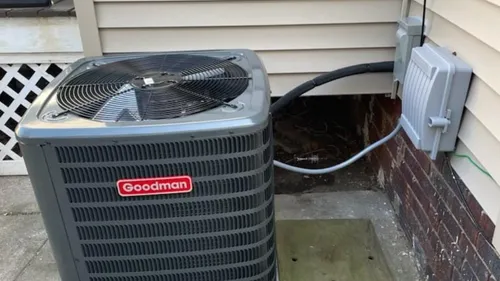
Air Quality Control Heating and Cooling
Cleveland, OH
Air Quality Control Heating and Cooling is a locally owned HVAC company serving Cleveland, OH. With over 35 years of experience and 44 years in the community, they provide services including air conditioning, heating, heat pump repair, mini split installation, and indoor air quality solutions. The company is led by Joe Insana, who continues the family tradition of personalized service and extended hours.
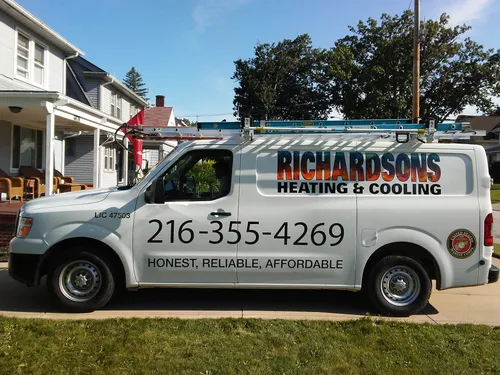
Richardsons Heating & Cooling
190 Lucy Ln, Northfield, OH 44067
Richardsons Heating & Cooling is a veteran and minority-owned HVAC company based in Cleveland, OH. They provide installation, repair, and maintenance services for air conditioning systems, furnaces, heat pumps, ductless mini-splits, thermostats, and indoor air quality equipment. The company also offers electrical and plumbing services related to heating and cooling systems. Richardsons Heating & Cooling is known for its 24/7 emergency availability, serving Cleveland and surrounding communities in Northeast Ohio. Their team is certified and insured, focusing on flexible appointments and professional service.
Clean Air HVAC
Cleveland, OH
Clean Air HVAC is an HVAC service provider based in Cleveland, OH. They offer a range of services including air conditioning repair and installation, furnace repair, mini split installation, and HVAC tune-ups. The company is known for handling complex installations such as central air systems in historic homes and addressing issues like gas leaks and faulty vent dampers. Clean Air HVAC also provides emergency after-hours service, including late-night house calls. Their team is experienced in installing top-tier equipment like Mitsubishi units and offers thorough diagnostics and repairs.
Why Choose a Ductless Mini-Split System?
For many homes in Mentor, traditional central HVAC systems with ductwork are either impractical or inefficient. Ductless mini-split installation offers a versatile alternative. The core advantage is zoned comfort: each indoor unit, or air handler, serves a specific room or area, allowing for independent temperature control. This eliminates energy waste from heating or cooling unoccupied spaces 1. They are particularly well-suited for home additions, finished basements, garages, or sunrooms where extending existing ducts is costly or impossible 2. By providing both heating and cooling from a single, quiet system, a mini-split can be a comprehensive climate control solution.
Key Components of a Mini-Split Installation
Understanding the main parts of a ductless system will help you plan your installation.
- Outdoor Condenser Unit: This is mounted outside your home on a stable concrete pad or a sturdy bracket. It requires clear space around it for proper airflow and heat exchange; failing to follow manufacturer clearance specs can hinder efficiency.
- Indoor Air Handler(s): This is the unit mounted inside the room you wish to condition. The most common type is the wall-mounted unit, installed high on a wall to project air evenly into the room. Other styles include ceiling cassettes that recess flush with the ceiling for a less intrusive look.
- Refrigerant Line Set: A conduit containing copper tubing (for refrigerant), a condensate drain line, and electrical wiring connects the indoor and outdoor units. A key part of the installation involves drilling a roughly 3-inch hole through the wall to run this line set.
The Professional Installation Process Explained
A proper ductless mini-split installation is a technical job best left to certified professionals, not only for performance but often to maintain the manufacturer's warranty. Here's what a standard installation entails:
- Site Assessment & Planning: A technician will evaluate the best locations for the indoor and outdoor units, considering airflow, structural support, and aesthetics.
- Mounting the Indoor Unit: A mounting bracket is securely anchored to a wall stud. The placement is crucial, requiring clear wall space away from obstructions like curtains or furniture.
- Drilling and Running Lines: A hole is drilled through the exterior wall. The refrigerant line set, drain line, and electrical cables are run from the indoor unit's location through this hole to the outdoor unit's planned location.
- Installing the Outdoor Unit: The condenser is placed on its prepared stable base, ensuring it has the recommended clearance from walls, plants, and debris.
- Making Connections & Testing: The technician connects the refrigerant lines between the units. The system is then pressurized with nitrogen to check for leaks, evacuated with a vacuum pump to remove moisture and air, and charged with refrigerant. Finally, the system is powered on and tested in both heating and cooling modes to ensure proper operation 3.
Find the perfect mini-split installers for your needs
Get personalized recommendations and expert advice
Understanding Installation Costs in Mentor
The cost of a mini-split installation in Mentor varies significantly based on the system's scope and complexity. Here's a general breakdown to help you budget:
- Single-Zone System (One Room): For installing one indoor air handler connected to one outdoor condenser, homeowners can expect costs typically ranging from $2,000 to over $5,000 4 5. The final price depends on the brand, the system's efficiency (SEER2 rating), and the complexity of the wall penetration and electrical work.
- Multi-Zone System (Whole-Home or Multiple Rooms): Systems with one outdoor unit supporting two or three indoor heads (multi-zone) offer greater whole-home coverage. These installations have a wider range, generally from $3,200 to $14,500 or more 6 7. The total is influenced by the number of zones, the total cooling/heating capacity needed, the length of the refrigerant line sets, and any necessary electrical panel upgrades.
Choosing the Right Indoor Unit Style
While wall-mounted units are the standard, understanding your options ensures the system fits your space and design preferences.
- Wall-Mounted: This is the most common and often most cost-effective choice. Installed high on a wall, it provides excellent air distribution across the room 8 9.
- Ceiling Cassette: These units are recessed into the ceiling, with only a sleek vent visible. They are less intrusive and can be ideal for rooms with limited wall space, though installation can be more complex and costly due to ceiling work 10.
- Floor-Mounted: A less common option that sits low on a wall, useful in rooms with high ceilings or specific architectural constraints.
Benefits for Mentor Homeowners
Investing in a ductless system brings several long-term advantages:
- Energy Efficiency: By allowing you to condition only the rooms you use, mini-splits can significantly reduce your energy consumption compared to running a central system for the entire house.
- Improved Indoor Air Quality: Without ductwork, there's no place for dust, allergens, and mold to accumulate and circulate throughout your home.
- Flexibility and Comfort: Create custom temperature zones for different family members' preferences or for rooms with different sun exposures.
- Quiet Operation: The loudest component, the condenser, is located outside. Indoor units operate at very low sound levels.
Frequently asked questions
Sources
Footnotes
-
Understanding Ductless HVAC Systems - Lew's Reliable Heat - https://lewsreliableheat.com/cooling-services/ductless-hvac/ ↩
-
Ductless mini-split installation: Cool 2025 Guide - Southern Air - https://www.southern-air.com/blog/ductless-mini-split-installation ↩
-
How to Install a Ductless Mini-Split Air Conditioner | This Old ... - https://www.youtube.com/watch?v=ozaw9QhxkQU&t=25 ↩
-
How Much Does It Cost To Install A Carrier Ductless Mini Split AC? - https://carrierohio.com/how-much-does-it-cost-to-install-a-carrier-ductless-mini-split-ac/ ↩
-
Mini Split AC Installation Cost Breakdown for Willoughby, OH Homes - https://www.tomschaeferplumbing.com/blog/air-conditioning-service/mini-split-ac-installation-cost-breakdown-for-willoughby-oh-homes/ ↩
-
Ductless Mini-Split Installation Cost in 2025: Full Breakdown - https://osborneheatingncooling.com/ductless-mini-split-installation-cost/ ↩
-
How Much Does It Cost to Install a Mini Split System? - https://elementairco.com/how-much-does-it-cost-to-install-a-mini-split-system/ ↩
-
Ductless Mini Split Setup: An Ultimate Guide - Airflow Heating & Air - https://www.goairflow.com/blog/ductless-mini-split-installation/ ↩
-
Ductless Mini-Splits: A Comprehensive Cost Breakdown - https://www.myfivestarhomeservices.com/ductless-mini-splits-a-comprehensive-cost-breakdown/ ↩
-
How Much Does a Mini-Split Installation Cost? - Taskrabbit Blog - https://www.taskrabbit.com/blog/mini-split-installation-cost/ ↩