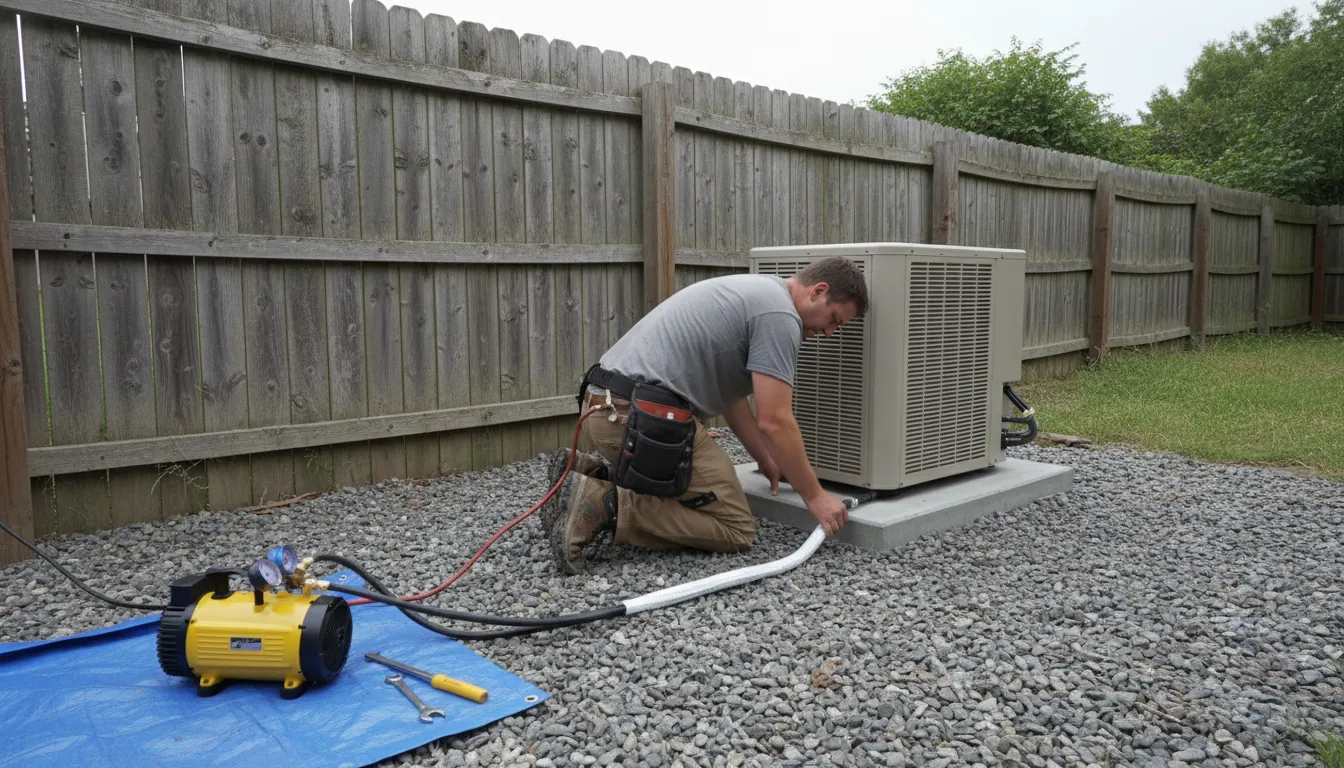
Find the Best Mini-Split Installers for Your Business
No obligation • Fast responses • Nationwide coverage

Why you can trust HVAC Firms
HVAC Firms is a leading United States resource for evaluating HVAC service providers. Our team researches companies, checks credentials, and reviews customer feedback to present clear, unbiased information. Listings and rankings are based on merit, and companies cannot pay to change our editorial content.
Search providers near you
Top Mini-Split Installers in Euclid, Ohio Ranked
A ductless mini-split system is a versatile heating and cooling solution perfect for homes without existing ductwork or for adding comfort to specific areas like additions, garages, or sunrooms. These systems provide zoned climate control, allowing you to heat or cool only the rooms you're using, which can lead to significant energy savings and enhanced comfort. This guide will help you understand the key considerations for a successful mini-split installation in Euclid, from system types and placement to costs, so you can effectively evaluate local service providers.

Lakeshore Heating & Cooling
1017 Woodstock Rd, Eastlake, OH 44095
Lakeshore Heating & Cooling is a locally owned HVAC contractor based in Eastlake, Ohio, serving Cleveland and surrounding areas including Willoughby, Mentor, and Painesville. They offer a full range of heating and cooling services such as furnace, boiler, heat pump, and air conditioning repair and installation, along with thermostat and mini split system services. The company is known for handling all major brands and providing tailored solutions to improve home comfort and energy efficiency. Lakeshore Heating & Cooling holds an A+ BBB rating and has earned a strong reputation for quality workmanship and customer care.

W.F. Hann and Sons
26401 Miles Rd, Warrensville Heights, OH 44128
W.F. Hann and Sons is an HVAC and plumbing company serving Cleveland, OH, and the surrounding Northeast Ohio area. Established in 1907, they offer heating and cooling services including furnace, boiler, heat pump, and air conditioning repair and installation. Their team is factory-trained and certified, providing emergency services and maintenance for residential and commercial customers. The company also handles plumbing needs such as water heater installation and drain cleaning. W.F. Hann and Sons is known for upfront pricing and detailed proposals, with technicians available around the clock for urgent repairs.
Air Quality Control Heating and Cooling
Cleveland, OH
Air Quality Control Heating and Cooling is a locally owned HVAC company serving Cleveland, OH. With over 35 years of experience and 44 years in the community, they provide services including air conditioning, heating, heat pump repair, mini split installation, and indoor air quality solutions. The company is led by Joe Insana, who continues the family tradition of personalized service and extended hours.
Richardsons Heating & Cooling
190 Lucy Ln, Northfield, OH 44067
Richardsons Heating & Cooling is a veteran and minority-owned HVAC company based in Cleveland, OH. They provide installation, repair, and maintenance services for air conditioning systems, furnaces, heat pumps, ductless mini-splits, thermostats, and indoor air quality equipment. The company also offers electrical and plumbing services related to heating and cooling systems. Richardsons Heating & Cooling is known for its 24/7 emergency availability, serving Cleveland and surrounding communities in Northeast Ohio. Their team is certified and insured, focusing on flexible appointments and professional service.
Clean Air HVAC
Cleveland, OH
Clean Air HVAC is an HVAC service provider based in Cleveland, OH. They offer a range of services including air conditioning repair and installation, furnace repair, mini split installation, and HVAC tune-ups. The company is known for handling complex installations such as central air systems in historic homes and addressing issues like gas leaks and faulty vent dampers. Clean Air HVAC also provides emergency after-hours service, including late-night house calls. Their team is experienced in installing top-tier equipment like Mitsubishi units and offers thorough diagnostics and repairs.
What is a Ductless Mini-Split System?
At its core, a ductless mini-split is a heat pump system consisting of an outdoor compressor/condenser unit connected via refrigerant lines to one or more indoor air-handling units. Unlike central HVAC, it requires no ductwork, making it an ideal retrofit for older Euclid homes, room additions, or spaces like finished basements and garages 1. The key benefit is zone control; each indoor unit can be operated independently, letting you set different temperatures in different rooms. This not only boosts personal comfort but also improves overall system efficiency by avoiding the energy waste of conditioning unoccupied spaces 1.
Types of Mini-Split Systems: Single-Zone vs. Multi-Zone
Choosing the right system configuration is the first major decision. Your choice will depend on the size of the area you want to condition and your overall comfort goals.
Single-Zone Systems A single-zone setup involves one outdoor unit connected to one indoor unit. This is the most common and cost-effective choice for conditioning a single, specific area. It's perfect for a Euclid homeowner looking to cool a hot upstairs bedroom, heat a three-season porch, or provide climate control for a home office or garage workshop. Installation is generally simpler and faster than multi-zone configurations.
Multi-Zone Systems A multi-zone system uses one outdoor condenser to power multiple indoor air handlers (typically 2 to 5+). This setup is designed for whole-home comfort or for conditioning several distinct zones within a larger floor plan 2. For a typical 1,500-square-foot Euclid home, a 2-3 zone system might be ideal, allowing you to manage the living area, bedrooms, and a basement independently. Multi-zone installations are more complex but provide the ultimate in flexible, efficient home comfort without the need for ductwork.
Critical Installation Considerations: Indoor Unit Placement
Proper placement of the indoor air handler is crucial for performance, efficiency, and comfort. It's not just about finding an empty spot on the wall.
Location and Air Distribution The indoor unit should be mounted on an interior wall for the most consistent performance, as exterior walls are subject to greater temperature fluctuations. The primary goal is to ensure good air distribution throughout the room. The unit should be positioned so its airflow path is unobstructed by furniture, curtains, or room dividers.
Clearance and Height Requirements For optimal airflow and to prevent recirculating air, mini-split units require specific clearance. Generally, you need about 6 inches of space above the unit and on both sides 3. The standard mounting height is between 7 to 8 feet from the floor on a standard 8-foot ceiling, ensuring cooled or heated air is distributed effectively at occupant level without creating drafts.
Aesthetic and Practical Factors While wall-mounted units are less intrusive than bulky ductwork and large vents, their placement should consider the room's aesthetics and function. Avoid installing the unit directly above televisions, electronics, or beds where condensed moisture could drip or airflow could be a nuisance. A professional installer will help balance technical requirements with your living space's layout.
Outdoor Unit Placement and Requirements
The outdoor condenser is the heart of the system, and its placement affects efficiency, longevity, and serviceability.
A Stable, Level Foundation The outdoor unit must be placed on a stable, level surface to prevent vibration and noise. While some units come with a composite pad, most professional installations in Euclid will involve placing the unit on a new concrete pad to ensure permanent stability.
Adequate Clearance for Airflow Just like the indoor unit, the condenser needs clear space around it to exhaust heat effectively. Obstructions like bushes, fences, or walls too close to the unit can restrict airflow, causing the system to work harder, reduce efficiency, and potentially overheat. Always follow the manufacturer's specific clearance guidelines, which a qualified installer will know and adhere to 4.
Accessibility for Service Ensure there is a clear pathway for technicians to access the unit for routine maintenance, repairs, or seasonal startups. The location should also consider noise; placing the condenser under a bedroom window, for example, might lead to unwanted operational sounds inside the home.
Find the perfect mini-split installers for your needs
Get personalized recommendations and expert advice
Understanding Installation Costs in Euclid
The cost of a ductless mini-split installation in Euclid can vary widely based on system type, capacity, brand, and installation complexity. Professional installation is not a place to cut corners, as it is crucial for system performance, efficiency, and maintaining the manufacturer's warranty 5 6.
Single-Zone Installation Costs For a basic single-zone system cooling or heating one room, homeowners can expect costs to range from $2,000 to $8,000 or more 7. The final price depends on the unit's BTU capacity, the brand (e.g., Mitsubishi, Daikin, LG), the length of the refrigerant line set, and whether any new electrical circuits are required.
Multi-Zone and Whole-Home Installation Costs For a more comprehensive solution, costs increase. A 2-3 zone system for a ~1,500 sq ft home typically ranges from $5,000 to $10,000+ 8 9 10. A whole-home installation for a 2,000 sq ft property with multiple zones can range from $7,000 to $14,000 or higher 8 11. Multi-zone systems involve more labor, more refrigerant line sets, and often more complex electrical work.
Key Factors Influencing Price
- System Size & Brand: Higher BTU capacity and premium brands cost more.
- Installation Complexity: Long refrigerant line runs, difficult wall penetrations, or the need to run new electrical service will add to the cost.
- Labor & Permits: Professional labor is a significant portion of the cost, and proper permits required by the City of Euclid are essential for safety and compliance.
The Importance of Professional Installation
While DIY videos exist, installing a mini-split is a job for licensed HVAC professionals. A proper installation involves critical tasks like vacuuming the refrigerant lines to remove moisture and air, which if done incorrectly, can lead to premature compressor failure 12. Professionals also handle the electrical connections safely, ensure the system is charged correctly, and test it for optimal performance. Most importantly, a professional installation is almost always required to activate the manufacturer's equipment warranty, protecting your investment.
Benefits for Euclid Homeowners
Ductless mini-splits offer distinct advantages that make them a compelling choice for many in Euclid.
- Zoned Comfort: Independently control temperatures in different rooms.
- High Efficiency: Inverter technology and no duct losses lead to lower energy bills.
- Flexible Installation: Ideal for homes without ducts, historic properties, or room additions.
- Year-Round Use: Modern systems provide both efficient heating and cooling.
Frequently asked questions
Sources
Footnotes
-
Columbus, OH Ductless Mini Split Installation - https://cwaohio.com/products/ductless-systems/ ↩ ↩2
-
How Much Does It Cost to Install a Mini-Split? [2026 Data] | Angi - https://www.angi.com/articles/how-much-does-it-cost-install-ductless-mini-split-ac.htm ↩
-
Mini Split Clearance Requirements: What You Need to Know - https://support.mrcool.com/hc/en-us/articles/37035349099028-Mini-Split-Clearance-Requirements-What-You-Need-to-Know ↩
-
Euclid Mini Split Installation Tips - Wilson Plumbing - https://www.wilsonplumbingandheating.com/post/euclid-mini-split-installation-tips ↩
-
Ductless mini-split installation: Cool 2025 Guide - Southern Air - https://www.southern-air.com/blog/ductless-mini-split-installation ↩
-
Cleveland Mini Split Installation Guide - Wilson Plumbing - https://www.wilsonplumbingandheating.com/post/cleveland-mini-split-installation-guide ↩
-
Ductless Mini-Split Installation Cost in 2025: Full Breakdown - https://osborneheatingncooling.com/ductless-mini-split-installation-cost/ ↩
-
Understanding mini split installation costs: A quick guide - Homeaglow - https://www.homeaglow.com/hub/content/mini-split-installation-cost ↩ ↩2
-
Ductless Mini-Splits: A Complete Guide To Cost, Benefits, And ... - https://petermanhvac.com/about-us/blog/mini-splits-complete-guide/ ↩
-
Why is a Garage Mini Split the Ideal Heating and Cooling Solution? - https://www.bryant.com/en/us/products/ductless-systems/garage-mini-split/ ↩
-
How much to install mini split? - Mr. Good Guy HVAC - https://mrgoodguyhvac.com/how-much-to-install-mini-split/ ↩
-
DIY Mini Split Install - All the Things Nobody Shows You - https://www.youtube.com/watch?v=2mKwCmaR5Qg&t=16 ↩