Find the Best Mini-Split Installers for Your Business
No obligation • Fast responses • Nationwide coverage

Why you can trust HVAC Firms
HVAC Firms is a leading United States resource for evaluating HVAC service providers. Our team researches companies, checks credentials, and reviews customer feedback to present clear, unbiased information. Listings and rankings are based on merit, and companies cannot pay to change our editorial content.
Search providers near you
Best Mini-Split Installers in New York Ranked
Ductless mini-split systems are an increasingly popular solution for efficient heating and cooling in New York homes and businesses. These systems provide targeted comfort control without the need for extensive ductwork, making them ideal for older buildings, room additions, or spaces where traditional HVAC is impractical. Finding a qualified professional for your installation is crucial, as proper setup directly impacts system performance, energy savings, and longevity. This guide provides essential information to help you understand the process, costs, and regulations for installing a mini-split system in New York, so you can make an informed decision and connect with experienced local providers.
Sullivan Heating & Cooling
3486 Walden Ave, Depew, NY 14043
Sullivan Heating & Cooling is a licensed HVAC contractor serving Buffalo, NY, specializing in heating and cooling system installation, repair, and maintenance. They work with all brands of furnaces, air conditioners, heat pumps, boilers, and mini split systems. The company offers indoor air quality services and installs thermostats and zoning products. As a Lennox dealer, they provide a range of residential heating and air conditioning equipment. Sullivan Heating & Cooling has experience installing many systems in the area and offers 24/7 emergency service to assist customers whenever needed.
KOKA-TECH HVAC INC
60-21 Menahan St, Ridgewood, NY 11385
KOKA-TECH HVAC INC provides professional heating and cooling services in New York, NY, including installation, repair, and tune-ups for air conditioners, furnaces, heat pumps, boilers, and mini splits. They offer 24/7 emergency support and same-day availability, serving Queens, Brooklyn, Manhattan, Bronx, and Long Island. The company is licensed and insured, with a strong local presence and expertise in NYC buildings. With nearly 300 five-star reviews, KOKA-TECH HVAC INC is recognized for upfront quotes and customer approval before starting work.
Aeromark Mechanical Inc
153 Morgan St, Jersey City, NJ 07302
Aeromark Mechanical Inc provides residential and commercial HVAC services in New York, NY, and the surrounding Northern New Jersey area. They specialize in heating and air conditioning repair, installation, and maintenance, including heat pumps, ductless HVAC systems, and indoor air quality solutions. With over 15 years of experience, Aeromark Mechanical offers seasonal maintenance plans and has expertise in installing advanced systems like VRF and high-velocity HVAC. Their certified technicians also handle smart thermostat installations and duct repair services.

The Heating Cooling Doctor
1454 42nd St, Brooklyn, NY 11219
The Heating Cooling Doctor provides heating and air conditioning services in New York, NY. They offer AC repair, installation of central AC and mini split systems, as well as boiler and radiator services. Their team can diagnose and fix heating and cooling issues promptly to help maintain comfort throughout the year.
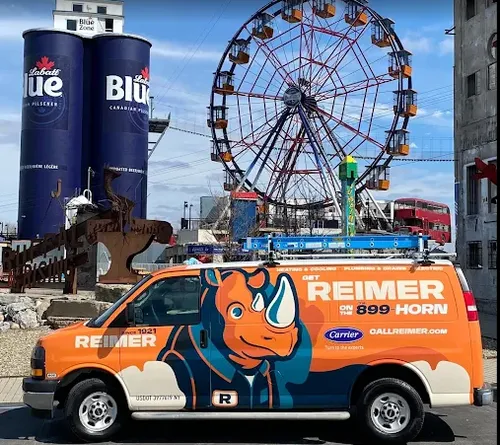
Reimer Heating, Cooling & Plumbing
2575 Broadway, Cheektowaga, NY 14227
Reimer Heating, Cooling & Plumbing is a full-service provider based in Buffalo, NY, offering HVAC, plumbing, and electrical services. They specialize in air conditioning and furnace repair and installation, mini split and ductless system installation, HVAC tune-ups, and indoor air quality solutions. Reimer is a Factory Authorized Trane System Dealer and has been serving Western New York since 1921. The company provides 24/7 availability for urgent home service needs, ensuring comfort and safety year-round.
Understanding Ductless Mini-Split Systems
A ductless mini-split system consists of an outdoor compressor/condenser unit connected by refrigerant lines to one or more indoor air-handling units. This design eliminates the energy losses associated with ductwork, which can account for more than 30% of energy consumption in a forced-air system 1. For New Yorkers, this efficiency translates to significant savings on utility bills, especially during the peak heating and cooling seasons. The ability to create independent "zones" allows you to heat or cool only the rooms you're using, providing superior comfort and control compared to a single thermostat managing an entire home.
Why Professional Installation is Non-Negotiable in NY
Installing a ductless system is not a typical DIY project. It involves handling refrigerants, performing precise electrical work, and ensuring the system meets all local building codes. In New York, anyone who handles refrigerant during installation must hold a current EPA 608 Certification. This federal requirement is in place to prevent the release of harmful greenhouse gases and to ensure systems are charged correctly for optimal performance.
Beyond federal rules, New York City has its own stringent requirements. For systems over 3 tons (36,000 BTU/hr), a permit from the Department of Buildings (DOB) is typically required 2. Even for smaller systems, working with a licensed contractor ensures all electrical connections-like installing a dedicated circuit from your breaker panel-comply with the strict NYC Electrical Code 3 4. Attempting an installation without proper permits or expertise can lead to fines, voided equipment warranties, safety hazards, and an inefficient system that costs more to operate.
The Professional Installation Process: What to Expect
A proper installation by a qualified New York contractor follows a meticulous process to ensure reliability and efficiency.
1. Initial Consultation and Load Calculation The first step is a professional assessment of your space. A reputable contractor will perform a Manual J load calculation, which considers your home's square footage, insulation, window types, and local climate to determine the exact heating and cooling capacity (measured in BTUs) needed for each zone. Correct sizing is critical; an undersized unit will struggle to maintain temperature, while an oversized unit will short-cycle, leading to uneven temperatures, higher humidity, and increased wear.
2. Site Preparation and Planning Your installer will identify the best locations for the indoor and outdoor units. The outdoor condenser needs a stable, level pad with adequate clearance for airflow and maintenance access. For the indoor units, they will plan a route for the refrigerant lines, drain line, and electrical conduit, minimizing the length of the line run to preserve efficiency. They will also verify your electrical panel has the capacity for the new dedicated circuit.
3. Installation Day The physical installation involves several skilled trades:
- Mounting: Securing the wall-mounted, ceiling cassette, or floor-standing indoor unit(s) and the outdoor condenser.
- Drilling: Creating a small, sealed hole (typically 3 inches) through the exterior wall to connect the linesets.
- Electrical: Running conduit and wiring from the breaker panel to the outdoor unit and connecting the indoor units.
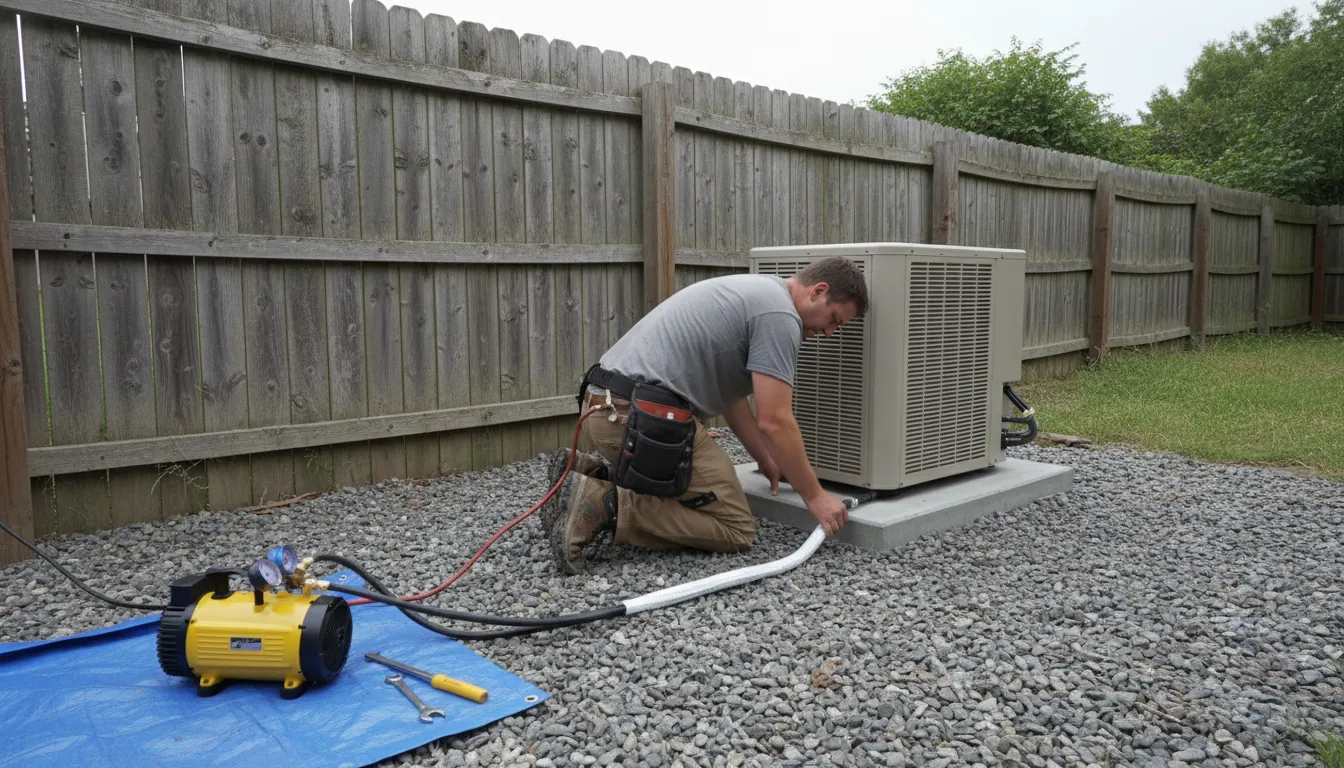
- Refrigerant Lines: Connecting the pre-charged linesets, performing a pressure test to check for leaks, and evacuating the system with a vacuum pump to remove moisture and air.
- System Startup: Charging the system with refrigerant, testing all functions, and demonstrating the thermostat and remote controls to the homeowner.
Cost of Mini-Split Installation in New York
The total investment for a ductless mini-split system in New York varies based on system complexity, brand, and your home's specific requirements. Below is a general cost breakdown.
Equipment and Installation Labor:
- Single-Zone System: Installing one indoor unit connected to one outdoor condenser typically ranges from $2,000 to $4,500, including the equipment and professional installation 5.
- Multi-Zone System: For a system with one outdoor unit serving two, three, or four indoor heads, expect costs between $3,000 and $10,000 or more. The price increases with each additional indoor zone.
Additional Potential Costs:
- Electrical Upgrades: If your home's electrical panel needs an update to support the new dedicated circuit, this can add $1,000 to $3,000 to the project 6 7.
- Permits: Permit fees in New York City and other municipalities vary but are a necessary part of a legal, code-compliant installation.
- Complex Installations: Jobs requiring extensive line-set runs, special mounting brackets, or complex attic/crawlspace access may incur higher labor costs.
Find the perfect mini-split installers for your needs
Get personalized recommendations and expert advice
Financial Incentives and Rebates for New York Homeowners
A significant advantage of installing an energy-efficient mini-split heat pump in New York is access to financial incentives that can substantially lower your net cost.
Federal Tax Credit: The Inflation Reduction Act (IRA) provides a tax credit worth 30% of the total project cost, up to $2,000, for qualifying high-efficiency heat pump installations 8 9. This credit is applied to your federal income tax liability for the year the system is installed.
New York State and Utility Rebates: New York offers robust state-level incentives, primarily administered through NYSERDA's Clean Heat program. Rebates are often provided as point-of-sale discounts through participating contractors 10. Additionally, local utility companies like Con Edison may offer their own rebates for converting from fossil fuel heating to efficient electric heat pumps 11. Your installer should be well-versed in these programs and can help you identify all available savings.
Financing Options: For those needing to manage upfront costs, New York State offers low-interest financing options specifically for heat pump installations, making the upgrade more accessible.
Maximizing Efficiency and Long-Term Value
The inherent efficiency of a ductless system comes from zone control and the elimination of duct losses. However, the full energy-saving potential is only realized with a flawless installation. A properly sized and installed system will operate smoothly, maintain consistent comfort, and have a longer service life. To protect your investment, choose a contractor who is licensed, insured, and has specific experience with mini-split installations in New York's climate. Ask for references and verify they will handle the entire process, including pulling necessary permits and coordinating post-installation inspections if required 12 13.
Frequently asked questions
Sources
Footnotes
-
Do Ductless Mini Splits Use a Lot of Electricity? - Smedley Service - https://smedleyservice.com/do-ductless-mini-splits-use-a-lot-of-electricity/ ↩
-
Can You Install an AC Unit Without a Permit in NYC? - Always On HVAC - https://alwaysonhvac.com/can-you-install-an-ac-unit-without-a-permit-in-nyc/ ↩
-
Why DIY Ductless Mini Split Installation in NYC Is a Bad Idea - https://acinstallationbyvlad.godaddysites.com/f/why-diy-ductless-mini-split-installation-in-nyc-is-a-bad-idea ↩
-
Is It Legal to Install a Ductless Mini Split Without Permission? - https://dellahome.com/blogs/della-blog/is-it-legal-to-install-a-ductless-mini-split-without-permission ↩
-
Premier Ductless Mini Split Systems Installation in New York, NY 10013 - https://www.richaircomfort.com/service-area/ductless-mini-split-in-new-york-ny-10013/ ↩
-
New Yorkers and Ductless Mini-Split Air Conditioning - https://nycpigeonairconditioner.com/f/new-yorkers-and-ductless-mini-split-air-conditioning?blogcategory=Mini+Split+Air+Conditioner ↩
-
Ductless Mini Split Installation: A Complete Guide - https://www.goairflow.com/blog/ductless-mini-split-installation/ ↩
-
Ductless Mini-Split Installation Cost in 2025: Full Breakdown - https://osborneheatingncooling.com/ductless-mini-split-installation-cost/ ↩
-
Explore Discounts & Mini Split Tax Credits in 2025 - Carrier - https://www.carrier.com/residential/en/us/products/ductless-mini-splits/tax-credits/ ↩
-
Ductless Mini-Split Heat Pumps for an Apartment - NY.Gov - https://cleanheat.ny.gov/ductless-heat-pump-for-an-apartment/ ↩
-
Ductless Mini Split Rebates - HVACDirect.com - https://hvacdirect.com/ductless-mini-splits/ductless-mini-split-rebates.html ↩
-
Space Heating Heat Pump Technical Requirements: Split Systems - https://www.nyc.gov/assets/hpd/downloads/pdfs/services/space-heating-heat-pump-technical-requirements-split-systems.pdf ↩
-
Step-by-Step Mini Split Installation Guide for NYC - https://airsynchvac.com/mini-split-installation-process-nyc/ ↩