Find the Best Mini-Split Installers for Your Business
No obligation • Fast responses • Nationwide coverage

Why you can trust HVAC Firms
HVAC Firms is a leading United States resource for evaluating HVAC service providers. Our team researches companies, checks credentials, and reviews customer feedback to present clear, unbiased information. Listings and rankings are based on merit, and companies cannot pay to change our editorial content.
Search providers near you
Top Mini-Split Installers in Atlanta, Georgia Ranked
For Atlanta homeowners seeking efficient, flexible climate control, ductless mini-split installation offers a powerful solution. These systems provide targeted, zoned comfort, making them ideal for additions, older homes without ductwork, or simply upgrading inefficient rooms. This guide explains what mini-split installation entails, the options available, and how to find qualified local professionals to ensure your project is completed correctly for lasting performance.

Wall Heating & Air Conditioning, Inc.
485 Scenic Hwy S, Lawrenceville, GA 30046
Wall Heating & Air Conditioning, Inc. is an HVAC company serving Atlanta, GA, specializing in air conditioning, heating, and indoor air quality services. They handle installation, repair, and maintenance for central air conditioners, ductless mini splits, heat pumps, furnaces, and rooftop or packaged units for both residential and commercial properties. The company also offers indoor air quality solutions including air cleaners, humidifiers, dehumidifiers, and UV germicidal lights, with a focus on Aprilaire products. Their certified technicians provide expertise in eco-friendly heat pump systems and climate control efficiency.
Techmazing Heating and Cooling
4931 Hwy 81, Loganville, GA 30052
Techmazing Heating and Cooling provides a full range of HVAC services in Atlanta, GA, including air conditioning, furnace, heat pump, and ductless mini-split installation and repair. They also offer indoor air quality solutions and commercial refrigeration services. The company is experienced in servicing all major brands and models, with certified technicians who provide warranties on parts and labor. Techmazing Heating and Cooling serves Northeast Georgia communities such as Braselton, Buford, Dacula, Duluth, Gainesville, Lawrenceville, Loganville, and Snellville. Their capabilities include expert diagnostics and repairs, as well as custom installations of Trane heating and cooling systems.

Arcadia HVAC
3288 Duluth Hwy, Duluth, GA 30096
Arcadia HVAC is an HVAC company serving Atlanta, GA, and surrounding areas including Duluth, Norcross, and Roswell. They provide a range of services such as air conditioning, furnace, heat pump, and mini-split installation and repair, along with indoor air quality solutions and thermostat upgrades. The company has been in business since 1974 and offers extended labor warranties and complimentary service after installations. Their technicians have over 80 years of combined experience and focus on honest pricing without unnecessary upselling.
Estes Services
3981 Tradeport Blvd, Atlanta, GA 30354
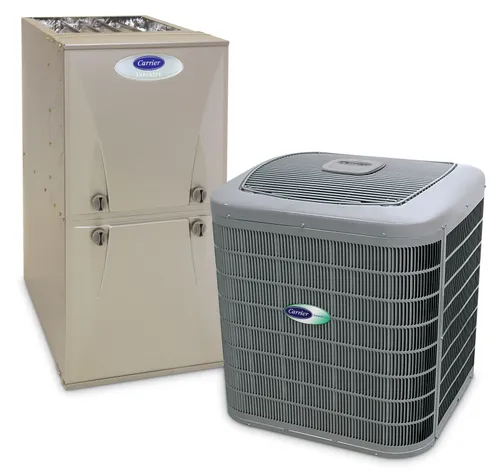
Estes Services is a family-owned HVAC, plumbing, and electrical company serving Atlanta, GA. With over 75 years of experience, they provide heating and cooling system installation, repair, and maintenance for homes and businesses. Their certified technicians work on furnaces, heat pumps, air conditioners, ductless mini-splits, and indoor air quality systems. Estes Services is a Carrier Factory Authorized Dealer, offering high-quality HVAC products and expert commercial and residential services. They also provide plumbing and electrical solutions, including water heater installation and electrical panel replacement.
Bartlett Heating & Cooling
825 S Cobb Dr SE, Marietta, GA 30060
Bartlett Heating & Cooling is a family-owned HVAC company serving Atlanta, GA, and the surrounding areas including Marietta and Smyrna. Since 1989, they have provided a range of services including air conditioning and furnace repair, installation, and maintenance, as well as mini-split and thermostat installation. The company emphasizes ongoing technician training and offers comprehensive AC tune-ups to ensure system efficiency and reliability. Bartlett Heating & Cooling is known for its experience with major HVAC brands and its commitment to customer care.
What is a Ductless Mini-Split System?
A ductless mini-split system is a highly efficient heating and cooling solution that operates without the need for extensive ductwork. It consists of two main components: a compact outdoor condenser unit and one or more sleek indoor air handling units, often called "heads." These components are connected by a small conduit that houses refrigerant lines, a drain tube, and power wiring, which only requires a small hole through the wall. This setup makes ductless systems perfect for room additions, sunrooms, finished basements, or older Atlanta homes where installing traditional ducted systems would be prohibitively expensive or structurally challenging.
The core appeal of a ductless heat pump installation is its zoning capability. Unlike a central system that treats the entire house as one zone, a mini-split allows you to control the temperature independently in each room where an indoor head is installed. This means you can cool a home office during the day without wasting energy on an empty living room, leading to significant savings on utility bills. For Atlanta's humid climate, these systems also provide excellent dehumidification, enhancing comfort during the sweltering summer months.
Common Applications for Mini-Splits in Atlanta Homes
Atlanta's diverse housing stock, from historic bungalows to modern additions, presents unique challenges for HVAC. Ductless air conditioner installation is frequently the best answer for several specific scenarios:
- Room Additions and Sunrooms: Converting a porch or adding a new room often means extending ductwork is impractical. A mini-split provides dedicated, efficient comfort for the new space without overburdening your existing system 1.
- Targeted Room Comfort: Is your master bedroom always too warm? Is the home office over the garage unusable in summer? Installing a single-zone mini-split is a cost-effective way to solve hot or cold spots without replacing your entire central system.
- Whole-Home Replacement: For older Atlanta homes built without any ductwork, a multi-zone ductless system can be a cleaner, more efficient alternative to bulky window units or costly new duct installation. It provides modern, zoned comfort throughout the entire house 2 3.
- Supplemental Heating and Cooling: A ductless heat pump can efficiently provide both warmth and cooling, serving as a primary system for a small home or a supplemental one for a frequently used space like a garage workshop or in-law suite.
Understanding System Types: Single-Zone vs. Multi-Zone
Choosing the right system configuration is the first major decision in your mini-split installation project.
Single-Zone Systems consist of one outdoor condenser connected to one indoor air handler. This is the most straightforward and often most affordable setup, designed to condition a single room or open area. It's the go-to choice for a sunroom, garage apartment, or solving a comfort issue in one specific bedroom.
Multi-Zone Systems feature a single, more powerful outdoor condenser that connects to multiple indoor heads (typically 2 to 5). Each indoor unit operates independently, allowing you to set different temperatures in the living room, kitchen, and bedrooms simultaneously. This is the ideal solution for whole-home comfort or for conditioning several adjacent rooms efficiently. While the upfront cost is higher than a single-zone, a multi-zone installation often provides better overall value and efficiency for conditioning multiple spaces.
Choosing Your Indoor Air Handler Style
The indoor unit, or head, is the visible component in your room. Selecting the right style depends on your space, aesthetics, and airflow preferences.
- Wall-Mounted: This is the most common and recognizable type. It's mounted high on a wall for optimal air distribution across the room. Installation is relatively straightforward, and modern models are surprisingly slim and quiet.
- Ceiling Cassette: For a discreet, built-in look, a ceiling cassette is recessed into the ceiling with only a decorative panel visible. It distributes air in four directions, providing very even cooling and heating. This option is excellent for rooms with low wall space or where a minimalist aesthetic is desired.
- Floor-Mounted: Designed like a tall, slim radiator, a floor-mounted unit is ideal for rooms with sloped ceilings (like attics), walls made of glass, or limited wall space. It provides gentle, upward airflow and is often installed under windows 4.
- Ducted Mini-Split: This concealed option involves a small indoor unit hidden in a closet, attic, or above a drop ceiling, connected to short duct runs and vents. It's perfect for situations where you want the zoning benefits of a mini-split but prefer the look of traditional central air registers.
Find the perfect mini-split installers for your needs
Get personalized recommendations and expert advice
Key Steps in the Professional Installation Process
A proper ductless system installation is a technical job that ensures efficiency, reliability, and warranty protection. Here's what a professional installation typically involves:
- Site Evaluation and Planning: A technician will assess your home to determine the optimal location for the outdoor condenser (considering airflow, noise, and service access) and each indoor head (for comfort and aesthetics). They will plan the refrigerant line routing and electrical requirements.
- Mounting the Equipment: The indoor mounting bracket is securely anchored to a wall stud or ceiling joist. Outside, a stable pad or wall brackets are installed for the condenser.
- Drilling and Running Lines: A small, clean hole (typically 3 inches) is drilled through the exterior wall. The flexible conduit containing pre-charged refrigerant lines, a condensate drain line, and control wiring is run between the indoor and outdoor units.
- Making Electrical Connections: A dedicated electrical circuit is run from your home's panel to the outdoor unit to provide reliable power 5.
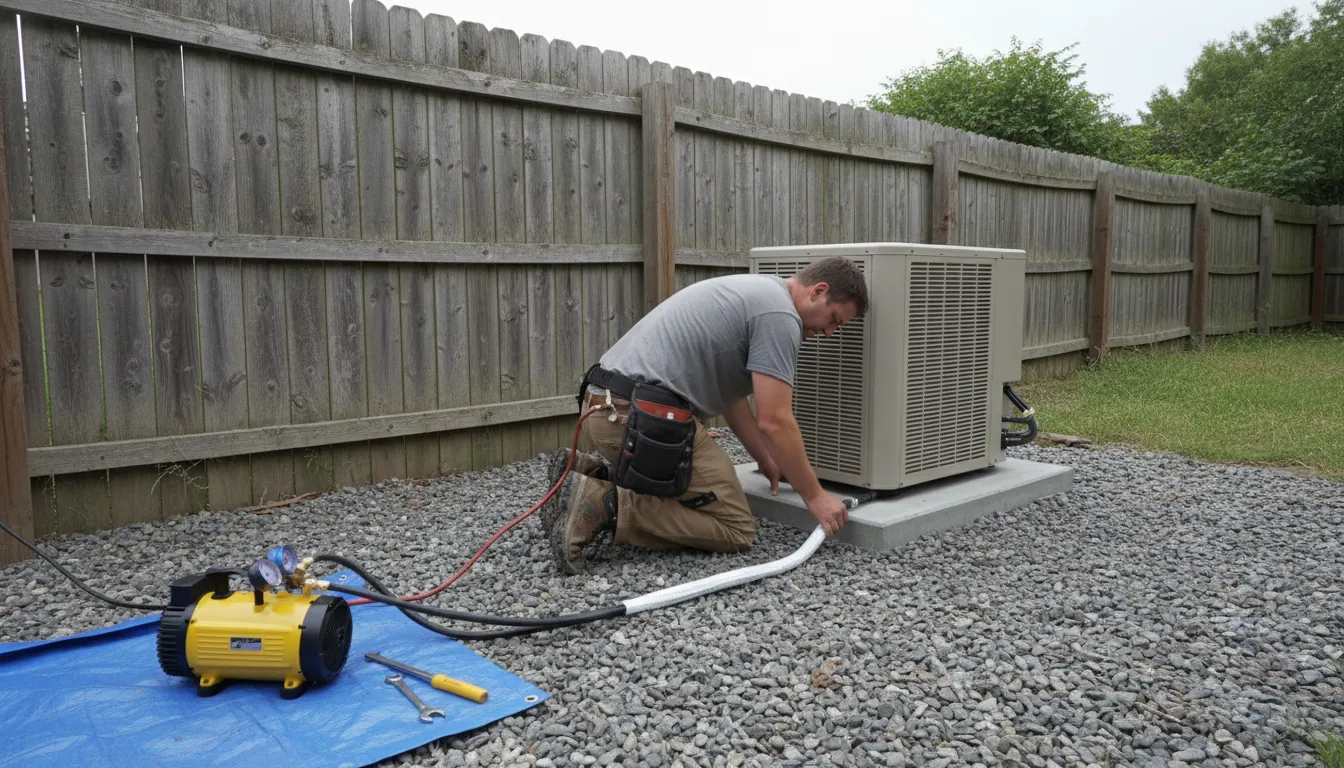
- System Evacuation and Testing: This is the most critical step. A vacuum pump is used to remove all air and moisture from the refrigerant lines, which is essential for system efficiency and longevity. Once evacuated, the refrigerant is released, and the system is thoroughly tested for proper cooling, heating, and drainage 6.
Factors Influencing Installation Cost in Atlanta
The cost for a mini-split air conditioner installation in Atlanta can vary widely based on your specific needs. Here's a breakdown of key factors:
- Number of Zones: This is the primary cost driver. A single-zone system for one room typically ranges from $2,500 to $5,000. A multi-zone system for whole-home comfort can range from $6,000 to $12,000 or more, depending on the number of indoor heads 7 8 9.
- System Capacity and Efficiency: Systems are sized in tons (or BTUs). An undersized unit will struggle, while an oversized one will short-cycle. Higher SEER2 (Seasonal Energy Efficiency Ratio) ratings indicate greater efficiency and come with a higher upfront cost but lower operating expenses 10.
- Equipment Brand: Premium brands (like Mitsubishi, Daikin, Fujitsu) often command higher prices for advanced features and reliability, while value brands offer solid performance at a lower cost 11.
- Installation Complexity: Costs increase if the installation requires: long refrigerant line runs beyond the standard 15 feet, new electrical service or sub-panel installation, complex mounting (e.g., on a second-story wall), or obtaining local permits 12 13.
- Indoor Unit Style: Standard wall-mounted units are generally the most affordable. Ceiling cassettes, floor-mounted, or ducted units involve more labor and materials, increasing the project cost 14.
Planning for Your Outdoor Unit Placement
The location of the outdoor condenser is crucial for performance and maintenance. Key considerations include:
- Adequate Clearance: The unit needs ample space for airflow-typically at least 1-2 feet on all sides and 4-5 feet above-to reject heat effectively. Avoid placing it in an enclosed alcove or directly against shrubs.
- Service Access: Technicians need room to access all sides of the unit for future maintenance and repairs.
- Noise Considerations: While modern units are quiet, consider placing the condenser away from bedroom windows or neighboring property lines.
- Drainage: Ensure the condensate drain line from the indoor unit has a clear path to drain away from the foundation.
Frequently asked questions
Sources
Footnotes
-
Mini-Split Installation in North Atlanta Metro - Your AC Company - https://www.youracco.com/mini-splits-installation/ ↩
-
Ductless mini-split installation: Cool 2025 Guide - Southern Air - https://www.southern-air.com/blog/ductless-mini-split-installation ↩
-
Options for Installing Central Air in a House Without Ducts - https://cwaohio.com/blog/no-ducts-no-problem-a-look-at-ductless-heating-and-cooling-systems/ ↩
-
The Different Types of Mini Split Air Handlers: An In-Depth Guide - https://leblanchvac.com/blog/mini-split-heat-pump-news/the-different-types-of-mini-split-air-handlers-an-in-depth-guide ↩
-
Ductless Mini Split System Services Near Atlanta, GA - https://www.tecertifiedelectricians.com/ductless-mini-splits/ ↩
-
Ductless Mini Split Setup: An Ultimate Guide - Airflow Heating & Air - https://www.goairflow.com/blog/ductless-mini-split-installation/ ↩
-
How Much Does It Cost to Install a Mini Split System? - https://elementairco.com/how-much-does-it-cost-to-install-a-mini-split-system/ ↩
-
Ductless Mini-Split Installation Cost in 2025: Full Breakdown - https://osborneheatingncooling.com/ductless-mini-split-installation-cost/ ↩
-
Cost to Install Mini Split AC System in 2025 - https://dellahome.com/blogs/della-blog/cost-to-install-mini-split-ac-system ↩
-
How much to install mini split? - https://mrgoodguyhvac.com/how-much-to-install-mini-split/ ↩
-
Understanding mini split installation costs: A quick guide - Homeaglow - https://www.homeaglow.com/hub/content/mini-split-installation-cost ↩
-
Ductless Mini Split Installation Costs in 2026 - Carrier - https://www.carrier.com/residential/en/us/products/ductless-mini-splits/ductless-mini-split-installation-cost/ ↩
-
Ductless Mini-Splits: A Comprehensive Cost Breakdown | Fire & Ice - https://indoortemp.com/resources/cost-of-mini-split-ductless-system ↩
-
How Much Does a Mini Split Installation Cost? (2026) - HomeGuide - https://homeguide.com/costs/ductless-mini-split-ac-cost ↩