Find the Best Mini-Split Installers for Your Business
No obligation • Fast responses • Nationwide coverage

Why you can trust HVAC Firms
HVAC Firms is a leading United States resource for evaluating HVAC service providers. Our team researches companies, checks credentials, and reviews customer feedback to present clear, unbiased information. Listings and rankings are based on merit, and companies cannot pay to change our editorial content.
Search providers near you
Top Mini-Split Installers in Kissimmee, Florida Ranked
Looking for a flexible and efficient way to cool or heat specific rooms in your Kissimmee home? Ductless mini-split systems are a popular solution, offering targeted comfort without the need for extensive ductwork. This guide explains what ductless AC installation involves, why it's an excellent choice for many local homes, and how you can find qualified professionals to handle your project.
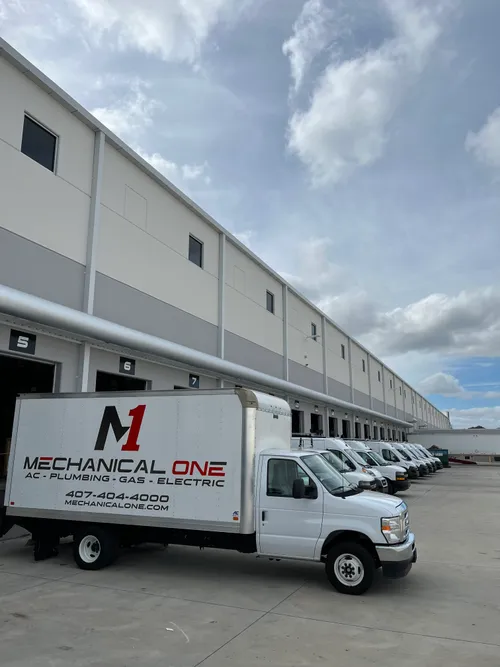
Mechanical One
217 N Westmonte Dr #1007, Altamonte Springs, FL 32714
Mechanical One is an HVAC and home services company based in Altamonte Springs, FL, serving the Orlando area and other Florida metro regions including Tampa and Jacksonville. They provide a wide range of services including air conditioning, furnace, heat pump, mini split, and thermostat installation and repair, along with plumbing, gas, and electrical work. Their technicians are licensed and NATE-certified, working with major HVAC brands such as Carrier, Trane, and Lennox. Mechanical One offers 24/7 emergency repair services and maintains a large inventory of parts and systems to enable installations and repairs within 24 to 48 hours. The company has been part of the Altamonte Springs community since its founding and operates with a nearby warehouse in Orlando to support its service coverage.
Blue Air Heating and Cooling
3725 Conway Rd Suite B, Orlando, FL 32812
Blue Air Heating and Cooling is a family-owned HVAC company serving Orlando, FL, and surrounding areas. With over fifteen years of experience, they provide a full range of heating, cooling, ventilation, and indoor air quality services for both residential and commercial customers. Their offerings include installation, repair, upgrades, replacements, and preventative maintenance for systems such as heat pumps, furnaces, air conditioners, and ductless mini-splits. Blue Air Heating and Cooling also specializes in improving indoor air quality and offers 24/7 emergency repair services.

One Way Air
4512 Parkway Commerce Blvd, Orlando, FL 32808
One Way Air is an air conditioning and indoor air quality contractor serving Orlando, FL. They offer a full range of AC services including installation, repair, maintenance, and indoor air quality evaluations. Their team handles all types of AC units, from central systems to ductless mini-splits, and can assist with zoning systems for larger homes. With over 20 years of experience, One Way Air provides 24/7 emergency service to ensure cooling needs are met any time of day or night.
Victory Cooling and Heating
341 Geneva Dr Suite A, Oviedo, FL 32765
Victory Cooling and Heating is a family-owned, veteran-operated HVAC company serving Orlando, FL, and nearby areas. They provide a wide range of heating and cooling services including air conditioning and furnace repair, installation of heat pumps and ductless mini-split systems, thermostat installation, indoor air quality solutions, and ductwork services. With over 10 years of experience, Victory Cooling and Heating offers licensed and insured technicians who deliver same-day and 24/7 emergency service to ensure year-round comfort for residential and light commercial customers.
Blue Star Air Conditioning LLC
2735 W State Rd 434 UNIT 1011, Longwood, FL 32779
Blue Star Air Conditioning LLC is an HVAC company based in Longwood, serving Orlando, FL, and the surrounding Central Florida area. They provide a full range of heating and cooling services including air conditioning repair and installation, furnace and heat pump services, ductless system installation, indoor air quality solutions, and thermostat installation. The company is known for its expertise in HVAC diagnostics and repairs, with a team of NATE-certified Comfort Advisors. Established in 2013, Blue Star Air Conditioning is a Trane Comfort Specialist and has received industry awards such as the Trane Dealer Excellence Award in 2015 and the Trane Pace Setter Award in 2020.
What is a Ductless Mini-Split System?
A ductless mini-split is a type of heating and cooling system that doesn't require air ducts. It consists of two main components: a quiet outdoor compressor/condenser and one or more sleek indoor air-handling units, often called "heads." These components are connected by a small conduit that houses refrigerant lines, power cables, and a drain line, which is run through a small hole in your wall 1. This setup makes ductless systems perfect for homes without existing ducts, room additions, converted spaces like garages, or rooms with unique comfort needs such as sunrooms, home offices, or bedrooms 2.
The core advantage of a mini-split is zone control. Each indoor head serves a specific "zone" or room, allowing you to set individual temperatures. This means you can cool your home office during the day without wasting energy cooling the entire house, leading to significant energy savings and reduced utility bills.
Ideal Applications for Kissimmee Homes
Ductless technology is particularly well-suited for the diverse housing styles and needs in Central Florida. Here are the most common scenarios where a mini-split installation shines:
- Homes Without Ductwork: Older homes, historic properties, or certain construction types that were built without a central air system.
- Room Additions: Adding conditioned space to your home without the expense and disruption of extending existing ductwork.
- Converted Spaces: Turning an attic, garage, or enclosed patio into a livable room that needs its own climate control.
- Problem Rooms: Addressing hot or cold spots in specific areas, like a south-facing bedroom that gets too warm or a sunroom with lots of windows.
- Multi-Family Units: Providing independent temperature control for individual apartments or in-law suites.
Key Considerations for Installation Placement
Proper placement of both the indoor and outdoor units is critical for performance, efficiency, and longevity.
Indoor Unit Placement
Where you mount the indoor air handler directly impacts comfort and airflow. Professional installers will assess your room's layout to determine the optimal spot.
- High-Wall Mount: This is the most common installation. The unit is placed high on an interior wall, typically 6-8 inches from the ceiling, in a central location for the best air distribution. It should be away from direct sunlight, large heat sources, and obstructions like tall furniture 3.
- Floor-Mounted/Cassette Units: If wall space is limited by large windows, low walls, or sloped ceilings, a floor-mounted model is an excellent alternative. It delivers comfort at ground level and is often discreet. Ceiling cassette units are another option, recessed into the ceiling for a very clean look.
- Key Rooms: Focus on rooms with high heat loads (lots of electronics or sunlight), bedrooms for personalized sleep comfort, home offices, and open-concept living areas 4.
Outdoor Unit Placement
The outdoor condenser requires careful siting. It needs adequate space for airflow-typically several feet of clearance on all sides-and should be placed on a stable, level pad. Professional installation ensures proper placement for ventilation, protects the unit from lawn debris and damage, and considers local noise ordinances.
The Installation Process & What to Expect
A professional ductless mini-split installation is a precise job that typically follows these steps:
- Site Evaluation & Planning: A technician will visit your home to assess your needs, determine the correct system size (load calculation), and plan the routing for the lines between units.
- Mounting the Indoor Unit: A mounting bracket is securely attached to the wall or ceiling at the chosen location.
- Creating the Line Set Passage: A small hole (usually about 3 inches) is drilled through the exterior wall to connect the indoor and outdoor units.
- Setting the Outdoor Unit: The condenser is placed on its pad and leveled.
- Running & Connecting the Line Set: The refrigerant lines, electrical wiring, and condensate drain line are run through the wall hole and connected between the two units. All connections are meticulously sealed.
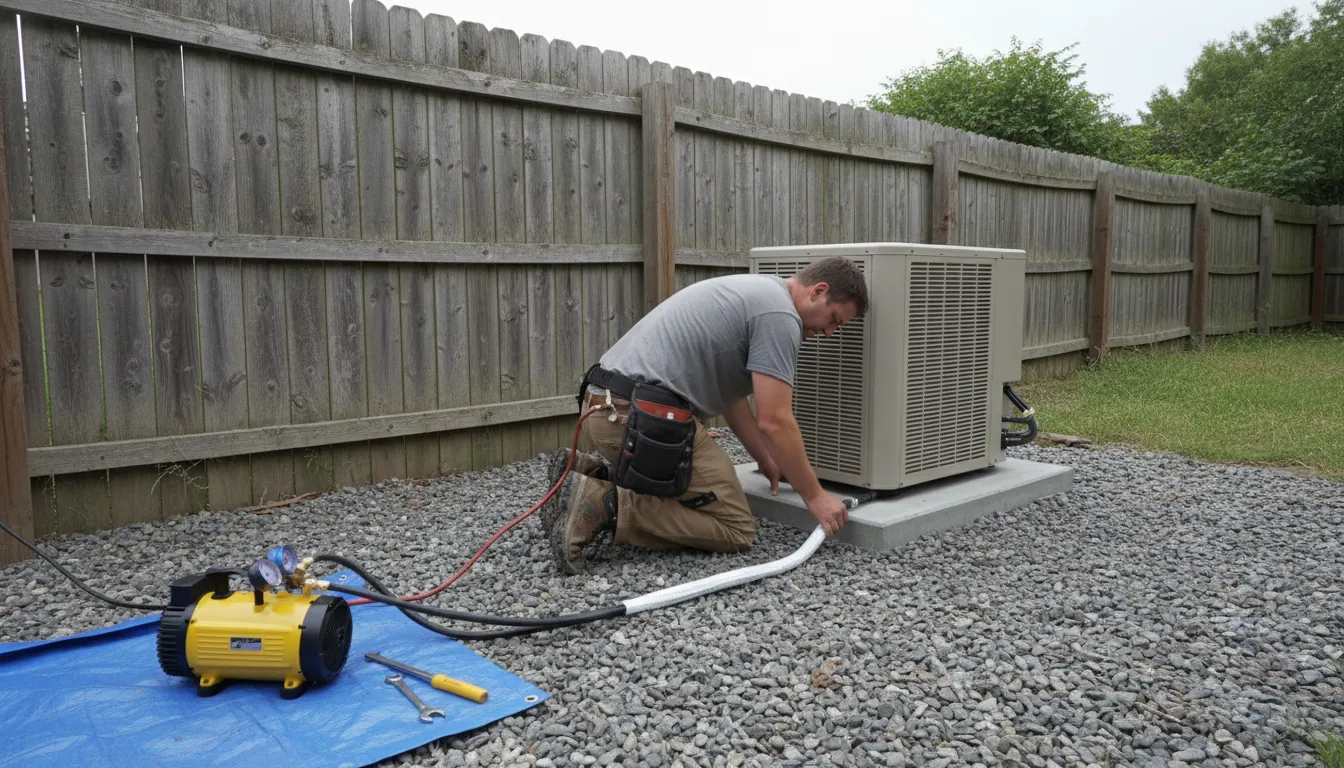
- System Evacuation & Charging: The refrigerant circuit is vacuumed to remove any moisture and air, then charged with the correct amount of refrigerant.
- Testing & Commissioning: The system is powered on and tested in both heating and cooling modes to ensure it operates correctly, efficiently, and quietly.
Find the perfect mini-split installers for your needs
Get personalized recommendations and expert advice
Understanding the Cost of Mini-Split Installation in Kissimmee
The cost of installing a ductless system in Central Florida varies widely based on the project's scope and specifications. Here's a general breakdown to help you budget 5 6:
- Single-Zone System (1 Head): $2,000 - $8,000. This is for cooling one room or area.
- Multi-Zone System (2-4 Heads): $5,000 - $12,000+. A single outdoor compressor can connect to multiple indoor heads, making this cost-effective for conditioning several rooms.
- Whole-Home Solution (4+ Zones): $10,000 - $20,000+. For comprehensive, ductless whole-house comfort.
Factors Influencing Your Final Cost:
- Number of Zones & Heads: More indoor units increase equipment and labor costs.
- System Efficiency (SEER2 Rating): Higher-efficiency models cost more upfront but save significantly on energy bills, a crucial factor in Florida's climate 7 8.
- Brand & Features: Premium brands and units with advanced features (like Wi-Fi controls) command higher prices.
- Labor Complexity: The difficulty of running the line set through walls, attics, or between floors impacts labor time. Longer line sets also add cost.
- Electrical Work: Upgrading an electrical panel or running a new dedicated circuit adds to the project.
- Additional Components: You may need a condensate pump if gravity drainage isn't possible, or decorative line set covers for a cleaner look.
While the initial investment can be substantial, the energy savings from zoning and high-efficiency operation often lead to meaningful reductions in monthly energy bills, providing a return over time 9.
Benefits of Choosing a Ductless System
Opting for a mini-split installation in your Kissimmee home comes with several compelling advantages:
- Energy Efficiency & Savings: By conditioning only the rooms you're using, you avoid the energy waste common with central systems. Modern inverter-driven compressors also use less energy than traditional HVAC systems 10.
- Flexible Installation: The small, flexible conduit makes installation possible in places where ducts can't go, with minimal disruption to your home.
- Improved Indoor Air Quality: Without ducts, there's no network for dust, pollen, and allergens to accumulate and circulate. Many indoor units also feature multi-stage filtration.
- Quiet Operation: The loudest component (the compressor) is located outside, and indoor fans are designed for whisper-quiet performance.
- Both Heating & Cooling: Modern ductless heat pumps provide efficient heating even in Florida's milder winter temperatures, offering year-round comfort from one system.
Frequently asked questions
Sources
Footnotes
-
How to Install a Ductless Mini-Split Air Conditioner | This Old ... - https://www.youtube.com/watch?v=ozaw9QhxkQU&t=25 ↩
-
Mini-Splits Explained: Costs, Benefits, and Use Cases - https://petermanhvac.com/about-us/blog/mini-splits-complete-guide/ ↩
-
How Much Does a Mini Split Installation Cost? (2026) - HomeGuide - https://homeguide.com/costs/ductless-mini-split-ac-cost ↩
-
Mini-Split Placement Guide: Best and Worst Spots for Installation - https://gulfshorecooling.com/mini-split-placement-guide/ ↩
-
Ductless Mini-Split Installation Cost in 2025: Full Breakdown - https://osborneheatingncooling.com/ductless-mini-split-installation-cost/ ↩
-
Ductless Mini-Splits: A Comprehensive Cost Breakdown | Fire & Ice - https://indoortemp.com/resources/cost-of-mini-split-ductless-system ↩
-
Mini-Split AC Cost in Florida (2025 Guide) - Climacore - https://climacoreair.com/mini-split-ac-cost-in-florida/ ↩
-
Ductless Mini-Splits: A Comprehensive Cost Breakdown - https://www.myfivestarhomeservices.com/ductless-mini-splits-a-comprehensive-cost-breakdown/ ↩
-
Ductless Mini Split Installation Costs in 2026 - Carrier - https://www.carrier.com/residential/en/us/products/ductless-mini-splits/ductless-mini-split-installation-cost/ ↩
-
Ductless mini-split installation: Cool 2025 Guide - Southern Air - https://www.southern-air.com/blog/ductless-mini-split-installation ↩