Find the Best Mini-Split Installers for Your Business
No obligation • Fast responses • Nationwide coverage

Why you can trust HVAC Firms
HVAC Firms is a leading United States resource for evaluating HVAC service providers. Our team researches companies, checks credentials, and reviews customer feedback to present clear, unbiased information. Listings and rankings are based on merit, and companies cannot pay to change our editorial content.
Search providers near you
Top Mini-Split Installers in Clermont, Florida Ranked
A ductless mini-split system is a versatile heating and cooling solution that provides targeted comfort without the need for extensive ductwork. For homeowners in Clermont, these systems are particularly valuable for managing Florida's heat and humidity in specific areas of a home. This guide explains what mini-split installation involves, its key benefits, and how to evaluate your options for adding efficient, zone-controlled climate control to your living space.
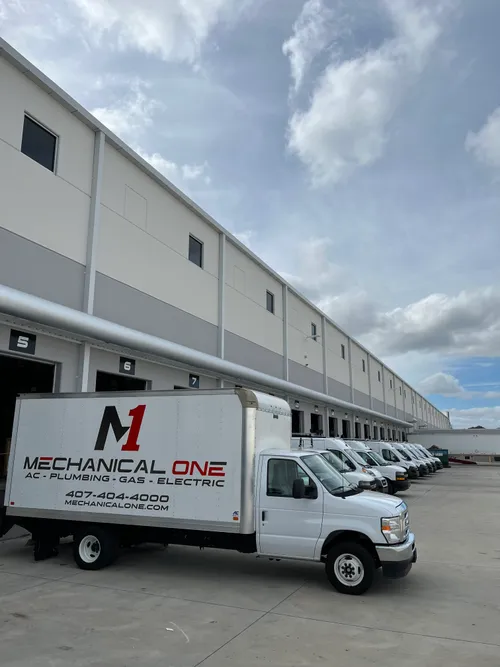
Mechanical One
217 N Westmonte Dr #1007, Altamonte Springs, FL 32714
Mechanical One is an HVAC and home services company based in Altamonte Springs, FL, serving the Orlando area and other Florida metro regions including Tampa and Jacksonville. They provide a wide range of services including air conditioning, furnace, heat pump, mini split, and thermostat installation and repair, along with plumbing, gas, and electrical work. Their technicians are licensed and NATE-certified, working with major HVAC brands such as Carrier, Trane, and Lennox. Mechanical One offers 24/7 emergency repair services and maintains a large inventory of parts and systems to enable installations and repairs within 24 to 48 hours. The company has been part of the Altamonte Springs community since its founding and operates with a nearby warehouse in Orlando to support its service coverage.

Infinite Air HVAC & AC Repair Lake Mary
908 W Charing Cross Cir, Lake Mary, FL 32746
Infinite Air HVAC & AC Repair Lake Mary is an HVAC contractor based in Orlando, FL, serving Lake Mary, Sanford, Longwood, and Seminole County. The company offers a range of services including air conditioning repair and installation, furnace and heat pump repair and installation, duct cleaning, thermostat installation, and indoor air quality solutions. Their certified technicians handle issues such as refrigerant leaks, compressor failures, ignition problems, and airflow concerns, using quality parts and advanced diagnostics. Infinite Air provides 24/7 emergency service and works with well-known brands like Rheem and American Standard. With over 237 five-star reviews, they are recognized for their expertise and customer care.
Blue Air Heating and Cooling
3725 Conway Rd Suite B, Orlando, FL 32812
Blue Air Heating and Cooling is a family-owned HVAC company serving Orlando, FL, and surrounding areas. With over fifteen years of experience, they provide a full range of heating, cooling, ventilation, and indoor air quality services for both residential and commercial customers. Their offerings include installation, repair, upgrades, replacements, and preventative maintenance for systems such as heat pumps, furnaces, air conditioners, and ductless mini-splits. Blue Air Heating and Cooling also specializes in improving indoor air quality and offers 24/7 emergency repair services.

One Way Air
4512 Parkway Commerce Blvd, Orlando, FL 32808
One Way Air is an air conditioning and indoor air quality contractor serving Orlando, FL. They offer a full range of AC services including installation, repair, maintenance, and indoor air quality evaluations. Their team handles all types of AC units, from central systems to ductless mini-splits, and can assist with zoning systems for larger homes. With over 20 years of experience, One Way Air provides 24/7 emergency service to ensure cooling needs are met any time of day or night.
Air Tech of Central Florida
813 Waterway Pl, Longwood, FL 32750
Air Tech of Central Florida is an HVAC and plumbing company serving Orlando, FL, and surrounding communities. Established in 1988, this family-owned business offers a wide range of services including air conditioning and furnace repair, HVAC installation, mini split systems, thermostat installation, and indoor air quality solutions. They are a Carrier Factory Authorized Dealer and LG Pro Dealer for mini-splits, with NATE-certified technicians and a strong focus on technical expertise supported by staff engineers. Air Tech provides comprehensive heating and cooling services along with plumbing, emphasizing personalized solutions and customer satisfaction.
What is a Ductless Mini-Split System?
A ductless mini-split, often simply called a ductless AC or heat pump, consists of two main components: a quiet outdoor condenser unit and one or more sleek indoor air-handling units. Refrigerant lines and electrical wiring connect the units through a small hole in the wall, eliminating the need for bulky, invasive ductwork. This makes ductless systems a perfect retrofit solution for homes where installing traditional central air would be impractical or prohibitively expensive. The core advantage is zone control, allowing you to independently set temperatures in different rooms, which can lead to significant energy savings and enhanced comfort.
Ideal Applications for Mini-Splits in Clermont Homes
Ductless technology solves specific climate control challenges common in the Clermont area. Here are the most frequent and effective uses:
- Room Additions and Sunrooms: Adding a new room, enclosed patio, or sunroom often means extending ductwork is too costly or structurally difficult. A single-zone mini-split provides efficient, independent cooling and heating for these new spaces seamlessly 1.
- Older Homes Without Ductwork: Many historic or older Florida homes were built without central air conditioning. Installing ducts can damage plaster walls and historic finishes. A multi-zone ductless system offers whole-home comfort without the massive renovation.
- Targeting Hot or Cold Spots: Does your garage apartment, home office, or master bedroom never seem to reach a comfortable temperature? A mini-split installation directly addresses these problematic zones, supplementing your existing HVAC system without overburdening it.
- Whole-Home Solution: For smaller homes or those seeking maximum efficiency, a multi-zone system with several indoor heads can efficiently heat and cool the entire house. Each zone operates independently, so you're only conditioning the spaces you're using.
Understanding System Types: Single-Zone vs. Multi-Zone
Choosing between a single-zone and multi-zone configuration is a fundamental decision in your installation plan.
- Single-Zone Systems: This setup links one indoor unit to one outdoor condenser. It's designed to condition a single room or open area, such as a bedroom, garage, or living room. It's the most straightforward and often most cost-effective option for a targeted application 2.
- Multi-Zone Systems: A single outdoor condenser can connect to multiple indoor units (typically 2 to 4 or more). This allows you to control the temperature in several different rooms or zones independently from one another. For example, you could cool a home office during the day and bedrooms at night, all from one efficient outdoor unit. This is ideal for whole-home comfort or for conditioning multiple specific areas 3.
Key Installation Considerations for Optimal Performance
Professional installation is critical for efficiency, performance, and warranty protection. Key considerations include:
Indoor Unit Placement: The location of the indoor air handler significantly impacts airflow and comfort.
- High on Wall: The most common placement, high on an interior wall, allows for excellent air distribution across the room.
- Floor-Mounted: This style is ideal for rooms with limited wall space, under windows, or with sloped ceilings (like in many sunrooms). It provides strong upward airflow.
- Central Location: Regardless of mounting type, the unit should be placed centrally in the zone it serves, away from large furniture, curtains, or other obstructions that could block airflow.
Outdoor Condenser Clearance: The outdoor unit requires careful placement for proper operation and longevity.
- Follow Manufacturer Specs: Installers must adhere to the manufacturer's guidelines for minimum clearance (usually several feet) on all sides of the unit to ensure adequate airflow for heat exchange 4.
- Airflow and Accessibility: The condenser should be placed in a clear, unobstructed location, not tucked into an overly tight alcove or surrounded by vegetation. This ensures efficient operation and allows for easy future maintenance 5 6.
- Drainage: The installation must account for proper condensate drainage from the indoor unit, directing moisture safely away from your home's foundation.
Find the perfect mini-split installers for your needs
Get personalized recommendations and expert advice
Understanding Mini-Split Installation Costs in Clermont
Costs for ductless mini-split installation can vary widely based on system capacity, efficiency, and project complexity. The following ranges are based on typical professional installations in the Florida market.
- Single-Zone System: Installing a single indoor head with one outdoor condenser typically ranges from $3,000 to $7,500 or more. The final price depends heavily on the system's efficiency rating (SEER2), brand, the complexity of the electrical work, and the length of the refrigerant line set required 7 8.
- Multi-Zone System (2-4 Heads): For a system connecting multiple indoor units to one outdoor condenser, homeowners can expect costs between $5,000 and $12,000+. Adding more zones increases the cost for additional indoor units, more complex refrigerant line routing, and electrical connections 9.
- Whole-Home Solution (4+ Zones): A comprehensive ductless system designed to heat and cool an entire home generally starts around $10,000 and can reach $20,000 or higher. This investment covers high-capacity, high-efficiency equipment and a more involved installation process but can result in substantial long-term energy savings 10 11.
Factors that increase cost include requiring longer refrigerant line sets, upgrading to higher SEER2-rated units for better efficiency, complex electrical service upgrades, and challenging structural situations that require more labor 12.
The Professional Installation Process
A proper installation by a qualified technician ensures your system runs efficiently and reliably for years. The general process includes:
- Site Evaluation and Load Calculation: A technician assesses your space to determine the correct system size (BTU capacity) needed for each zone.
- Mounting the Units: The indoor wall bracket or floor stand is securely mounted. The outdoor condenser pad or wall bracket is installed in the chosen location.
- Drilling and Running Lines: A small, clean hole (typically 3 inches) is drilled through the wall to connect the indoor and outdoor units. The refrigerant lines, condensate drain line, and electrical wiring are run through a protective line-hide conduit.
- Making Connections: The technician carefully connects the refrigerant lines using a flaring tool or pre-charged quick-connect lines, ensuring a perfect seal to prevent leaks. All electrical connections are made according to code.
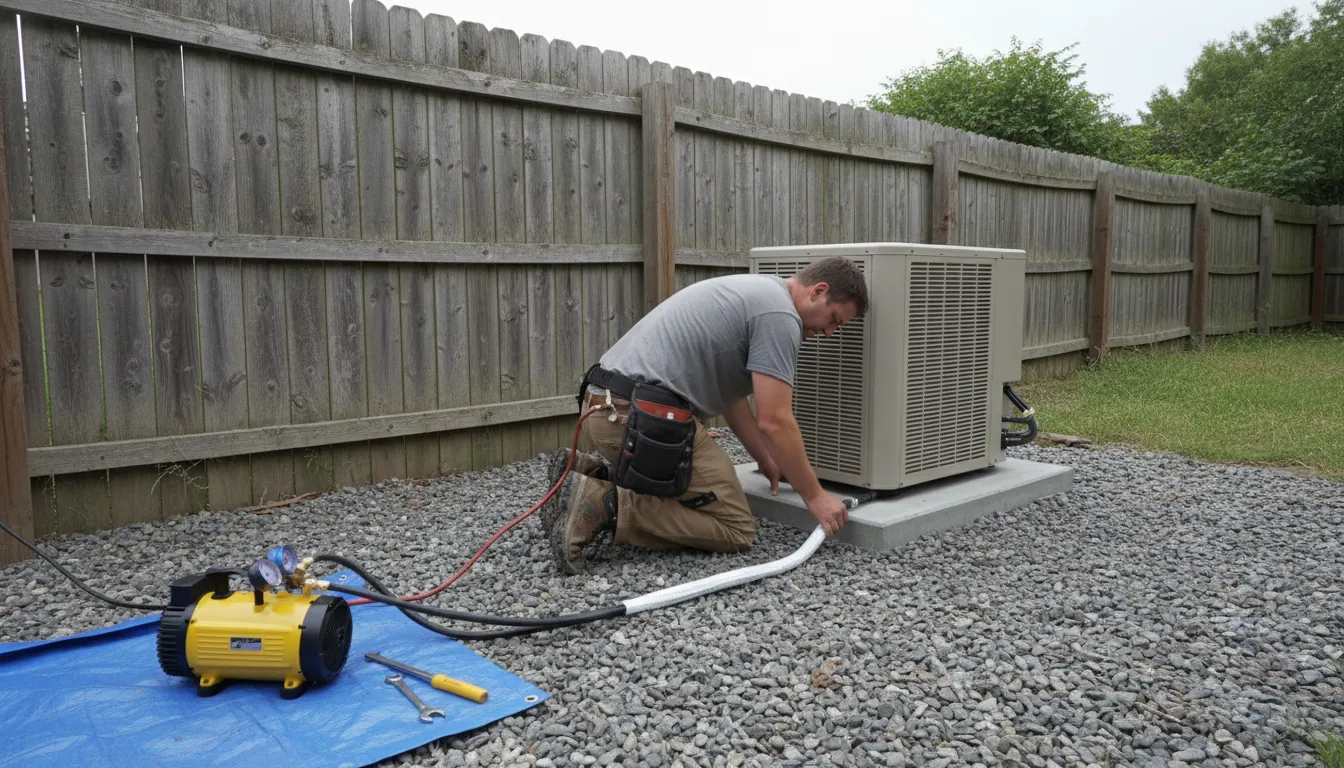
- Vacuum and Charge: The refrigerant circuit is evacuated of air and moisture using a vacuum pump before the precise amount of refrigerant is charged into the system.
- System Test and Demonstration: The installer powers on the system, tests all modes (cooling, heating, fan), checks for proper drainage, and shows you how to use the remote control or Wi-Fi thermostat 13 14.
Frequently asked questions
Sources
Footnotes
-
Ductless mini-split installation: Cool 2025 Guide - Southern Air - https://www.southern-air.com/blog/ductless-mini-split-installation ↩
-
How Much Space Can You Cool With a Ductless Mini-Split? | AJ Danboise - https://ajdanboise.com/how-much-space-can-you-cool-with-a-ductless-mini-split/ ↩
-
How Much Does it Cost to Install a Ductless Mini-Split AC in ... - https://www.cooltoday.com/blog/how-much-does-it-cost-to-install-a-ductless-mini-split-ac-in-florida ↩
-
Mini-Split Placement Guide: Best and Worst Spots for Installation - https://gulfshorecooling.com/mini-split-placement-guide/ ↩
-
Mini Split Installer Find Best Place for Ductless Air Conditioner - https://alpineductless.com/post/ductless-mini-split-for-air-circulation/ ↩
-
Choosing the Right HVAC System for Multi-Zone Homes - https://thefurnaceoutlet.com/blogs/hvac-tips/choosing-the-right-hvac-system-for-multi-zone-homes ↩
-
Mini-Split AC Cost in Florida (2025 Guide) - Climacore - https://climacoreair.com/mini-split-ac-cost-in-florida/ ↩
-
How Much Does It Cost to Install a Mini Split System? - https://elementairco.com/how-much-does-it-cost-to-install-a-mini-split-system/ ↩
-
Ductless Mini-Split Installation Cost in 2025: Full Breakdown - https://osborneheatingncooling.com/ductless-mini-split-installation-cost/ ↩
-
Ductless Mini-Splits: A Comprehensive Cost Breakdown | Fire & Ice - https://indoortemp.com/resources/cost-of-mini-split-ductless-system ↩
-
How much to install mini split? - Mr. Good Guy HVAC - https://mrgoodguyhvac.com/how-much-to-install-mini-split/ ↩
-
How Much Does a Mini Split Installation Cost? (2026) - HomeGuide - https://homeguide.com/costs/ductless-mini-split-ac-cost ↩
-
How to Install a Ductless Mini-Split Air Conditioner | This Old ... - https://www.youtube.com/watch?v=ozaw9QhxkQU&t=25 ↩
-
Ductless Mini Split Installation: 101 Ultimate Guide - https://www.newbernac.com/ductless-mini-split-installation/ ↩