Find the Best Mini-Split Installers for Your Business
No obligation • Fast responses • Nationwide coverage

Why you can trust HVAC Firms
HVAC Firms is a leading United States resource for evaluating HVAC service providers. Our team researches companies, checks credentials, and reviews customer feedback to present clear, unbiased information. Listings and rankings are based on merit, and companies cannot pay to change our editorial content.
Search providers near you
Top Mini-Split Installers in New Haven, Connecticut Ranked
Ductless mini-split systems are an increasingly popular solution for efficient, zoned heating and cooling in New Haven homes and businesses. These systems provide targeted comfort control, making them ideal for room additions, spaces without existing ductwork, or for creating independent climate zones. This guide will help you understand the key considerations for a successful ductless installation, from system types and placement to costs and professional requirements, so you can find the right local expertise for your project.
Tyler Heating, Air Conditioning, Refrigeration LLC
255 Hathaway Dr Unit 1, Stratford, CT 06615
Tyler Heating, Air Conditioning, Refrigeration LLC is an HVAC company serving New York, NY, with a focus on heating, cooling, and indoor air quality services. They provide installation, repair, and maintenance for air conditioners, furnaces, heat pumps, mini splits, and ductless HVAC systems. The company also offers indoor air quality solutions including humidity control and air purification. Established in 1995, Tyler Heating has over 25 years of experience serving the Southwest Connecticut area and offers same-day service to address urgent needs.
Hellas Air Temp Inc
52 Connecticut Ave, Norwalk, CT 06850
Hellas Air Temp Inc provides residential and commercial heating and cooling services in New York, NY. They offer sales, service, maintenance, and installation for a wide range of HVAC systems including central air, forced air, gas and propane boilers, ductless systems, rooftop units, and custom refrigeration solutions. Established in 1978, the company brings decades of experience to climate control solutions and specializes in customizable systems such as manifolds and circulation pumps.
What is a Ductless Mini-Split System?
A ductless mini-split, often simply called a mini-split or ductless heat pump, is a versatile HVAC system that provides both heating and cooling without the need for extensive ductwork. It consists of a compact outdoor condenser unit connected by a small conduit to one or more sleek indoor air handlers. This conduit houses the refrigerant lines, power cable, and a condensate drain. The primary appeal of a ductless air conditioner or heater is its ability to create "zones," allowing you to control the temperature in individual rooms or areas independently, which can lead to significant energy savings and enhanced comfort.
Ideal Applications for Mini-Splits in New Haven
Ductless technology is particularly well-suited to the diverse architecture and needs of New Haven properties.
- Room Additions, Garages, and Sunrooms: If you've added a new living space or converted a garage, extending existing ductwork can be prohibitively expensive and disruptive. A mini-split is a perfect, self-contained solution for these areas.
- Historic Homes: For New Haven's many historic homes, preserving original plaster walls, moldings, and floorboards is a priority. Installing a ductless system avoids the invasive demolition required to run new ducts, allowing you to add modern climate control while maintaining architectural integrity 1.
- Homes with Hot or Cold Spots: Do you have a bedroom that's always too warm or a home office that's chilly? Installing a ductless unit in that specific zone provides precise temperature control, solving comfort issues without having to adjust the whole-house system.
- Supplemental Heating and Cooling: A ductless heat pump can efficiently handle the shoulder seasons in Connecticut, providing heat on cool fall days and cooling during mild summer spells, potentially reducing the runtime of your primary, less efficient system.
Understanding System Types: Single-Zone vs. Multi-Zone
Choosing between a single-zone and multi-zone system is one of the first and most important decisions.
- Single-Zone Systems: This configuration links one indoor air handler to one outdoor condenser. It's the most straightforward and cost-effective option for conditioning a single space, such as a master bedroom suite, a garage workshop, or a standalone apartment.
- Multi-Zone Systems: A single, more powerful outdoor unit can connect to multiple indoor air handlers (typically 2, 3, 4, or more). This is an excellent whole-home or multi-room solution. For example, you could install air handlers in two bedrooms and the living room, all controlled independently but powered by one outdoor condenser. This maximizes flexibility and can be more efficient than installing several separate single-zone systems 2 3.
Critical Planning: Indoor and Outdoor Unit Placement
Proper placement is crucial for performance, efficiency, and aesthetics. Professional installers will conduct a site survey to determine the optimal locations.
Indoor Air Handler Placement (High-Wall Units are Most Common):
- Mount the unit high on an interior wall for optimal air circulation.
- Choose a central location within the room, away from corners, to ensure even air distribution.
- Maintain a minimum of 6-8 inches of clearance from the ceiling and at least 6 feet from the floor 4.
- Avoid placing it directly above large furniture, televisions, or in a path where curtains or blinds could obstruct airflow 5 6.
- Ensure the wall can support the unit's weight; reinforcement may be necessary.
Outdoor Condenser Placement:
- Install on a stable, level surface such as a concrete pad or specialized mounting brackets.
- Allow for ample clearance (typically 24-36 inches on all sides, especially the rear) for proper airflow and easy service access.
- Consider noise: place it away from bedroom windows and neighboring property lines.
- The location must allow for a relatively short, straight run of the connecting conduit to the indoor unit to maintain efficiency.
Find the perfect mini-split installers for your needs
Get personalized recommendations and expert advice
Understanding Installation Costs in New Haven
The cost of a ductless mini-split installation in New Haven varies based on system capacity, complexity, and the specific requirements of your home. Professional installation is a significant part of the total investment, ensuring the system operates correctly, safely, and under warranty 7.
- Single-Zone System: For a basic, single-zone installation with one indoor head, homeowners can expect a total cost range of $3,000 to $5,500. This includes equipment and professional labor 8.
- Multi-Zone Systems: Costs increase with the number of zones. A two or three-zone system typically ranges from $5,500 to $8,500+, while a four-zone or larger whole-home solution can range from $8,000 to $15,000 or more 9 10 11.
- Key Cost Factors:
- System Size (Tonnage): Correctly sized based on a Manual J load calculation.
- Efficiency (SEER2 Rating): Higher-efficiency models (like those from premium brands such as Carrier) cost more upfront but save on energy bills.
- Brand & Features: Budget-friendly brands (e.g., Pioneer) offer value, while premium brands offer advanced features and often longer warranties.
- Installation Complexity: Long refrigerant line sets, challenging wall mounts, significant electrical upgrades, or the need for structural reinforcement will add to the labor cost.
The Importance of Professional Installation
While DIY mini-split kits are marketed, professional installation is strongly recommended. A proper ductless installation requires expertise in two distinct trades: HVAC and electrical.
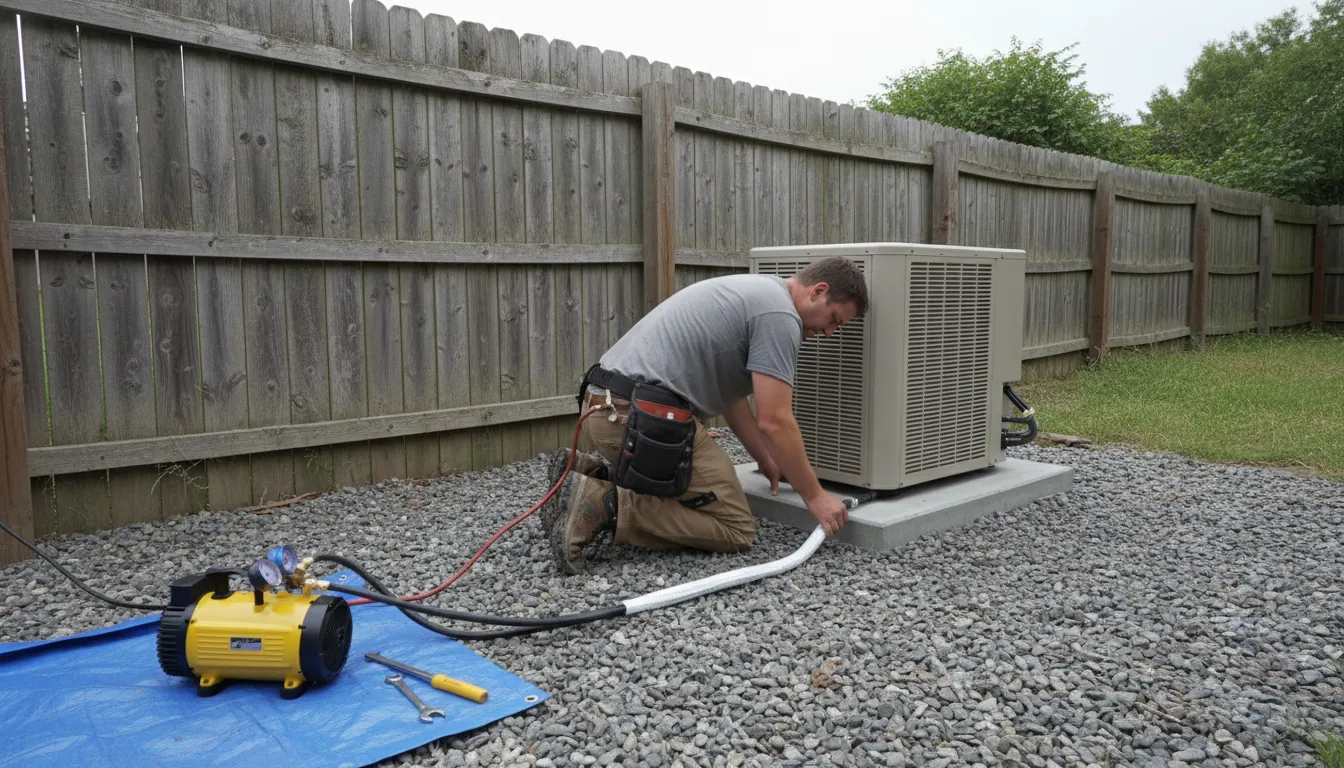
- HVAC Expertise: Certified technicians handle the critical tasks of evacuating the refrigerant lines to remove moisture and air, making precise flare connections, and charging the system with the exact amount of refrigerant. Mistakes here can lead to leaks, poor efficiency, and compressor failure.
- Electrical Work: Installing a dedicated circuit from your electrical panel to the outdoor unit almost always requires a licensed electrician to ensure it meets National Electrical Code (NEC) and local New Haven standards for safety.
- Warranty Protection: Most manufacturers' equipment warranties are contingent on professional installation by a certified technician. A DIY install will likely void the warranty 12.
- Permits and Codes: A reputable installer will pull the necessary local building and electrical permits, ensuring the installation is inspected and compliant with all Connecticut codes.
Choosing the Right Equipment and Partner
Selecting a system involves more than just price. Consider the system's Seasonal Energy Efficiency Ratio 2 (SEER2) for cooling and Heating Seasonal Performance Factor 2 (HSPF2) for heating-higher numbers indicate greater efficiency, which is valuable in Connecticut's climate 13. Look for a local contractor with specific experience in ductless mini-split installations. They should perform a detailed load calculation, provide a clear, written estimate that breaks down equipment and labor, offer options from reputable brands, and explain the warranty terms for both parts and labor. A trustworthy professional will also discuss post-installation maintenance to keep your system running reliably for years to come.
Frequently asked questions
Sources
Footnotes
-
New Haven Ductless Mini-Splits | What is a Ductless Mini-Split? - https://www.modernhvacct.com/hvac-services/ductless-mini-splits/ ↩
-
How To Install a Ductless Mini Split AC - https://www.carrier.com/residential/en/ca/products/ductless-mini-splits/install-ductless-ac/ ↩
-
Ductless Mini Splits Market Share & Opportunities, 2025-2032 - https://www.coherentmarketinsights.com/industry-reports/ductless-mini-splits-market ↩
-
Ductless Mini Split Installation Guide - https://www.bryant.com/en/ca/products/ductless-systems/mini-split-installation/ ↩
-
Mini-Split Placement Guide: Best and Worst Spots for Installation - https://gulfshorecooling.com/mini-split-placement-guide/ ↩
-
Ductless mini-split installation: Cool 2025 Guide - https://www.southern-air.com/blog/ductless-mini-split-installation ↩
-
Ductless mini-split installation: Cool 2025 Guide - Southern Air - https://www.southern-air.com/blog/ductless-mini-split-installation ↩
-
How Much Does It Cost to Install a Mini Split System? - Element Air Heating and Cooling - https://elementairco.com/how-much-does-it-cost-to-install-a-mini-split-system/ ↩
-
Ductless Mini-Split Installation Cost in 2025: Full Breakdown - https://osborneheatingncooling.com/ductless-mini-split-installation-cost/ ↩
-
Ductless Mini Split Installation Costs in 2026 - Carrier - https://www.carrier.com/residential/en/us/products/ductless-mini-splits/ductless-mini-split-installation-cost/ ↩
-
Understanding Mini Split Installation Costs A Complete Guide - https://armusmech.net/understanding-mini-split-installation-costs-a-complete-guide/ ↩
-
Is a Ductless Mini-Split Installation a DIY Project A Complete Guide - https://www.heating-ac.com/blog/is-a-ductless-mini-split-installation-a-diy-project-a-complete-guide ↩
-
Connecticut Home Mini Split Heat Pump Guide - https://egreenhvac.com/blog/connecticut-home-mini-split-heat-pump-guide/ ↩