Find the Best Mini-Split Installers for Your Business
No obligation • Fast responses • Nationwide coverage

Why you can trust HVAC Firms
HVAC Firms is a leading United States resource for evaluating HVAC service providers. Our team researches companies, checks credentials, and reviews customer feedback to present clear, unbiased information. Listings and rankings are based on merit, and companies cannot pay to change our editorial content.
Search providers near you
Best Mini-Split Installers in Connecticut Ranked
Installing a ductless mini-split system is a popular and efficient way to heat and cool Connecticut homes, especially those without existing ductwork. These systems offer targeted comfort, high energy efficiency, and can significantly reduce utility bills. This guide explains the key considerations for a successful installation, from permits and sizing to finding qualified local professionals who can ensure your system is safe, compliant, and optimized for Connecticut's climate.
Understanding Ductless Mini-Split Systems
A ductless mini-split, or ductless heat pump, consists of an outdoor compressor/condenser unit connected by refrigerant lines to one or more indoor air-handling units. This design eliminates the need for extensive ductwork, making it an ideal solution for room additions, older homes, or spaces where extending central HVAC is impractical. In Connecticut, where both heating and cooling are essential, modern cold-climate mini-splits provide efficient year-round comfort 1.
The primary advantage is zoning. Each indoor unit can be controlled independently, allowing you to heat or cool only the rooms you're using. This avoids the energy waste common with central systems that condition the entire house. For Connecticut homeowners looking to replace inefficient window units, electric baseboard heaters, or aging oil/gas systems, a mini-split installation can be a transformative upgrade.
Connecticut Installation: Permits, Licenses, and Codes
A proper installation in Connecticut is not a DIY project. It is governed by state and local regulations designed to ensure safety and efficiency.
Permits Are Typically Required: Most municipalities in Connecticut require both a mechanical permit and an electrical permit for a mini-split installation. The mechanical permit covers the refrigerant piping, pressure testing, and the physical mounting of equipment. The electrical permit is for the new dedicated circuit, wiring, and outdoor disconnect box. Skipping permits can result in fines, voided equipment warranties, and complications when selling your home 2 3.
Licensed Professionals Are Essential: The work should be performed by licensed contractors. This often means a team approach:
- A licensed electrician is crucial for running the dedicated circuit from your electrical panel, ensuring proper wire gauge and breaker size, and installing the required outdoor disconnect.
- The HVAC technician handling the refrigerant must hold EPA Section 608 certification, which is federal law for anyone working with refrigerants 4. Many reputable HVAC companies employ or subcontract these licensed specialists to provide a complete, code-compliant installation.
Local Building Codes: Connecticut follows state building codes that incorporate national standards, but local towns may have additional amendments. Your installer should be familiar with the specific codes in your municipality, covering clearances for the outdoor unit, line-set routing, and electrical specifications.
Key Factors for a Successful Installation
Proper Sizing and Load Calculation
An oversized or undersized system will lead to poor performance, higher energy costs, and reduced equipment life. Sizing is based on a Manual J load calculation, which considers your room's square footage, insulation quality, window types and orientation, ceiling height, and local climate. A common rule-of-thumb is to estimate 25 BTUs per square foot, but a professional calculation is far more accurate 5. For Connecticut's variable climate, ensuring your system has adequate heating capacity for cold snaps is as important as its cooling capacity.
Electrical Requirements
Every mini-split outdoor unit requires a dedicated electrical circuit from your main service panel. The installer must determine the correct amperage and wire size. A properly sized circuit breaker and an accessible outdoor disconnect switch within sight of the condenser are mandatory safety code requirements 6.
Choosing Equipment and Efficiency
Look for systems with high SEER2 (Seasonal Energy Efficiency Ratio) and HSPF2 (Heating Seasonal Performance Factor) ratings. In Connecticut, selecting a cold-climate heat pump model is advisable for reliable winter performance. Many high-efficiency models now offer SEER2 ratings of 20 or higher, which translate to significant long-term savings on your electric bills.
Professional Installation Best Practices
A quality installation is critical. This includes:
- Securely mounting the indoor and outdoor units on stable surfaces.
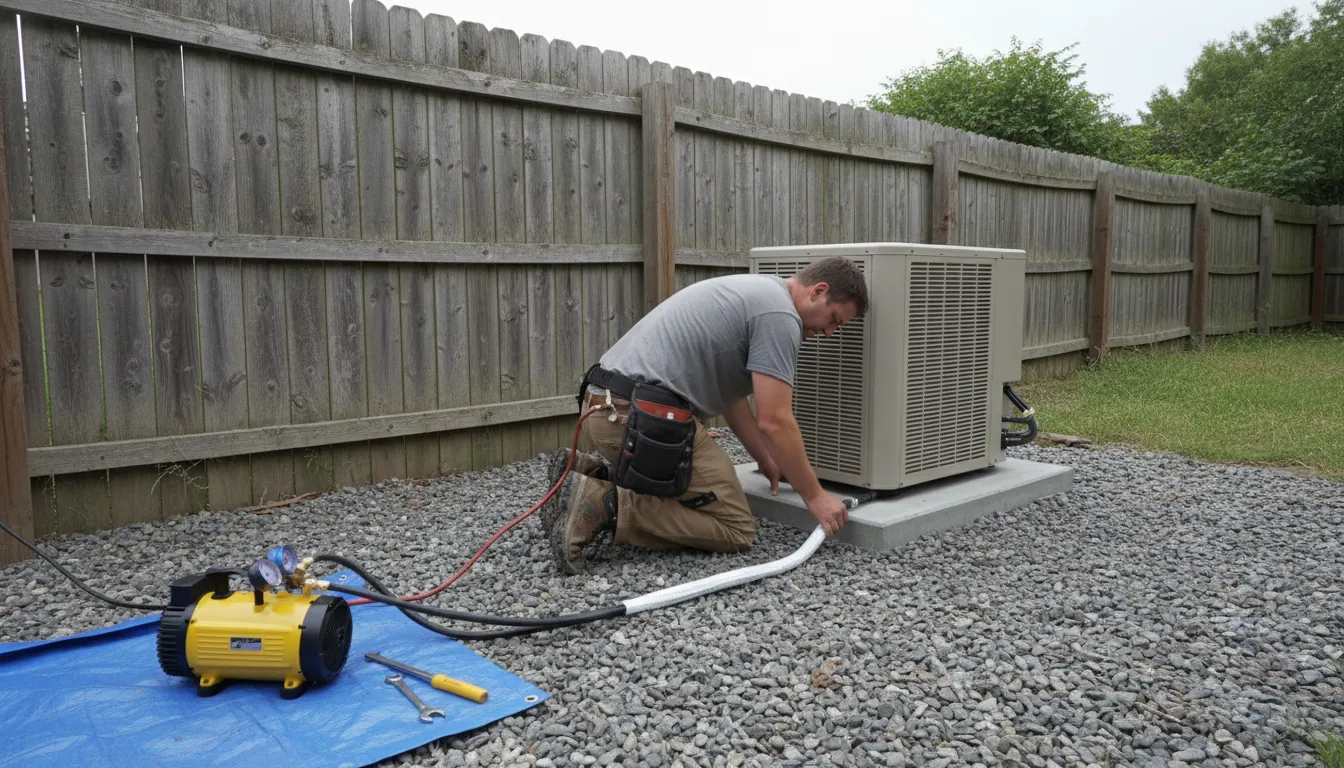
- Properly evacuating and charging the refrigerant lines to the manufacturer's exact specification.
- Ensuring condensate drainage is correctly routed.
- Sealing all penetrations in the building envelope.
- Thoroughly testing the system in both heating and cooling modes.
Find the perfect mini-split installers for your needs
Get personalized recommendations and expert advice
Costs, Incentives, and Savings in Connecticut
Installation Cost Overview
The total cost for a ductless mini-split installation in Connecticut varies widely based on system complexity, brand, and labor. For a single-zone system (one outdoor unit, one indoor head), homeowners can expect a range of approximately $2,000 to $5,000+ 7 8. Multi-zone systems, which use one outdoor unit to power several indoor heads, have a broader range, typically from $6,000 to $12,000 or more, depending on the number of zones and the difficulty of the installation 7.
Available Financial Incentives
Connecticut offers some of the most attractive incentives in the country to offset these upfront costs, primarily through the EnergizeCT program.
- EnergizeCT Heat Pump Rebates: This program offers substantial rebates for installing high-efficiency air-source heat pumps (which include ductless mini-splits) when they replace fossil fuel (oil, propane, or natural gas) or electric resistance heating systems. Rebates are typically calculated per ton of capacity and can range from $250 to over $1,000 per ton 9. The exact amount depends on the efficiency tier of the equipment and the type of fuel being displaced.
- Utility-Specific Rebates: Some local utilities, such as Groton Utilities, offer additional rebates on qualifying high-efficiency HVAC equipment 10. It's important to check with your specific electric provider.
- Federal Tax Credits: The federal residential energy efficiency tax credit, which provided up to $2,000 for qualifying heat pumps under the Inflation Reduction Act, expired at the end of 2025 11 12. However, state and utility rebates remain available and can provide significant savings.
Pro Tip: Incentives can often be "stacked." You may be eligible for both an EnergizeCT rebate and a utility rebate on the same installation. Always confirm eligibility requirements with your contractor and the program administrators before purchase 13.
Long-Term Operational Savings
The real value of a mini-split lies in its operational efficiency. By zoning your home and using a high-efficiency heat pump, you can dramatically reduce energy consumption compared to traditional systems like baseboard electric heat, window AC units, or inefficient central systems 14. While the federal tax credit is no longer available, the combination of lower monthly utility bills and strong state rebates continues to make mini-split installation a financially sound investment for Connecticut homeowners.
Finding the Right Installation Professional in Connecticut
Given the technical and regulatory requirements, selecting a qualified installer is the most important step. Look for a Connecticut-based HVAC contractor with specific, proven experience installing ductless mini-split systems. They should be fully insured, able to pull all necessary local permits, and provide references from past mini-split projects. A trustworthy contractor will conduct a thorough home assessment, provide a detailed written estimate that includes all equipment, labor, and permit costs, and clearly explain the available rebate application process.
Frequently asked questions
Sources
Footnotes
-
Mini Split Installation & Repair in CT - Harp Home Services - https://www.harpcanhelpyou.com/air-conditioning-services/mini-split-air-conditioning/ ↩
-
Do Mini Splits Need Permits? Installation Requirements Guide - https://www.greecomfort.com/news-and-events/do-mini-splits-need-permits/ ↩
-
Is It Legal to Install a Ductless Mini Split Without Permission? - https://dellahome.com/blogs/della-blog/is-it-legal-to-install-a-ductless-mini-split-without-permission ↩
-
Do You Need a Permit to Install a Mini Split? Find Out Now - https://www.edsheatingandcooling.com/blog/do-you-need-a-permit-to-install-a-mini-split-find-out-now/ ↩
-
Connecticut Home Mini Split Heat Pump Guide - https://egreenhvac.com/blog/connecticut-home-mini-split-heat-pump-guide/ ↩
-
Ductless mini-split installation: Cool 2025 Guide - Southern Air - https://www.southern-air.com/blog/ductless-mini-split-installation ↩
-
Ductless Mini-Split Installation Cost in 2025: Full Breakdown - https://osborneheatingncooling.com/ductless-mini-split-installation-cost/ ↩ ↩2
-
Ductless Mini Split Installation Costs in 2026 - Carrier - https://www.carrier.com/residential/en/us/products/ductless-mini-splits/ductless-mini-split-installation-cost/ ↩
-
Air Source Heat Pumps | Ductless Mini-Split & Ducted - https://www.energizect.com/explore-solutions/heating-cooling/heat-pumps/air-source-heat-pumps ↩
-
Residential HVAC & AC Rebates | Groton Utilities, CT - https://grotonutilities.com/242/Residential-AC-Rebate-Form ↩
-
2026 Energy Incentives for Connecticut Homeowners - https://www.shafferbeacon.com/post/maximize-your-savings-a-guide-to-2026-energy-incentives-for-connecticut-homeowners ↩
-
2026-2027 U.S. Solar and HVAC Incentives After Federal Credits End - https://www.acdirect.com/blog/2026-2027-us-solar-hvac-incentives-post-federal-credit-era/ ↩
-
Rebates for a single unit install in Connecticut : r/heatpumps - Reddit - https://www.reddit.com/r/heatpumps/comments/xe7f02/rebates_for_a_single_unit_install_in_connecticut/ ↩
-
Explore Discounts & Mini Split Tax Credits in 2025 - Carrier - https://www.carrier.com/residential/en/us/products/ductless-mini-splits/tax-credits/ ↩