Find the Best Mini-Split Installers for Your Business
No obligation • Fast responses • Nationwide coverage

Why you can trust HVAC Firms
HVAC Firms is a leading United States resource for evaluating HVAC service providers. Our team researches companies, checks credentials, and reviews customer feedback to present clear, unbiased information. Listings and rankings are based on merit, and companies cannot pay to change our editorial content.
Search providers near you
Top Mini-Split Installers in Hamden, Connecticut Ranked
A ductless mini-split system is a versatile heating and cooling solution that provides zoned comfort without the need for extensive ductwork. This type of installation is particularly valuable for managing Hamden's distinct seasons, offering efficient climate control for specific rooms or entire homes. Whether you're looking to add comfort to a new addition, upgrade an older home without ducts, or simply gain better control over your energy bills, understanding your options for ductless heat pump installation is the first step. The following guide will help you navigate the key considerations, from system types and placement to costs and local incentives, so you can make an informed decision for your home.
What is a Ductless Mini-Split System?
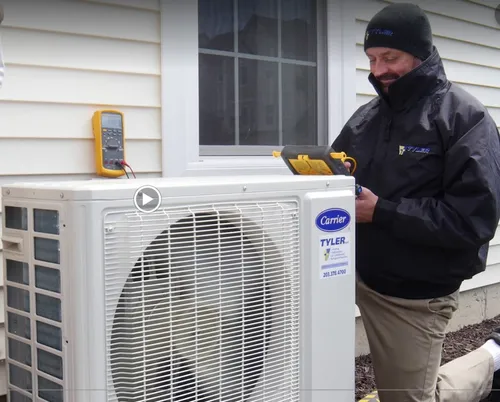
A ductless mini-split, or ductless heat pump, consists of two main components: an outdoor compressor/condenser unit and one or more indoor air handlers. These are connected by a small conduit that houses refrigerant lines, power cables, and a condensate drain, requiring only a 3-inch hole in an exterior wall 1 2. This setup provides both heating and cooling directly to a designated space, eliminating the energy losses associated with ductwork, which can be as high as 30% in a standard forced-air system 3. For many homes in Hamden, especially those built without central air, older properties, or room additions, a ductless installation offers a targeted and efficient way to achieve year-round comfort.
Ideal Applications for Hamden Homes
Ductless systems are not a one-size-fits-all solution, but they are exceptionally well-suited for specific scenarios common in the area. They are the ideal choice for homes that lack existing ductwork, such as many historic properties, radiant-heat homes, or converted spaces like garages and basements. They are also a perfect solution for room additions, sunrooms, or enclosed porches where extending the existing central HVAC system would be prohibitively expensive or impractical. Furthermore, homeowners looking to add supplemental cooling to a second floor or create independent temperature zones (like keeping a home office cooler than the living room) will find ductless technology highly effective.
Understanding System Types: Single-Zone vs. Multi-Zone
The first major decision in planning your installation is choosing between a single-zone or multi-zone system. A single-zone system links one indoor air handler to one outdoor unit, making it perfect for conditioning a single room, such as a primary bedroom, living room, or garage workshop. It's the most straightforward and often most cost-effective configuration for a targeted need.
A multi-zone system, on the other hand, connects multiple indoor units (typically 2 to 4 or more) to a single, more powerful outdoor condenser 4. This allows you to independently control the temperature in different rooms or "zones" of your home. For example, you could install heads in the kitchen, living room, and two bedrooms, all running off one outdoor unit. This provides whole-house comfort without ducts and offers superior energy efficiency, as you only condition the spaces you are using.
Choosing and Placing Indoor Air Handlers
Selecting the right style of indoor unit is crucial for both performance and aesthetics. The most common type is the wall-mounted unit, installed high on a wall. It requires careful placement with sufficient clearance from the ceiling and at least 6 feet of space from the floor for optimal airflow, and it should be positioned above furniture.
For a more discreet look, a ceiling cassette is recessed into the ceiling, with only a sleek vent visible. This option is popular for rooms with high ceilings or contemporary designs but generally involves more complex and costly installation. The floor-mounted model, which resembles a low-profile radiator, is an excellent choice for rooms with limited wall space, such as those with extensive glass or below knee walls, or for accessibility reasons 5.
Strategic placement is key. Each indoor head must be located on an exterior wall or a wall where the 3-inch conduit can be run to the outside with minimal obstruction. The goal is to place the unit where its airflow can circulate evenly throughout the room without being blocked by furniture or blowing directly on occupants for extended periods.
Outdoor Condenser Installation Considerations
The outdoor unit requires thoughtful placement for longevity and efficiency. It must be mounted on a stable, level surface, such as a concrete pad or sturdy wall brackets, to prevent vibration and noise. Crucially, it needs ample clearance on all sides (typically 1-2 feet) for proper airflow and future service access. In Hamden, considering snow accumulation is important; the unit should be placed where snow from roofs won't fall directly on it and where plowed snow won't bury it.
The electrical requirements are a significant part of the installation. Most systems need a dedicated circuit run from your main electrical panel. If your panel is already near capacity, this may necessitate an upgrade or the installation of a sub-panel, work that must be performed by a licensed electrician.
Find the perfect mini-split installers for your needs
Get personalized recommendations and expert advice
Understanding Installation Costs and Financing
The cost of a ductless mini-split installation in Hamden varies widely based on the project's scope. A basic single-zone system typically ranges from approximately $2,000 to $5,000 installed 6 7. For a multi-zone system with 2-3 indoor heads, homeowners can expect to invest between $5,500 and $8,500 or more8 9. Several factors influence the final price:
- System Capacity and Efficiency: Higher BTU capacity and higher SEER2 (Seasonal Energy Efficiency Ratio) ratings for cooling and HSPF for heating increase equipment costs but offer lower operating costs.
- Number of Zones: Each additional indoor head adds to the equipment and labor cost.
- Installation Complexity: Long refrigerant line runs, difficult wall penetrations (like brick or stone), and the need for significant electrical work will raise labor costs.
- Brand and Features: Premium brands and units with advanced features like Wi-Fi controls or ultra-quiet operation command higher prices.
Significant Savings Through Rebates and Tax Credits
A critical aspect of cost analysis is exploring available financial incentives. The federal Inflation Reduction Act (IRA) provides a tax credit of up to 30% of the project cost (up to a $2,000 annual limit) for qualified high-efficiency heat pumps installed in primary residences 10 11. Additionally, local utility rebates can provide substantial upfront savings. For example, Eversource, a major utility in Connecticut, often offers rebates for installing high-efficiency ductless heat pumps, which can directly reduce your installed cost 12 13. Always consult with your installer about the latest federal, state, and utility incentives, as they can dramatically improve the return on your investment.
The Professional Installation Process
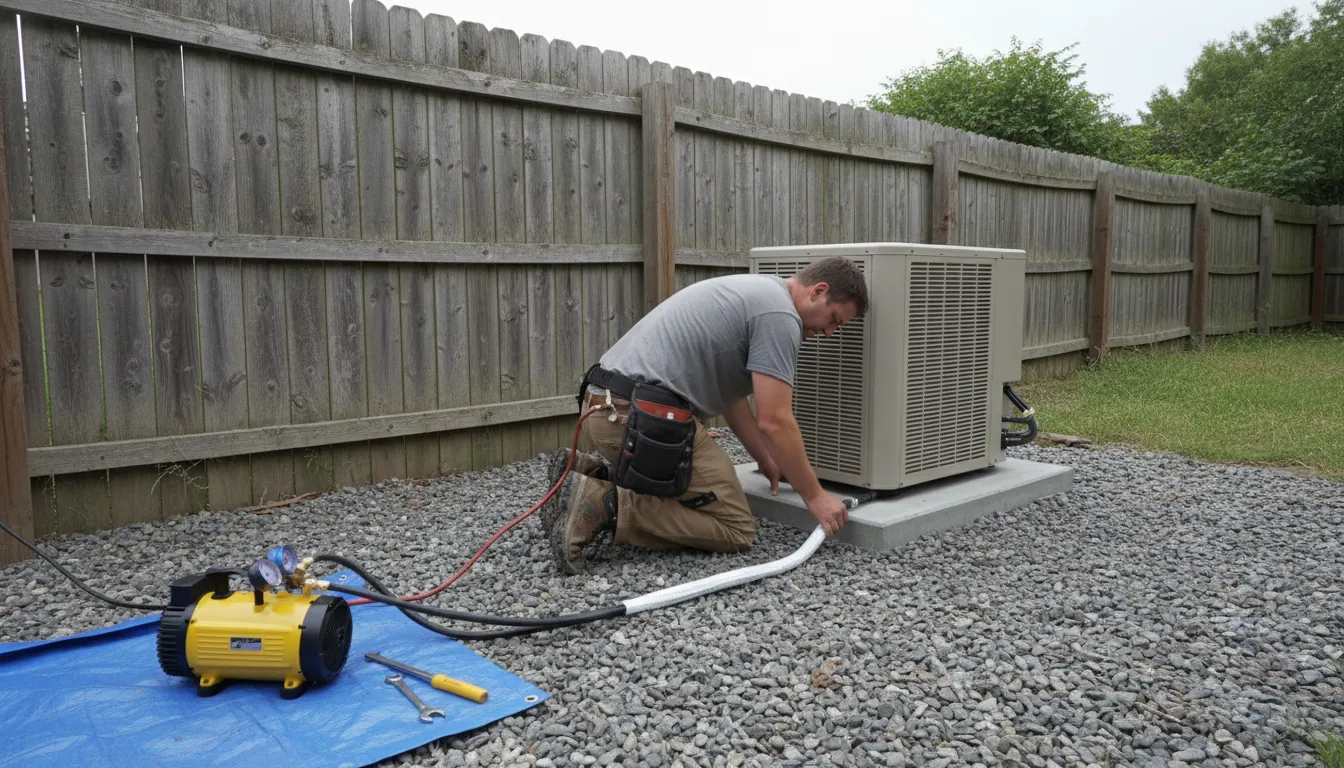
A proper ductless installation is not a DIY project. It requires licensed HVAC technicians who are EPA-certified to handle refrigerant. The process generally involves a site evaluation, system design, mounting the indoor and outdoor units, drilling the precision line hole, connecting the refrigerant lines with a flaring tool to prevent leaks, pulling a vacuum on the lineset to remove moisture and air, charging the system with refrigerant, and performing comprehensive testing of all electrical and mechanical functions 14. Skipping professional installation risks poor performance, refrigerant leaks, voided warranties, and safety hazards.
Frequently asked questions
Sources
Footnotes
-
Ductless Mini Splits - East Coast Mechanical, Inc. - https://www.calleastcoast.com/ductless-mini-splits/ ↩
-
Ductless Mini Split Setup: An Ultimate Guide - Airflow Heating & Air - https://www.goairflow.com/blog/ductless-mini-split-installation/ ↩
-
Heating and Air Conditioning Installation in Hamden, CT - https://www.homedepot.com/services/l/ct/hamden/heating-air-conditioning-installation/c16fbb4b7 ↩
-
Guide to Ductless Mini Split Installations - https://hurricaneairconditioning.com/guide-to-ductless-mini-split-installations/ ↩
-
How Much Does a Mini-Split Installation Cost? - Taskrabbit Blog - https://www.taskrabbit.com/blog/mini-split-installation-cost/ ↩
-
Ductless Mini-Split Installation Cost in 2025: Full Breakdown - https://osborneheatingncooling.com/ductless-mini-split-installation-cost/ ↩
-
How Much Does It Cost to Install a Mini-Split? [2026 Data] | Angi - https://www.angi.com/articles/how-much-does-it-cost-install-ductless-mini-split-ac.htm ↩
-
Understanding Mini Split Installation Costs A Complete Guide - https://armusmech.net/understanding-mini-split-installation-costs-a-complete-guide/ ↩
-
Ductless Mini-Splits: A Comprehensive Cost Breakdown | Fire & Ice - https://indoortemp.com/resources/cost-of-mini-split-ductless-system ↩
-
Ductless Mini Split Installation Costs in 2026 - Carrier - https://www.carrier.com/residential/en/us/products/ductless-mini-splits/ductless-mini-split-installation-cost/ ↩
-
How Much Does It Cost to Install a Mini Split System? - https://elementairco.com/how-much-does-it-cost-to-install-a-mini-split-system/ ↩
-
Connecticut Home Mini Split Heat Pump Guide - https://egreenhvac.com/blog/connecticut-home-mini-split-heat-pump-guide/ ↩
-
Ductless mini-split installation: Cool 2025 Guide - Southern Air - https://www.southern-air.com/blog/ductless-mini-split-installation ↩
-
Whole House Ductless Mini Split Walk Through - https://www.youtube.com/watch?v=lDwutt_ywsA&t=2 ↩