
Find the Best Indoor Air Quality Service Providers for Your Business
No obligation • Fast responses • Nationwide coverage

Why you can trust HVAC Firms
HVAC Firms is a leading United States resource for evaluating HVAC service providers. Our team researches companies, checks credentials, and reviews customer feedback to present clear, unbiased information. Listings and rankings are based on merit, and companies cannot pay to change our editorial content.
Search providers near you
Top Indoor Air Quality Service Providers in Gresham, Oregon Ranked
The air you breathe inside your Gresham home or business has a direct impact on your health, comfort, and productivity. Indoor air quality (IAQ) refers to the condition of the air within and around buildings, particularly as it relates to the health and well-being of occupants. In the Pacific Northwest, unique environmental factors like wildfire smoke, persistent dampness, and radon make proactive IAQ management essential. This guide will help you understand the common pollutants affecting Gresham residents, the professional services available for assessment and improvement, and practical steps you can take to create a healthier indoor environment.
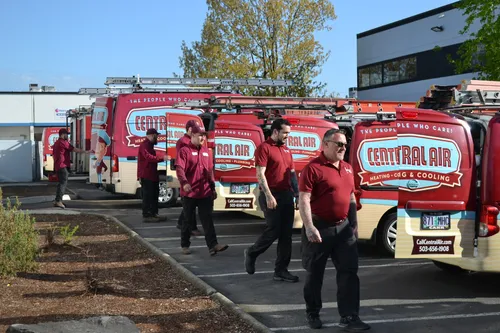
Central Air Heating, Cooling & Plumbing
11640 SW Corby Dr #5, Portland, OR 97225
Central Air Heating, Cooling & Plumbing is a Portland, OR-based company providing heating, cooling, plumbing, and indoor air quality services. Since 2001, they have offered installation, repair, and maintenance for central air conditioners, ductless mini splits, furnaces, and heat pumps. Their services include HVAC tune-ups, air balancing, air purifier installation, and plumbing repairs. The company emphasizes trained technicians and offers a comprehensive HVAC service plan to help maintain system efficiency and reduce breakdowns. They also provide plumbing solutions such as water heater and garbage disposal installation. Central Air Heating, Cooling & Plumbing guarantees repairs lasting at least three years and serves Portland homeowners with a broad range of home comfort needs.
Three Rivers Heating and Cooling
14710 SE Lee Ave, Portland, OR 97267
Three Rivers Heating and Cooling is an HVAC company based in Portland, OR, offering a range of heating and cooling services. They specialize in air conditioning and furnace repair and installation, heat pump and mini split system installation, and indoor air quality services. As an authorized dealer of Lennox, Mitsubishi, and Trane, they provide expert installation and maintenance of these brands' HVAC systems. Their team is knowledgeable in handling these systems to help maintain efficient and comfortable indoor environments.
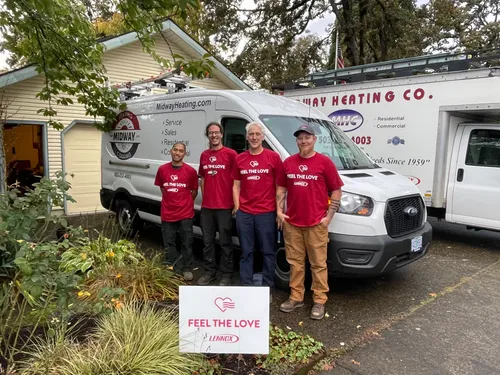
Midway Heating Company
16015 SE 106th Ave, Clackamas, OR 97015
Midway Heating Company is a family-owned HVAC business serving Portland, OR, and the surrounding metro area since 1959. They provide a range of heating and cooling services including furnace and air conditioning repair and installation, mini-split installation, HVAC tune-ups, and indoor air quality solutions such as UV lights, dehumidifiers, and air scrubbers. Midway Heating Company is recognized as a Lennox Premier Dealer and holds an A+ rating from the BBB. Their technicians are available 24/7 to address heating and cooling needs promptly.

Professor Heat Pump Llc
7402 NE 131st Ave, Vancouver, WA 98682
Professor Heat Pump Llc provides HVAC services including air conditioning repair, furnace repair, heat pump repair, HVAC tune-ups, and indoor air quality solutions in Portland, OR. They focus on installation, repair, replacement, and maintenance to keep homes comfortable throughout the year. The company has expertise in restoring air conditioning and heating systems to optimal performance and offers comprehensive air quality services such as air purifiers and ventilation systems. While based near Vancouver, WA, they serve the Portland area with tailored HVAC solutions. Their team is experienced in heat pump maintenance and repair, helping extend system lifespan and improve efficiency.

A-Temp Heating, Cooling, and Electrical
13585 SE Hwy 212, Clackamas, OR 97015
A-Temp Heating, Cooling, and Electrical is a family-owned HVAC company serving Portland, OR, and surrounding counties including Clackamas, Multnomah, and Washington. With over 50 years of experience, they provide a range of services including air conditioning and furnace repair, installation, system tune-ups, and indoor air quality solutions. Their technicians are trained to work with various brands and models, ensuring comprehensive heating and cooling support. The company offers a 10-year parts and labor warranty on new installations and guarantees satisfaction with their work.
Why Indoor Air Quality Matters in Gresham
Gresham's climate and geography create specific challenges for maintaining clean indoor air. The region's high humidity and frequent rain can lead to moisture intrusion and mold growth in attics, crawl spaces, and basements. Furthermore, seasonal wildfire smoke has become a recurring issue, with fine particulate matter (PM2.5) easily infiltrating homes during summer and fall, posing serious respiratory risks. Many homes in the area, whether older constructions or newer, tightly-sealed energy-efficient builds, can trap these pollutants indoors, making proper ventilation and filtration systems critical for resident health.
Common Indoor Air Pollutants in Gresham Homes
Understanding the specific contaminants is the first step toward cleaner air. Here are the most prevalent issues faced by local homeowners and business operators:
- Wildfire Smoke & Particulate Matter (PM2.5): A major seasonal concern, wildfire smoke carries microscopic particles that can penetrate deep into the lungs and even enter the bloodstream. These particles easily seep into buildings through small gaps and openings.
- Mold and Mildew: The damp climate is a perfect breeding ground for mold. Spores thrive in areas with chronic moisture problems, such as leaky roofs, poorly ventilated bathrooms, and encapsulated crawl spaces.
- Radon Gas: This colorless, odorless radioactive gas naturally occurs in soil and rock and can enter homes through cracks in foundations and floors. Radon is a significant health risk in the region and is the leading cause of lung cancer among non-smokers.
- Volatile Organic Compounds (VOCs): These are gases emitted from a wide array of household products, including paints, varnishes, cleaning supplies, adhesives, and even new furniture. In poorly ventilated spaces, VOC concentrations can build up, causing headaches, eye irritation, and other health issues.
- Combustion Pollutants: Appliances like gas stoves, furnaces, water heaters, and wood-burning stoves can produce carbon monoxide (CO) and nitrogen dioxide (NO2) if not properly vented. These gases are dangerous and require functional, well-maintained exhaust systems.
- Biological Allergens: Dust mites, pet dander, and pollen are common allergens that accumulate in carpets, upholstery, and bedding. Low air circulation in a home can keep these irritants suspended in the air.
Professional Indoor Air Quality Assessments
If you suspect an issue or simply want peace of mind, a professional evaluation is the most thorough approach. Local specialists use advanced tools to diagnose problems you can't see or smell.
- 48-Hour SMART IAQ Monitoring: Companies like Oregon Healthy Homes deploy specialized sensors in your home for a multi-day period. This equipment continuously monitors levels of particulate matter, VOCs, humidity, carbon dioxide, and more, providing a detailed picture of your air over time.
- Comprehensive Visual & Environmental Inspection: A technician will inspect key areas like your attic, crawl space, and HVAC system for signs of moisture, mold, duct leaks, and inadequate ventilation that contribute to poor air health.
- Radon Testing: While DIY radon test kits are available and recommended for homes below the third floor, professional testing offers greater accuracy and is often part of a broader assessment, especially during real estate transactions.
- Professional Air Sampling (e.g., AirMD): For suspected mold or high chemical exposure, professionals can take air samples that are sent to a laboratory for analysis. This identifies specific types of mold spores or VOC concentrations, which is crucial for targeted remediation 1 2.
The cost for these professional assessments can vary, often starting around $500 for basic evaluations, with higher costs for comprehensive, larger-scale, or commercial testing 3. Many local HVAC and home health companies offer free initial air quality evaluations as part of their service consultations 4 5.
Find the perfect indoor air quality service providers for your needs
Get personalized recommendations and expert advice
Solutions for Healthier Indoor Air
Once an assessment identifies problems, a range of solutions can be implemented to clean your air.
1. Advanced Air Filtration & Purification: Upgrading the filter in your central HVAC system is one of the most effective steps. For capturing fine wildfire smoke particles, a Minimum Efficiency Reporting Value (MERV) 13 or higher filter is recommended. For whole-home protection, professionals can install integrated air cleaners or purifiers that use HEPA and activated carbon filtration to remove particles, odors, and gases. Portable HEPA air purifiers are also excellent for targeting specific rooms.
2. Ventilation Improvements: Modern, energy-efficient homes are often too airtight, allowing pollutants to build up. Solutions include:
- Ensuring bathroom and kitchen exhaust fans are used and vented to the outside.
- Installing an Energy Recovery Ventilator (ERV) or Heat Recovery Ventilator (HRV). These systems bring in fresh outdoor air while conserving energy by transferring heat and moisture from the exhausted stale air 6 7.
3. Humidity Control: Managing moisture is key to preventing mold. In damp areas like basements, a properly sized dehumidifier can maintain indoor relative humidity between 30-50%. Ensuring your HVAC system is correctly sized and functioning also helps control humidity levels 8 9.
4. Duct Cleaning and Sealing: Over time, dust, mold, and debris accumulate in ductwork. Professional cleaning removes these contaminants. More importantly, sealing leaks in the duct system prevents unfiltered air from attics or crawl spaces from being drawn into your living spaces and improves overall system efficiency 10.
5. Source Control and Remediation: This addresses pollutants at their root.
- Mold Mitigation: Professional mold remediation safely contains and removes fungal growth and addresses the underlying moisture source, which may involve crawl space encapsulation or attic ventilation improvements 11.
- Radon Mitigation: If high radon levels are detected, a professional can install a radon mitigation system, typically a vent pipe and fan, which draws the gas from beneath the house and vents it safely above the roofline 12.
- Combustion Appliance Safety: Annual inspection and maintenance of gas-burning appliances and chimneys are essential to prevent carbon monoxide leaks 13.
Maintaining Your Indoor Environment
Beyond professional installations, daily habits contribute significantly to air health:
- Use exhaust fans when cooking, showering, or using the dishwasher.
- Choose low-VOC paints, cleaning products, and building materials when possible.
- Regularly vacuum using a HEPA-filter vacuum cleaner and wash bedding in hot water to reduce allergens.
- Inspect your home periodically for water leaks, condensation, or musty odors.
- Change HVAC filters regularly according to manufacturer instructions, and more frequently during wildfire season.
Frequently asked questions
Sources
Footnotes
-
Indoor Air Quality Testing Portland OR - AirMD - https://airmd.com/areas-served/oregon/portland/indoor-air-quality-testing/ ↩
-
VOC Testing Services | Chemical Air Quality Analysis - https://airmd.com/services/voc/ ↩
-
Essential Indoor Air Quality Testing For Portland Offices - Shyft - https://www.myshyft.com/blog/indoor-air-quality-testing-for-offices-portland-oregon/ ↩
-
Indoor Air Quality Services In Gresham, OR | One Speed - https://onespeedservices.com/service-area/gresham-oregon/ ↩
-
Indoor air quality evaluations - Oregon Healthy Homes LLC - https://oregonhealthyhomes.com/air-quality-evaluations-2/ ↩
-
Thousands in Oregon and California Told to Stay Indoors Due ... - https://www.airoasis.com/blogs/articles/thousands-in-oregon-and-california-told-to-stay-indoors-due-to-unhealthy-air-quality ↩
-
Indoor Air Quality | MP Heating & Air - https://mpcomfort.com/indoor-air-quality/ ↩
-
Air Pollution Advisories : Air Quality : State of Oregon - https://www.oregon.gov/deq/aq/pages/air-pollution-advisories.aspx ↩
-
Indoor Air Quality Company Gresham, OR - https://www.greshamheating.com/indoor-air-quality/ ↩
-
Tualatin Indoor Air Monitoring - Oregon Healthy Homes - https://oregonhealthyhomes.com/indoor-air-monitoring/ ↩
-
Indoor Air Quality - Comfort Connection - https://www.comfortco.com/indoor-air-quality ↩
-
Indoor Air Quality - Oregon Environmental Council - https://oeconline.org/our-work/toxic-free-environments/eco-healthy-home-checkup/indoor-air-quality/ ↩
-
Indoor Air Quality - Lane Regional Air Protection Agency - https://www.lrapa-or.gov/air-quality-protection/community-center/indoor-air-quality/ ↩