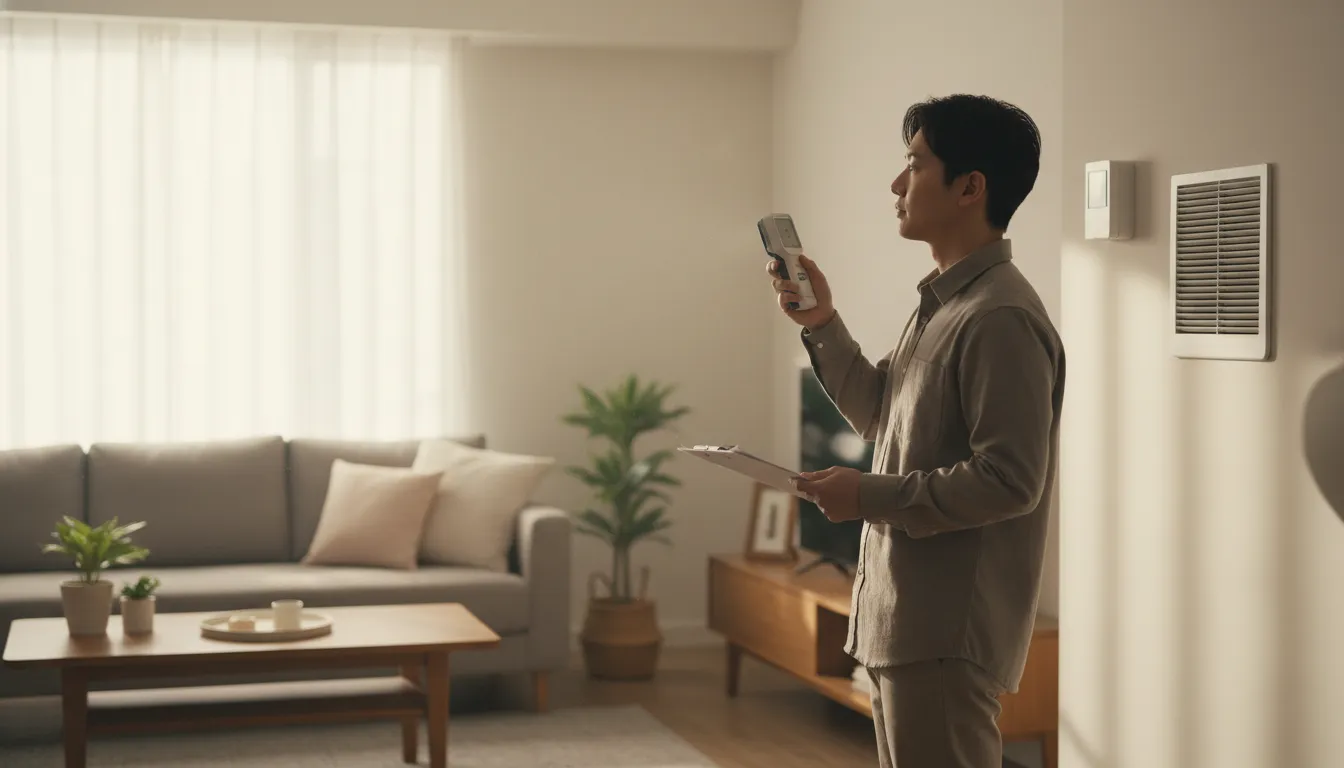
Find the Best Indoor Air Quality Service Providers for Your Business
No obligation • Fast responses • Nationwide coverage

Why you can trust HVAC Firms
HVAC Firms is a leading United States resource for evaluating HVAC service providers. Our team researches companies, checks credentials, and reviews customer feedback to present clear, unbiased information. Listings and rankings are based on merit, and companies cannot pay to change our editorial content.
Search providers near you
Best Indoor Air Quality Service Providers in Illinois Ranked
The air inside your Illinois home or business can be more polluted than the air outside, impacting comfort, health, and even property value. Indoor air quality (IAQ) refers to the condition of the air within a building, focusing on the presence of pollutants and the adequacy of ventilation. In Illinois, factors like high radon risk, seasonal humidity, and modern, energy-efficient "tight" construction make managing IAQ a critical concern. This guide provides a clear overview of common pollutants, state-specific guidelines, practical solutions, and how to connect with qualified local professionals who can assess and improve your indoor environment.
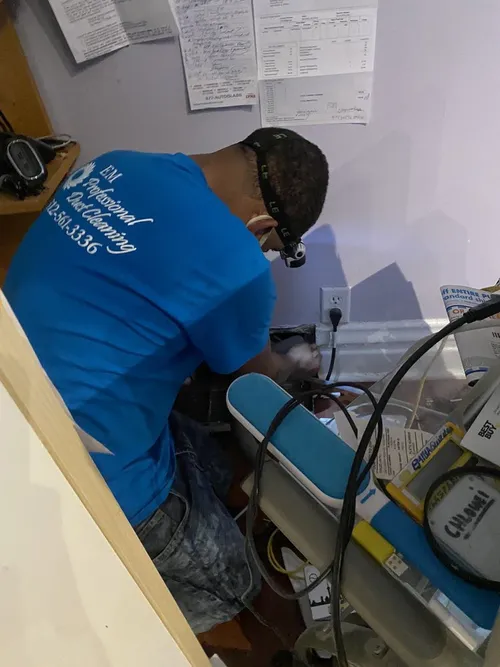
EM Duct Cleaning Chicago
6124 N Milwaukee Ave #3, Chicago, IL 60646
EM Duct Cleaning Chicago is a local company providing professional air duct cleaning and indoor air quality services in Chicago, IL. They serve homes and small to medium-sized commercial properties, focusing on removing dust, dirt, mold, and allergens from HVAC systems and ductwork to improve air quality and system efficiency. Their services include air duct cleaning, dryer vent cleaning, chimney cleaning, UV light installation, mold removal, odor elimination, and filter replacement. With over eight years in the cleaning industry, EM Duct Cleaning uses EPA-approved, environmentally friendly solutions and state-of-the-art equipment to ensure thorough cleaning and sanitization. The company is fully licensed and insured and offers free HVAC inspections with every job.
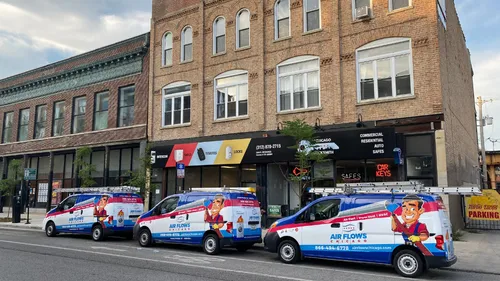
Air Flows Chicago - Belmont
3019 W Belmont Ave, Chicago, IL 60618
Air Flows Chicago - Belmont provides comprehensive HVAC, chimney, and indoor air quality services in Chicago, IL. They offer heating and cooling system installation, repair, and maintenance, including furnaces, boilers, air conditioners, ductless systems, and heat pumps. The company also specializes in chimney sweeping, inspection, and liner services, as well as dryer vent cleaning and repair. Their air duct cleaning and installation services help improve indoor air quality, supported by UV germicidal light installations, humidifiers, and air cleaners. Air Flows Chicago serves both residential and commercial clients and offers 24/7 emergency repair services to minimize downtime.
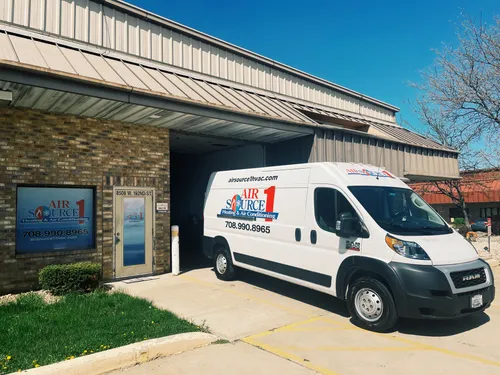
Air Source 1 Heating & Air Conditioning
8508 W 192nd St, Mokena, IL 60448
Air Source 1 Heating & Air Conditioning is a family-owned HVAC contractor based near Chicago, IL, serving Mokena and the surrounding South Chicagoland and Northwest Indiana areas. Since 2014, they have specialized in heating and cooling installation, repair, maintenance, indoor air quality services, and sheet metal fabrication. The company offers 24/7 emergency repair services and works with reputable brands like RUUD to provide quality HVAC systems tailored to customer needs. Owner Tim brings over 15 years of hands-on experience, ensuring skilled and dedicated service on every job.
Allied Air Conditioning & Heating Corp.
203 Peterson Rd, Libertyville, IL 60048
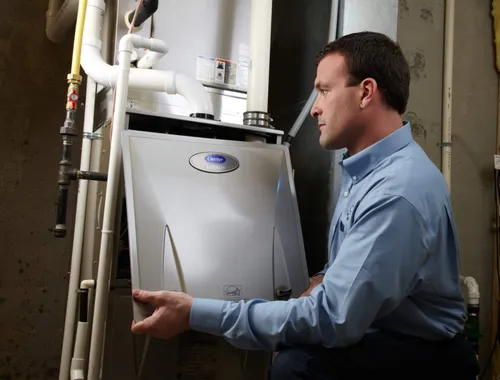
Allied Air Conditioning & Heating Corp. is a heating and cooling company serving Chicago, IL, and the surrounding Northwest Chicagoland area. With over 55 years of experience, they provide HVAC installation, repair, and maintenance services, including air conditioning, furnace, indoor air quality, and pool dehumidifier systems. Allied is an authorized Carrier dealer and offers 24/7 emergency service to address heating and cooling issues promptly. Their NATE-certified technicians focus on delivering reliable home comfort solutions and advanced HVAC products.

AAA Cleaning Services INC
1004 Westchester Cir, Schaumburg, IL 60193
AAA Cleaning Services INC provides residential and commercial air duct and dryer vent cleaning in Chicago, IL. The company focuses on improving indoor air quality by removing pollutants such as dust mites, pollen, mildew, and pet dander that can affect health and HVAC system performance. Their services help enhance air quality, prepare HVAC systems for seasonal changes, and improve system efficiency and lifespan. The team is knowledgeable and pet-friendly, offering support and information about indoor air quality and HVAC maintenance.
Why Indoor Air Quality Matters in Illinois
Illinois residents spend a significant amount of time indoors, where concentrations of certain pollutants can be two to five times higher than outdoor levels. Poor IAQ is linked to a range of immediate and long-term health effects, from headaches, fatigue, and irritation of the eyes, nose, and throat to more serious respiratory diseases, heart conditions, and even cancer. For vulnerable populations like children, the elderly, and those with asthma or allergies, the impact is even more pronounced. Beyond health, poor IAQ can lead to musty odors, excessive dust, and moisture damage like mold growth, which can compromise a building's structure.
The state's climate and geology present unique challenges. Cold winters and hot, humid summers mean HVAC systems run frequently, and homes are sealed tight for energy efficiency, trapping pollutants inside. Furthermore, Illinois soil has a high potential for radon gas, a leading cause of lung cancer.
Common Indoor Air Pollutants in Illinois Homes
Understanding the specific contaminants in your environment is the first step toward improvement. Key pollutants of concern in Illinois include:
- Radon: A colorless, odorless radioactive gas that seeps from the soil into buildings. Illinois is considered a high-risk radon state, and testing is strongly recommended for all homes.
- Carbon Monoxide (CO): A deadly, odorless gas produced by incomplete combustion in furnaces, water heaters, fireplaces, and gas stoves. Illinois law requires the installation of CO alarms within 15 feet of all sleeping areas.
- Volatile Organic Compounds (VOCs): Gases emitted from a wide array of household products, including paints, varnishes, cleaning supplies, adhesives, and even new furniture and building materials (a process known as "off-gassing")1 2.
- Particulate Matter (PM2.5 & PM10): Microscopic particles like dust, pollen, pet dander, mold spores, and smoke from cooking or fireplaces. These can penetrate deep into the lungs.
- Biological Contaminants: These include mold, mildew, bacteria, viruses, and dust mites. They thrive in damp conditions, making humidity control crucial, especially in Illinois' humid summers.
Illinois Guidelines and Standards for Indoor Air
While Illinois does not enforce mandatory IAQ standards for private residences, the Illinois Department of Public Health (IDPH) provides science-based, voluntary guidelines to help residents and building managers maintain healthy environments3. These guidelines are often aligned with standards from organizations like ASHRAE (the American Society of Heating, Refrigerating and Air-Conditioning Engineers).
Key IDPH recommendations include4 5:
- Carbon Dioxide (CO₂): Maintain levels below 1,000 parts per million (ppm), with an ideal target under 800 ppm. CO₂ is a key indicator of ventilation adequacy; levels above 1,000 ppm can lead to drowsiness and poor concentration.
- Relative Humidity: Keep indoor humidity between 30% and 60% to inhibit mold growth and dust mites while maintaining comfort.
- Ventilation: Ensure adequate fresh air exchange. The modern Illinois residential energy code requires mechanical ventilation if a home is too "tight" (specifically, if its air leakage rate is less than 4 air changes per hour at 50 Pascals of pressure)6.
For schools, proposed legislation like HB1923 highlights growing awareness, mandating radon testing every five years and the use of portable air cleaners with HEPA filters in classrooms7 8.
Find the perfect indoor air quality service providers for your needs
Get personalized recommendations and expert advice
Core Strategies for Improving Indoor Air
A comprehensive approach to IAQ involves four key actions: testing, maintaining, ventilating, and cleaning.
1. Test and Assess
You cannot fix what you don't measure. Professional IAQ assessments can identify specific pollutant levels.
- Radon Testing: Essential for every Illinois home. Low-cost short-term test kits are available, or you can hire a professional for a more precise long-term test.
- Mold Inspection: If you see or smell mold, or have had water damage, a professional inspection can identify the extent and type of mold.
- General IAQ Testing: Professionals can measure levels of VOCs, particulate matter, humidity, and CO₂ to provide a baseline.
2. Maintain Your HVAC System
Your heating and cooling system is the lungs of your home.
- Filter Replacement: Change your HVAC system's air filter regularly-every 90 days is a good standard, or more often if you have pets or allergies. Upgrade to a filter with a MERV 13 rating or higher where your system allows, as these are much more effective at capturing fine particles.
- Professional Maintenance: Annual HVAC tune-ups ensure systems are operating efficiently and not contributing to pollution (e.g., by checking for cracked heat exchangers that could leak CO).
3. Increase Ventilation
Diluting stale indoor air with fresh outdoor air is fundamental.
- Spot Ventilation: Always use exhaust fans in bathrooms and kitchens during and after use to remove moisture and pollutants at the source.
- Whole-Home Ventilation: For modern, tight homes, dedicated systems like Heat Recovery Ventilators (HRVs) or Energy Recovery Ventilators (ERVs) are highly effective. These systems bring in fresh air while recovering energy from the exhausted air, improving IAQ without sacrificing energy efficiency. Installation costs typically range from $1,500 to $3,000+9 10.
- Natural Ventilation: When weather permits, opening windows is a simple and effective strategy. The Illinois Mechanical Code notes that if no mechanical system exists, openable window area should equal at least 4% of the floor space11.
4. Clean and Purify the Air
Source control and air cleaning address pollutants that remain.
- Portable Air Cleaners: Units with true HEPA filters can effectively remove particulate matter from a single room. Look for models sized appropriately for the room where they will be used. Prices generally range from $150 to $500 per unit12.
- Source Control: Choose low-VOC paints and cleaning products. Store chemicals properly. Address water leaks immediately to prevent mold.
- Radon Mitigation: If testing reveals elevated radon levels (4 pCi/L or higher), a professionally installed radon mitigation system, typically costing between $800 and $1,500, is necessary to vent the gas safely from beneath your home13 14.
Understanding Costs for IAQ Services in Illinois
Investing in indoor air quality varies based on your home's size, existing systems, and specific needs. Here is a general overview of common services15:
- IAQ Inspection/Testing (Radon, Mold, VOCs): $200 - $600+
- Routine HVAC Maintenance/Filter Replacement Visit: $100 - $200
- Upgrading to High-Efficiency Filtration (MERV 13+): $50 - $150 (for filter housing or initial filter set)
- Portable HEPA Air Cleaner: $150 - $500 per unit
- Whole-Home Ventilation System (HRV/ERV) Installation: $1,500 - $3,000+
- Radon Mitigation System Installation: $800 - $1,500
Finding the Right Professional Help
Selecting a qualified provider is crucial for effective and safe IAQ improvements. Look for licensed HVAC contractors who specialize in indoor air quality services. They should be able to conduct assessments, interpret results, and offer a range of solutions from filter upgrades to installing complex ventilation systems. For radon testing and mitigation, ensure the provider is certified by the National Radon Proficiency Program (NRPP) or the National Radon Safety Board (NRSB). Always ask for references, detailed quotes, and proof of insurance.
Frequently asked questions
Sources
Footnotes
-
Indoor Air Quality Contractor Near Winnetka, Wilmette, Lake Forest, ... - https://www.desneillinois.com/indoor-air-quality.html ↩
-
Untitled - https://pandemics.sph.brown.edu/sites/default/files/pdfs/AUG_2025_State%20Guide%20for%20Clean%20Indoor%20Air%20-%20converted.pdf ↩
-
Compiled Resources on Indoor Air Quality - https://www.isbe.net/Documents/IAQ-resources.pdf ↩
-
IDPH Guidelines for Indoor Air Quality - Illinois.gov - https://dph.illinois.gov/topics-services/environmental-health-protection/toxicology/indoor-air-quality-healthy-homes/idph-guidelines-indoor-air-quality.html ↩
-
IDPH Guidelines for Indoor Air Quality - Illinois.gov - https://dph.illinois.gov/topics-services/environmental-health-protection/toxicology/indoor-air-quality-healthy-homes/idph-guidelines-indoor-air-quality.html ↩
-
Indoor Air Quality - EnergySense Resilience Center - https://energysense.uillinois.edu/indoor-air-quality/ ↩
-
Bill Text: IL HB1923 | 2025-2026 | 104th General Assembly - LegiScan - https://legiscan.com/IL/text/HB1923/id/3089808 ↩
-
Database of State Indoor Air Quality Laws - https://www.eli.org/sites/default/files/files-pdf/2024%20Schools%20Excerpt_0.pdf ↩
-
Mechanical Code: Heat and Ventilation Overview - https://www.chicago.gov/content/dam/city/depts/bldgs/general/Self_Cert_Program/2022/2022-03-04.pdf ↩
-
Indoor Air Quality | Green Homes Illinois - https://www.greenhomesil.com/service/indoor-air-quality ↩
-
Chapter 4 Ventilation: Illinois Mechanical Code 2021 | UpCodes - https://up.codes/viewer/illinois/imc-2021/chapter/4/ventilation ↩
-
Improving Indoor Air Quality to Improve Health - St. Louis County - https://stlouiscountymo.gov/st-louis-county-departments/public-health/covid-19/advisories-safety-recommendations/improving-indoor-air-quality/ ↩
-
IDPH Guidelines for Indoor Air Quality - Illinois.gov - https://dph.illinois.gov/topics-services/environmental-health-protection/toxicology/indoor-air-quality-healthy-homes/idph-guidelines-indoor-air-quality.html ↩
-
Indoor Air Quality Services Downers Grove IL - https://www.katsheating.com/indoor-air-quality ↩
-
How Much Does a Home Indoor Air Quality Testing Cost? - https://www.airpf.com/how-much-does-a-home-indoor-air-quality-testing-cost/ ↩