Find the Best Indoor Air Quality Service Providers for Your Business
No obligation • Fast responses • Nationwide coverage

Why you can trust HVAC Firms
HVAC Firms is a leading United States resource for evaluating HVAC service providers. Our team researches companies, checks credentials, and reviews customer feedback to present clear, unbiased information. Listings and rankings are based on merit, and companies cannot pay to change our editorial content.
Search providers near you
Top Indoor Air Quality Service Providers in West Haven, Connecticut Ranked
The air you breathe inside your West Haven home or office has a direct impact on your health, comfort, and productivity. Indoor air quality, or IAQ, refers to the condition of the air within and around buildings, particularly as it relates to the health and well-being of occupants. In our coastal Connecticut climate, with its humid summers and reliance on heating systems, managing indoor pollutants is a critical concern. This resource is designed to help you understand the common air quality challenges specific to West Haven, recognize the signs of poor indoor air, and learn about the professional testing and improvement solutions available locally to create a healthier indoor environment.
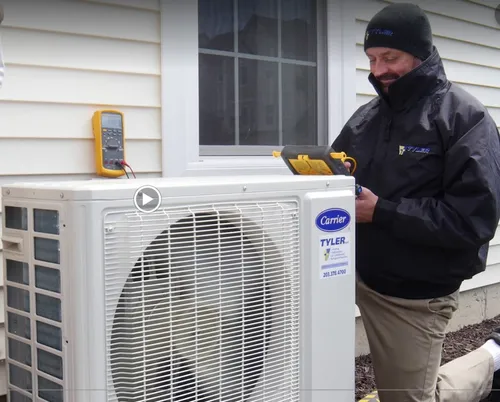
Tyler Heating, Air Conditioning, Refrigeration LLC
255 Hathaway Dr Unit 1, Stratford, CT 06615
Tyler Heating, Air Conditioning, Refrigeration LLC is an HVAC company serving New York, NY, with a focus on heating, cooling, and indoor air quality services. They provide installation, repair, and maintenance for air conditioners, furnaces, heat pumps, mini splits, and ductless HVAC systems. The company also offers indoor air quality solutions including humidity control and air purification. Established in 1995, Tyler Heating has over 25 years of experience serving the Southwest Connecticut area and offers same-day service to address urgent needs.
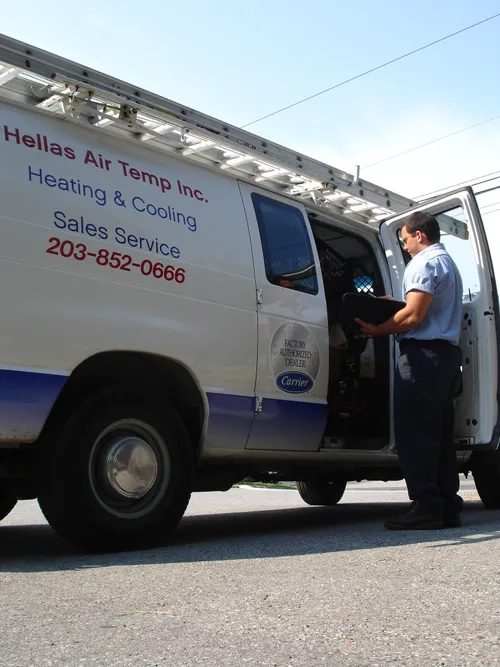
Hellas Air Temp Inc
52 Connecticut Ave, Norwalk, CT 06850
Hellas Air Temp Inc provides residential and commercial heating and cooling services in New York, NY. They offer sales, service, maintenance, and installation for a wide range of HVAC systems including central air, forced air, gas and propane boilers, ductless systems, rooftop units, and custom refrigeration solutions. Established in 1978, the company brings decades of experience to climate control solutions and specializes in customizable systems such as manifolds and circulation pumps.
Understanding West Haven's Indoor Air Quality Challenges
West Haven's unique location and climate create a specific set of indoor environmental concerns. The combination of seasonal humidity, older housing stock, and proximity to major transportation routes means residents and business owners should be proactive about their indoor air. Common pollutants often stem from moisture issues, combustion appliances, and the very construction of modern, energy-efficient "tight" buildings that can trap contaminants inside 1.
Moisture and Mold: A Primary Concern
Connecticut's fluctuating humidity, amplified by coastal influences, makes moisture control a top priority for indoor air health. Leaks from roofs, basements, or plumbing can lead to dampness, and mold can begin to grow within 24 to 48 hours in the right conditions. This isn't just a cosmetic issue; mold spores released into the air can trigger allergies, asthma attacks, and other respiratory problems. Managing relative humidity through proper ventilation and dehumidification is a key first step in preventing mold-related air quality issues.
Combustion Byproducts from Heating Systems
Burning fossil fuels for heat and hot water is a significant activity in Connecticut homes, and it can be a major source of both outdoor and indoor air pollution 2. Appliances like furnaces, boilers, water heaters, and gas stoves can emit dangerous pollutants indoors, including carbon monoxide (CO), nitrogen oxides (NOx), and fine particulate matter (PM2.5) 3. Faulty equipment, blocked vents, or inadequate ventilation can allow these colorless, odorless gases to accumulate to dangerous levels. Ensuring appliances are properly maintained and vented is crucial for safety and air purity.
The Invisible Threat: Radon Gas
Radon is a naturally occurring, radioactive gas that seeps from the soil into buildings. It is the second leading cause of lung cancer and is present throughout much of the Northeast, including Connecticut. Because it is undetectable by sight or smell, the only way to know if your West Haven home has elevated radon levels is to test for it. The Connecticut Department of Public Health and the U.S. EPA recommend that every home be tested for radon.
Volatile Organic Compounds (VOCs) and Tight Buildings
Modern building practices emphasize energy efficiency, leading to homes and offices that are very well-sealed. While this saves on energy costs, it can also trap pollutants generated indoors. Volatile Organic Compounds (VOCs) are gases emitted from a wide array of household products, including paints, varnishes, cleaning supplies, adhesives, and even new furniture and carpets 4. Studies show that concentrations of many VOCs can be consistently 2 to 5 times higher indoors than outdoors 5. Without adequate ventilation, these compounds can contribute to headaches, eye and throat irritation, and long-term health concerns.
Outdoor Pollution Intrusion
West Haven's air is also influenced by its surroundings. Proximity to Interstate 95, the New Haven port area, and other transportation corridors means that outdoor pollutants like vehicle exhaust (PM2.5) can infiltrate indoor spaces 6. During periods of high outdoor pollution, having proper filtration in your HVAC system and ensuring your building envelope is well-sealed becomes an important part of protecting your indoor air.
Find the perfect indoor air quality service providers for your needs
Get personalized recommendations and expert advice
How to Assess Your Indoor Air
Before investing in expensive tests or equipment, a systematic approach to assessment is wise. The Connecticut Department of Public Health often recommends starting with a thorough visual and olfactory inspection to identify obvious sources of pollution before moving to specific testing 7.
Professional Inspection and Diagnosis
A qualified indoor air quality specialist begins with a comprehensive inspection. They use their senses and experience to look for signs of moisture, water damage, mold growth, and improper ventilation. They will check fuel-burning appliances for proper venting, look for chemical storage areas, and assess the overall airflow in your building 8 9. This diagnostic step is critical for identifying the root cause of air quality issues rather than just treating symptoms.
Targeted Contaminant Testing
For certain invisible hazards, specific testing is non-negotiable:
- Radon Testing: Simple, inexpensive do-it-yourself test kits are available at hardware stores, or you can hire a professional for a more detailed assessment. Testing is the only way to know your risk level 10.
- Carbon Monoxide Detection: CO detectors are legally required and should be installed on every level of a home and near all sleeping areas. These are life-saving devices that provide continuous monitoring.
- Mold, VOC, and Allergen Testing: When a visual inspection isn't enough, professional environmental consultants can take air and surface samples. These samples are analyzed in certified laboratories to identify types and concentrations of mold spores, specific VOCs, pollen, dust mites, and other particulate matter 11 12 13.
Continuous Monitoring with Technology
Beyond one-time tests, technology now allows for ongoing monitoring of your air. Smart thermostats and dedicated indoor air quality monitors can track levels of particulate matter (PM2.5), VOCs, humidity, and temperature in real-time, giving you data to understand daily patterns and the effectiveness of your improvement efforts 14.
Solutions and Improvement Strategies for West Haven Homes
The path to better indoor air involves source control, ventilation, and filtration. The right mix of solutions depends entirely on the problems identified in your specific property.
Source Control: Eliminating the Problem at Its Origin
The most effective way to improve air quality is to remove or reduce the sources of pollution.
- Moisture and Mold Remediation: Fixing leaks, improving drainage, and using dehumidifiers are essential. For existing mold, professional remediation involves safely containing and removing contaminated materials, which can range in cost from $300 for a small area to $4,000 or more for severe, widespread problems 15 16.
- Combustion Appliance Maintenance: Have furnaces, boilers, water heaters, and chimneys inspected and serviced annually by a qualified technician to ensure safe, efficient operation and proper venting.
- Choosing Low-Emission Products: When renovating or cleaning, select paints, sealants, and cleaning supplies labeled "low-VOC" or "zero-VOC."
Ventilation: Diluting Stale Air with Fresh Air
Bringing in fresh outdoor air is vital, especially in tight buildings.
- Local Exhaust: Use exhaust fans in kitchens and bathrooms to remove moisture and pollutants directly at the source.
- Whole-Home Solutions: For comprehensive ventilation, systems like Heat Recovery Ventilators (HRVs) or Energy Recovery Ventilators (ERVs) are integrated with your HVAC system. They bring in fresh air while recovering energy from the outgoing stale air, improving air quality without sacrificing energy efficiency. Installation is a professional job with costs varying based on the system's complexity 17.
Air Cleaning and Filtration
When source control and ventilation aren't enough, air cleaners can remove particles and gases from the air.
- Portable Air Purifiers: These units with HEPA filters can be effective for single rooms. It's important to choose one sized appropriately for the space.
- Whole-Home Air Cleaners: Installed directly into your forced-air HVAC system, these devices-such as high-efficiency particulate air (HEPA) filters, electronic air cleaners, or units with UV-C lights-clean the air throughout your entire home as it circulates. This is a significant investment best installed by an HVAC professional.
Specialized Mitigation: Radon Systems
If testing reveals elevated radon levels (at or above 4 pCi/L), a radon mitigation system should be installed. These systems typically use a vent pipe and fan to pull radon gas from beneath the foundation and exhaust it safely above the roofline, preventing its entry into living spaces. Professional installation costs for a radon mitigation system in our area can range from approximately $800 to $2,500 18.
Investing in Your Air: Understanding Costs
Improving your indoor environment is an investment in health. Costs are highly variable and depend on the specific issues found and the solutions chosen.
- Professional Air Quality Testing: A basic professional assessment, including several indoor air samples and an outdoor control, often starts around $425 or more, depending on the scope and number of contaminants tested 19.
- Equipment and System Upgrades: As mentioned, costs range from the price of a portable dehumidifier to several thousand dollars for integrated whole-home ventilation, filtration, or radon mitigation systems. Obtaining estimates from qualified local professionals is the best way to understand the investment needed for your situation.
Frequently asked questions
Sources
Footnotes
-
IEQ NEWS - CT.gov - https://portal.ct.gov/-/media/Departments-and-Agencies/DPH/dph/environmental_health/eoha/pdf/IEQNEWSWinter09finalpdf.pdf ↩
-
CT's homes and businesses are a 'major source' of air pollution - https://www.ctinsider.com/news/article/ct-outdoor-air-pollution-study-18366232.php ↩
-
CONNECTICUT'S HIDDEN AIR POLLUTION PROBLEM: FOSSIL ... - https://www.savethesound.org/wp-content/uploads/2024/02/Connecticuts-Hidden-Pollution-Problem_report-for-web_2023-09-20.pdf ↩
-
Indoor Air Quality Testing, VOC Testing | NY, CT, NJ - https://rtkenvironmental.com/services/iaq-radon/how-safe-is-the-air-inside-your-home/ ↩
-
Indoor Air Quality Concerns - Dr. Energy Saver Connecticut - https://www.ctdrenergysaver.com/indoor-air-quality/indoor-air-quality-concerns.html ↩
-
Hold Your Breath! Air Pollution Measured - New Haven ... - https://www.newhavenindependent.org/2024/08/26/air_quality/ ↩
-
Should I Test My Indoor Air? - CT.gov - https://portal.ct.gov/-/media/DPH/EHDW/Should-I-test-my-indoor-air-rev-Dec-2023v2.pdf ↩
-
Indoor Air Quality - Quinnipiack Valley Health District - https://www.qvhd.org/indoor-air-quality ↩
-
Should I Test My Indoor Air? - CT.gov - https://portal.ct.gov/-/media/DPH/EHDW/Should-I-test-my-indoor-air-rev-Dec-2023v2.pdf ↩
-
FACT SHEET Should I Test My Indoor Air? - CT.gov - https://portal.ct.gov/-/media/dph/ieq/should-i-test-my-indoor-air---fact-sheet---january-2024---new-logo.pdf?rev=80254f1f4fcd40daba2650c6187187c4&hash=B82995C8B854FC2CE253239F439CC097 ↩
-
New Haven CT Mold Inspectors, Lead, Asbestos, Air Quality ... - https://rtkenvironmental.com/testing-service-areas/ct/new-haven-county/ ↩
-
Air Quality Screening - Tiger Home & Building Inspections - https://tigerinspect.com/homeowner-services/home-air-quality-testing/ ↩
-
New Haven CT Mold Inspectors, Lead, Asbestos, Air Quality Testing ... - https://rtkenvironmental.com/testing-service-areas/ct/new-haven-county/ ↩
-
New Haven Air Quality - https://www.newhavenct.gov/government/departments-divisions/engineering/air-quality ↩
-
West Haven, CT Mold Removal, Remediation, Inspections ... - https://www.biocleanct.com/west-haven-ct-mold-removal-remediation ↩
-
Non-Structural/Interior Waste Materials: Guidance and Assumptions | I-WASTE DST | US EPA - https://iwaste.epa.gov/waste-materials-estimator/guidance/non-structural-materials ↩
-
Expert Indoor Air Quality Solutions in New Haven - https://a-teamplumbingandhvac.com/indoor-air-quality-solutions/ ↩
-
EPA's Home Buyer's and Seller's Guide to Radon" - https://p2infohouse.org/ref/17/radon/pubs/hmbyguid.html ↩
-
Indoor Air Quality Solutions in New Haven - https://www.apexradonsolutions.com/indoor-air-quality-services.html ↩