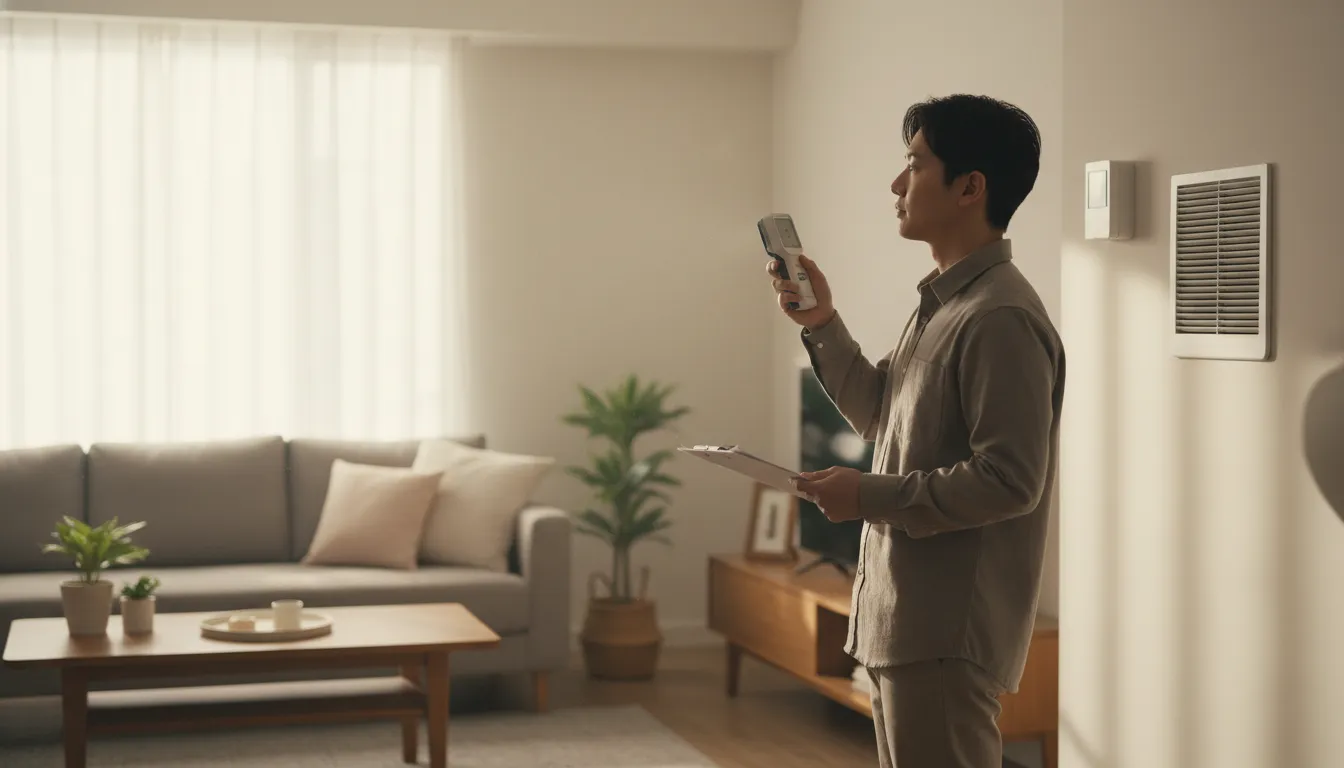
Find the Best Indoor Air Quality Service Providers for Your Business
No obligation • Fast responses • Nationwide coverage

Why you can trust HVAC Firms
HVAC Firms is a leading United States resource for evaluating HVAC service providers. Our team researches companies, checks credentials, and reviews customer feedback to present clear, unbiased information. Listings and rankings are based on merit, and companies cannot pay to change our editorial content.
Search providers near you
Best Indoor Air Quality Service Providers in Connecticut Ranked
The quality of the air inside your Connecticut home or business directly impacts your comfort, health, and productivity. Indoor air quality (IAQ) refers to the condition of the air within buildings, influenced by pollutants, humidity, and ventilation. In Connecticut, managing IAQ is crucial due to a mix of seasonal extremes, older housing stock, and specific local pollutants like radon. This guide explains the key pollutants, state guidelines, and practical steps you can take to assess and improve your indoor environment, helping you connect with the right expertise for testing and solutions.
Understanding Connecticut's Indoor Air Quality Landscape
Unlike outdoor air, which is regulated by federal and state environmental agencies, indoor air in private residences and most commercial workplaces in Connecticut is not subject to comprehensive, enforceable statewide standards for most pollutants 1. The state's approach relies heavily on guidelines and best practices issued by the Connecticut Department of Public Health (DPH) and the U.S. Environmental Protection Agency (EPA). A significant exception exists for public schools, which are mandated by law to conduct regular indoor air quality inspections and evaluations, setting a higher standard for these public spaces 2 3.
This regulatory framework means that for most homeowners, renters, and business owners, proactive management is essential. The responsibility for identifying and mitigating air quality issues falls on the property owner or occupant, guided by expert recommendations and building codes that govern new construction and major renovations.
Common Indoor Air Pollutants in Connecticut Homes and Buildings
Connecticut's indoor environments can harbor a variety of pollutants originating from appliances, building materials, daily activities, and the state's unique geology. Understanding these common contaminants is the first step toward addressing them.
Combustion Pollutants
These are gases and fine particles produced by burning fuels. Common sources in Connecticut include:
- Gas-fired furnaces, boilers, and water heaters
- Wood-burning stoves and fireplaces
- Gas stoves and ovens
- Tobacco smoke
- Attached garages where cars idle
Key combustion pollutants include carbon monoxide (CO), an odorless, deadly gas; nitrogen dioxide (NO₂), which can irritate the respiratory system; and fine particulate matter (PM2.5), which can penetrate deep into the lungs 4 5. A report highlighted that homes and businesses are a "major source" of outdoor air pollution in the state, underscoring how indoor combustion activities contribute to the broader problem 4.
Biological Contaminants
These are living organisms or their byproducts, often triggered by excess moisture-a common challenge in Connecticut's humid summers and during wet spring and fall seasons.
- Mold and mildew: Grow on damp surfaces like walls, ceilings, and around windows.
- Dust mites: Thrive in humid conditions within bedding, upholstered furniture, and carpets.
- Bacteria and viruses: Can circulate through indoor air, especially in poorly ventilated spaces.
- Pollen and pet dander: Can be tracked indoors and accumulate 6.
Chemical Compounds (VOCs and Formaldehyde)
Volatile Organic Compounds (VOCs) are gases emitted from a wide array of solids and liquids. Sources in the home include:
- Paints, stains, and solvents
- Adhesives and sealants
- New furniture, cabinets, and flooring (especially pressed wood products)
- Cleaning and disinfecting products
- Air fresheners and scented candles
Formaldehyde is a specific VOC of concern, commonly found in building materials and household products. These chemicals can cause short-term irritation and may have long-term health effects.
Naturally Occurring Pollutants
- Radon: This radioactive gas is the second leading cause of lung cancer in the United States. It seeps into buildings from the underlying soil and rock. Connecticut has areas with elevated radon potential, making testing a critical step for every home.
- Asbestos and Lead: Primarily found in homes and buildings constructed before the 1980s. Disturbing asbestos-containing insulation or lead-based paint during renovations can release hazardous dust into the air 7.
Find the perfect indoor air quality service providers for your needs
Get personalized recommendations and expert advice
Connecticut's Guidelines for Ventilation and Air Quality
The most effective strategy for improving indoor air, as emphasized by Connecticut guidelines, is source control followed by increased ventilation 8. The state's building codes adopt the American Society of Heating, Refrigerating and Air-Conditioning Engineers (ASHRAE) Standard 62, which sets minimum ventilation rates for acceptable indoor air quality. These codes are legally enforceable for new construction and major renovations 9.
General Ventilation Principles
For existing buildings, the core guidance is to increase the amount of outdoor air brought inside. This dilutes and removes indoor pollutants. Practical methods include:
- Opening windows and doors when weather and outdoor air quality permit.
- Using exhaust fans that are vented to the outdoors in kitchens (to remove cooking fumes) and bathrooms (to remove moisture). These should be run during and for a period after use.
- Ensuring clothes dryers are vented directly outside.
- Adjusting central HVAC systems to maximize the intake of fresh outdoor air, if the system is designed to do so.
Mechanical System Requirements
State mechanical codes specify requirements for occupied spaces:
- Ventilation is required in all occupied spaces during periods of occupancy.
- Residential codes outline specific airflow rates (measured in cubic feet per minute, or CFM) for areas like kitchens and bathrooms to control moisture and odors 10 11.
- Maintenance is key: HVAC systems should be inspected and maintained regularly. This includes changing air filters; upgrading to a filter with a Minimum Efficiency Reporting Value (MERV) of 13 or higher can significantly capture finer particles, including some viruses and bacteria.
Assessing and Improving Your Indoor Air: Costs and Considerations
Because many air quality problems are not visible or odorous, professional assessment is often the most reliable path to an accurate diagnosis.
Professional IAQ Testing and Inspections
- Radon Testing: This is a high-priority, low-cost test for Connecticut homeowners. DIY test kits are inexpensive, while professional radon testing typically ranges from $150 to $200 12.
- Comprehensive IAQ Inspection: A professional can test for a suite of pollutants, including mold spores, VOCs, formaldehyde, carbon monoxide, and particulates. The cost varies based on the size of the property and number of contaminants analyzed, generally ranging from a few hundred dollars to over $1,000 13 14.
- When to Test: The Connecticut DPH advises that testing should not always be the first step. A visual inspection for moisture, mold, and obvious sources, combined with reviewing the home's ventilation, is often the recommended starting point 15.
Common Improvement Solutions and Estimated Costs
- Ventilation Upgrades: Costs can range from installing a simple bathroom exhaust fan (a few hundred dollars) to adding a whole-house Heat Recovery Ventilator (HRV) or Energy Recovery Ventilator (ERV) (several thousand dollars) to bring in fresh air without losing heating or cooling energy.
- Source Control: This can be low-cost (switching to low-VOC cleaning products, ensuring gas appliances are properly vented) or more involved (replacing mold-damaged drywall, removing old asbestos insulation under professional guidance).
- Air Purification: Portable High-Efficiency Particulate Air (HEPA) filter units are effective for single rooms and range in price from roughly $50 to $500 or more. Whole-house air cleaners installed in the ductwork are a more comprehensive solution with higher installation costs 16 17.
- Mold Remediation: For small areas (less than 10 square feet), cleaning with appropriate products may be a DIY task. For extensive growth, professional remediation is necessary for safety and effectiveness and can be a significant expense.
Special Focus: IAQ in Connecticut Schools
Connecticut has taken a proactive legislative stance on air quality in public schools. Laws mandate that school districts develop and implement indoor air quality programs, including regular inspections and maintenance of HVAC systems 18 19. These requirements aim to protect the health and learning environments of students and staff, setting a benchmark that informed homeowners and business owners may wish to emulate. The guidance for schools emphasizes proper HVAC operation, increased ventilation, and the use of higher-efficiency filters, all of which are best practices for any building 20.
Frequently asked questions
Sources
Footnotes
-
FACT SHEET Should I Test My Indoor Air? - CT.gov - https://portal.ct.gov/-/media/dph/ieq/should-i-test-my-indoor-air---fact-sheet---january-2024---new-logo.pdf?rev=80254f1f4fcd40daba2650c6187187c4&hash=B82995C8B854FC2CE253239F439CC097 ↩
-
PERMANENT SCHOOL BUILDING COMMITTEES AND SCHOOL MAINTENANCE - https://www.cga.ct.gov/2008/rpt/2008-R-0696.htm ↩
-
How Often Should Commercial HVAC Ducts Be Cleaned? Expert Advice - https://www.hyettrefrigeration.com/post/how-often-should-commercial-hvac-ducts-be-cleaned ↩
-
CT's homes and businesses are a 'major source' of air pollution - https://www.ctinsider.com/news/article/ct-outdoor-air-pollution-study-18366232.php ↩ ↩2
-
Indoor Air Quality - NM-Tracking - https://nmtracking.doh.nm.gov/environment/air/IndoorQuality.html ↩
-
Indoor Air Quality Solutions | CT Mold Pros - https://ctmoldpros.com/indoor-air-quality-solutions/ ↩
-
CONNECTICUT'S HIDDEN AIR POLLUTION PROBLEM - https://www.savethesound.org/wp-content/uploads/2024/02/Connecticuts-Hidden-Pollution-Problem_report-for-web_2023-09-20.pdf ↩
-
Keep it Well-Ventilated | Norwalk, CT - Official Website - https://www.norwalkct.gov/1418/Keep-it-Well-Ventilated ↩
-
AN ACT CONCERNING INDOOR AIR QUALITY IN SCHOOLS. - https://www.cga.ct.gov/2022/ba/pdf/2022HB-05479-R000395-BA.pdf ↩
-
Chapter 4 Ventilation: 2021 IMC portion of the 2022 CT State ... - https://up.codes/viewer/connecticut/imc-2021/chapter/4/ventilation ↩
-
Chapter 4 Ventilation: 2015 IMC portion of the 2018 CT ... - UpCodes - https://up.codes/viewer/connecticut/imc-2015/chapter/4/ventilation ↩
-
FACT SHEET Should I Test My Indoor Air? - CT.gov - https://portal.ct.gov/-/media/dph/ieq/should-i-test-my-indoor-air---fact-sheet---january-2024---new-logo.pdf?rev=80254f1f4fcd40daba2650c6187187c4&hash=B82995C8B854FC2CE253239F439CC097 ↩
-
Air Quality and Ventilation - Connecticut Office of Early ... - https://www.ctoec.org/health-and-safety/air-quality-and-ventilation/ ↩
-
Northwest Connecticut Indoor Air Quality Testing - https://npiweb.com/nwct/services/indoor-air-testing/ ↩
-
Indoor Air Quality Testing Should Not Be The First Move - http://www.boardofreps.org/Data/Sites/43/userfiles/committees/publicsafety/items/2023/ps31002/ps31.002_fact_sheet_2022-06-ct-dph-rev-pdf.pdf ↩
-
4 Major Indoor Air Pollutants Impacting Your Health - https://evergreenairquality.com/what-are-the-4-major-indoor-air-pollutants/ ↩
-
AN ACT IMPROVING INDOOR AIR QUALITY IN PUBLIC SCHOOL ... - https://www.cga.ct.gov/2022/BA/PDF/2022SB-00423-R000320-BA.PDF ↩
-
Fresh Air: New Indoor Air Quality and HVAC Requirements for ... - https://www.shipmangoodwin.com/insights/fresh-air-new-indoor-air-quality-and-hvac-requirements-for-connecticut-public-schools.html ↩
-
IAQ Requirements for School Districts - CT.gov - https://portal.ct.gov/das/grants/hvac-grants/iaq-requirements-for-school-districts ↩
-
Guidance for School Systems for the Operation of Central and ... - https://portal.ct.gov/-/media/Coronavirus/20200622-DPH-Guidance-for-School-Systems-for-the-Operation-of-Central-and-nonCentral-Ventilation-Sys.pdf ↩