Find the Best Indoor Air Quality Service Providers for Your Business
No obligation • Fast responses • Nationwide coverage

Why you can trust HVAC Firms
HVAC Firms is a leading United States resource for evaluating HVAC service providers. Our team researches companies, checks credentials, and reviews customer feedback to present clear, unbiased information. Listings and rankings are based on merit, and companies cannot pay to change our editorial content.
Search providers near you
Top Indoor Air Quality Service Providers in New Haven, Connecticut Ranked
The air you breathe inside your home or office in New Haven has a direct impact on your health, comfort, and well-being. Indoor air quality, or IAQ, refers to the condition of the air within and around buildings, particularly as it relates to the health of the occupants. In a historic city like New Haven, with its older housing stock and unique urban environment, managing indoor air pollutants is especially important. This resource helps you understand the common local air quality concerns, how to assess them, and the solutions available from qualified professionals in the area.
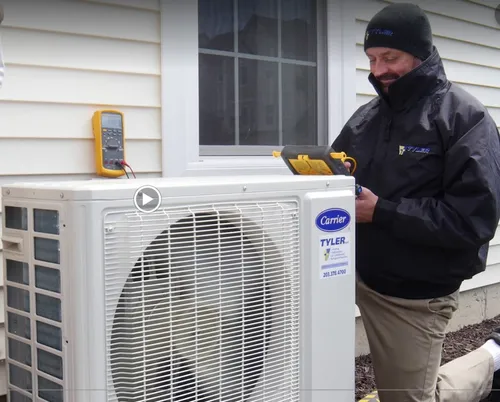
Tyler Heating, Air Conditioning, Refrigeration LLC
255 Hathaway Dr Unit 1, Stratford, CT 06615
Tyler Heating, Air Conditioning, Refrigeration LLC is an HVAC company serving New York, NY, with a focus on heating, cooling, and indoor air quality services. They provide installation, repair, and maintenance for air conditioners, furnaces, heat pumps, mini splits, and ductless HVAC systems. The company also offers indoor air quality solutions including humidity control and air purification. Established in 1995, Tyler Heating has over 25 years of experience serving the Southwest Connecticut area and offers same-day service to address urgent needs.
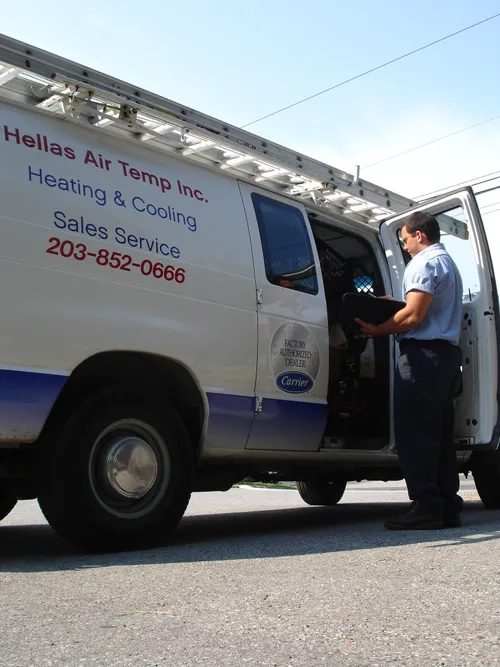
Hellas Air Temp Inc
52 Connecticut Ave, Norwalk, CT 06850
Hellas Air Temp Inc provides residential and commercial heating and cooling services in New York, NY. They offer sales, service, maintenance, and installation for a wide range of HVAC systems including central air, forced air, gas and propane boilers, ductless systems, rooftop units, and custom refrigeration solutions. Established in 1978, the company brings decades of experience to climate control solutions and specializes in customizable systems such as manifolds and circulation pumps.
Why Indoor Air Quality Matters in New Haven
New Haven's character is shaped by its history, coastal location, and urban density, all of which influence the air inside its buildings. Poor indoor air can lead to immediate effects like headaches, dizziness, and fatigue, as well as long-term respiratory issues, allergies, and other serious health conditions. For vulnerable populations, including children, the elderly, and those with asthma or heart disease, the risks are even greater. Given that many residents spend up to 90% of their time indoors, ensuring clean indoor air isn't just a luxury-it's a critical component of public health and daily comfort in the Elm City.
Common Indoor Air Pollutants in New Haven Homes & Offices
The specific air quality challenges faced in New Haven are influenced by the region's climate, urban landscape, and the age of its buildings 1 2 3. Understanding these common pollutants is the first step toward a healthier indoor environment.
Mold and Moisture
Due to coastal humidity and a significant percentage of older, inadequately maintained housing-51% built before 1940-moisture intrusion from leaks and high humidity levels are prevalent 4. This damp environment is ideal for mold growth, which can cause significant respiratory problems and exacerbate conditions like asthma.
Particulate Matter (PM2.5)
New Haven's location at the intersection of major transportation corridors, industrial areas, and a port leads to higher outdoor levels of fine particulate matter (PM2.5) 5. These microscopic particles can easily infiltrate buildings, worsening indoor air and exacerbating respiratory and cardiovascular conditions.
Radon
This naturally occurring, radioactive gas is the second leading cause of lung cancer. It seeps into buildings from the ground, and certain soil compositions in the region make testing for radon a crucial safety step for every homeowner 6.
Asbestos and Lead
Buildings constructed before the 1980s may contain asbestos in insulation, tiles, and other materials, as well as lead-based paints. These materials are hazardous when disturbed during renovations or due to deterioration, releasing fibers or dust into the air.
Volatile Organic Compounds (VOCs) & Carbon Monoxide
Everyday products like cleaning supplies, paints, and new furniture can off-gas VOCs. Fuel-burning appliances such as furnaces, water heaters, and stoves can produce carbon monoxide if not properly vented. These pollutants can accumulate in modern, energy-efficient "tighter" buildings, leading to headaches, nausea, and other illnesses 7 8.
How to Assess Your Indoor Air Quality
Determining the state of your indoor environment involves either a do-it-yourself initial screening or a comprehensive professional assessment. The Connecticut Department of Public Health (DPH) often recommends starting with a "walk-through" visual and olfactory inspection to identify obvious problems like musty odors, visible mold, or condensation before pursuing general testing, especially if no specific health complaints are present 9 10.
Do-It-Yourself (DIY) Testing
Inexpensive test kits are available for initial screening of specific pollutants like radon, mold, or allergens. These can range in cost from $15 to $200+ and are a good first step for concerned homeowners. However, they may not provide the full picture or diagnostic accuracy of a professional evaluation.
Professional Testing and Inspection
Certified indoor air quality specialists offer thorough assessments using advanced equipment. The cost varies by the size of the area and the number of pollutants tested.
- Basic Professional IAQ Testing: Averages around $400, typically checking for common allergens, mold spores, VOCs, and carbon monoxide levels.
- Specific Pollutant Testing: Can range from $100 to over $1,000 per test. For example, a dedicated mold inspection can cost between $300 and $1,000, while radon testing typically runs from $150 to $800 11 12.
Find the perfect indoor air quality service providers for your needs
Get personalized recommendations and expert advice
Solutions for Improving Indoor Air Quality
Once pollutants are identified, a range of solutions exists to clean your air, control sources, and improve ventilation. The right approach depends on your home's specific issues, layout, and existing HVAC system.
Air Purification and Filtration
Adding filtration is a direct way to remove particles from the air.
- Portable Air Purifiers: Target single rooms and are available at various price points.
- Whole-Home Air Cleaners: Integrated into your central HVAC system, these provide filtration for the entire house. Systems like high-efficiency particulate air (HEPA) filters or electronic air cleaners can range from $1,500 for basic units to more for comprehensive systems.
- UV Germicidal Lights: Installed inside the HVAC ductwork, these lights use ultraviolet radiation to kill mold, bacteria, and viruses as air passes by, adding an extra layer of defense.
Ventilation and Humidity Control
Managing moisture and bringing in fresh air are foundational to good IAQ.
- Humidifiers/Dehumidifiers: Whole-home systems can balance humidity levels year-round, preventing both dry air in winter and muggy, mold-friendly conditions in summer. Installed costs typically range from $1,300 to $4,300.
- Energy Recovery Ventilators (ERVs) & Fresh Air Intakes: These systems systematically exchange stale indoor air with filtered fresh outdoor air while recovering energy to maintain temperature efficiency. Installation generally costs between $2,000 and $5,000+ 13.
Source Control and Remediation
The most effective strategy is to remove or seal the pollution source.
- Mold Remediation: Professional removal and cleanup of mold-infested areas is critical for health and structural integrity. For an average-sized home, this process can cost approximately $5,000 14.
- Radon Mitigation: A professionally installed radon mitigation system, which vents the gas from beneath the home to the outside, is highly effective. These systems typically cost between $700 and $1,200+ to install 15 16.
- Asbestos/Lead Abatement: This is a highly specialized and regulated process that must be performed by licensed professionals to safely contain or remove hazardous materials.
Incentives and Programs for New Haven Residents
Investing in indoor air quality improvements can also align with energy efficiency goals. Homeowners in Connecticut may be eligible for incentives for certain upgrades through programs like Energize Connecticut, which can include rebates for high-efficiency HVAC equipment like heat pumps that also improve ventilation 17. Furthermore, the State of Connecticut administers an HVAC Indoor Air Quality Grants Program for Public Schools to fund system upgrades in educational buildings, highlighting the public priority placed on healthy indoor air 18.
Maintaining Healthy Indoor Air
Improving your air quality is not a one-time event but an ongoing process. Simple habits make a big difference:
- Change HVAC Filters Regularly: Use high-quality filters (MERV 11-13 is often recommended) and change them every 1-3 months.
- Control Humidity: Use bathroom fans, fix leaks promptly, and consider a dehumidifier for damp basements.
- Ventilate: Open windows when weather and outdoor air quality permit, and always use exhaust fans while cooking or showering.
- Choose Low-VOC Products: Opt for paints, cleaners, and furnishings labeled as low-VOC.
- Schedule HVAC Maintenance: Annual servicing of your heating and cooling system ensures it operates efficiently and doesn't become a source of dust or combustion gases.
Frequently asked questions
Sources
Footnotes
-
A seasonal investigation of indoor air quality in relation to ... - NIH - https://pmc.ncbi.nlm.nih.gov/articles/PMC11541727/ ↩
-
Template for for the Jurnal Teknologi - https://journals.utm.my/jurnalteknologi/article/download/3995/3626/14866 ↩
-
Indoor Air Quality Services - https://www.ssihvac.com/indoor-air-quality/ ↩
-
asthma: a health justice issue in new haven, ct - https://law.yale.edu/sites/default/files/area/center/ghjp/documents/asthma_issue_brief_november_2018.pdf ↩
-
New Haven air quality sensors shining light on pollution - https://ctmirror.org/2024/08/28/new-haven-air-quality-sensors/ ↩
-
Indoor Air Quality Solutions in New Haven - https://www.apexradonsolutions.com/indoor-air-quality-services.html ↩
-
Indoor Air Quality - NM-Tracking - https://nmtracking.doh.nm.gov/environment/air/IndoorQuality.html ↩
-
IEQ NEWS - CT.gov - https://portal.ct.gov/-/media/Departments-and-Agencies/DPH/dph/environmental_health/eoha/pdf/IEQNEWSWinter09finalpdf.pdf ↩
-
FACT SHEET Should I Test My Indoor Air? - CT.gov - https://portal.ct.gov/-/media/dph/ieq/should-i-test-my-indoor-air---fact-sheet---january-2024---new-logo.pdf?rev=80254f1f4fcd40daba2650c6187187c4&hash=B82995C8B854FC2CE253239F439CC097 ↩
-
FACT SHEET Should I Test My Indoor Air? - CT.gov - https://portal.ct.gov/-/media/dph/ieq/should-i-test-my-indoor-air---fact-sheet---january-2024---new-logo.pdf?rev=80254f1f4fcd40daba2650c6187187c4&hash=B82995C8B854FC2CE253239F439CC097 ↩
-
Air Quality Testing - New Haven Mold Inspection - https://www.moldinspectioninnewhaven.com/air-quality-testing/ ↩
-
How Much Does Indoor Air Quality Testing Cost? [2026 Data] - https://www.angi.com/articles/how-much-does-indoor-air-quality-testing-cost.htm ↩
-
How Much Does Professional Home Indoor Air Quality Testing Cost? - https://www.airpf.com/how-much-does-a-home-indoor-air-quality-testing-cost/ ↩
-
New Haven Indoor Air Quality - https://www.modernhvacct.com/indoor-air-quality/ ↩
-
How Much Do Indoor Air Quality Systems Cost? - https://www.callmattioni.com/blog/t-indoor-air-quality-systems-cost/ ↩
-
Indoor Air Quality Services in New Haven, CT | Air Specialties - https://www.airspecialtiesac.com/indoor-air-quality-new-haven-county-ct/ ↩
-
CONNECTICUT'S HIDDEN AIR POLLUTION PROBLEM: FOSSIL ... - https://www.savethesound.org/wp-content/uploads/2024/02/Connecticuts-Hidden-Pollution-Problem_report-for-web_2023-09-20.pdf ↩
-
HVAC - CT.gov - https://portal.ct.gov/dph/newsroom/press-releases---2024/hvac ↩