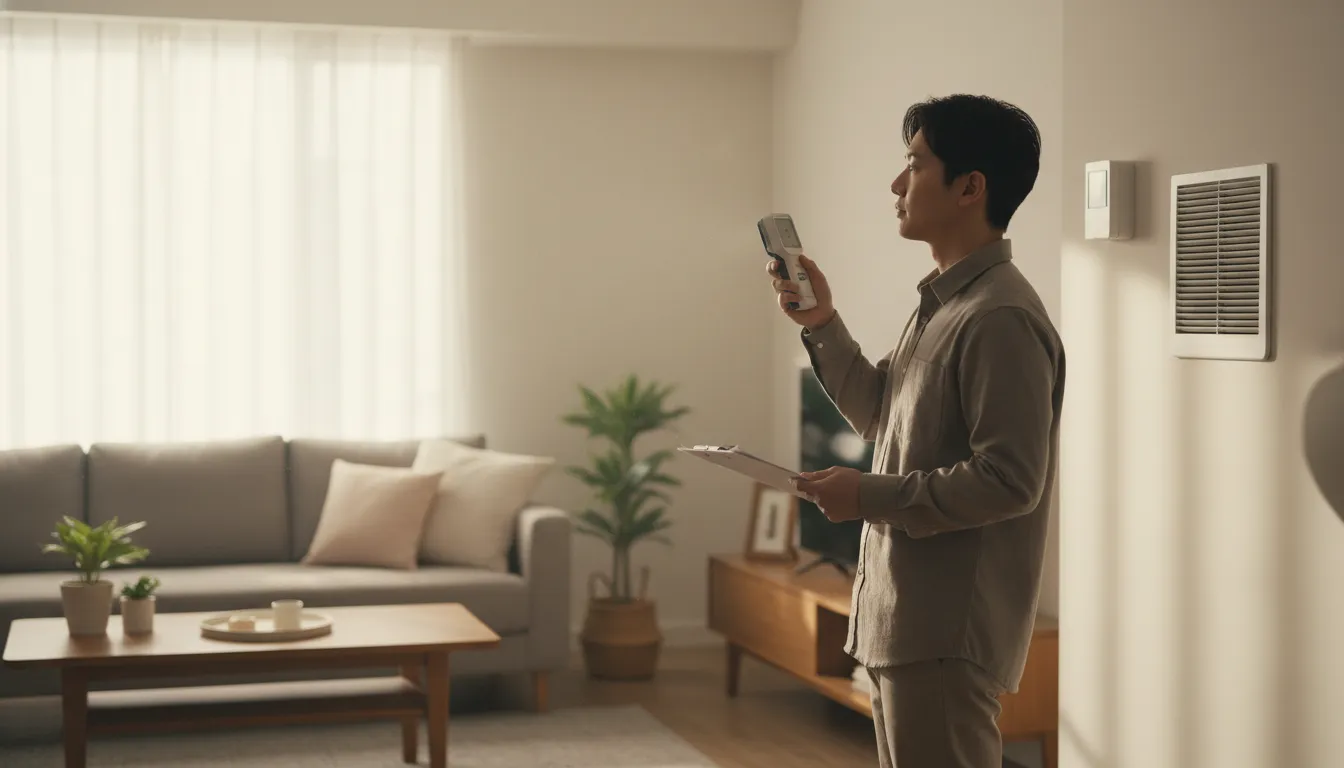
Find the Best Indoor Air Quality Service Providers for Your Business
No obligation • Fast responses • Nationwide coverage

Why you can trust HVAC Firms
HVAC Firms is a leading United States resource for evaluating HVAC service providers. Our team researches companies, checks credentials, and reviews customer feedback to present clear, unbiased information. Listings and rankings are based on merit, and companies cannot pay to change our editorial content.
Search providers near you
Top Indoor Air Quality Service Providers in Milford, Connecticut Ranked
The air you breathe inside your Milford home directly impacts your health, comfort, and well-being. Indoor Air Quality (IAQ) refers to the condition of the air within and around buildings, particularly as it relates to the presence of pollutants and allergens. In a coastal city like Milford, with its older housing stock and humid climate, managing IAQ is especially important to address concerns like mold, radon, and volatile organic compounds. This guide will help you understand the local factors affecting your home's environment, the professional services available for assessment and improvement, and practical steps you can take to create a healthier indoor space.
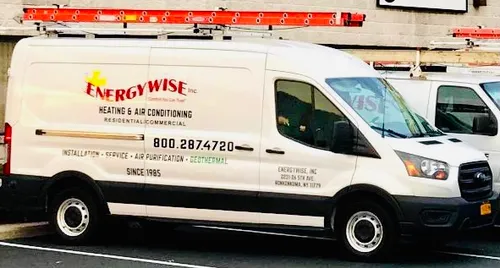
Energywise Inc
2231 5th Ave Suite 26, Ronkonkoma, NY 11779
Energywise Inc is an HVAC company based in New York, NY, specializing in heating and cooling solutions. They offer installation, repair, and maintenance services for a variety of systems including heat pumps, central air conditioning, ductless mini splits, geothermal systems, and traditional furnaces. Their factory-trained technicians provide expert guidance and personalized recommendations to optimize home comfort and energy efficiency. Energywise Inc emphasizes energy-efficient products and sustainable solutions to reduce environmental impact while maintaining reliable system performance. The company has decades of experience and provides 24/7 emergency repair services to address urgent heating or cooling issues promptly.

Central Air Systems, Inc
22 Scouting Blvd #2, Medford, NY 11763
Central Air Systems, Inc is an HVAC company serving New York, NY, specializing in heating and cooling services. They provide repair, installation, and maintenance for air conditioners, furnaces, boilers, and geothermal heat pumps. The company also offers indoor air quality services and HVAC tune-ups. Established in 1989, Central Air Systems has experience delivering comprehensive comfort solutions, including high-efficiency system installations and geothermal heating and cooling. Their technicians are factory trained and equipped to handle repairs for all major brands.
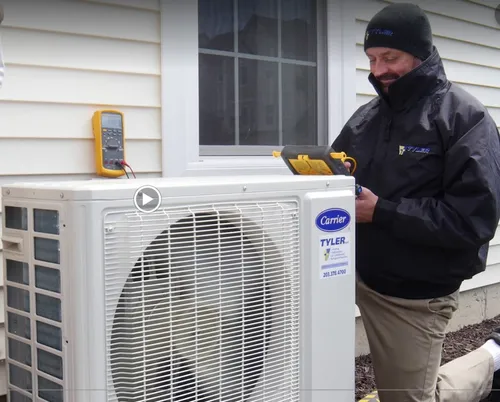
Tyler Heating, Air Conditioning, Refrigeration LLC
255 Hathaway Dr Unit 1, Stratford, CT 06615
Tyler Heating, Air Conditioning, Refrigeration LLC is an HVAC company serving New York, NY, with a focus on heating, cooling, and indoor air quality services. They provide installation, repair, and maintenance for air conditioners, furnaces, heat pumps, mini splits, and ductless HVAC systems. The company also offers indoor air quality solutions including humidity control and air purification. Established in 1995, Tyler Heating has over 25 years of experience serving the Southwest Connecticut area and offers same-day service to address urgent needs.
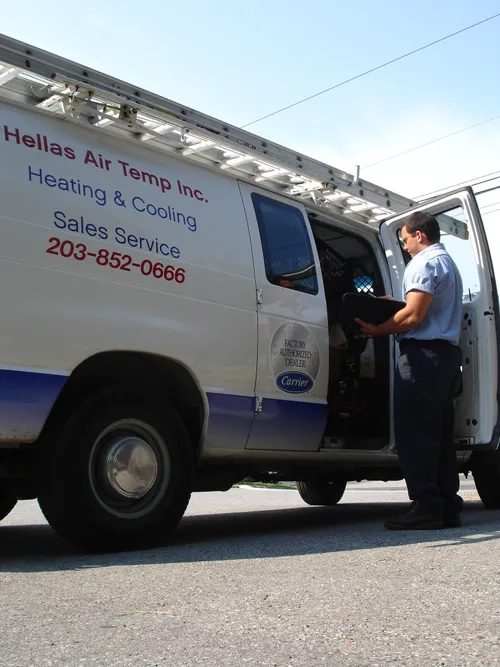
Hellas Air Temp Inc
52 Connecticut Ave, Norwalk, CT 06850
Hellas Air Temp Inc provides residential and commercial heating and cooling services in New York, NY. They offer sales, service, maintenance, and installation for a wide range of HVAC systems including central air, forced air, gas and propane boilers, ductless systems, rooftop units, and custom refrigeration solutions. Established in 1978, the company brings decades of experience to climate control solutions and specializes in customizable systems such as manifolds and circulation pumps.
Pacific Heating & Air Conditioning
Los Angeles, CA
Pacific Heating & Air Conditioning is an HVAC company serving Los Angeles, CA, offering a range of heating and cooling services including installation, repair, and maintenance of air conditioners, furnaces, boilers, mini split systems, and PTAC units. They provide indoor air quality services such as duct cleaning and thermostat installation. The company specializes in PTAC repair and installation, working with various brands and offering 24/7 emergency service. Their technicians also handle air duct cleaning to improve indoor air quality. With over 10 years of experience, Pacific Heating & Air Conditioning focuses on customized home comfort solutions and offers service contracts to maintain system efficiency.
Why Indoor Air Quality Matters in Milford
The quality of your home's air is not an abstract concern; it's a daily factor in your family's health. Poor indoor environmental quality can lead to immediate effects like headaches, dizziness, fatigue, and irritation of the eyes, nose, and throat 1. Over the long term, exposure to certain contaminants like radon or mold spores can contribute to more serious respiratory diseases and other health conditions 1. For individuals with asthma or allergies, indoor allergens like dust mites and pet dander can significantly worsen symptoms. Given that people spend approximately 90% of their time indoors, ensuring clean air at home is a critical component of preventative healthcare 2.
Common Indoor Air Pollutants in Milford Homes
Several pollutants are of particular concern for Milford residents, influenced by the local geography, climate, and building age.
- Radon Gas: This colorless, odorless radioactive gas is a leading environmental cause of lung cancer and is naturally present in Connecticut's bedrock. It can seep into homes through cracks in foundations and basements. The U.S. Environmental Protection Agency (EPA) recommends mitigation if radon levels exceed 4 picocuries per liter (pCi/L).
- Mold and Moisture: Milford's proximity to Long Island Sound contributes to higher humidity levels, especially in basements and crawl spaces. This moisture, combined with potential flooding or water leaks, creates ideal conditions for mold growth, which releases spores that can trigger allergic reactions and asthma attacks 3.
- Volatile Organic Compounds (VOCs): These are gases emitted from a wide array of household products, including paints, varnishes, cleaning supplies, adhesives, and even new furniture and carpets 4. Off-gassing from these materials can contribute to poor indoor air and cause various health irritations.
- Combustion Byproducts: Carbon monoxide (CO), nitrogen dioxide, and smoke can be released from fuel-burning appliances like furnaces, water heaters, wood stoves, and gas stoves if they are not properly vented, maintained, or used.
- Particulates and Allergens: Common biological pollutants include dust mites, pet dander, pollen, and rodent droppings. These particles can circulate through your home's air and HVAC system, aggravating allergies and asthma.
How to Test Your Home's Air in Milford
Identifying specific pollutants is the first step toward a solution. Several methods are available to Milford homeowners.
- Professional IAQ Assessment: Hiring a local environmental testing company is the most comprehensive approach. Firms in the area, such as those listed in local directories, offer testing for a suite of contaminants including mold spores, VOCs, formaldehyde, and allergens. A professional assessment provides a detailed analysis and actionable report.
- Radon Testing: While inexpensive short-term DIY test kits are available at hardware stores, professionals often recommend long-term testing for a more accurate picture of your home's radon levels year-round. Many local home inspectors also offer radon testing as part of their services.
- Digital Air Quality Monitors: For ongoing awareness, smart monitors like those from Airthings allow you to track key metrics in real-time, including levels of particulate matter (PM2.5), VOCs, carbon dioxide (CO2), humidity, and temperature 5. This data can help you correlate air quality changes with activities like cooking or cleaning.
- Targeted Inspection: For specific concerns, such as in older homes, you may need a specialist to test for legacy hazards like asbestos or lead paint, which require particular handling during renovations 6.
Solutions and Improvements for Healthier Air
Once you understand your home's air quality profile, you can implement targeted solutions. The three fundamental strategies are source control, ventilation, and air cleaning 7.
1. Source Control The most effective way to improve IAQ is to eliminate individual sources of pollution or reduce their emissions.
- Choose low-VOC or zero-VOC paints, stains, and sealants for home projects 8.
- Store paints, solvents, and adhesives in a well-ventilated shed or garage, not in living spaces.
- Use natural cleaning products or ensure areas are well-ventilated when using chemical cleaners.
- Address water leaks and seepage promptly to prevent mold growth. Ensure gutters and downspouts direct water away from your foundation.
- Have fuel-burning appliances serviced annually by a qualified technician to ensure proper combustion and venting 9.
2. Ventilation Improvements Increasing the amount of outdoor air coming indoors helps dilute and remove pollutants.
- Use exhaust fans in your kitchen and bathrooms, venting them to the outside, not into an attic.
- When weather permits, open windows and doors to create cross-ventilation.
- Consider installing an energy recovery ventilator (ERV) or heat recovery ventilator (HRV). These systems bring in fresh outdoor air while preconditioning it (heating or cooling it) using the energy from the exhaust air, improving ventilation without massive energy loss.
3. Air Cleaning and Filtration While not a substitute for source control and ventilation, air cleaners can be highly effective at removing particles and some gases from circulating air.
- HVAC Filter Upgrades: The simplest upgrade is to use a higher-efficiency filter in your central heating and cooling system. Look for a Minimum Efficiency Reporting Value (MERV) rating of 8 or higher to capture a significant portion of airborne particles. Change filters regularly according to manufacturer instructions.
- Portable Air Purifiers: For single rooms, a portable unit with a True HEPA filter can effectively remove allergens and fine particles. Units with activated carbon filters can also help adsorb some gases and odors.
- Whole-Home Air Purifiers: These are installed directly into your HVAC ductwork, cleaning the air throughout your entire house as the system runs. Options include high-efficiency particulate air filters, electronic air cleaners, and hybrid models.
- UV Germicidal Lights: Installed inside your HVAC system's ductwork, UV-C lights can help reduce the concentration of mold spores, bacteria, and viruses that pass by the lamps.
4. Humidity Control Managing moisture is critical in Milford's climate to inhibit mold growth and dust mites.
- Use dehumidifiers in damp areas like basements to maintain indoor relative humidity between 30% and 50% 10.
- Ensure your clothes dryer is vented to the outside.
- Run bathroom exhaust fans during and for 20-30 minutes after showers.
Find the perfect indoor air quality service providers for your needs
Get personalized recommendations and expert advice
Professional Services and Investment
For problems beyond DIY fixes, Milford has access to qualified professionals. The cost of services varies based on the home's size, the scope of the problem, and the solutions chosen.
- Comprehensive Air Quality Test: A professional assessment that tests for multiple pollutants typically ranges from $250 to $550+ in the region, depending on the number of contaminants analyzed 11.
- Mold Inspection and Testing: If mold is suspected, a targeted inspection and air/surface sampling can cost between $300 and $500 12.
- Radon Mitigation System: If high radon levels are detected, installing an active soil depressurization system-the most common and effective fix-can range from $800 to $2,500+ for installation 13.
- HVAC Integrated Solutions: Adding a whole-home air purifier, UV light system, or dehumidifier to your existing HVAC system involves equipment and installation labor, with costs generally starting around $500 and ranging to $3,000 or more depending on the technology and complexity 14 15.
- Duct Cleaning: Having your HVAC ductwork professionally cleaned to remove accumulated dust, debris, and potential mold can vary in price based on the size of your system and the extent of cleaning required.
Maintaining Your Indoor Environment
Good IAQ is an ongoing process. Simple habits make a big difference:
- Vacuum regularly using a vacuum cleaner with a HEPA filter.
- Dust surfaces with a damp cloth to avoid kicking particles back into the air.
- Keep houseplants, which can help absorb certain gases (though they are not a primary solution for poor air quality).
- Test your carbon monoxide and smoke detectors monthly and replace batteries as needed.
- Schedule annual maintenance for your HVAC system to ensure it operates efficiently and circulates clean air.
Frequently asked questions
Sources
Footnotes
-
Indoor Air Quality Mold and Moisture Carbon Monoxide (CO) - https://www.milfordct.us/DocumentCenter/View/800 ↩ ↩2
-
Simple Tips to Make Air Inside Your Home Safer | AAP - https://www.youtube.com/watch?v=ZvCcrpR-eWc ↩
-
Indoor Environmental Quality - CT.gov - https://portal.ct.gov/DEEP/Reduce-Reuse-Recycle/Greenbuilding/Indoor-Environmental-Quality ↩
-
Milford, CT Poor Air Quality Map and Forecast | First Street - https://firststreet.org/city/milford-ct/947515_fsid/air ↩
-
How to test indoor air quality in your home - Airthings - https://www.airthings.com/resources/how-to-test-air-quality-in-your-home ↩
-
THE BEST 10 Environmental Testing in Milford, CT - Yelp - https://m.yelp.com/search?find_desc=Environmental+Testing&find_loc=Milford%2C+CT ↩
-
THREE BASIC STRATEGIES TO IMPROVE INDOOR AIR QUALITY - https://airquip.com/three-basic-strategies-to-improve-indoor-air-quality/ ↩
-
Indoor Environmental Quality - CT.gov - https://portal.ct.gov/DEEP/Reduce-Reuse-Recycle/Greenbuilding/Indoor-Environmental-Quality ↩
-
Indoor Air Quality Solutions - CT Mold Pros - https://ctmoldpros.com/indoor-air-quality-solutions/ ↩
-
IEQ NEWS - CT.gov - https://portal.ct.gov/-/media/Departments-and-Agencies/DPH/dph/environmental_health/eoha/pdf/IEQNEWSWinter09finalpdf.pdf ↩
-
How Much Does Professional Home Indoor Air Quality Testing Cost? - https://www.airpf.com/how-much-does-a-home-indoor-air-quality-testing-cost/ ↩
-
TOP 10 BEST Indoor Air Quality Testing in Milford, CT - Yelp - https://www.yelp.com/search?find_desc=Indoor+Air+Quality+Testing&find_loc=Milford%2C+CT ↩
-
Radon Mitigation & Radon Testing in Milford, CT | Indoor Air ... - https://www.apexradonsolutions.com/milford-ct.html ↩
-
Indoor Air Quality Across Connecticut | Degree HVAC - https://www.degreeheatingandcooling.com/indoor-air-quality/ ↩
-
Indoor Air Quality Services Norwich CT - https://www.broadbrookheating.com/indoor-air-quality ↩