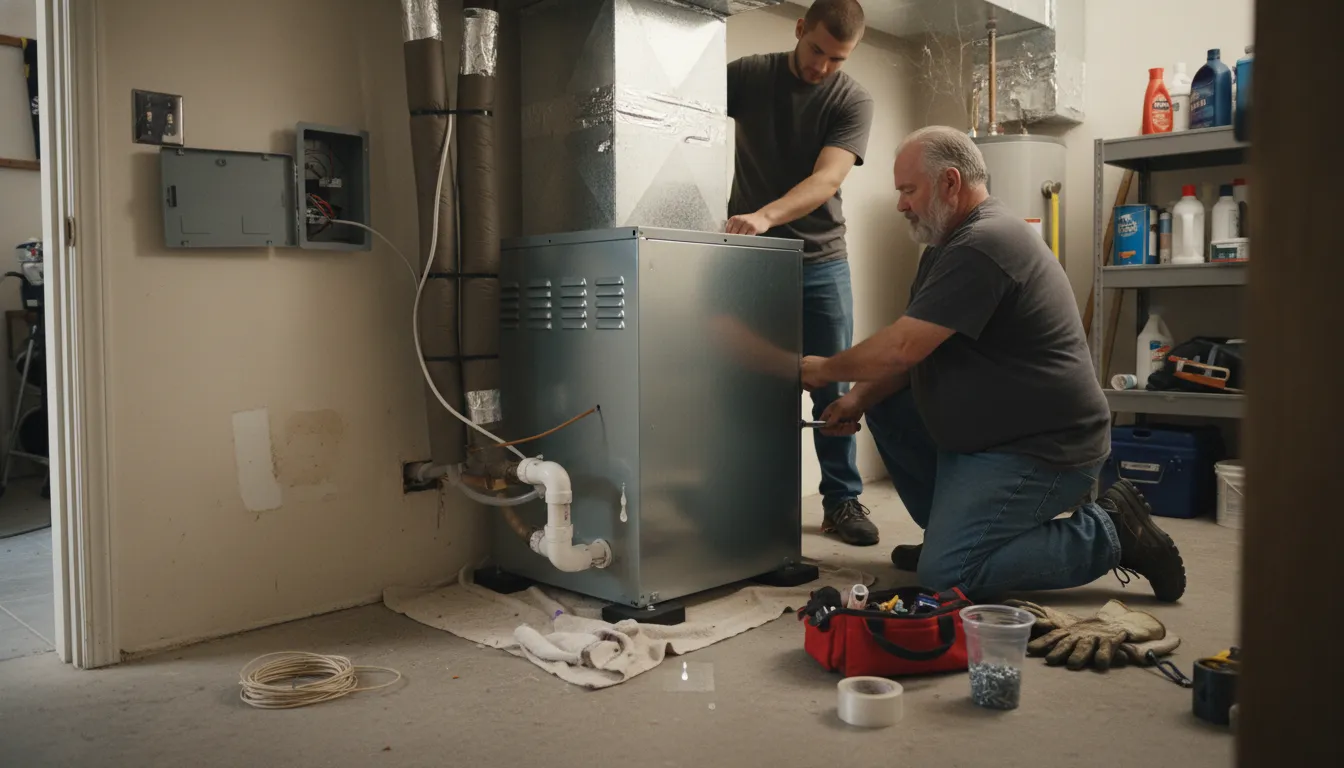
Find the Best HVAC Installers for Your Business
No obligation • Fast responses • Nationwide coverage

Why you can trust HVAC Firms
HVAC Firms is a leading United States resource for evaluating HVAC service providers. Our team researches companies, checks credentials, and reviews customer feedback to present clear, unbiased information. Listings and rankings are based on merit, and companies cannot pay to change our editorial content.
Search providers near you
Top HVAC Installers in East Providence, Rhode Island Ranked
Choosing the right heating and cooling system for your East Providence home is a significant decision that impacts your comfort, energy bills, and property value for years to come. Whether you're upgrading an aging system, adding air conditioning to an older home, or building new, understanding your options for HVAC installation is crucial. This guide will help you navigate the process, from selecting the best system type for Rhode Island's climate to understanding the installation steps and available financial incentives, so you can make an informed choice with a local professional.
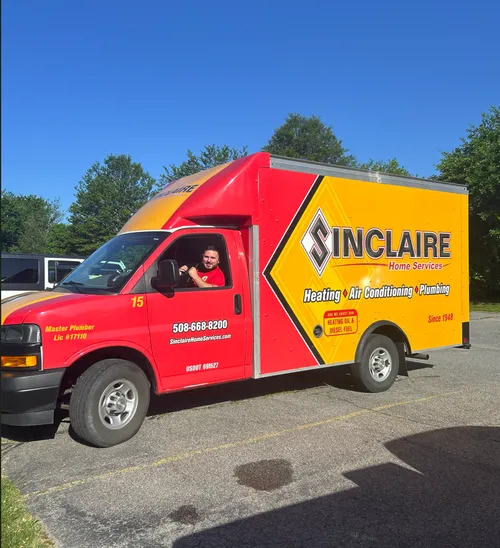
Sinclaire Home Services
140 South St STE 6, Walpole, MA 02081
Sinclaire Home Services is a family-owned company based near Boston, MA, providing heating, air conditioning, plumbing, electrical, and home heating oil services. Serving a wide area including Walpole and surrounding communities, they offer comprehensive HVAC installation, repair, and tune-up services. Established in 1948, Sinclaire has over 70 years of experience and provides 24/7 heating services to ensure year-round comfort. Their licensed and background-checked team handles everything from routine maintenance to urgent repairs and system upgrades.
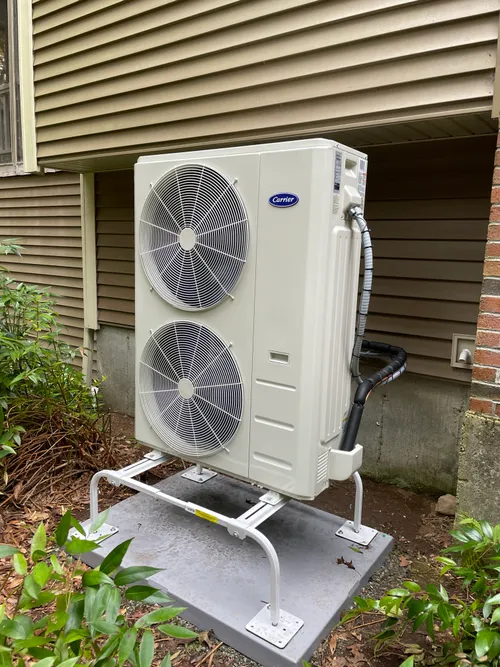
Smart Climate HVAC
292 Page St B, Stoughton, MA 02072
Smart Climate HVAC is a heating, air conditioning, and water heating service provider based in Boston, MA. They specialize in the design, installation, and servicing of HVAC systems for residential, commercial, and new construction projects. Their services include heating and AC repairs, tune-ups, installations, and replacements, ensuring year-round comfort. The company also offers water heating solutions. Their team of expert HVAC technicians handles a wide range of projects with a focus on customer satisfaction.
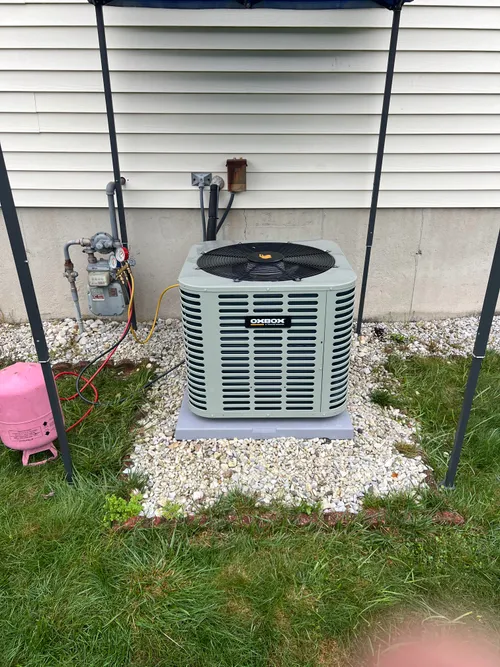
Accurate LLC
5 Millhouse Ave, Randolph, MA 02368
Accurate LLC is a veteran-owned HVAC contractor based in Boston, MA, specializing in residential and commercial installation services. Since 2004, they have provided installation of HVAC systems, gas furnaces, mini splits, and heat pumps. The company offers 24/7 emergency services to address urgent HVAC needs promptly. Accurate LLC is committed to energy efficiency and sustainable practices as a member of Northeast Energy Efficiency Partnerships (NEEP).
Suburban HVAC, Inc.
16 SW Park, Westwood, MA 02090
Suburban HVAC, Inc. provides heating and cooling services in Boston, MA, serving both residential and commercial clients. They offer a range of HVAC services including installation, repair, and maintenance for air conditioners, furnaces, heat pumps, and boilers. The company is experienced with commercial HVAC systems and understands the specific needs of businesses to maintain comfort and efficiency. With over 100 years of combined team experience, Suburban HVAC supports customers through all stages of HVAC service and installation.
Alpha Omega HVAC Plumbing and Heating
Boston, MA
Alpha Omega HVAC Plumbing and Heating is a full-service HVAC and plumbing company serving Boston, MA. They specialize in air conditioning and furnace repair, maintenance, and installation, including gas and oil heating systems. The company offers 24/7 emergency services to address urgent heating and cooling needs. Established in 1997, Alpha Omega HVAC Plumbing and Heating has over two decades of experience in the industry, providing reliable heating and plumbing solutions to local customers.
Understanding Your HVAC System Options in East Providence
The climate in Rhode Island demands a system that can efficiently handle both cold winters and warm, humid summers. Modern HVAC installation offers several primary pathways, each with distinct advantages depending on your home's layout and existing infrastructure.
Heat Pumps: The All-in-One Solution Heat pumps are increasingly popular in East Providence for their remarkable efficiency and versatility. They function as both a heater and an air conditioner by moving heat rather than generating it. For homes without existing ductwork, ductless mini-split systems are an excellent choice. These involve one outdoor unit connected to one or more indoor air handlers mounted on walls or ceilings, allowing for "zoning" where you can control temperatures in individual rooms 1. For homes with ducts, a central heat pump system can replace both a furnace and a central air conditioner, providing efficient year-round comfort 2.
Central Air Conditioning and Furnace Systems If your home already has a functional ductwork system, a traditional split system pairing a gas or oil furnace with a central air conditioner remains a reliable and effective option. The key factor here is the efficiency rating of the air conditioner, measured as SEER2 (Seasonal Energy Efficiency Ratio). A higher SEER2 rating means lower operating costs, though the initial equipment cost may be higher. This setup is often ideal for whole-home heating and cooling in larger, single-family homes.
High-Efficiency Boilers Many older homes in East Providence utilize hydronic (hot water) heating systems with radiators or baseboard heaters. When the boiler needs replacement, installing a modern, high-efficiency condensing boiler from reputable brands can significantly reduce fuel consumption while maintaining the comfortable, even heat characteristic of these systems.
The HVAC Installation Process: A Step-by-Step Overview
A professional HVAC installation is a detailed, multi-stage project that ensures your new system operates safely, efficiently, and reliably for its full lifespan.
1. Comprehensive Site Evaluation and Load Calculation The process begins long before equipment arrives. A qualified contractor will perform a detailed assessment of your home. This includes measuring square footage, evaluating insulation levels, checking window quality, and assessing the condition of any existing ductwork 3. Most importantly, they will perform a Manual J load calculation to determine the precise heating and cooling capacity (measured in BTUs or tons) your home requires. An improperly sized system-too large or too small-will lead to comfort issues, frequent cycling, and higher energy costs.
2. System Design, Permitting, and Preparation Based on the evaluation, your contractor will design the system layout, select appropriate equipment, and secure any required local building permits from the City of East Providence. This step ensures the installation complies with all safety and building codes. On installation day, the crew will prepare the work area, protecting your floors and furnishings, and safely disconnect and remove your old furnace, air conditioner, or boiler.
3. Installation of New Equipment and Components This is the core physical work. For a central system, it involves setting the new furnace or air handler, connecting refrigerant and drainage lines, and placing the outdoor condenser unit on a stable pad 4. For ductless systems, technicians will mount the indoor units, run the connecting line set through a small hole in the wall, and connect to the outdoor unit. Any necessary electrical work, such as running a new 240-volt circuit for an air conditioner or heat pump, is completed by a licensed electrician.
4. Ductwork Assessment and Modification If you are installing a central system, the existing ductwork will be thoroughly inspected. Leaky, poorly insulated, or inadequately sized ducts can sabotage the performance of even the most efficient equipment. The installation may include sealing leaks with mastic, adding insulation, or modifying duct runs to improve airflow balance. In rare cases for new construction or major renovations, entirely new ductwork may be installed.
Find the perfect hvac installers for your needs
Get personalized recommendations and expert advice
5. Final Connections, System Startup, and Testing Once all components are in place, the system is connected to electrical power and the thermostat. The most critical phase follows: system commissioning and testing. A technician will start the system and perform a series of checks, including measuring refrigerant charge, testing airflow at each register, verifying electrical amp draw, ensuring the heat pump reverses properly, and checking for any gas leaks in a furnace 5. They will also calibrate the thermostat and explain the basic operation and maintenance schedule to you. This thorough testing is essential for optimal performance and longevity.
What Influences the Cost of HVAC Installation?
The investment for a new HVAC system in East Providence varies widely based on several key factors. Understanding these can help you interpret estimates and plan your budget.
Primary Cost Drivers:
- System Type and Size: A basic central AC and furnace replacement for a 1,500-square-foot home may range from $8,000 to $14,000+, while a multi-zone ductless mini-split system for a similar-sized home could start around $16,000+ 6 7. Larger homes requiring more capacity (e.g., 3-ton or larger systems) will be at the higher end of the cost spectrum.
- Equipment Efficiency: High-efficiency models with superior SEER2 (for cooling) and HSPF (for heat pumps) ratings command a higher price but offer lower monthly utility bills.
- Ductwork Modifications: The need for significant duct repair, resealing, or redesign can add substantially to the project cost 8.
- Installation Complexity: Factors like the accessibility of attic or crawlspace installations, the need for electrical panel upgrades, or custom fabrication for unique spaces affect labor time and cost.
Project Timeline: A standard replacement of a furnace and air conditioner or the installation of a multi-zone heat pump system typically takes 1 to 2 days for a skilled crew 9. Projects involving extensive new ductwork or complex retrofits in historic homes may take longer.
Financial Incentives and Rebates for East Providence Homeowners
Significant financial incentives are available to help offset the cost of high-efficiency HVAC installations, making it an opportune time to upgrade.
Federal Tax Credits: The Inflation Reduction Act (IRA) provides a tax credit worth 30% of the project cost, up to $2,000 annually, for the installation of qualified heat pumps and high-efficiency biomass stoves or boilers 10. This credit applies directly to your federal income tax liability.
State and Local Rebates: Rhode Island Energy (RIEnergy) often administers rebate programs for energy-efficient upgrades. These can include direct cash rebates for installing qualifying air-source heat pumps or other high-efficiency equipment 11. Programs and amounts change, so it's essential to ask your HVAC contractor about current local incentives or check the utility's website directly. Your contractor should be able to help you navigate the application process for these valuable savings.
Frequently asked questions
Sources
Footnotes
-
East Bay Air Systems | Heat Pump Installation | East Providence - https://www.eastbayairsystems.com/ ↩
-
Mitsubishi Electric Heating & Air Conditioning Systems - https://www.carjon.com/mitsubishi-electric-heating-air-conditioning-systems ↩
-
Step-by-Step HVAC Installation Guide - Carrier - https://www.carrier.com/residential/en/us/products/air-conditioners/hvac-installation/ ↩
-
Air Conditioning Installation: A Step-by-Step Process - https://nexgenairandplumbing.com/blog/air-conditioning-installation-a-step-by-step-process/ ↩
-
HVAC Post-Installation Testing Checklist - Blue Collars - https://bluecollars.com/hvac-post-installation-testing-checklist/ ↩
-
Heating and Air Conditioning Installation in East Providence, RI - https://www.homedepot.com/services/l/ri/east-providence/heating-air-conditioning-installation/c16fbb4b7 ↩
-
How Much Does an Air Conditioner Cost for a 1,500-Square-Foot Home? - https://www.thisoldhouse.com/heating-cooling/air-conditioner-cost-for-1500-square-foot-home ↩
-
Things You Need to Know About Ductwork Installation - https://www.ashburnham-insurance.co.uk/blog/2019/10/things-you-need-to-know-about-ductwork-installation/ ↩
-
How Does AC Installation Cost? - Rhode Island HVAC Services - https://rhodeislandhvacservices.com/blog/how-much-should-ac-installation-cost/ ↩
-
Air Conditioners in 2024 | What you should know - https://www.youtube.com/watch?v=XufPDxw7x5I ↩
-
Oregon HVAC Rebates & Incentives For New System Installations - https://sunglowinc.com/oregon-rebates/ ↩