Find the Best HVAC Installers for Your Business
No obligation • Fast responses • Nationwide coverage

Why you can trust HVAC Firms
HVAC Firms is a leading United States resource for evaluating HVAC service providers. Our team researches companies, checks credentials, and reviews customer feedback to present clear, unbiased information. Listings and rankings are based on merit, and companies cannot pay to change our editorial content.
Search providers near you
Top HVAC Installers in Dayton, Ohio Ranked
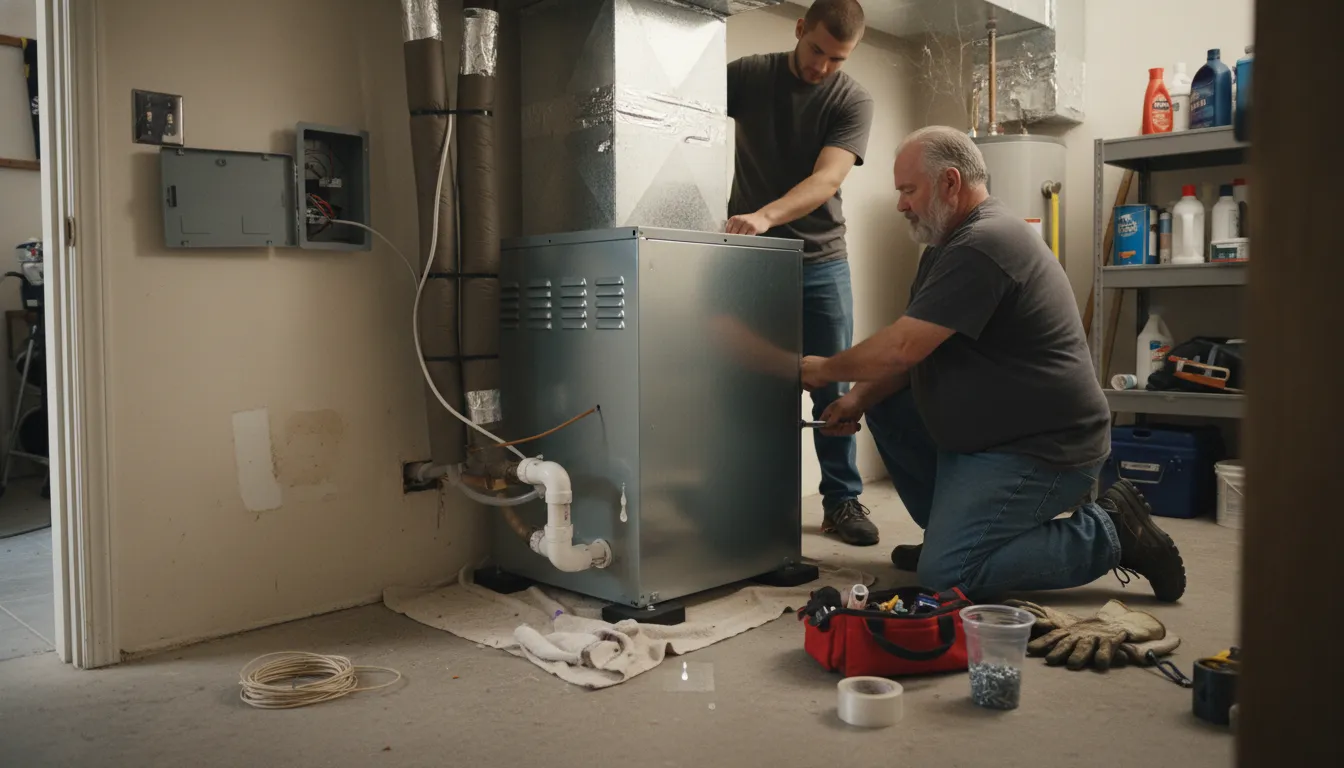
Installing a new heating and cooling system is a significant investment in your Dayton home's comfort, efficiency, and value. The right HVAC installation ensures reliable performance through Ohio's hot, humid summers and cold winters while managing your energy costs. This guide will help you understand the types of systems available, the installation process, and key cost factors, empowering you to make an informed decision when selecting a local provider for your project.
Twin Power Heating & Air
Cincinnati, OH
Twin Power Heating & Air is an HVAC company serving Cincinnati, OH, and nearby communities. They offer a full range of heating, cooling, and ventilation services, including repair, installation, and maintenance of air conditioners, furnaces, and heat pumps. The company also specializes in indoor air quality solutions to help improve home air cleanliness and comfort. Twin Power Heating & Air serves multiple locations around Cincinnati, including West Chester, Mason, and Loveland, providing professional HVAC services tailored to residential and commercial needs.
Gruter Heating & Air Conditioning Co., Inc.
164 Wyndham Dr, Maineville, OH 45039
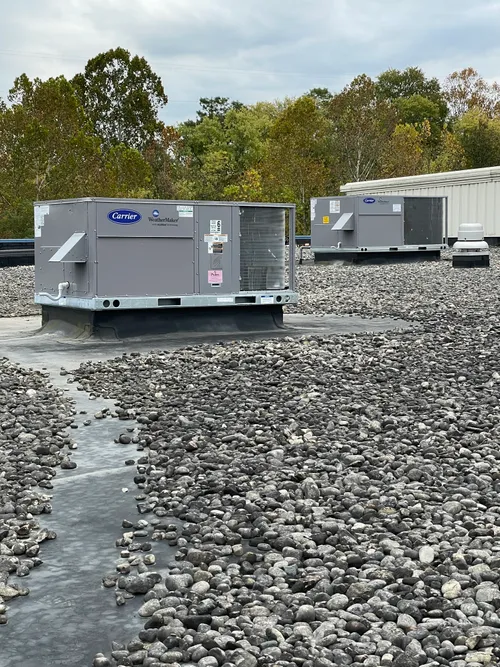
Gruter Heating & Air Conditioning Co., Inc. is an HVAC contractor serving Cincinnati, OH, and the surrounding areas. They provide installation, repair, and maintenance services for air conditioners, furnaces, heat pumps, boilers, mini splits, and geothermal heat pumps for both residential and commercial clients. The company works with well-known brands and uses advanced diagnostic tools and genuine manufacturer parts to ensure efficient and eco-friendly solutions. With nearly 40 years of experience, Gruter Heating & Air Conditioning offers flexible scheduling and competitive pricing to meet customer needs.
Understanding Your HVAC System Options in Dayton
Choosing the right system is the first step toward year-round comfort. The most common configurations in the Dayton area are designed to handle the full range of Midwestern seasons.
Furnace and Central Air Conditioner Combo This is a traditional and very popular pairing in Ohio. A gas furnace provides efficient, powerful heat during winter, while a separate central air conditioning unit handles summer cooling. This split-system approach allows homeowners to select the ideal efficiency level for each component, often measured by AFUE (Annual Fuel Utilization Efficiency) for the furnace and SEER2 (Seasonal Energy Efficiency Ratio) for the AC.
Heat Pump Systems A heat pump is a versatile all-in-one unit that provides both heating and cooling by transferring heat. In cooling mode, it removes heat from your home. In heating mode, it extracts heat from the outdoor air (even in cold weather) and moves it inside. Modern cold-climate heat pumps are increasingly efficient for Dayton's climate and can be a great option for reducing reliance on fossil fuels.
Ductless Mini-Split Systems For homes without existing ductwork, like older properties or room additions, ductless mini-splits are an excellent solution. These systems consist of an outdoor compressor/condenser and one or more indoor air-handling units mounted on walls or ceilings. They offer zoned comfort, allowing you to control temperatures in individual rooms, which can lead to significant energy savings.
The Step-by-Step HVAC Installation Process
A professional HVAC installation follows a structured sequence to ensure safety, efficiency, and compliance with local codes. Understanding this process can help you know what to expect from start to finish.
1. Initial Consultation and Load Calculation A qualified technician will visit your home to assess your needs. This goes beyond just square footage; they will evaluate insulation levels, window quality, sun exposure, and the layout of your living spaces. A proper Manual J load calculation is essential to determine the correct size (in tons or BTUs) for your new system. An oversized or undersized unit will lead to comfort issues, frequent cycling, and higher energy bills.
2. System Design and Proposal Based on the assessment, the contractor will design a system tailored to your home. You'll receive a detailed proposal outlining equipment options (including brand, model, and efficiency ratings), the scope of work, a project timeline, and a comprehensive cost estimate. This is the time to ask questions about different efficiency tiers (e.g., a 16 SEER2 AC vs. an 18 SEER2 model) and their long-term value.
3. Permitting and Preparation For most new installations, especially those involving gas lines or electrical work, the contractor will pull the required permits from the City of Dayton or your local municipality 1. This ensures the work will be inspected and meet all safety codes. On installation day, the crew will prepare the work area, protecting your floors and furnishings, and begin by safely disconnecting and removing your old equipment.
4. Installation of New Equipment This is the core phase where the new system is put in place. For a standard furnace and AC replacement, this involves:
- Setting the new furnace and connecting it to gas, electrical, and venting systems.
- Installing the new outdoor AC condenser on a stable pad.
- Mounting the matching evaporator coil on the furnace.
- Upgrading the thermostat and low-voltage wiring.
- Connecting refrigerant linesets and ensuring they are properly sealed. If the project includes new or modified ductwork to improve airflow, this work will be done concurrently 2.
5. System Testing, Balancing, and Inspection Once physically installed, the system is charged with refrigerant, powered on, and put through a series of tests. The technician will check refrigerant levels, airflow at each vent, gas pressure (for furnaces), and thermostat calibration. They will also ensure the condensate drain is clear and functioning. Finally, a city inspector may visit to verify the installation meets code before the system is officially commissioned for your use.
Timeline: How Long Does an HVAC Installation Take?
The duration of your project depends heavily on its complexity. A straightforward swap of existing equipment is much faster than a job requiring new infrastructure.
- Simple Replacement (Furnace and AC Swap): If your existing ductwork, electrical, and gas lines are in good condition and compatible with the new units, the installation of a new furnace and central air conditioner can typically be completed in 1 to 2 days 3. A standalone central AC replacement can sometimes be done in as little as 4-8 hours.
- Complex Projects: Installations that involve running new ductwork, upgrading electrical service, or installing a more complex system like a geothermal heat pump can take several days to a week or more 4. The timeline for these projects is often discussed in detail during the proposal stage.
Find the perfect hvac installers for your needs
Get personalized recommendations and expert advice
Factors Influencing the Cost of HVAC Installation in Dayton
The cost for a full HVAC system replacement in Dayton can vary widely, with a typical range of $5,000 to $15,000 or more for a complete furnace and AC system 5. Several key factors determine where your project will fall within this range.
System Efficiency and Type The efficiency rating of the equipment is a primary cost driver. A basic 14 SEER2 air conditioner will have a lower upfront cost than a high-efficiency 18 or 20 SEER2 model. Similarly, a standard 80% AFUE furnace costs less than a 96% AFUE condensing model. While higher-efficiency units cost more initially, they provide lower monthly utility bills 6 7. The type of system also affects price; a ductless mini-split for a single zone costs less than a whole-home geothermal system.
Ductwork Modifications or Installation Existing ductwork in good condition minimizes cost. However, if ducts need to be sealed, resized, replaced, or extended to new rooms, it adds significant labor and material expenses to the project 8. Installing an entirely new duct system is one of the largest cost factors in an HVAC project.
Equipment Brand and Features Prices vary between manufacturers (like Carrier, Trane, Lennox, etc.) and within their product lines. Units with advanced features, such as variable-speed blowers, two-stage compressors, or smart thermostat compatibility, will be priced higher than their basic counterparts.
Labor and Complexity Labor typically accounts for a substantial portion of the total cost, often averaging between $1,500 and $2,500 or more for installation labor 9. Contractor rates generally range from $75 to $250 per hour 10. Complex installations that are difficult to access, require extensive electrical work, or involve historic homes will naturally incur higher labor costs.
Ensuring a Quality Installation
The quality of the installation is just as important as the quality of the equipment you choose. A poor installation can reduce system efficiency by 30% or more, negating the benefits of high-end equipment. Look for providers who are licensed, insured, and have positive local reviews. They should perform a formal load calculation, provide a detailed written contract, and clearly explain the workmanship warranty on their labor.
Frequently asked questions
Sources
Footnotes
-
HVAC Installation & Replacement - https://cjsheatingandair.com/air-conditioning/ac-installation-replacement/ ↩
-
Main Components of an HVAC System | Key Parts Explained - https://www.kjheatingandair.com/main-components-of-hvac-systems ↩
-
How Long Does It Take To Replace Your HVAC System? - https://downeyplumbing.com/blog/how-long-does-it-take-to-replace-your-hvac-system/ ↩
-
Step-by-Step HVAC Installation Guide - Carrier - https://www.carrier.com/residential/en/us/products/air-conditioners/hvac-installation/ ↩
-
How Much Does an Air Conditioner Cost for a 1,500-Square-Foot Home? - https://www.thisoldhouse.com/heating-cooling/air-conditioner-cost-for-1500-square-foot-home ↩
-
How Much Does an Air Conditioner Cost for a 1700-Square-Foot Home? - https://www.thisoldhouse.com/heating-cooling/air-conditioner-cost-for-1700-square-foot-home ↩
-
Cost to Install Central Air in 2026: How to Save - NerdWallet - https://www.nerdwallet.com/home-ownership/home-improvement/learn/cost-to-install-central-air ↩
-
AC Installation - Dayton, OH | Korrect Plumbing & HVAC - https://korrectplumbing.com/air-conditioning/ac-installation ↩
-
What Is the Average Cost to Install an AC? - Lochard HVAC and Plumbing - https://www.lochardplumbingheatingandcooling.com/what-is-the-average-cost-to-install-an-ac/ ↩
-
How Much Does HVAC Cost? - HVACDirect of Dayton - https://hvacdirectofdayton.com/blog/how-much-does-hvac-cost/ ↩