Find the Best HVAC Installers for Your Business
No obligation • Fast responses • Nationwide coverage

Why you can trust HVAC Firms
HVAC Firms is a leading United States resource for evaluating HVAC service providers. Our team researches companies, checks credentials, and reviews customer feedback to present clear, unbiased information. Listings and rankings are based on merit, and companies cannot pay to change our editorial content.
Search providers near you
Top HVAC Installers in Cleveland Heights, Ohio Ranked
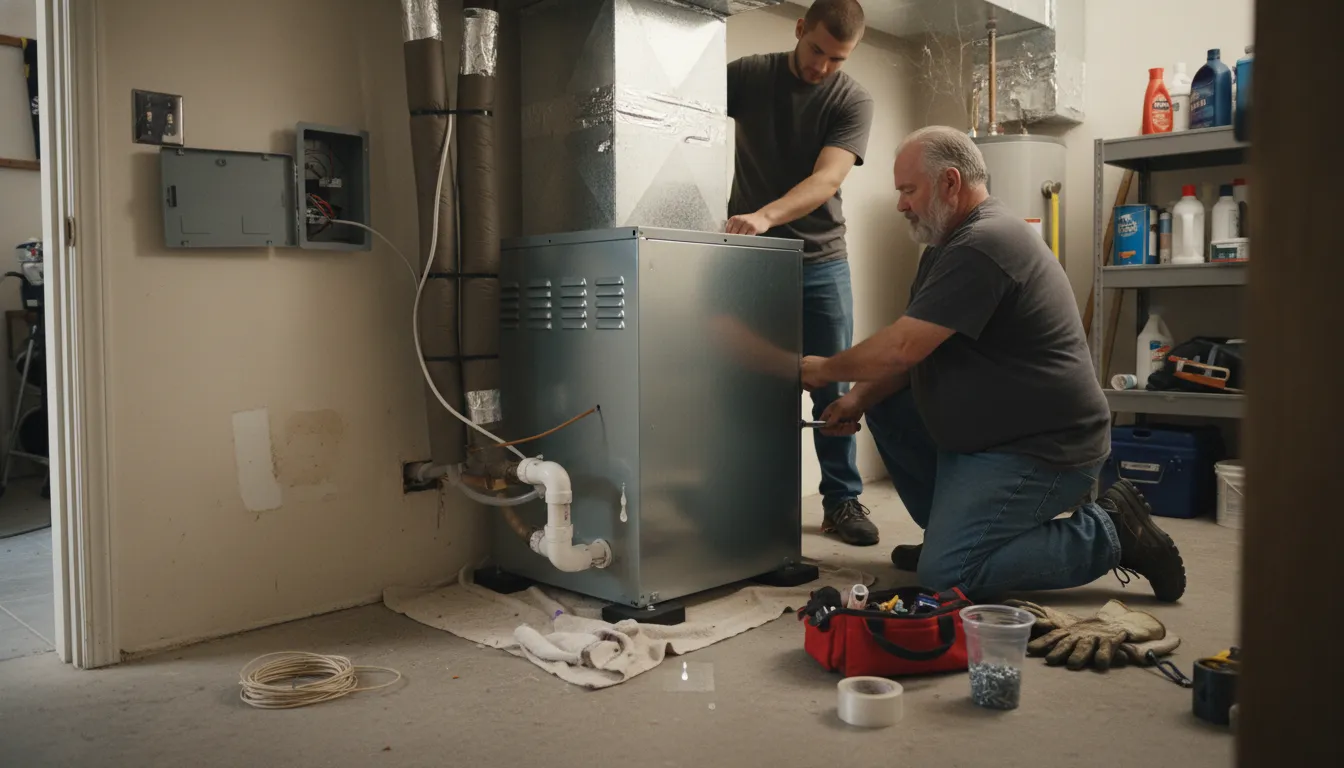
Installing a new heating and cooling system is a significant investment in your home's comfort, efficiency, and value. Whether you're replacing an aging unit or installing a system for the first time, understanding the process and local considerations is key. This guide explains what HVAC installation entails in Cleveland Heights, from choosing the right system to navigating local permits, helping you make an informed decision when selecting a qualified local contractor.
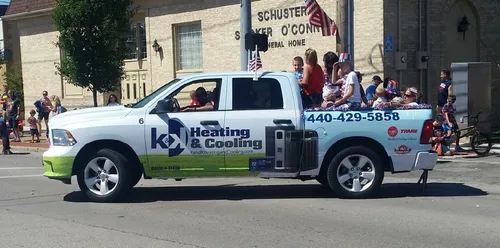
K and K Heating and Cooling
4107 Brookpark Rd, Parma, OH 44134
K and K Heating and Cooling is a residential and commercial HVAC company serving Cleveland, OH, and the broader Northeast Ohio region. They provide a full range of heating and cooling services, including installation, repair, and maintenance of air conditioning and furnace systems. The company is known for servicing all major HVAC brands and offers a comprehensive system diagnosis. Their technicians are NATE-certified and committed to ongoing education to ensure skilled service. K and K Heating and Cooling also offers a 100% satisfaction guarantee on installations and strives for same-day repairs when parts are available.
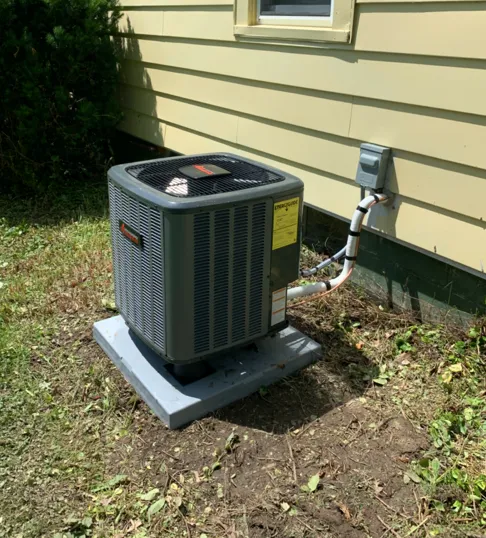
Lanigan Heating & Air Conditioning
1869 E 337th St, Eastlake, OH 44095
Lanigan Heating & Air Conditioning is a locally owned HVAC company serving Cleveland, OH. They provide a range of services including air conditioning and furnace installation, repair, and maintenance for both residential and commercial properties. Their capabilities include air duct inspection and cleaning to improve indoor air quality and reduce allergens. Lanigan Heating & Air Conditioning offers guarantees on parts, labor, and equipment to ensure customer satisfaction.
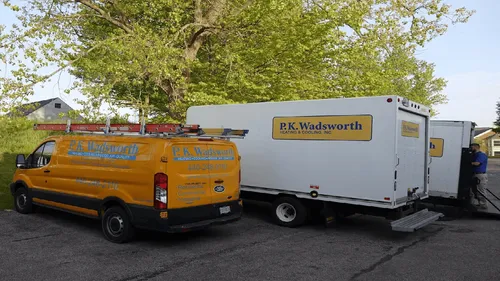
P.K. Wadsworth Heating & Cooling
Front Unit, 1658 Mentor Ave, Painesville Township, OH 44077
P.K. Wadsworth Heating & Cooling has been serving Cleveland, OH, and the surrounding areas since 1936. The company offers a range of HVAC services including air conditioning and furnace repair, installation, and tune-ups, as well as water heater services. Their experienced technicians handle repairs, replacements, and maintenance to ensure efficient heating and cooling systems year-round. With over 80 years of experience, they provide reliable plumbing services including water heater repair and fixture replacement.

Lakeshore Heating & Cooling
1017 Woodstock Rd, Eastlake, OH 44095
Lakeshore Heating & Cooling is a locally owned HVAC contractor based in Eastlake, Ohio, serving Cleveland and surrounding areas including Willoughby, Mentor, and Painesville. They offer a full range of heating and cooling services such as furnace, boiler, heat pump, and air conditioning repair and installation, along with thermostat and mini split system services. The company is known for handling all major brands and providing tailored solutions to improve home comfort and energy efficiency. Lakeshore Heating & Cooling holds an A+ BBB rating and has earned a strong reputation for quality workmanship and customer care.
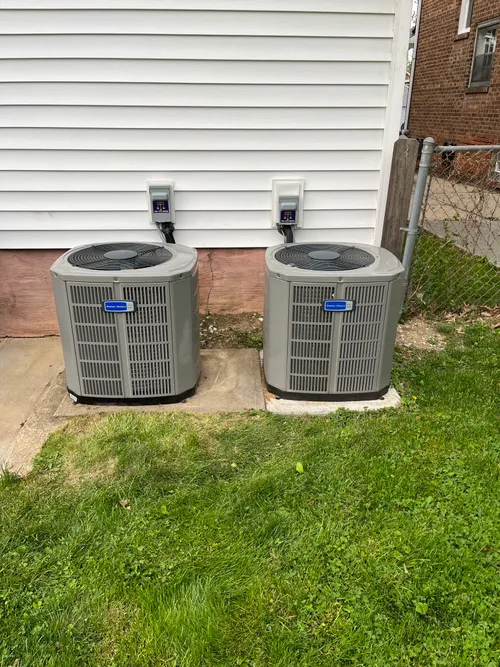
Balanced Air Heating & Cooling
23672 Lorain Rd, North Olmsted, OH 44070
Balanced Air Heating & Cooling is an HVAC contractor based in Cleveland, OH, offering repair, maintenance, and installation services for heating and cooling systems. Founded in 2022 by Jeremy Hall, the company provides balanced service focused on customer satisfaction without commission-based technician pay. They specialize in air conditioning, furnace, heat pump, and indoor air quality services, ensuring systems operate efficiently and comfortably.
Understanding Your HVAC System Options
When planning a new heating and air conditioning setup, homeowners in Cleveland Heights have several common system types to consider. The right choice depends on your home's layout, existing infrastructure, and your comfort goals.
Split Systems are the most popular choice for residential HVAC installation. This configuration features an outdoor unit (containing the condenser and compressor) and an indoor unit (a furnace or air handler), connected by refrigerant lines. They are typically paired with ductwork to distribute conditioned air throughout the home and are a reliable solution for whole-house comfort.
For homes without existing ducts or for room additions, Ductless Mini-Split Systems offer an efficient alternative. These systems provide zoned heating and cooling, allowing you to control temperatures in individual rooms. While the upfront cost per zone can be higher, they eliminate the need for extensive ductwork installation and can improve energy efficiency by avoiding duct losses 1.
Other considerations include heat pumps, which provide both heating and cooling from one unit, and packaged systems that house all components in a single outdoor cabinet. A reputable local contractor can perform a detailed load calculation to determine the correct system size and type for your specific Cleveland Heights home.
The Step-by-Step Installation Process
A professional HVAC installation is a multi-stage project that ensures your system is safe, efficient, and compliant with local codes. Here's what you can typically expect from start to finish.
Initial Consultation and Site Evaluation: The process begins with a contractor visiting your home. They will assess your current system, evaluate your ductwork (if present), measure your home's square footage and insulation levels, and discuss your efficiency goals. This evaluation is crucial for generating an accurate quote and properly sizing your new equipment.
Permit Acquisition: Before work begins, your contractor should pull the necessary permits from the local building department. In the Cleveland area, residential HVAC permits are required to ensure installations meet safety and building codes. This step protects you as a homeowner and is a mark of a legitimate, professional operation.
Removal and Preparation: The old furnace, air conditioner, or both are safely disconnected, removed, and responsibly disposed of. The work area is prepared, which may involve clearing space in a utility room, basement, or by the outdoor pad for the new equipment.
Find the perfect hvac installers for your needs
Get personalized recommendations and expert advice
New Equipment Installation: The new indoor and outdoor units are set in place. This includes installing the new furnace or air handler, the outdoor condenser, and the indoor evaporator coil. For split systems, refrigerant lines are carefully run and connected between the units.
Ductwork and Ventilation: This is a critical phase, especially for central air systems. Existing ductwork may be modified, sealed, or cleaned. In some cases, all new ductwork may be installed. Properly sized and sealed ducts are essential for system efficiency, airflow, and home comfort.
Electrical and Control Hookup: The new system is wired into your home's electrical panel. New circuit breakers may be installed. The thermostat is also mounted and connected, whether it's a basic model or a modern smart thermostat for enhanced control and scheduling.
System Testing and Startup: Once everything is physically installed, the contractor will start the system. They will check refrigerant levels, test airflow at all vents, verify the operation of the heating and cooling cycles, and ensure the thermostat is communicating correctly. They will also review the system's operation with you and explain basic maintenance 2.
Timelines and What to Expect
The duration of your HVAC installation project in Cleveland Heights depends largely on the scope of work. Understanding the timeline helps you plan accordingly.
A straightforward unit replacement, where a new furnace or air conditioner is swapped for an old one with minimal ductwork changes, can often be completed in a single day, typically within 4 to 8 hours.
A full system installation that includes both a new furnace and air conditioner, along with standard hookups to existing ducts, will generally take 1 to 2 full days.
More complex projects, such as those requiring new or extensive ductwork modifications, can extend the timeline to 3 days or more 3 4. The contractor should provide a clear estimated schedule during the initial quote.
Investment and Cost Factors
The cost of a new HVAC system in Cleveland Heights varies based on several key factors. For a full system replacement, homeowners can expect a range of $4,000 to $10,000 or more, with a typical combination of a new air conditioner and furnace often falling between $5,000 and $7,500 for a standard-efficiency setup 5 6.
System Size and Capacity: Properly sizing the system (measured in tons for cooling, BTU for heating) is paramount. An undersized unit will struggle, while an oversized unit will "short cycle," leading to inefficiency and uneven temperatures. The size is determined by a professional load calculation, not just your home's square footage.
Energy Efficiency Ratings: Higher efficiency units come with a higher price tag but offer long-term savings on utility bills. For air conditioners, look at the SEER (Seasonal Energy Efficiency Ratio) rating; for furnaces, the AFUE (Annual Fuel Utilization Efficiency) percentage. Investing in a higher-rated system can be cost-effective over its lifespan, especially in our climate.
Equipment Brand and Features: Different manufacturers offer various tiers of equipment with different warranties, noise levels, and advanced features like variable-speed blowers or communicating technology.
Ductwork Complexity: The condition and design of your existing ductwork significantly impact cost. Simple repairs or sealing are less expensive, while designing and installing an entirely new duct system is a major project that increases the overall budget.
Labor and Permits: Labor rates vary by contractor. Additionally, permit fees are part of the cost. For example, residential HVAC permits in the City of Cleveland start at a minimum fee 7.
Choosing a Qualified Cleveland Heights Contractor
Selecting the right professional is the most important step in ensuring a successful HVAC installation.
Verify Licensing and Insurance: Always choose a licensed HVAC contractor. In Ohio, proper licensing ensures the contractor has the required knowledge of state and local mechanical codes. They should also carry both liability insurance and workers' compensation to protect you and your property.
Check Local Experience: A contractor familiar with Cleveland Heights and Cuyahoga County will understand specific local code requirements, common home styles (including older homes), and the permit process with local municipalities.
Get Detailed Written Estimates: Obtain at least three written quotes. These should be itemized, specifying equipment make and model numbers, labor scope, warranty details, and a timeline. Be wary of quotes that are significantly lower than others, as they may cut corners on quality, permits, or proper sizing.
Ask About Load Calculations: A trustworthy contractor will insist on performing a Manual J load calculation (or equivalent) to determine the correct system size for your home. This is a non-negotiable sign of professional practice.
Review Warranties: Understand what is covered by the manufacturer's warranty on parts and the compressor, and what labor warranty the installing contractor provides. A strong warranty offers peace of mind for your investment.
Frequently asked questions
Sources
Footnotes
-
Comparing 8 Common Types of HVAC Systems - BigRentz - https://www.bigrentz.com/blog/types-of-hvac-systems ↩
-
Step-by-Step HVAC Installation Guide - Carrier - https://www.carrier.com/residential/en/us/products/air-conditioners/hvac-installation/ ↩
-
Heating and Air Conditioning Installation in Cleveland Heights ... - https://www.homedepot.com/services/l/oh/cleveland-heights/heating-air-conditioning-installation/c16fbb4b7 ↩
-
How Long Does It Take to Install an AC Unit? - Trane® - https://www.trane.com/residential/en/resources/blog/how-long-does-it-take-to-install-an-ac-unit/ ↩
-
How To Buy A New HVAC System In Cleveland, OH - https://kandkheatingandcooling.com/2025/08/22/how-to-buy-a-new-hvac-system-in-cleveland-oh/ ↩
-
What Is the Average Cost to Install an AC? - Lochard HVAC and Plumbing - https://www.lochardplumbingheatingandcooling.com/what-is-the-average-cost-to-install-an-ac/ ↩
-
HVAC Permit and Fee Schedule - City of Cleveland Ohio - https://www.clevelandohio.gov/sites/clevelandohio/files/2023-04/HVACAppandFeeSchedule.pdf ↩