Find the Best HVAC Installers for Your Business
No obligation • Fast responses • Nationwide coverage

Why you can trust HVAC Firms
HVAC Firms is a leading United States resource for evaluating HVAC service providers. Our team researches companies, checks credentials, and reviews customer feedback to present clear, unbiased information. Listings and rankings are based on merit, and companies cannot pay to change our editorial content.
Search providers near you
Top HVAC Installers in Ormond Beach, Florida Ranked
Finding the right climate control system for your Ormond Beach home is a significant investment in comfort, efficiency, and peace of mind. A proper HVAC installation ensures your system operates reliably through Florida's humid summers and mild winters, while also meeting state energy codes. This guide will help you understand your options, the installation process, and what to expect when selecting a local provider for your heating and cooling needs.
Understanding Your HVAC System Options in Ormond Beach
Choosing the right type of system is the first step toward year-round comfort. The local climate heavily influences which systems are most effective and efficient for Volusia County homes. Here are the primary types of systems commonly installed in the area.
Heat Pumps are an excellent choice for Florida, providing both heating and cooling efficiently in one system. They work by transferring heat, rather than generating it, making them highly energy-efficient for our moderate winter temperatures. This dual functionality makes them a popular and cost-effective solution for Ormond Beach residents.
AC/Furnace Combos represent the traditional setup, where a central air conditioner handles cooling and a separate gas or electric furnace provides heat. While the furnace is used less frequently in our climate, this split system offers powerful cooling and reliable heating for those occasional colder nights.
Ductless Mini-Splits are ideal for homes without existing ductwork or for adding zoned cooling to specific areas. These systems consist of an outdoor compressor unit connected to one or more indoor air handlers. They offer high efficiency and flexible temperature control for individual rooms, such as sunrooms, garages, or home additions.
Package Units are a compact, all-in-one heating and cooling solution typically installed on the ground or rooftop1. They contain all components in a single cabinet, making them a good fit for smaller homes, condos, or commercial spaces with limited indoor space for equipment.
The Step-by-Step Installation Process
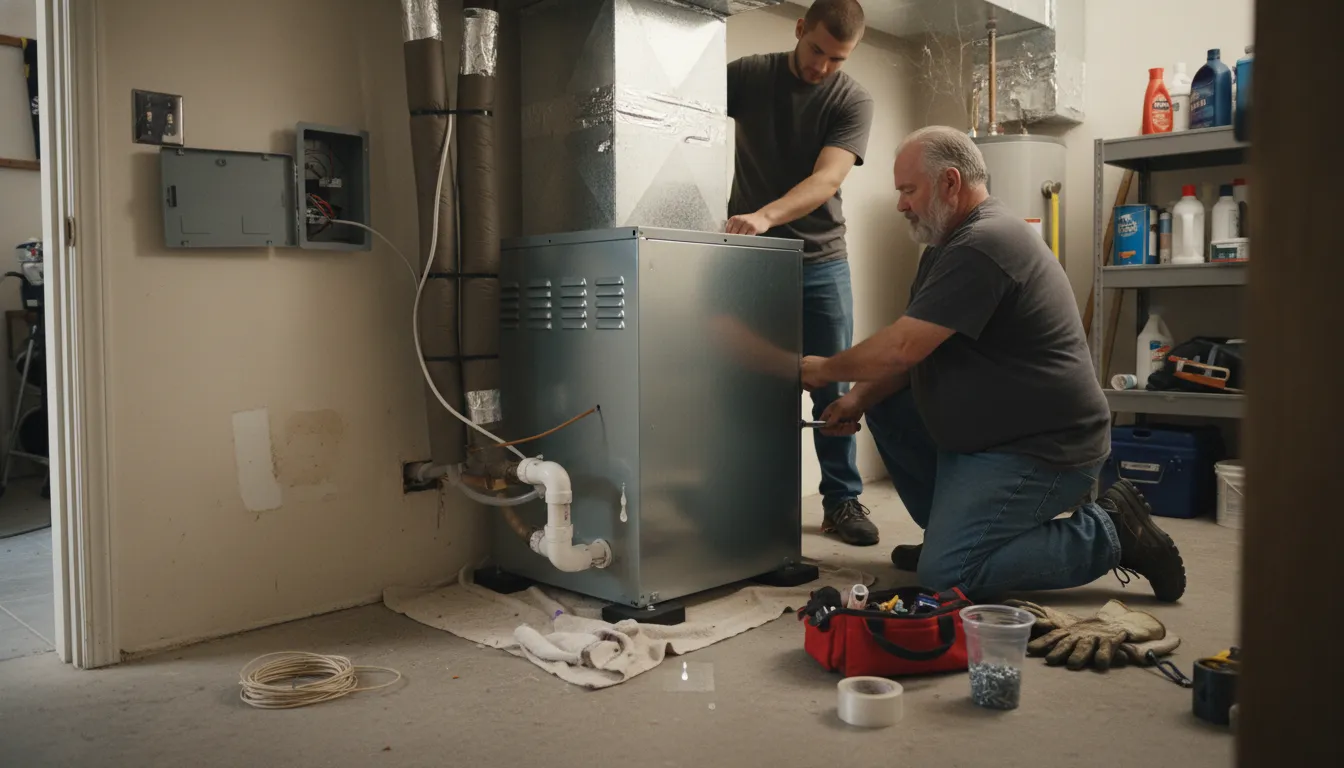
A professional HVAC installation follows a meticulous sequence to ensure safety, efficiency, and compliance with local codes. Knowing what to expect can help you prepare your home and communicate effectively with your contractor.
1. Site Evaluation & Permits The process begins with a thorough evaluation of your home. A qualified technician will assess your square footage, insulation, existing ductwork, and electrical service to determine the correctly sized system. They will then pull any necessary permits from the City of Ormond Beach or Volusia County, which is a crucial step for ensuring the work meets Florida's building codes.
2. Old System Removal The existing unit is safely disconnected, dismantled, and removed from your property. This includes the proper recovery of refrigerant from old air conditioners or heat pumps, which is required by law. The area is then cleared and prepared for the new equipment.
3. Ductwork Assessment & Modification If your home has existing ducts, they will be inspected for leaks, damage, or inadequate sizing. Repairs, sealing, or replacement may be necessary to ensure optimal airflow and efficiency. For homes opting for ductless systems or those without ducts, this step involves planning the routing for refrigerant lines and electrical conduit.
4. New Unit Installation The new outdoor condenser (for split systems) or package unit is set on a stable, level pad. The indoor air handler or furnace is installed in the designated location, such as a closet, attic, or garage. All components are securely fastened and leveled.
5. Electrical & Control Connections A licensed electrician or HVAC technician will connect the system to your home's electrical panel, ensuring proper voltage and circuit protection. New wiring is run to the thermostat location, and a modern programmable or smart thermostat is installed to give you precise control over your new system2.
6. System Testing & Startup This is the most critical phase. The technician will power on the system, check refrigerant levels (for ACs and heat pumps), test airflow at all vents, and verify that all safety controls and electrical connections are functioning. They will ensure the installation complies with Florida's minimum efficiency standard of 15 SEER2 and provide you with a walkthrough of your new system's operation.
Find the perfect hvac installers for your needs
Get personalized recommendations and expert advice
What Influences the Cost of a New System?
The total investment for a new HVAC system in Ormond Beach varies widely based on several key factors. Understanding these can help you interpret estimates and make an informed decision.
System Type and Size: The capacity of the unit, measured in tons, must match your home's cooling and heating load. An undersized system will struggle, while an oversized system will short-cycle, reducing efficiency and comfort. For a typical 2,000 square foot Ormond Beach home, a full system replacement (like an AC with a furnace or a heat pump) can range from $8,000 to $14,000 or more 3. A central air conditioner alone might cost between $5,500 and $9,000.
Efficiency Rating: Higher-efficiency units with a greater SEER2 (Seasonal Energy Efficiency Ratio) rating for cooling and HSPF (Heating Seasonal Performance Factor) for heat pumps cost more upfront but offer significant savings on monthly energy bills. Florida's current minimum is 15 SEER24.
Ductwork Requirements: The condition of your existing ducts plays a major role. Simple resealing might be minor, but a full duct replacement for a 2,000 sq. ft. home can add several thousand dollars to the project5. Homes opting for ductless mini-splits avoid this cost but incur expenses for each indoor zone (typically $4,000 - $8,000 per zone)5.
Labor and Complexity: The difficulty of the installation affects the timeline and cost. A straightforward replacement in an easily accessible location will be less labor-intensive than a first-time installation in a tight attic or a job requiring new electrical lines or complex zoning controls.
Timeline: How Long Does Installation Take?
The duration of your HVAC project depends largely on its scope. A clear timeline helps you plan for the disruption.
A simple replacement-swapping out an old AC or heat pump for a new one of similar type and capacity with no ductwork changes-can often be completed in 6 to 10 hours, or about one day.
More complex projects that involve installing new ductwork, adding zones, or dealing with challenging access points can take 1 to 3 full days or more6 7. If your project requires a city inspection after the permit is closed, this may add an additional day to the schedule.
Why Professional Installation is Non-Negotiable
While DIY projects can be tempting, HVAC installation is not one of them. The stakes are too high for comfort, safety, and your wallet.
Code Compliance & Permits: Florida and local municipalities have specific codes governing electrical connections, refrigerant handling, and equipment placement. A professional ensures all work is permitted and inspected, protecting you from liability and ensuring your system is insurable.
System Performance & Longevity: A poorly installed system, even with the best equipment, will suffer from reduced efficiency, frequent breakdowns, and a shorter lifespan. Proper sizing, charging, and airflow balancing are technical skills that directly impact performance and your utility bills.
Warranty Protection: Most equipment manufacturers require professional installation by a licensed contractor to validate their equipment warranty. A DIY job could void the warranty, leaving you fully responsible for any future repairs.
Preparing for Your Installation Day
A little preparation can make the installation process smoother for everyone involved.
- Clear the Work Areas: Ensure easy access to the indoor unit (closet, attic, or garage), the outdoor condenser pad, and your electrical panel. Move furniture, stored items, and decor away from these zones.
- Secure Pets and Children: The installation involves open doors, tools, and trip hazards. Keeping pets and kids in a safe, separate room is best for their safety and allows the crew to work efficiently.
- Plan for Indoor Comfort: Installation will involve turning off your power and existing AC for periods of time. Schedule the work for a milder time of day if possible and plan to be away from home or in a cooler part of the house.
- Ask Questions: Be present to discuss the final placement of the outdoor unit and thermostat with the lead technician. A good contractor will welcome your questions before they begin the work.
Frequently asked questions
Sources
Footnotes
-
HVAC Installation in Ormond Beach | Cool Breeze Air Systems - https://coolbreezeairsystems.com/hvac-installation-contractor-ormond-beach-fl/ ↩
-
Step-by-Step HVAC Installation Guide - Carrier - https://www.carrier.com/residential/en/us/products/air-conditioners/hvac-installation/ ↩
-
How Much Does an Air Conditioner Cost for a 2000-Square-Foot Home? - https://www.thisoldhouse.com/heating-cooling/air-conditioner-cost-for-2000-square-foot-home ↩
-
Florida HVAC Installation codes - The Building Codes Assistance Project - https://bcapcodes.org/florida/hvac-installation-codes/ ↩
-
How Much Does a New HVAC System Cost to Install and Replace in ... - https://hvac.filterbuy.com/resources/air-conditioning-heat-pumps/how-much-does-a-new-hvac-system-cost-to-install-and-replace-in-florida-homes/ ↩ ↩2
-
AC Installation in Florida: Timeline, Checklist & Care Tips - https://progressiveairsystems.com/blog/what-to-expect-during-an-ac-installation-in-florida-timeline-checklist-and-post-install-care-tips/ ↩
-
How Long Does It Take To Replace Your HVAC System? - https://downeyplumbing.com/blog/how-long-does-it-take-to-replace-your-hvac-system/ ↩