Find the Best HVAC Installers for Your Business
No obligation • Fast responses • Nationwide coverage

Why you can trust HVAC Firms
HVAC Firms is a leading United States resource for evaluating HVAC service providers. Our team researches companies, checks credentials, and reviews customer feedback to present clear, unbiased information. Listings and rankings are based on merit, and companies cannot pay to change our editorial content.
Search providers near you
Top HVAC Installers in Miami Beach, Florida Ranked
Finding the right air conditioning and heating system for your Miami Beach home is more than a comfort upgrade-it's a necessity for year-round living in a subtropical climate. HVAC installation involves selecting, sizing, and professionally setting up a complete system to manage your indoor temperature, humidity, and air quality. This process is critical because a properly installed system ensures efficiency, reliability, and durability against coastal elements. The following guide will help you understand your options, the typical process, and key local considerations, empowering you to make an informed decision when selecting a service provider for your project.
Florida Clean Air Plus
15251 NE 18th Ave Suite #3, North Miami Beach, FL 33162
Florida Clean Air Plus is an HVAC company based in Miami, FL, offering a wide range of heating and cooling services for both residential and commercial clients. Their services include AC repair, installation of new AC and heat pump systems, air duct cleaning, duct sealing, dryer vent cleaning, and thermostat installation. They emphasize improving indoor air quality and energy efficiency through thorough maintenance and cleaning. The company provides 24/7 emergency HVAC service, ensuring support whenever needed. Their certified technicians are experienced in handling all major HVAC brands and models, delivering precise installations and repairs with transparent, upfront quotes.
FRASCONA HVAC-R
1102 SW 113th Way, Pembroke Pines, FL 33025
FRASCONA HVAC-R provides professional HVAC and refrigeration services in Miami, FL. With over 70 years of combined experience, they handle commercial and residential air conditioning, heating, and refrigeration projects. Their state-certified team offers installation, repairs, maintenance, and 24-hour emergency services. The company has roots dating back to 1952 in South America and has been operating in South Florida since 2013 under the leadership of CEO Nicolas Frascona.
Power Air Cooling & Heating, LLC
901 NE 172nd St, Miami, FL 33162
Power Air Cooling & Heating, LLC is an HVAC service company based in Miami, FL, offering air conditioning repair, installation, maintenance, and indoor air quality services. Serving Miami-Dade, Broward, and surrounding areas, they provide comprehensive HVAC solutions including system diagnostics and custom filter options. With over 15 years of experience, this family-owned business combines traditional values with modern technology to deliver dependable service and clear communication.
MARTIN AIR AND HEATING LLC
7221 NW 169th St, Hialeah, FL 33015
Martin Air and Heating LLC is a Latina-owned HVAC company based in Miami, FL. Since 2017, they have provided air conditioning installation and repair services, including mini split and central air systems, for residential and commercial clients. The company focuses on delivering personalized service and helping customers find the right cooling solutions for their needs.
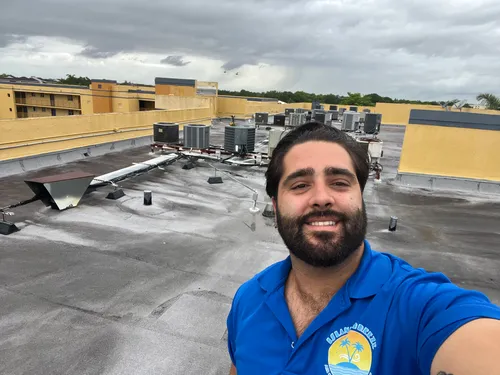
Island Breeze Air Conditioning, LLC
6831 SW 44th St APT 109, Miami, FL 33155
Island Breeze Air Conditioning, LLC is an HVAC company serving Miami, FL, specializing in heating and air conditioning system installation, repair, and maintenance. Their services include air conditioner, furnace, heat pump, and mini split system installation and repair, as well as thermostat installation and indoor air quality improvements. They offer 24/7 emergency repair services and provide service agreements for regular maintenance to extend system life and ensure reliable performance. The company also supplies a range of products such as air cleaners, humidifiers, UV lights, and zoning systems to enhance indoor environments.
Understanding Your HVAC System Options in Miami Beach
The first step in any installation project is choosing the right type of system for your specific property. The humid, salty air and consistent cooling demands of Miami Beach make certain choices more prevalent and practical than others.
Central Air Conditioning Systems are the most common choice for whole-home cooling, especially in larger single-family homes with existing ductwork. These systems use a single outdoor condenser unit connected to an indoor air handler that distributes cool air through a network of ducts. For our climate, high-efficiency models with superior SEER2 ratings are strongly recommended to combat high humidity and manage energy costs effectively 1.
Ductless Mini-Split Systems have gained immense popularity, particularly in condos, historic homes, or any residence without existing ducts. These systems consist of an outdoor compressor connected to one or more indoor air-handling units mounted on walls or ceilings. They offer zoned cooling (and often heating), allowing you to control temperatures in individual rooms, which can lead to significant energy savings 2.
Heat Pumps are an excellent all-in-one solution, providing both efficient cooling and heating. Given Miami Beach's mild winters, a heat pump can handle your year-round climate control needs in a single, energy-efficient system. Modern air-source heat pumps are highly effective even in our humidity.
A non-negotiable consideration for any system type is its coastal-grade construction. Standard units can corrode rapidly when exposed to salt spray. Specially coated coils and corrosion-resistant materials are essential for longevity when you live just blocks from the ocean.
The Step-by-Step Installation Process
A professional HVAC installation is a meticulous process designed to ensure safety, compliance, and optimal performance. Here's what you can generally expect from start to finish.
1. Initial Consultation and Site Evaluation A technician will visit your home to assess your cooling and heating needs. This involves calculating the required load (based on square footage, insulation, window exposure, and more), evaluating existing ductwork (if any), and discussing your efficiency and zoning preferences. This is also when necessary permits for the work are identified and secured.
2. Preparation and Removal of Old Equipment On installation day, the crew will prepare the work area, laying down protective coverings. Your old air conditioner, furnace, or heat pump will be safely disconnected, removed, and responsibly disposed of, including the recovery of any old refrigerant according to EPA regulations.
3. Installation of New Indoor and Outdoor Units The new outdoor condenser unit is placed on a stable, level pad, often a concrete slab. The indoor unit-whether an air handler, furnace, or evaporator coil-is installed in your garage, attic, or closet. These two units are then connected via refrigerant linesets and electrical wiring. For ductless systems, the wall-mounted indoor heads are secured and connected to the outdoor unit via a small hole in the wall.
4. Ductwork Assessment and Modification For central systems, the existing ductwork is thoroughly inspected for leaks, damage, or inadequate sizing. Technicians will seal leaks with mastic and may recommend repairs or partial replacement to ensure the new system isn't strained by inefficient airflow.
5. Electrical, Thermostat, and Control Setup The system is connected to your home's electrical panel. A new, modern thermostat (often a programmable or smart model) is installed and configured. This step ensures all components communicate properly for efficient operation 3.
6. System Testing, Balancing, and Startup This is the most critical phase. The technicians will start the system, check refrigerant charge, measure airflow from all vents, and verify that the system is cooling (and heating, if applicable) properly. They will ensure the installation meets all local Miami-Dade County and Florida building codes. A final walkthrough includes showing you how to operate the thermostat, explaining your new system's features, and reviewing warranty and maintenance information 4.
Find the perfect hvac installers for your needs
Get personalized recommendations and expert advice
Realistic Timelines for Installation
Understanding how long the project will take helps in planning. For a straightforward replacement of a central air system with compatible existing ductwork, the work can often be completed in 6 to 10 hours, or less than a single day.
More complex jobs will extend the timeline. This includes installations requiring new ductwork, implementing advanced zoning systems, or installing multi-zone ductless mini-splits throughout a home. These projects typically take 1 to 2 full days, and sometimes longer for extensive whole-home renovations 5 6.
Cost Considerations for Miami Beach Homes
Investment in a new HVAC system varies widely based on system type, home size, and equipment efficiency. It's important to view this as a long-term investment in your home's comfort, energy bills, and property value.
- Standard Central AC Replacement: For a typical system, homeowners might expect a range of $5,000 to $9,500.
- Ductless Mini-Split (Per Zone): Installing a single-zone system typically costs between $3,500 and $8,000. Multi-zone systems for cooling several rooms will be a larger investment.
- High-Efficiency or Coastal-Grade Units: Upgrading to a unit with a high SEER2 rating and corrosion-resistant features generally ranges from $6,000 to $12,000 or more for a central system.
- Large Homes or Luxury Installations: For expansive properties or systems with full-home zoning and top-tier equipment, costs can range from $10,000 to over $20,0007.
These figures are for full system installation and should include equipment, labor, standard materials, and permitting. Always request detailed, written estimates that break down all costs.
Key Local Factors You Must Consider
The unique Miami Beach environment demands specific attention during your HVAC planning.
1. Combatting Salt Air Corrosion: This is the foremost concern. Always specify coastal-grade or "marine-rated" equipment. These units feature special coatings on the condenser coils and other components made from corrosion-resistant materials like aluminum or coated copper. Skipping this can lead to premature system failure.
2. Managing Extreme Humidity: An air conditioner's primary job in South Florida is dehumidification. Look for systems with enhanced humidity control features, such as variable-speed blowers that run longer at lower speeds to remove more moisture from the air. Proper system sizing is also crucial; an oversized unit will cool too quickly without adequately dehumidifying, leaving your home feeling cold and clammy.
3. Prioritizing Energy Efficiency: Given the system may run for much of the year, a higher efficiency rating translates to substantial savings on FPL bills. Look for high SEER (Seasonal Energy Efficiency Ratio) and the new SEER2 ratings. While a unit with a 14 SEER is the federal minimum, opting for a 16, 18, or even 20+ SEER system can be a wise financial decision over its lifespan in our climate 8.
4. Ensuring Proper Sizing and Load Calculation: Never allow a contractor to simply replace your old unit with one of the same size. A professional should perform a Manual J load calculation to determine the precise cooling capacity (in tons) your home needs. An improperly sized system will be inefficient, uncomfortable, and prone to frequent breakdowns.
Frequently asked questions
Sources
Footnotes
-
What Kind of HVAC System Is Usually Installed in Florida? - https://www.hvac.com/expert-advice/what-kind-of-hvac-system-is-usually-installed-in-florida/ ↩
-
How Much Does a New HVAC System Cost to Install and Replace in ... - https://hvac.filterbuy.com/resources/air-conditioning-heat-pumps/how-much-does-a-new-hvac-system-cost-to-install-and-replace-in-florida-homes/ ↩
-
Step-by-Step HVAC Installation Guide - Carrier - https://www.carrier.com/residential/en/us/products/air-conditioners/hvac-installation/ ↩
-
HVAC System Installation Service in Miami Beach FL - https://hvaccompanyservice.wordpress.com/2024/02/18/hvac-system-installation-service-in-miami-beach-fl/ ↩
-
AC Installation in Florida: Timeline, Checklist & Care Tips - https://progressiveairsystems.com/blog/what-to-expect-during-an-ac-installation-in-florida-timeline-checklist-and-post-install-care-tips/ ↩
-
How Long Does It Take To Replace Your HVAC System? - https://downeyplumbing.com/blog/how-long-does-it-take-to-replace-your-hvac-system/ ↩
-
AC Installation Cost - HVAC Miami Beach FL - https://www.hvacmiamibeachfl.com/ac-installation-cost.html ↩
-
How Much Does an Air Conditioner Cost for a 1,200-Square-Foot Home? - https://www.thisoldhouse.com/heating-cooling/air-conditioner-cost-for-1200-square-foot-home ↩