Find the Best HVAC Installers for Your Business
No obligation • Fast responses • Nationwide coverage

Why you can trust HVAC Firms
HVAC Firms is a leading United States resource for evaluating HVAC service providers. Our team researches companies, checks credentials, and reviews customer feedback to present clear, unbiased information. Listings and rankings are based on merit, and companies cannot pay to change our editorial content.
Search providers near you
Top HVAC Installers in Danbury, Connecticut Ranked
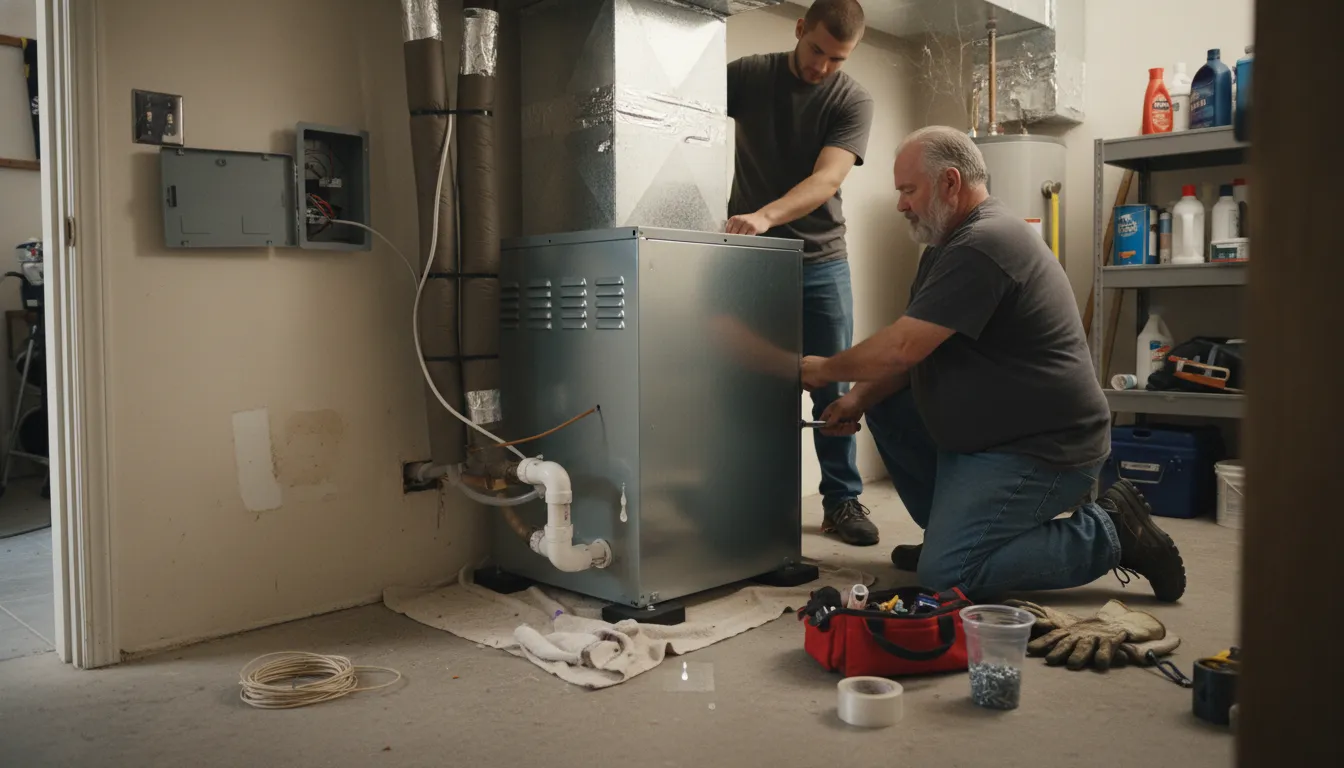
Installing a new heating, ventilation, and air conditioning system is a significant investment in your home's comfort, efficiency, and value. For Danbury residents, choosing the right climate control system is crucial for navigating the region's cold winters and warm, humid summers. This guide will help you understand the process, equipment options, and key considerations for a successful HVAC installation or replacement project, empowering you to make informed decisions with local contractors.
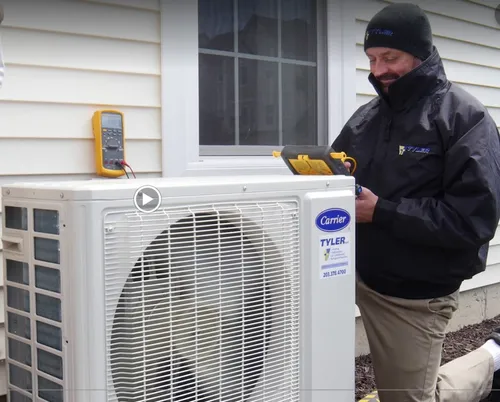
Tyler Heating, Air Conditioning, Refrigeration LLC
255 Hathaway Dr Unit 1, Stratford, CT 06615
Tyler Heating, Air Conditioning, Refrigeration LLC is an HVAC company serving New York, NY, with a focus on heating, cooling, and indoor air quality services. They provide installation, repair, and maintenance for air conditioners, furnaces, heat pumps, mini splits, and ductless HVAC systems. The company also offers indoor air quality solutions including humidity control and air purification. Established in 1995, Tyler Heating has over 25 years of experience serving the Southwest Connecticut area and offers same-day service to address urgent needs.
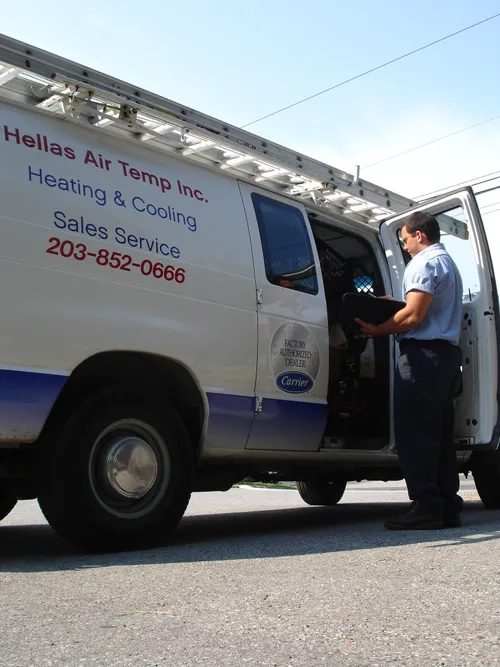
Hellas Air Temp Inc
52 Connecticut Ave, Norwalk, CT 06850
Hellas Air Temp Inc provides residential and commercial heating and cooling services in New York, NY. They offer sales, service, maintenance, and installation for a wide range of HVAC systems including central air, forced air, gas and propane boilers, ductless systems, rooftop units, and custom refrigeration solutions. Established in 1978, the company brings decades of experience to climate control solutions and specializes in customizable systems such as manifolds and circulation pumps.
Understanding Your HVAC System Options
Modern HVAC systems are more efficient and versatile than ever. The right choice for your Danbury home depends on your existing infrastructure, budget, and performance goals. The primary systems installed today include:
- High-Efficiency Furnaces and Air Handlers: For homes with existing ductwork, a gas furnace paired with a central air conditioner is a traditional and effective choice. Modern gas furnaces boast high Annual Fuel Utilization Efficiency (AFUE) ratings, meaning they convert more fuel into heat, which is ideal for Connecticut's cold winters. Air handlers circulate conditioned air through your ducts and are a key component of both heating and cooling setups.
- Heat Pumps: These are increasingly popular electric systems that provide both heating and cooling. They work by transferring heat rather than generating it, making them exceptionally efficient. Air-source heat pumps can effectively heat homes even in Danbury's climate, and they qualify for various energy-saving incentives1.
- Ductless Mini-Split Systems: If your home lacks ductwork or you need to condition a specific addition or zone, ductless systems are an excellent solution. They consist of an outdoor compressor/condenser and one or more indoor air handlers mounted on walls or ceilings, connected by a small conduit.
The HVAC Installation Process: A Step-by-Step Overview
A professional HVAC installation is a detailed, multi-stage project. Understanding the steps can help you know what to expect and ensure the job is done correctly.
- Initial Assessment and Load Calculation: This is the most critical first step. A qualified technician will perform a Manual J load calculation to determine the precise heating and cooling capacity (in BTUs or tons) your home needs. An improperly sized system will be inefficient, uncomfortable, and costly to operate 2.
- Permit Acquisition: Reputable contractors will pull the necessary permits from the City of Danbury. This ensures the installation will be inspected to meet local building and safety codes.
- Old System Removal: The existing furnace, air conditioner, or heat pump is safely disconnected, with refrigerants properly recovered, and removed from your home.
- New Equipment Installation: The new indoor unit (furnace, air handler, or evaporator coil) and outdoor unit (condenser or heat pump) are positioned, leveled, and secured. All refrigerant lines, condensate drains, and flue pipes are connected.
- Ductwork Evaluation and Modification: Your existing ductwork will be inspected for leaks, proper sizing, and insulation. Necessary repairs, sealing, or modifications are made to ensure optimal airflow and efficiency.
- Electrical and Control Integration: New electrical connections are made to the equipment. The system is integrated with a new or existing thermostat, which may be a modern programmable or smart model for better control and savings.
- System Testing and Startup: The final and vital step. The technician will start the system, check refrigerant levels, test all safety controls, measure airflow, and verify that both heating and cooling modes operate correctly. They should also walk you through basic operation and maintenance 3.
What to Expect: Timeline and Investment
The duration and cost of your HVAC project are influenced by the system's complexity and your home's specific requirements.
Typical Project Timeline: A standard replacement of a furnace and air conditioner typically takes 1 to 2 days. A straightforward swap of one component (like an outdoor AC unit) can sometimes be completed in 4 to 8 hours. More complex jobs involving significant ductwork modifications, a switch to a geothermal system, or a full install in a new construction can take several days4.
Understanding the Costs: For a complete system replacement (furnace and air conditioner) in an average Danbury home, homeowners can expect a range of $8,000 to $15,000 or more5 6. Several key factors drive the final price:
- System Size and Home Square Footage: Larger homes require more powerful, costly equipment. For example, a 1,200-square-foot home might see costs starting around $5,500 for a basic system and exceeding $14,000 for a high-efficiency model7.
- Equipment Efficiency: Units with higher Seasonal Energy Efficiency Ratio 2 (SEER2) ratings for cooling and higher AFUE ratings for heating cost more upfront but offer significant long-term utility savings.
- Equipment Type: Heat pump systems or high-efficiency modulating furnaces are generally more expensive than standard single-stage models.
- Ductwork and Infrastructure: The condition of your existing ducts is a major variable. Homes needing new ductwork, zoning dampers, or major repairs will see higher project costs.
- Incentives and Rebates: It's essential to ask your contractor about available incentives. Connecticut Clean Energy programs and manufacturer rebates can substantially offset the cost of qualifying high-efficiency or heat pump systems8 9.
Find the perfect hvac installers for your needs
Get personalized recommendations and expert advice
Key Components of Your New System
Knowing the main parts of your HVAC system helps you communicate with contractors and understand maintenance needs.
- Furnace: The heart of your heating system, usually located in a basement, attic, or closet. It burns fuel (natural gas, oil, or propane) or uses electric resistance to heat air.
- Air Handler/Evaporator Coil: This indoor unit houses the coil where refrigerant evaporates to cool air (or condenses to help heat in a heat pump). It contains the blower fan that moves air throughout your ductwork.
- Condenser/Heat Pump Unit: The outdoor metal cabinet contains the compressor, condenser coil, and a fan. It releases or collects heat from the outside air.
- Ductwork: The network of metal or flexible tubes that distributes conditioned air from the air handler to vents throughout your home and returns it back.
- Thermostat: The control center. Modern Wi-Fi thermostats allow for precise scheduling and remote control, optimizing comfort and efficiency.
Choosing the Right Contractor in Danbury
Your installer's expertise is as important as the equipment brand. Look for a licensed, insured, and NATE-certified contractor with strong local references. They should perform a detailed load calculation, provide a written, itemized estimate, and clearly explain the warranty on both parts and labor. A trustworthy professional will discuss all suitable options for your home and budget, not just the most expensive one.
Maintaining Your Investment
Once your new system is installed, protect its performance and longevity with regular maintenance. This includes changing air filters every 1-3 months, keeping the outdoor unit clear of debris, and scheduling professional preventative maintenance tune-ups twice a year-ideally in the spring for cooling and fall for heating.
Frequently asked questions
Sources
Footnotes
-
Complete Guide to Heat Pumps for Connecticut Homeowners - https://ne-smartenergy.com/blog/complete-guide-to-heat-pumps-for-ct-homeowners/ ↩
-
Main Components of an HVAC System | Key Parts Explained - https://www.kjheatingandair.com/main-components-of-hvac-systems ↩
-
Step-by-Step HVAC Installation Guide - Carrier - https://www.carrier.com/residential/en/us/products/air-conditioners/hvac-installation/ ↩
-
How Long Does It Take To Replace Your HVAC System? - https://downeyplumbing.com/blog/how-long-does-it-take-to-replace-your-hvac-system/ ↩
-
Heating Installation - https://www.homecomfortpractice.com/hvac/heating/heating-installation/ ↩
-
What Is The Average Cost For A New HVAC System? 2025 Shocking Facts - https://comforttemp.com/what-is-the-average-cost-for-a-new-hvac-system/ ↩
-
How Much Does an Air Conditioner Cost for a 1,200-Square-Foot Home? - https://www.thisoldhouse.com/heating-cooling/air-conditioner-cost-for-1200-square-foot-home ↩
-
Connecticut Furnace Guide: Residential Installs and ... - https://egreenhvac.com/blog/connecticut-furnace-guide-residential-installs-and-replacements/ ↩
-
Heating System Comparison - https://www.homecomfortpractice.com/hvac/heating/heating-system-comparison/ ↩