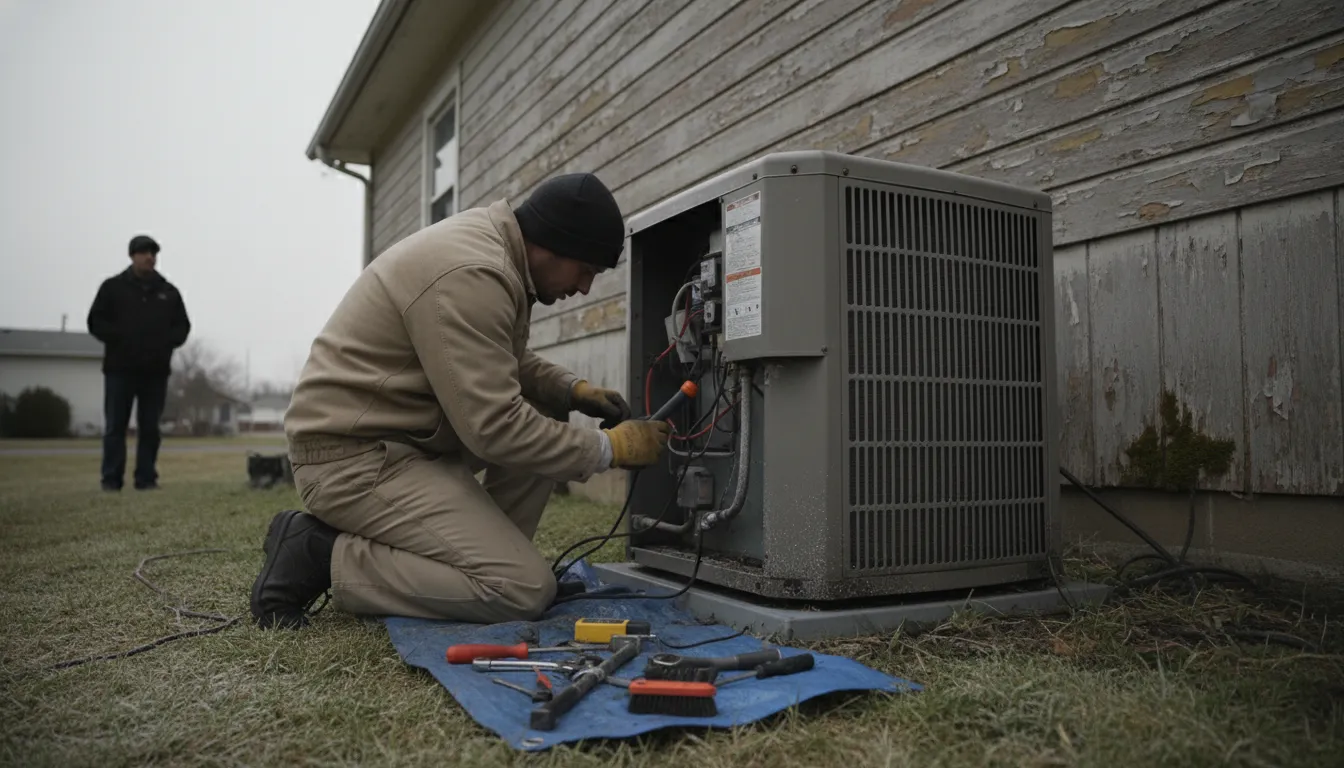
Find the Best Heat Pump Repair Contractors for Your Business
No obligation • Fast responses • Nationwide coverage

Why you can trust HVAC Firms
HVAC Firms is a leading United States resource for evaluating HVAC service providers. Our team researches companies, checks credentials, and reviews customer feedback to present clear, unbiased information. Listings and rankings are based on merit, and companies cannot pay to change our editorial content.
Search providers near you
Top Heat Pump Repair Contractors in Sterling Heights, Michigan Ranked
When your heat pump isn't keeping your Sterling Heights home comfortable, it's more than an inconvenience-it's a system under stress from our distinct Michigan climate. Heat pump service and repair involves diagnosing and fixing issues with the components that provide both your heating and cooling, ensuring year-round efficiency and reliability. This guide explains what goes wrong with these systems locally, what to expect during a professional service visit, and how you can find qualified technicians to restore your home's comfort.
Airman Heat & Air LLC
5129 8 Mile Rd, Warren, MI 48091
Airman Heat & Air LLC is a family-owned HVAC company serving Detroit, MI. They provide residential and commercial heating and cooling services, including installation and repair of air conditioners, furnaces, and heat pumps. The company uses factory-authorized brand name equipment and offers a labor warranty alongside the manufacturer's warranty. Established in 2001, Airman Heat & Air LLC emphasizes professionalism and a personalized approach to customer service.
Quality Air Control Heating & Cooling
18421 Valleyview St, Riverview, MI 48193
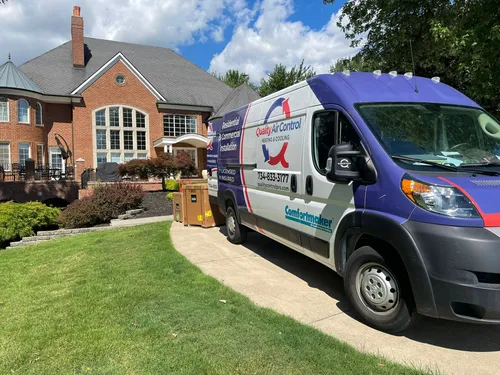
Quality Air Control Heating & Cooling is an HVAC company based in Detroit, MI, serving Downriver, Wayne County, and nearby areas. They offer a full range of heating and cooling services including AC repair and installation, furnace repair and installation, heat pump repair, mini split installation, duct cleaning, and indoor air quality solutions. With over 20 years of experience, the company handles both residential and commercial projects and is licensed, insured, and EPA certified.
Temperature Repair
Detroit, MI
Temperature Repair is an HVAC contractor based in Detroit, MI, serving Troy and nearby communities. They provide a range of heating and cooling services including AC repair, furnace repair and installation, heat pump repair, thermostat installation, HVAC tune-ups, and indoor air quality improvements. The company supports central air, ductless systems, and high-efficiency units to help maintain home comfort and safety throughout the year.
C & C Heating & Air Conditioning
29420 Groesbeck Hwy, Roseville, MI 48066
C & C Heating & Air Conditioning is an HVAC company based in Detroit, MI, offering a full range of heating and cooling services. They install and repair air conditioners, furnaces, heat pumps, and indoor air quality products from major manufacturers like Carrier, Lennox, and Trane. The company also provides humidifiers, generators, hot water heaters, and advanced air purification systems including UV lamps and germicidal lights. Their technicians are trained to handle installation and repair for all makes and models, ensuring comprehensive indoor air control solutions.
Cregger Plumbing, Heating & Cooling
2335 Goodrich St, Ferndale, MI 48220
Cregger Plumbing, Heating & Cooling is a third-generation, locally operated company serving Detroit, MI. They provide a range of HVAC and plumbing services including repair and installation of air conditioners, furnaces, heat pumps, and boilers. Their licensed and insured team is experienced in handling plumbing and HVAC needs throughout Michigan, with a capability in hydro jetting and emergency plumbing services. Established in 1987, Cregger offers 24/7 emergency plumbing support to address urgent issues at any time.
Understanding Your Heat Pump and Sterling Heights Climate
A heat pump is a versatile, all-in-one HVAC system that transfers heat, moving it into your home in the winter and out of your home in the summer. This dual functionality makes it a popular choice, but it also means the system operates nearly year-round. In Sterling Heights, this constant use is compounded by significant seasonal temperature swings-from humid, hot summers to frigid, snowy winters. These extremes place unique demands on the system's compressor, coils, and refrigerant cycle, accelerating wear and making consistent performance a challenge without proper care.
Common Heat Pump Problems in Sterling Heights
Local technicians frequently encounter a specific set of issues driven by our environment and usage patterns. Recognizing the signs early can help you schedule service before a minor fault becomes a major failure.
1. Strain from Extreme Temperature Swings
The compressor, often called the heart of the heat pump, works hardest during peak summer heat and deep winter cold. This constant heavy lifting can lead to overheating, electrical failures, or a complete breakdown. Similarly, the supplemental electric heating elements that assist during very cold weather can fail under strain, leaving you with inadequate heat.
2. Reduced Efficiency from Dirty Components
Our seasons bring pollen, dust, and humidity. This leads to a buildup of grime on both the indoor evaporator coil and the outdoor condenser coil. Dirty coils act as an insulator, preventing proper heat transfer and forcing the system to run longer cycles to meet the thermostat's demand. A clogged air filter exacerbates this by restricting airflow, which can also lead to frozen coils.
3. Refrigerant Complications
Refrigerant is the lifeblood of the heat transfer process. Leaks can develop in the copper lines or coils over time, especially where vibration or corrosion is present. A system low on refrigerant will struggle to heat or cool effectively, causing poor performance and potentially damaging the compressor by making it run too hot.
4. Electrical Component Failures
The frequent starting and stopping (cycling) required by our variable weather puts stress on electrical parts. Capacitors, which help motors start, are common failure points. Contactors (electrical relays) can also wear out or burn, interrupting power to the compressor or fan motors. These issues often manifest as a system that hums but won't start, or that trips the circuit breaker.
5. The Icy Grip of Frozen Coils
If you see ice on your indoor or outdoor unit, it's a clear distress signal. This is typically not an issue with cold weather itself, but a symptom of underlying problems like low refrigerant, a failing defrost control board, or severely restricted airflow from a dirty filter or blocked return vent.
What to Expect During a Professional Service Visit
When you call a technician for heat pump troubleshooting, a thorough inspection follows a systematic process to diagnose the root cause efficiently.
Initial Assessment: The visit begins with a discussion of the symptoms you've observed. The technician will check the thermostat settings and mode (heat/cool) and listen to the system during start-up to identify unusual noises.
Visual and Mechanical Inspection: The outdoor and indoor units are examined for obvious issues: physical damage, corrosion on coils or line sets, debris blocking airflow around the outdoor unit, and the condition of fan blades and motors. The technician will also check that all access panels are secure.
Airflow and Ductwork Evaluation: A critical step is assessing airflow. The air filter is inspected and replaced if dirty. The technician may check for obstructions at registers and in the ductwork itself, as leaks in ducts can significantly reduce system efficiency and comfort.
Electrical System Testing: Using multimeters and other tools, the technician will test safety controls, capacitors, contactors, and wiring connections. Voltage and amperage readings on the compressor and fan motors are taken to ensure they are operating within specifications.
Refrigerant Circuit Check: The technician will measure system pressure and temperature to calculate the refrigerant charge. This indicates if the system is undercharged, overcharged, or operating correctly. If low, they will use a leak detector to find the source of the leak before adding refrigerant.
Cleaning and Final Verification: If accessible, the indoor and outdoor coils may be cleaned to restore efficiency. Once any repairs are made, the technician will run the system through multiple cycles in both heating and cooling modes to verify it operates correctly and that the issue is resolved 1.
Find the perfect heat pump repair contractors for your needs
Get personalized recommendations and expert advice
Repair Timelines: From Quick Fixes to Major Overhauls
How long the service takes depends entirely on the diagnosis.
- Diagnosis and Minor Repairs: A standard diagnostic visit typically takes 30 to 90 minutes. If the issue is straightforward-like replacing a failed capacitor, a dirty air filter, or a faulty thermostat-the repair can often be completed in the same visit, adding 1-2 hours.
- Major Component Replacement: Repairs involving a compressor, coil replacement, or a complex refrigerant leak repair are more involved. The repair work itself may take 2 to 4 hours or more. However, if the needed part is not on the service truck, the job will require a return visit once the part is ordered and received 2.
Understanding Service and Repair Costs
Costs for heat pump maintenance and repair in Sterling Heights vary based on the component, labor, and parts required. It's important to get a detailed estimate before authorizing work.
- Service Call/Diagnostic Fee: Most companies charge an initial fee of $100 to $200+ to dispatch a technician, which covers the initial diagnosis. This fee is often applied toward the total cost if you proceed with the recommended repairs.
- Common Repair Examples:
- Air Filter Replacement: While a filter itself costs $10-$50 for a DIY replacement, having a technician supply and install it as part of a service call may range from $50 to $150.
- Capacitor Replacement: One of the most common repairs, typically costing between $150 and $350 for parts and labor.
- Fan Motor Replacement: Depending on the motor type and accessibility, this repair can range from $300 to $800+ 3.
- Refrigerant Recharge and Leak Repair: Fixing a leak and recharging the system with refrigerant can cost between $200 and $600+, with the final price heavily dependent on the leak's location and the amount of refrigerant needed 4.
The Value of Prevention: This cost breakdown highlights why investing in routine preventative maintenance, which often costs a few hundred dollars annually, is so crucial. A yearly tune-up can identify small issues like a weakening capacitor or a minor refrigerant leak before they lead to a catastrophic and expensive failure like a compressor burnout, saving you significant money and discomfort in the long run 7 8.
Finding the Right Service Professional
Look for a licensed and insured technician with specific experience servicing heat pumps, not just air conditioners or furnaces. Check for positive local reviews and ask about their diagnostic process. A reputable professional will be transparent about their findings, provide a clear written estimate, and explain the necessity of any recommended repairs, helping you make an informed decision for your home's comfort and your budget.
Frequently asked questions
Sources
Footnotes
-
What Does An Air Conditioner Check Consist Of? - https://greeneplumbing.com/what-does-an-air-conditioner-check-consist-of/ ↩
-
6 Important Things to Check Before Scheduling a Service Call - https://acmasters.com/6-things-to-check-before-scheduling-a-service-call/ ↩
-
HVAC Troubleshooting Guide: Step-by-Step Solutions Made Easy - https://projecthvac.com/2026/01/07/hvac-troubleshooting-guide-step-by-step/ ↩
-
10 Things That Should be Included in a Heat Pump Inspection - https://iaqcolorado.com/blog/10-things-that-should-be-included-in-a-heat-pump-inspection/ ↩
-
Does My Heat Pump Have a Bad Compressor in Durham, NC? - https://leeac.com/does-my-heat-pump-have-a-bad-compressor-in-durham-nc/ ↩
-
Heating and Air Conditioning Repair in Sterling Heights, MI - https://www.homedepot.com/services/l/mi/sterling-heights/heating-air-conditioning-repair/673dcc2c8 ↩
-
Operating and Maintaining Your Heat Pump | Department of Energy - https://www.energy.gov/energysaver/operating-and-maintaining-your-heat-pump ↩
-
Sterling Heights, MI HVAC, Heating & Cooling Experts - https://andysstatewide.com/service-area/sterling-heights ↩