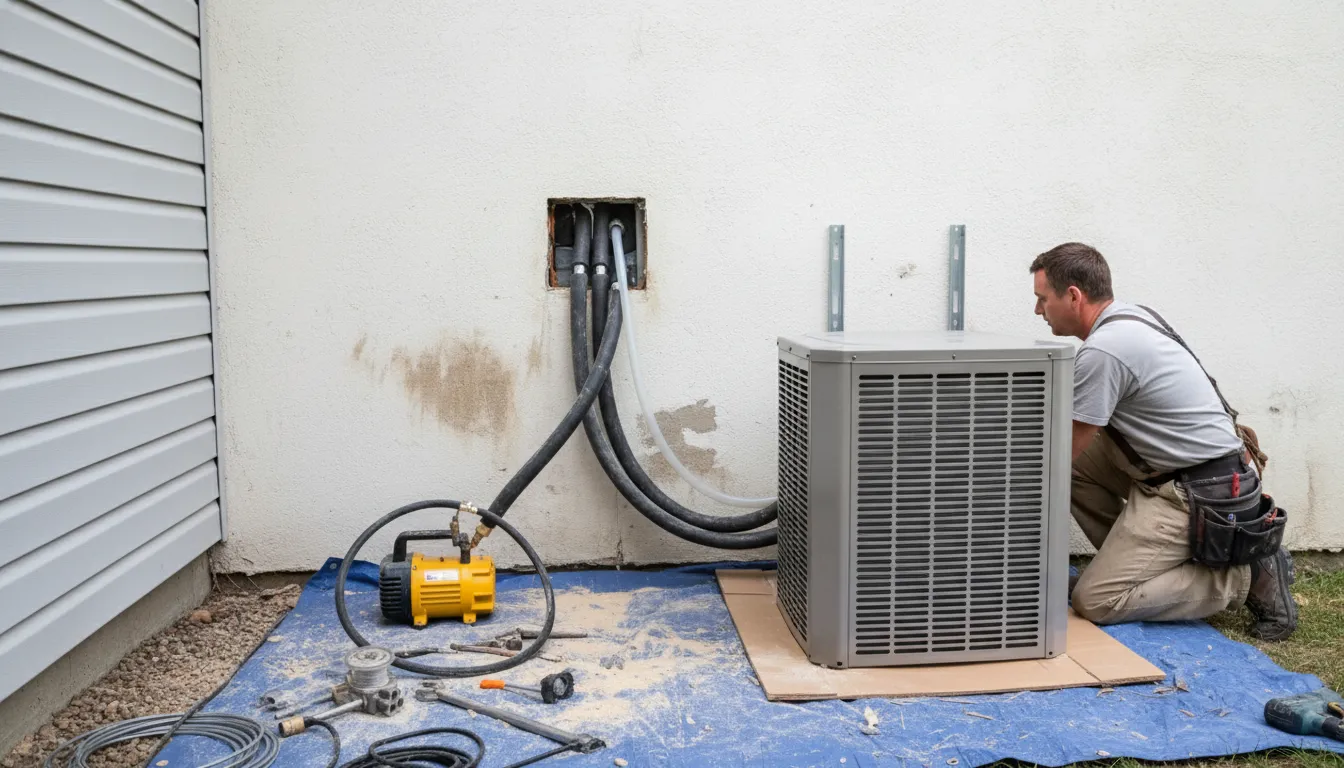
Find the Best Heat Pump Installation & Replacement Contractors for Your Business
No obligation • Fast responses • Nationwide coverage

Why you can trust HVAC Firms
HVAC Firms is a leading United States resource for evaluating HVAC service providers. Our team researches companies, checks credentials, and reviews customer feedback to present clear, unbiased information. Listings and rankings are based on merit, and companies cannot pay to change our editorial content.
Search providers near you
Top Heat Pump Installation & Replacement Contractors in Seattle, Washington Ranked
Seattle's mild, damp climate is uniquely suited for heat pump systems, making them an increasingly popular choice for efficient home heating and cooling. A heat pump installation or replacement is a significant home upgrade that transfers heat rather than generating it, offering substantial energy savings and year-round comfort. This guide explains the types of systems available, their benefits for local homes, and how to navigate costs and incentives to find qualified professionals for your project.
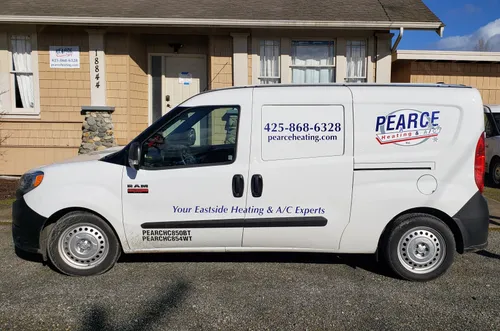
Pearce Heating & A/C
18844 NE 84th St, Redmond, WA 98053
Pearce Heating & A/C is a comprehensive HVAC and electrical service provider based in Seattle, WA. They serve the Eastside and King County areas, including Redmond, Bellevue, and Kirkland. Their services include installation, repair, and maintenance of heating, air conditioning, and heat pump systems, along with indoor air quality solutions such as air purifiers and humidifiers. Pearce Heating & A/C also offers professional electrical services including panel upgrades and rewiring. With decades of experience, their technicians are certified to work with all major HVAC brands and models. The company emphasizes personalized service by assigning consistent technicians and maintaining direct owner involvement to ensure quality and customer satisfaction.
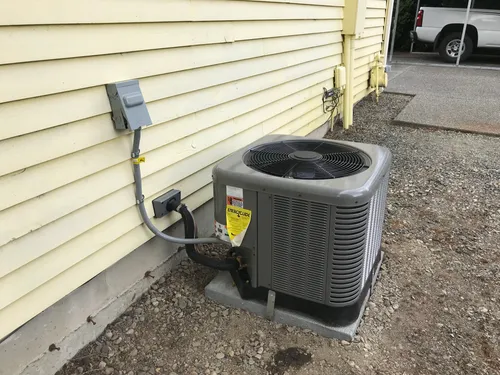
Columbia Heating & Air
6811 S 204th St, Kent, WA 98032
Columbia Heating & Air is an HVAC contractor based in Seattle, WA, serving King and Pierce counties. Founded in 1969, the company specializes in residential heating and cooling services including installation and repair of gas heating, air conditioning, heat pumps, ductless mini splits, and indoor air quality systems. They employ licensed and certified technicians and have been recognized as an A-Plus™ dealer by a leading manufacturer. Columbia Heating & Air offers evening and weekend service options for added convenience.
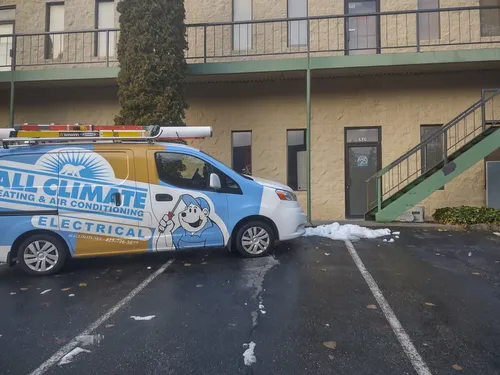
All Climate Heating & Air Conditioning
22313 70th Ave W Suite L7C, Mountlake Terrace, WA 98043
All Climate Heating & Air Conditioning is a family-owned HVAC company serving Seattle, WA, and the Greater Eastside areas since 1993. They provide a full range of heating and cooling services, including installation, repair, maintenance, and duct cleaning. As a Bryant authorized dealer, they offer energy-efficient heating and cooling equipment and employ NATE-certified technicians to ensure expert service. The company emphasizes careful workmanship and adherence to all codes and standards, with a lifetime workmanship warranty and extended factory warranties available on most equipment.
Progressive Comfort Solutions
129 NW 85th St Ste B, Seattle, WA 98117
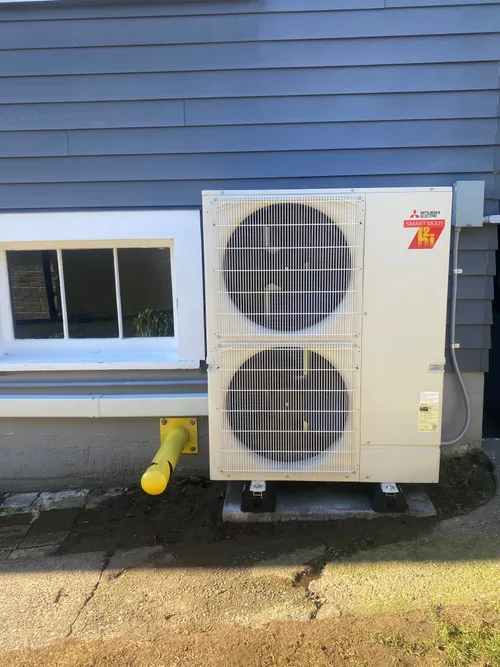
Progressive Comfort Solutions is a Seattle-based contractor specializing in the design and installation of energy-efficient heat pump systems. Serving Seattle, WA, they focus on Mitsubishi Electric heat pump products, including ductless mini-splits and ducted systems, tailored for residential and commercial properties. Established in 2010, the company operates with a fully in-house technical team and offers personalized system designs to improve comfort and reduce energy use. They provide flexible scheduling and assist customers with financing options and available rebates.
AAA Heating & Air Conditioning
4150 Lind Ave SW, Renton, WA 98057
AAA Heating & Air Conditioning is a local HVAC contractor serving Seattle, WA, and the surrounding Puget Sound area. They offer a wide range of heating and cooling services including installation, repair, and maintenance for air conditioners, furnaces, heat pumps, and boilers. The company also provides indoor air quality services such as duct cleaning and duct sealing to help improve home air quality. With over 30 years of experience since 1989, AAA Heating & Air Conditioning is equipped to handle common repairs efficiently with fully stocked trucks and offers 24/7 emergency service for air conditioning issues.
Why Seattle Homes Are Ideal for Heat Pumps
The Pacific Northwest climate, characterized by relatively mild winters and cool summers, is nearly perfect for heat pump operation 1. Unlike traditional furnaces that create heat, these systems move existing heat from one place to another-extracting warmth from the outdoor air (or ground) to heat your home in winter and reversing the process to cool it in summer. Because Seattle rarely experiences prolonged, deep freezes, modern air-source heat pumps can operate efficiently throughout the entire year2. This efficiency translates directly into lower utility bills and reduced reliance on fossil fuels, aligning with both personal savings and broader environmental goals for the region.
Types of Heat Pump Systems
Understanding the different system types is the first step in planning an installation or replacement. The right choice depends on your home's existing infrastructure, layout, and heating needs.
Air-Source Heat Pumps (ASHPs) This is the most common type installed in Seattle residences. They exchange heat with the outdoor air and come in two primary configurations:
- Ducted Systems: These connect to a home's existing forced-air ductwork, making them an excellent replacement option for homes with old furnaces or central air conditioners. They provide whole-home heating and cooling from a single, centralized unit.
- Ductless Mini-Split Systems: Comprising an outdoor compressor unit and one or more indoor air handlers mounted on walls or ceilings, mini-splits are ideal for homes without ducts, for room additions, or for creating independent temperature zones. Brands like Mitsubishi Electric are known for their high efficiency in this category.
Ground-Source Heat Pumps (Geothermal) These systems exchange heat with the ground through a network of buried pipes. They offer exceptional efficiency and consistent performance because ground temperatures remain stable year-round. However, the requirement for significant excavation leads to a much higher upfront installation cost compared to air-source models 3.
Understanding Efficiency and Performance Ratings
When evaluating a new heat pump, its efficiency ratings are critical indicators of long-term performance and operating cost. Since 2023, federal standards require new units to meet minimum ratings:
- SEER2 (Seasonal Energy Efficiency Ratio): Measures cooling efficiency. The higher the SEER2, the more efficient the cooling. The current minimum is 14.3 SEER2.
- HSPF2 (Heating Seasonal Performance Factor): Measures heating efficiency. A higher HSPF2 indicates more efficient heating performance, with a minimum standard of 7.5 HSPF2.
High-performance models will exceed these minimums significantly. Investing in a unit with superior SEER2 and HSPF2 ratings, while costing more initially, results in greater energy savings over the system's lifespan, especially in a climate like Seattle's where the system will be used for both heating and cooling4.
Cost Breakdown and Available Financial Incentives
The cost of a new heat pump system in Seattle varies widely based on system type, capacity, brand, and installation complexity.
Installation Cost Ranges For a complete air-source heat pump installation, homeowners can expect a range of roughly $4,000 to over $25,000 5 6. A standard ducted system replacement typically falls in the middle of this range. Ductless mini-split installations cost less for single-zone systems but increase with each additional indoor unit. The high end of the scale includes complex whole-home systems, homes requiring new electrical service or ductwork modifications, and ground-source geothermal installations.
Substantial Rebates and Tax Credits A major factor in the growing adoption of heat pumps in Seattle is the robust financial incentive landscape. The Seattle Clean Heat Program is a standout initiative designed to help homeowners transition away from oil or gas systems 7. This program can provide total savings of up to $8,000 through a combination of incentives:
- An instant rebate of up to $2,000 for installing an eligible heat pump.
- A bonus rebate of up to $4,000 for moderate-income households.
- Additionally, a federal tax credit of up to $2,000 is available for qualifying energy-efficient home improvements, including heat pumps8 9. It's crucial to verify the current status and eligibility requirements of all rebates and credits, as programs can change.
Find the perfect heat pump installation & replacement contractors for your needs
Get personalized recommendations and expert advice
Key Benefits for Seattle Residents
Switching to a heat pump offers multiple advantages tailored to the local environment and economy.
- Significant Energy Savings: Heat pumps are exceptionally efficient, often using 25-50% less electricity than standard electric resistance heating (like baseboard heaters)10 11. This efficiency directly lowers monthly energy bills.
- Year-Round Comfort in One System: A single heat pump unit provides both heating and cooling, eliminating the need for separate systems. This is increasingly valuable as Seattle summers see warmer temperatures.
- Reduced Environmental Impact: By using electricity and moving heat, heat pumps reduce the consumption of on-site fossil fuels (like natural gas or oil), lowering a home's carbon footprint and contributing to cleaner air12.
- Improved Air Quality and Control: Many modern systems include advanced filtration that can remove allergens and particulates from indoor air. Ductless systems also offer precise zonal control, allowing you to heat or cool only the rooms you're using.
Choosing a Qualified Professional
A proper installation is just as important as the quality of the equipment itself. An incorrectly sized or installed system will not perform efficiently. Look for licensed, bonded, and insured contractors with specific experience in heat pump installations. They should perform a detailed load calculation (Manual J) to determine the correct system size for your home's specific characteristics, not just match the capacity of your old unit. Ask for references, verify they are familiar with local permit requirements and incentive program paperwork, and ensure they provide a clear, detailed written estimate.
Maintenance for Long-Term Performance
To protect your investment and maintain peak efficiency, regular maintenance is essential. Homeowners should change or clean air filters monthly during peak seasons. An annual professional service check is recommended, typically in the spring or fall. This service includes inspecting refrigerant levels, cleaning coils, checking electrical connections, and ensuring the system cycles properly. Proper maintenance extends the system's life, ensures optimal efficiency, and can prevent costly repairs.
Frequently asked questions
Sources
Footnotes
-
Can Heat Pumps Handle Washington Winters?? - Blossom Solar - https://blossomsolar.com/blog/can-heat-pumps-handle-washington-winters ↩
-
Is a Heat Pump Worth It in Seattle? - Greenwood Heating - https://greenwoodheating.com/blog/is-a-heat-pump-worth-it-in-seattle/ ↩
-
Heat Pumps in Seattle Homes: Costs, Rebates, Benefits - https://zacleeseattle.com/blog/heat-pumps-in-seattle-homes-costs-rebates-benefits ↩
-
Heat pump efficiency rating: Master 2023 Performance - Daikin Seattle - https://www.daikinseattle.com/blog/heat-pump-efficiency-rating ↩
-
HVAC Installation & Replacement Cost in Washington State [2025] - https://residential.sunsetair.com/blog/hvac-installation-replacement-cost-washington-state-2025/ ↩
-
How Much Does a Heat Pump Cost in Seattle? [2025 Data] - Angie's List - https://www.angi.com/articles/how-much-does-heat-pump-cost/wa/seattle ↩
-
Seattle's Clean Heat Program - Environment - https://www.seattle.gov/environment/climate-change/buildings-and-energy/seattles-clean-heat-program ↩
-
2026 Heat Pump Cost Guide: Purchase, Installation & Repair - Carrier - https://www.carrier.com/residential/en/us/products/heat-pumps/how-much-does-a-heat-pump-cost/ ↩
-
2026 Heat Pump Costs | Purchase, Installation & Repair - Carrier - https://www.carrier.com/residential/en/us/products/heat-pumps/how-much-does-a-heat-pump-cost/ ↩
-
Heat Pump Installations Soar in Seattle: Rebates from City of ... - https://greenspace.seattle.gov/2025/02/heat-pump-installations-soar-in-seattle-rebates-from-city-of-seattle-make-adoption-more-affordable-for-households/ ↩
-
Heat pump installation Seattle: Smart Choice 2025 - https://www.daikinseattle.com/blog/heat-pump-installation-seattle-complete-guide ↩
-
Heating and Cooling Your Home - City Light - Seattle.gov - https://www.seattle.gov/city-light/residential-services/home-energy-solutions/heating-and-cooling-your-home ↩