Find the Best Heat Pump Installation & Replacement Contractors for Your Business
No obligation • Fast responses • Nationwide coverage

Why you can trust HVAC Firms
HVAC Firms is a leading United States resource for evaluating HVAC service providers. Our team researches companies, checks credentials, and reviews customer feedback to present clear, unbiased information. Listings and rankings are based on merit, and companies cannot pay to change our editorial content.
Search providers near you
Top Heat Pump Installation & Replacement Contractors in Redmond, Washington Ranked
Upgrading your home's heating and cooling system to a modern heat pump is one of the most impactful efficiency investments you can make in Redmond. These versatile systems provide both heating and cooling by moving heat, rather than generating it, leading to significant energy savings and enhanced comfort year-round. For Redmond homeowners, navigating the options-from ductless mini-splits to high-efficiency ducted systems-can be complex. This guide is designed to help you understand the technology, costs, and key considerations for a successful heat pump project, connecting you with the information needed to evaluate local service providers.
Pearce Heating & A/C
18844 NE 84th St, Redmond, WA 98053
Pearce Heating & A/C is a comprehensive HVAC and electrical service provider based in Seattle, WA. They serve the Eastside and King County areas, including Redmond, Bellevue, and Kirkland. Their services include installation, repair, and maintenance of heating, air conditioning, and heat pump systems, along with indoor air quality solutions such as air purifiers and humidifiers. Pearce Heating & A/C also offers professional electrical services including panel upgrades and rewiring. With decades of experience, their technicians are certified to work with all major HVAC brands and models. The company emphasizes personalized service by assigning consistent technicians and maintaining direct owner involvement to ensure quality and customer satisfaction.
Columbia Heating & Air
6811 S 204th St, Kent, WA 98032
Columbia Heating & Air is an HVAC contractor based in Seattle, WA, serving King and Pierce counties. Founded in 1969, the company specializes in residential heating and cooling services including installation and repair of gas heating, air conditioning, heat pumps, ductless mini splits, and indoor air quality systems. They employ licensed and certified technicians and have been recognized as an A-Plus™ dealer by a leading manufacturer. Columbia Heating & Air offers evening and weekend service options for added convenience.
All Climate Heating & Air Conditioning
22313 70th Ave W Suite L7C, Mountlake Terrace, WA 98043
All Climate Heating & Air Conditioning is a family-owned HVAC company serving Seattle, WA, and the Greater Eastside areas since 1993. They provide a full range of heating and cooling services, including installation, repair, maintenance, and duct cleaning. As a Bryant authorized dealer, they offer energy-efficient heating and cooling equipment and employ NATE-certified technicians to ensure expert service. The company emphasizes careful workmanship and adherence to all codes and standards, with a lifetime workmanship warranty and extended factory warranties available on most equipment.
Progressive Comfort Solutions
129 NW 85th St Ste B, Seattle, WA 98117
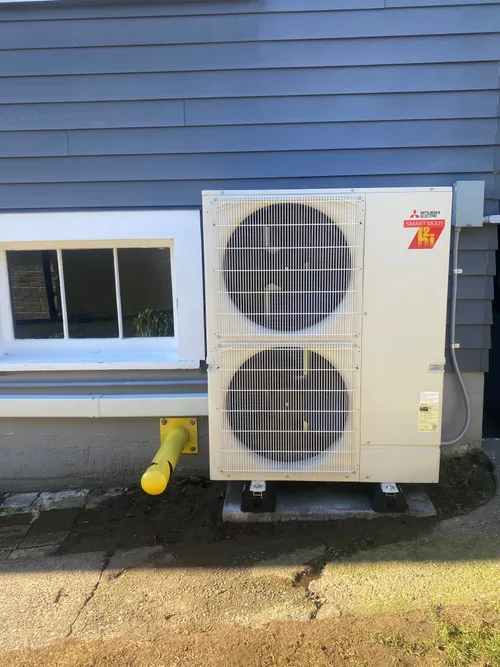
Progressive Comfort Solutions is a Seattle-based contractor specializing in the design and installation of energy-efficient heat pump systems. Serving Seattle, WA, they focus on Mitsubishi Electric heat pump products, including ductless mini-splits and ducted systems, tailored for residential and commercial properties. Established in 2010, the company operates with a fully in-house technical team and offers personalized system designs to improve comfort and reduce energy use. They provide flexible scheduling and assist customers with financing options and available rebates.
AAA Heating & Air Conditioning
4150 Lind Ave SW, Renton, WA 98057
AAA Heating & Air Conditioning is a local HVAC contractor serving Seattle, WA, and the surrounding Puget Sound area. They offer a wide range of heating and cooling services including installation, repair, and maintenance for air conditioners, furnaces, heat pumps, and boilers. The company also provides indoor air quality services such as duct cleaning and duct sealing to help improve home air quality. With over 30 years of experience since 1989, AAA Heating & Air Conditioning is equipped to handle common repairs efficiently with fully stocked trucks and offers 24/7 emergency service for air conditioning issues.
Why Choose a Heat Pump for Your Redmond Home?
Redmond's moderate climate, with its cool, wet winters and mild summers, is exceptionally well-suited for air-source heat pump technology. Unlike traditional furnaces that burn fuel, a heat pump transfers existing heat from the outside air into your home during winter, and reverses the process to cool your home in summer. This method of heat transfer is far more energy-efficient, which can translate to lower utility bills. Modern high-efficiency models are specifically engineered to extract heat effectively even during Redmond's colder spells, making them a reliable primary heating source for most homes in the area.
Types of Heat Pump Systems
Understanding the different configurations available is the first step in planning your installation or replacement.
Ducted Air-Source Heat Pumps
This is the most common type of system for homes that already have a functional ductwork system for forced-air heating and cooling. A ducted system replaces your existing outdoor condenser and indoor air handler or furnace. They are a seamless upgrade for whole-home comfort and are available in a wide range of efficiencies.
Ductless Mini-Split Heat Pumps
Ductless systems are an excellent solution for homes without existing ducts, for room additions, or for creating customized heating and cooling zones. They consist of an outdoor compressor unit connected to one or more indoor air handlers mounted on walls or ceilings. Mini-splits offer incredible flexibility, allowing you to control the temperature in individual rooms, which can further increase energy savings.
Geothermal (Ground-Source) Heat Pumps
While less common due to higher upfront investment, geothermal systems offer the highest efficiency by exchanging heat with the stable temperature of the ground. They are exceptionally effective but involve significant excavation or drilling, with installation costs typically starting in the range of $20,000 to $25,000 or more.
Dual-Fuel or Hybrid Systems
These systems pair a heat pump with a backup gas furnace. The heat pump handles heating during moderate temperatures, and the system automatically switches to the furnace during periods of extreme cold. This can be a cost-effective option for homeowners who want the efficiency of a heat pump but already have gas service and want a backup for the coldest nights 1.
Key Performance Ratings: SEER and HSPF
When comparing heat pump options, two efficiency ratings are paramount:
- SEER (Seasonal Energy Efficiency Ratio): Measures cooling efficiency. The higher the SEER, the more efficient the unit is at cooling. Modern standards require high ratings, with premium models offering SEER ratings above 20.
- HSPF (Heating Seasonal Performance Factor): Measures heating efficiency. A higher HSPF indicates better heating performance and energy savings over a typical winter.
For the Pacific Northwest climate, selecting a unit with a high HSPF is particularly important for maximizing winter energy savings. Investing in a unit with superior SEER and HSPF ratings, while having a higher initial cost, pays dividends through lower operating costs for years to come.
The Advantage of Variable-Speed Technology
One of the most significant advancements in heat pump systems is variable-speed compressor technology. Unlike single-stage units that simply turn on at full power or off, variable-speed systems can adjust their output in small increments2. This leads to:
- Enhanced Comfort: Maintains a more consistent temperature with fewer swings.
- Improved Humidity Control: Runs longer at lower speeds, removing more moisture from the air during cooling season.
- Quieter Operation: Runs at lower speeds most of the time.
- Greater Efficiency: Can reduce energy use by up to 40% compared to standard models by avoiding the large energy draw of frequent start-ups3.
Find the perfect heat pump installation & replacement contractors for your needs
Get personalized recommendations and expert advice
Understanding Heat Pump Installation Costs in Redmond
The total cost for a new heat pump installation or full system replacement in Redmond varies widely based on system type, size, efficiency, and the complexity of the installation. Below is a general overview of what homeowners can expect4 5.
- Whole-Home Ducted Air-Source Heat Pump: For a complete replacement of an existing system, including a high-efficiency unit and professional installation, costs typically range from $8,000 to $15,000 or more. The final price depends heavily on the unit's capacity and efficiency ratings.
- Ductless Mini-Split System: A single-zone system (one outdoor unit, one indoor head) generally costs between $3,500 and $7,000 installed. Multi-zone systems serving multiple rooms will be higher, often ranging from $8,000 to $15,000+6 7.
- Geothermal Heat Pump System: As a major project involving ground loops, these systems start at a significantly higher investment, often $20,000 to $30,000+ for a residential installation8 9.
Factors Influencing Your Final Price
Several variables will affect your specific quote:
- System Size and Capacity: An undersized or oversized unit will perform poorly. A professional will perform a Manual J load calculation to determine the perfect size for your home.
- Efficiency Rating: Units with higher SEER and HSPF ratings command a premium price.
- Existing Infrastructure: Homes with modern, well-sealed ductwork will see lower costs than those needing duct modification, sealing, or replacement.
- Labor and Permits: Installation complexity, local labor rates, and required city permits in Redmond are included in the total cost.
- Additional Electrical Work: Some installations may require an upgrade to the home's electrical panel or new wiring.
The Installation Process: What to Expect
A professional heat pump installation is a multi-step process that ensures optimal performance and longevity.
- Consultation and Load Calculation: A reputable provider will assess your home's insulation, windows, layout, and your family's comfort needs to recommend the correctly sized system.
- System Selection and Quote: You'll receive a detailed quote outlining the recommended equipment, its efficiency ratings, the scope of work, and the total cost.
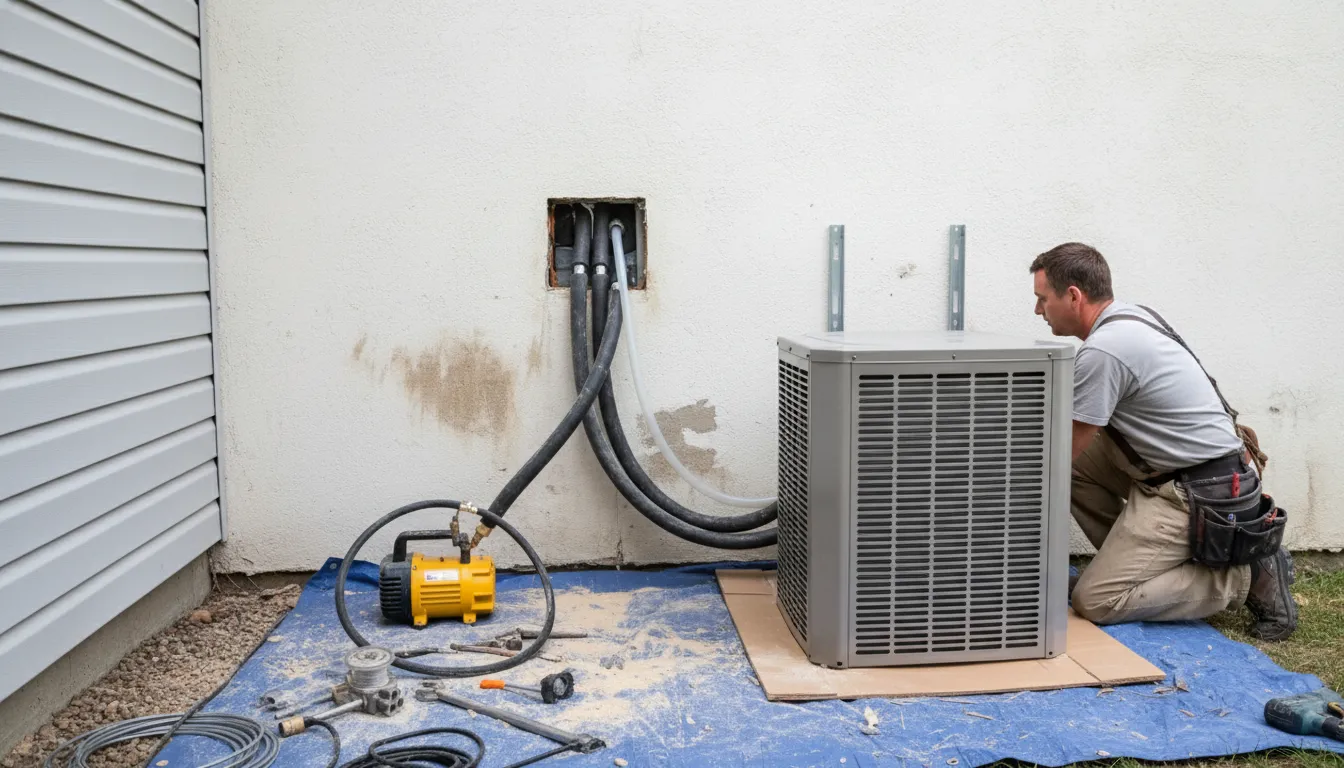
- Preparation and Installation: The crew will carefully remove the old equipment, prepare the site, install the new outdoor and indoor units, connect refrigerant lines and electrical wiring, and integrate with your thermostat and, if applicable, ductwork.
- Testing and Commissioning: This critical final step involves charging the system with refrigerant, testing all modes of operation, checking for leaks, verifying airflow, and ensuring the thermostat is properly calibrated. The technician should also walk you through basic operation and maintenance.
Maintaining Your Heat Pump for Peak Performance
To protect your investment and ensure your system runs efficiently for its full lifespan (typically 12-15 years), regular maintenance is key. This includes simple homeowner tasks like keeping the outdoor unit clear of leaves, snow, and debris, and changing indoor air filters regularly. It is also highly recommended to schedule a professional tune-up twice a year-once in the spring before cooling season and once in the fall before heating season. A professional service will include cleaning coils, checking refrigerant levels, inspecting electrical components, and verifying system pressures.
Frequently asked questions
Sources
Footnotes
-
Efficient Heat Pump Solutions in Redmond - https://www.alexandersheating.com/heating/heat-pumps-redmond-wa/ ↩
-
Heat Pump Installation - Redmond, WA | Ductless Systems - https://homecomfortalliance.com/heating-installation/heat-pumps-in-redmond-wa/ ↩
-
Planning Your New Construction HVAC System - https://www.allclimate.net/residential-services/new-construction/ ↩
-
HVAC Installation & Replacement Cost in Washington State ... - https://residential.sunsetair.com/blog/hvac-installation-replacement-cost-washington-state-2025/ ↩
-
2025 Heat Pump Replacement Costs - What Homeowners Can ... - https://heatpumppriceguides.com/heat-pump-replacement-costs-this-year/ ↩
-
2026 Heat Pump Costs | Purchase, Installation & Repair - Carrier - https://www.carrier.com/residential/en/us/products/heat-pumps/how-much-does-a-heat-pump-cost/ ↩
-
Here's how much heat pumps cost to install - https://homes.rewiringamerica.org/articles/heating-and-cooling/heat-pump-costs ↩
-
Heat Pump Cost & Replacement Cost Guide - Rahn Industries - https://rahnindustries.com/2023/08/08/heat-pump-replacement-cost-guide/ ↩
-
Heat Pump Cost Analysis: What To Expect & How It's Determined - https://clinesairconditioning.com/heat-pump-cost/ ↩