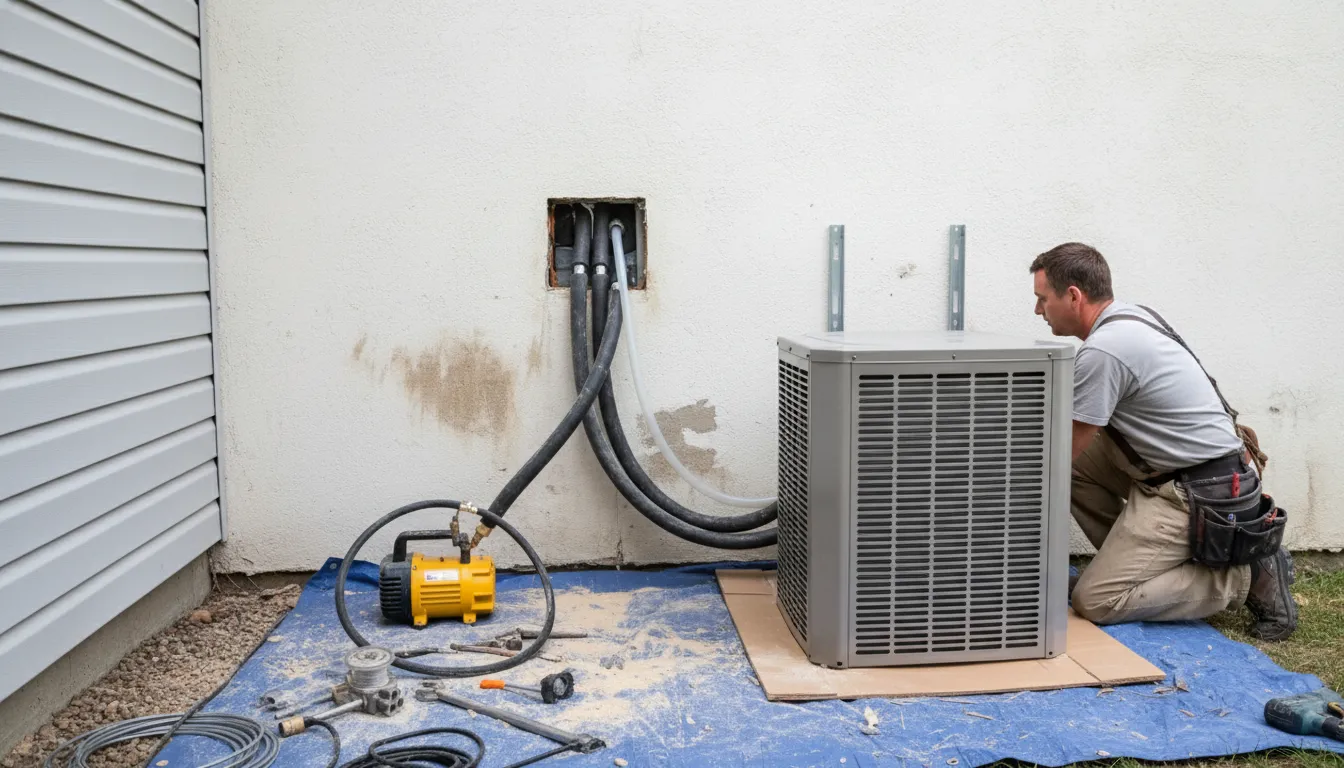
Find the Best Heat Pump Installation & Replacement Contractors for Your Business
No obligation • Fast responses • Nationwide coverage

Why you can trust HVAC Firms
HVAC Firms is a leading United States resource for evaluating HVAC service providers. Our team researches companies, checks credentials, and reviews customer feedback to present clear, unbiased information. Listings and rankings are based on merit, and companies cannot pay to change our editorial content.
Search providers near you
Top Heat Pump Installation & Replacement Contractors in Murfreesboro, Tennessee Ranked
Upgrading your home's heating and cooling system with a heat pump is a smart investment for comfort and efficiency in Murfreesboro. This technology provides both heating and cooling from a single unit, moving heat rather than generating it, which can lead to significant energy savings. For homeowners in Rutherford County, navigating the options for heat pump installation or replacement involves understanding local climate needs, system types, and costs. This guide will help you understand the key considerations and connect with qualified local professionals to assess your specific home.
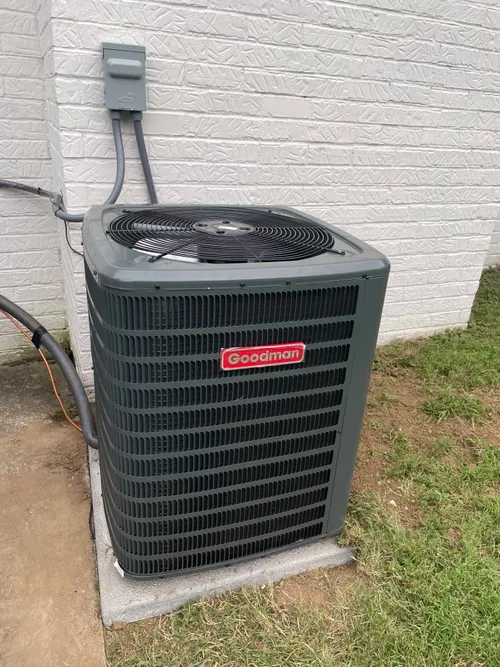
Bradley Maintenance & Air LLC
Nashville, TN
Bradley Maintenance & Air LLC is an HVAC and plumbing contractor serving Nashville, TN, and nearby areas including Brentwood, Antioch, and Murfreesboro. They provide HVAC maintenance, repair, and system changeouts, along with plumbing services such as water heater installation and repair. Their services cover air conditioning, furnace, heat pump installation, and tune-ups to maintain home and business comfort throughout the year.
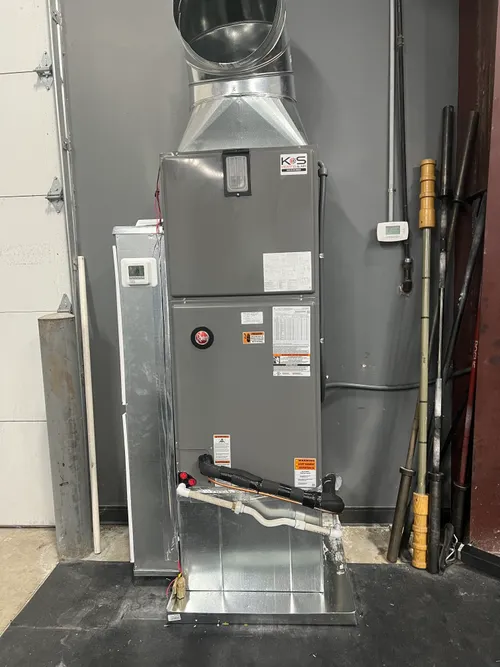
KandS HVAC
2055 Holloway Rd, Lebanon, TN 37090
KandS HVAC is an HVAC company based in Nashville, TN, providing repair, installation, and maintenance services for air conditioning, furnaces, heat pumps, and boilers. They offer convenient options for obtaining quotes, including in-home visits and remote assessments using photos. KandS HVAC handles a range of services from urgent repairs to routine tune-ups and new system installations, aiming to meet various heating and cooling needs efficiently.
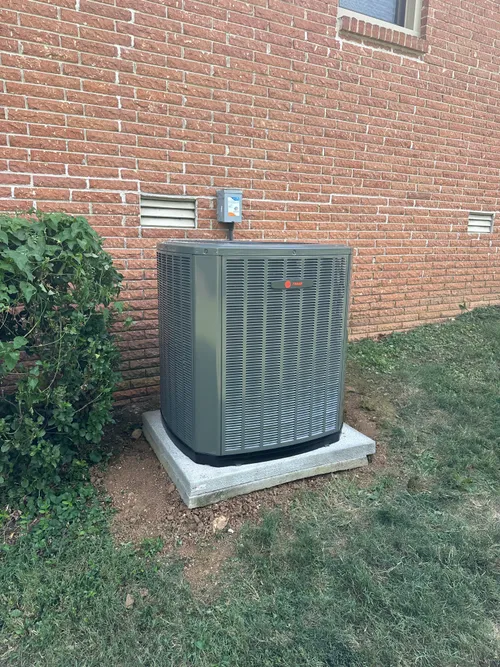
Breeze Heating and Cooling LLC
7175 Nolensville Rd #205, Nolensville, TN 37135
Breeze Heating and Cooling LLC is an HVAC company based in Nashville, TN, serving Middle Tennessee. They provide a range of services including air conditioning repair and installation, furnace repair and installation, heat pump repair and installation, as well as HVAC tune-up services. The company emphasizes respectful service and comprehensive indoor comfort solutions for residential properties.
G & G Comfort
Nashville, TN
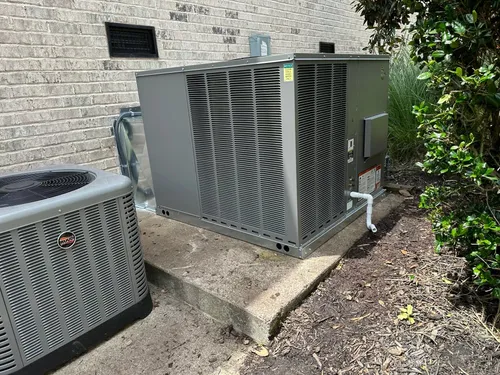
G & G Comfort is an HVAC company based near Nashville, TN, specializing in heating and cooling services for residential and light commercial customers. They offer repair, maintenance, and installation of air conditioners, furnaces, heat pumps, and duct systems. The company works with well-known brands such as American Standard, Goodman, Mitsubishi, Rheem, and Ruud. G & G Comfort provides custom seasonal maintenance plans to help customers maintain efficient HVAC systems and offers professional installation and replacement services tailored to individual needs.
PrimeTime Heat & Air
228 Wellington Way, Smyrna, TN 37167
PrimeTime Heat & Air is a locally owned HVAC company serving Nashville, TN, and surrounding areas. They provide a full range of heating and cooling services including repair, installation, and maintenance for air conditioners, furnaces, heat pumps, ductless systems, and indoor air quality solutions. The company is EPA certified, licensed, bonded, and insured, ensuring professional and compliant service. With expertise in ductwork, zoning systems, and air purification technologies like UV lights and air scrubbers, they address various comfort and air quality needs. PrimeTime Heat & Air emphasizes building lasting customer relationships and offers flexible appointment availability to meet client needs.
Understanding Heat Pump Technology for Your Home
A heat pump is a versatile HVAC system that transfers heat from one place to another. In the summer, it acts like an air conditioner, removing heat from your home and releasing it outdoors. In the winter, the process reverses, extracting available heat from the outside air (or ground) and moving it inside to warm your home. This method of heat transfer is inherently more efficient than traditional systems that create heat by burning fuel. For Murfreesboro residents, this means a single system can handle year-round climate control, simplifying maintenance and potentially lowering utility bills.
Why a Heat Pump is a Great Fit for Middle Tennessee
Murfreesboro's moderate climate is well-suited for heat pump operation. With hot, humid summers and generally mild winters, an air-source heat pump can efficiently meet most of your home's comfort needs 1. However, it's important to note that as outside temperatures drop below approximately 40°F, the system's efficiency decreases. During these colder spells, which do occur in our region, a properly configured heat pump system will engage a backup or "auxiliary" heating source, typically electric resistance heat strips, to maintain indoor comfort. Choosing a high-efficiency model with strong performance ratings can minimize the use of this more expensive backup heat.
Types of Heat Pump Systems Available
When considering a new heat pump installation, you'll encounter several system types, each with its own advantages and ideal applications.
Air-Source Heat Pumps (ASHP): This is the most common and widely installed type in Murfreesboro. An ASHP transfers heat between your home and the outside air. Modern units are highly efficient and come in several configurations:
- Single-Stage: Operates at full capacity when on. A reliable, often more affordable option.
- Two-Stage: Can operate at a lower capacity for mild days and a higher capacity for extreme temperatures, offering improved comfort and efficiency.
- Variable-Speed: Provides the highest level of efficiency and comfort by precisely modulating its output to match your home's needs moment-by-moment.
Ductless Mini-Split Heat Pumps: These systems are excellent for homes without existing ductwork, for room additions, sunrooms, or for creating zoned comfort control. A mini-split consists of an outdoor compressor unit connected to one or more indoor air-handling units mounted on walls or ceilings. They offer independent temperature control for different "zones" in your home and are known for their high efficiency 2.
Geothermal Heat Pumps (Ground-Source): This is the most efficient type of heat pump available. Instead of exchanging heat with the outside air, a geothermal system uses a loop of pipes buried in the ground to exchange heat with the earth's stable temperature. While the upfront installation cost is significantly higher due to the required ground loop, the operational savings and longevity can make it a compelling long-term investment for the right property.
Key Factors Influencing Heat Pump Cost in Murfreesboro
The cost of a new heat pump system in Murfreesboro can vary widely, typically ranging from roughly $4,000 for a basic, smaller system to $15,000 or more for a high-efficiency, variable-speed central system or a multi-zone ductless installation 3. Geothermal systems represent a larger investment, often starting around $18,000 and going up from there 4. Several core factors determine where your project will fall within these ranges:
- Home Size & Existing Ductwork: The size of your home (in square feet) and its layout determine the required capacity of the heat pump, measured in tons. An existing, well-sealed ductwork system can reduce installation complexity and cost, while damaged or poorly designed ducts may need modification or replacement 5.
- System Type & Efficiency: As outlined above, the technology you choose is a primary cost driver. Within each category, higher efficiency ratings (SEER2 for cooling, HSPF for heating) generally command a higher initial price but result in lower monthly energy bills 6.
- Labor & Local Requirements: The expertise of your chosen installer, the complexity of the installation (e.g., removing an old system, upgrading electrical service), and local permit fees in Murfreesboro and Rutherford County all contribute to the final cost 7.
Find the perfect heat pump installation & replacement contractors for your needs
Get personalized recommendations and expert advice
The Installation and Replacement Process
A professional heat pump installation is not a simple swap. It's a detailed process that ensures safety, efficiency, and system longevity. A reputable local contractor will start with a comprehensive load calculation (Manual J) to determine the precise size your home needs-an oversized or undersized unit will lead to comfort issues and higher costs. They will inspect your existing ductwork, electrical panel, and thermostat compatibility. The installation itself involves placing the outdoor unit, connecting refrigerant lines and electrical wiring, integrating the indoor air handler or coil, and ensuring the system is charged, tested, and balanced according to manufacturer specifications. For a replacement, the process also includes the safe recovery of refrigerant from the old unit and its proper disposal.
Maximizing Efficiency and Rebates
To get the most from your investment, consider these steps:
- Seal and Insulate: Before installing a new system, address air leaks in your home's envelope and ensure your attic and walls are properly insulated. This reduces the workload on your heat pump.
- Explore Financing: Many HVAC companies offer financing options to help manage the upfront cost of a new, efficient system.
- Investigate Rebates: Check for available rebates from federal programs, local utilities like Middle Tennessee Electric (MTE), or state initiatives that can significantly offset the cost of qualifying high-efficiency heat pump installations 8.
Choosing a Local Murfreesboro HVAC Professional
Your choice of installer is as critical as your choice of equipment. A qualified, NATE-certified technician will ensure your system is installed correctly for optimal performance. Look for a licensed, insured contractor with strong local references and experience specifically with heat pump systems in the Middle Tennessee climate. They should perform a detailed home evaluation and provide a clear, written estimate that breaks down equipment, labor, and warranty information. Local firms like The Tedder Company, which service the Murfreesboro area, can provide personalized assessments and quotes based on your home's unique characteristics 9.
Maintenance for Long-Term Performance
Once installed, regular maintenance is key to protecting your investment. An annual professional tune-up, ideally in the spring or fall, should include checking refrigerant levels, cleaning coils, inspecting electrical components, and testing system operation. Homeowners can also support system health by regularly changing or cleaning air filters (every 1-3 months), keeping the outdoor unit clear of leaves, grass, and debris, and ensuring indoor vents are not blocked by furniture.
Frequently asked questions
Sources
Footnotes
-
The Impact of Tennessee's Climate on HVAC System Design - https://wondercooling.com/tennessee-climate-hvac-solutions/ ↩
-
Heat Pump Price Guides - https://heatpumppriceguides.com/ ↩
-
Heat Pump Cost Analysis: What To Expect & How It's Determined - https://clinesairconditioning.com/heat-pump-cost/ ↩
-
Understanding Geothermal HVAC Cost in Middle Tennessee - https://www.righttimehvac.com/geothermal-hvac-cost/ ↩
-
Cost of a Heat Pump Installation in 2025 - https://www.cabshvac.com/heat-pump-installation-cost/ ↩
-
2026 Heat Pump Cost Guide: Purchase, Installation & Repair - https://www.carrier.com/residential/en/us/products/heat-pumps/how-much-does-a-heat-pump-cost/ ↩
-
HVAC Installation Costs and Breakdowns - https://tmcservice.com/hvac-installation-costs-and-breakdowns/ ↩
-
Heat Pumps & Outside Weather | Middle Tennessee Electric - https://mte.com/cooperative/news-media/blog/heat-pumps-outside-weather ↩
-
Heat Pumps | Repair, Maintenance, Install | Murfreesboro, TN - https://theteddercompany.com/residential/heat-pumps/ ↩