Find the Best Heat Pump Installation & Replacement Contractors for Your Business
No obligation • Fast responses • Nationwide coverage

Why you can trust HVAC Firms
HVAC Firms is a leading United States resource for evaluating HVAC service providers. Our team researches companies, checks credentials, and reviews customer feedback to present clear, unbiased information. Listings and rankings are based on merit, and companies cannot pay to change our editorial content.
Search providers near you
Top Heat Pump Installation & Replacement Contractors in Rock Hill, South Carolina Ranked
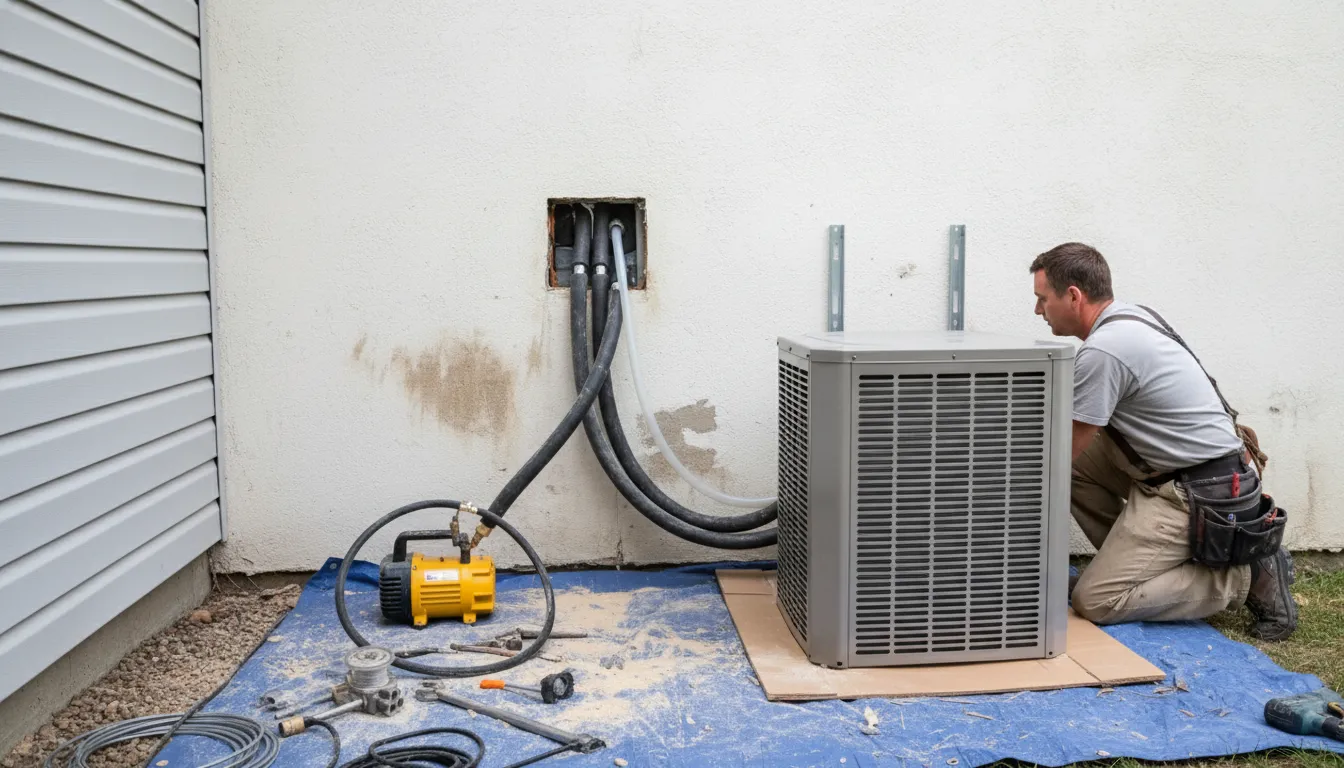
Considering a new heating and cooling system for your Rock Hill home? A heat pump is an excellent, energy-efficient choice for the region's moderate climate, providing both warmth in the winter and cooling in the summer from a single unit. This guide will help you understand the types of systems available, what to expect from the installation process, and how to find qualified local professionals to ensure your project is a success.
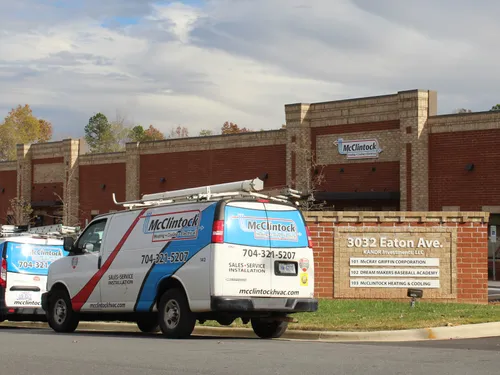
McClintock Heating and Cooling
3032 Eaton Avenue Suite 103, Indian Trail, NC 28079
McClintock Heating and Cooling is a locally owned and fully licensed HVAC company serving Charlotte, NC, and surrounding areas. They offer a range of heating and cooling services including repair and installation of air conditioners, furnaces, heat pumps, and indoor air quality solutions. The company also provides plumbing and electrical services, expanding their support for home and commercial comfort needs. With over 24 years of experience, McClintock Heating and Cooling focuses on tailored solutions that improve energy efficiency and system performance.
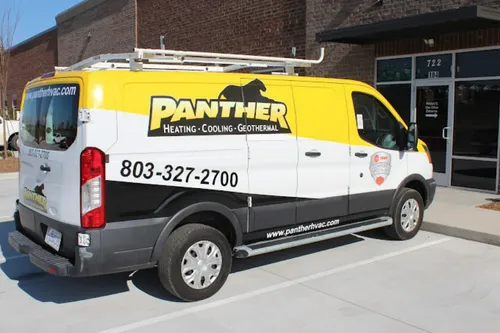
Panther Heating and Cooling
722 Corporate Blvd Suite 105, Rock Hill, SC 29730
Panther Heating and Cooling is an HVAC company based in Charlotte, NC, offering a full range of heating and cooling services including installation, repair, and maintenance of furnaces, air conditioners, heat pumps, and mini-split systems. They also provide indoor air quality solutions and smart thermostat installations. The company serves Charlotte and surrounding areas such as Rock Hill, Tega Cay, Fort Mill, Indian Land, York, Clover, Matthews, and Waxhaw. Panther Heating and Cooling emphasizes skilled, certified technicians and offers 24/7 emergency HVAC services to address urgent needs promptly.
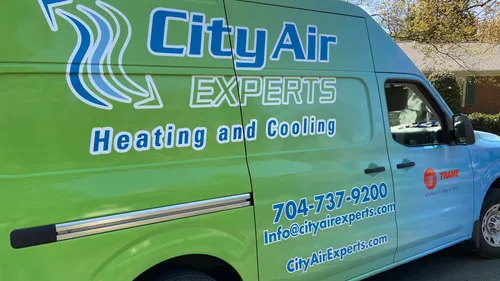
City Air Experts Heating and Cooling
411 Foster Ave, Charlotte, NC 28203
City Air Experts Heating and Cooling is a Charlotte, NC-based company providing residential and commercial HVAC services. They offer installation, repair, and maintenance for air conditioning, furnaces, heat pumps, mini splits, and general HVAC systems. The company is a certified Trane Comfort Specialist and employs NATE-certified technicians, ensuring skilled service. Established in 2009, City Air Experts provides 24/7 emergency HVAC services to respond to urgent needs any time of day or night.

NASCAIR Heating & Cooling
377 Rubin Center Dr Suite 210, Fort Mill, SC 29708
NASCAIR Heating & Cooling is a veteran-owned HVAC company serving Charlotte, NC, and nearby areas since 2004. They specialize in the repair, maintenance, and installation of heating and air conditioning systems, including furnaces, heat pumps, mini splits, and ductless systems. NASCAIR is known for its skilled technicians who handle all makes and models, offering services such as HVAC tune-ups and ductwork replacement. With over 20 years of experience, the company focuses on ensuring safe, efficient, and comfortable home environments.
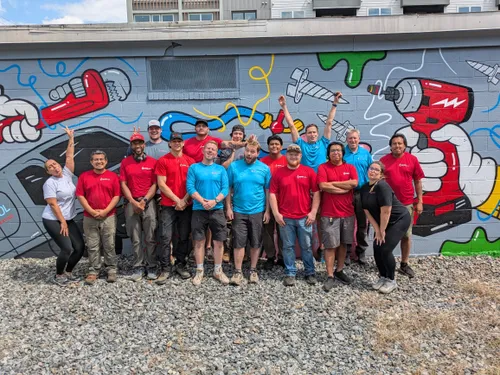
Super Cool HVAC
954 N Davidson St, Charlotte, NC 28206
Super Cool HVAC is a locally owned company based in Charlotte, NC, offering residential and commercial heating and cooling services. They provide installation, repair, and maintenance for air conditioners, furnaces, heat pumps, and HVAC systems. The company emphasizes clear communication and customer partnership throughout scheduling, diagnosis, and system replacement. They also handle warranty registration and offer labor warranties for new installations. Regular maintenance plans are available to help ensure efficient and reliable system operation and to prevent unexpected breakdowns.
Why Choose a Heat Pump for Your Rock Hill Home?
Rock Hill's climate is particularly well-suited for heat pump technology. With relatively mild winters, modern air-source heat pumps can efficiently handle the heating load for most of the year. These systems work by moving heat rather than generating it, making them significantly more efficient than traditional furnaces or baseboard heaters during the cooler months. In the summer, they reverse the process, acting as a central air conditioner to remove heat from your home. This dual functionality makes a heat pump replacement or new installation a smart, consolidated solution for year-round comfort.
Common Types of Heat Pump Systems
Not all heat pumps are the same. The right system for your home depends on your existing infrastructure, budget, and specific comfort needs. Here are the primary options available from Rock Hill HVAC contractors.
Air-Source Heat Pumps (ASHPs)
This is the most common type of heat pump installation. ASHPs transfer heat between your home's interior and the outside air. Technological advances have made them effective even during Rock Hill's occasional colder snaps, with many models operating efficiently in below-freezing temperatures. They are an ideal all-in-one solution for homes with existing ductwork.
Ductless Mini-Split Heat Pumps
Perfect for homes without ductwork, room additions, sunrooms, or for creating zoned temperature control. A ductless mini-split consists of an outdoor compressor unit connected to one or more indoor air handlers mounted on walls or ceilings. This setup allows you to heat or cool specific rooms independently, which can lead to substantial energy savings.
Geothermal Heat Pumps
Also known as ground-source heat pumps, these systems use the stable temperature of the earth a few feet below the surface for heat exchange. They are the most efficient type of heat pump available, offering dramatic reductions in energy use 1. However, the upfront installation cost is higher due to the need to bury looped piping underground, making them a significant long-term investment.
Hybrid or Dual-Fuel Systems
A hybrid system pairs an air-source heat pump with a traditional gas furnace. The heat pump handles moderate temperatures efficiently, while the furnace automatically takes over during extreme cold, ensuring reliable comfort while optimizing energy costs 2. This can be a great option for homeowners who want efficiency but also have access to natural gas.
Understanding Efficiency Ratings: SEER and HSPF
When comparing heat pump options, you'll encounter two key efficiency metrics: SEER and HSPF. Understanding these will help you evaluate long-term operating costs.
- SEER (Seasonal Energy Efficiency Ratio): Measures cooling efficiency. The higher the SEER rating, the more efficient the unit is at cooling. Current federal minimums are 14 SEER, but high-efficiency models can reach 20+ SEER. A higher SEER rating is beneficial for Rock Hill's hot and humid summers.
- HSPF (Heating Seasonal Performance Factor): Measures heating efficiency. Look for a unit with an HSPF of 8 or higher for efficient performance during the heating season 3 4. A higher HSPF means the unit uses less electricity to produce the same amount of heat.
Investing in a unit with higher SEER and HSPF ratings will result in lower monthly utility bills, though it typically comes with a higher initial purchase price.
What Influences Heat Pump Installation Cost in Rock Hill?
The cost of a new heat pump system in Rock Hill can vary widely based on several factors. On average, homeowners can expect a total cost-including equipment, labor, and basic installation-around $6,400 5 6. The overall range typically falls between $5,600 for a smaller or simpler system to over $10,000 for a larger, high-efficiency, or more complex installation 5 7.
Key factors that determine your final price include:
- System Size and Capacity: An undersized unit will run constantly, while an oversized unit will short-cycle, leading to inefficiency and discomfort. A professional will perform a Manual J load calculation to determine the correct size (measured in tons) for your home.
- Equipment Efficiency: As mentioned, units with higher SEER and HSPF ratings cost more upfront but save money over time.
- System Type: A standard air-source system replacing a similar unit is generally less expensive than installing a new geothermal system or a multi-zone ductless mini-split system.
- Existing Infrastructure: If your home already has ductwork in good condition, installation is more straightforward. Modifying, repairing, or installing new ductwork adds significant labor and material costs 8.
- Labor and Contractor Expertise: Rates vary between companies. Always choose a licensed, insured, and experienced contractor, as proper installation is critical to system performance and longevity.
Find the perfect heat pump installation & replacement contractors for your needs
Get personalized recommendations and expert advice
The Professional Installation Process
A proper heat pump installation is a detailed process that ensures safety, efficiency, and reliability. Reputable Rock Hill contractors will typically follow these steps:
- Initial Consultation and Load Calculation: A technician will assess your home's size, insulation, windows, and layout to calculate the precise heating and cooling load.
- System Recommendation and Quote: Based on the assessment, they will recommend a system type, size, and efficiency level and provide a detailed, written estimate.
- Removal of Old Equipment: If replacing a system, the old unit and refrigerant will be safely removed and disposed of according to EPA regulations.
- Preparation and Installation: This includes setting the new outdoor unit on a stable pad, installing the indoor coil or air handler, connecting refrigerant lines and electrical wiring, and integrating with existing ductwork or installing new lines for ductless systems.
- System Testing and Commissioning: The contractor will charge the system with refrigerant, test for leaks, check airflow, calibrate the thermostat, and ensure all components are operating correctly and efficiently.
- Customer Walkthrough: A final step where the installer explains the system's operation, thermostat programming, and basic maintenance to the homeowner.
Potential Savings: Rebates and Tax Credits
The initial investment in a high-efficiency heat pump can be offset by financial incentives. The federal government offers tax credits for qualifying energy-efficient home improvements, including certain heat pumps. Additionally, local utility companies, such as those serving York County, may offer rebates or special financing for upgrading to an efficient system. A qualified local installer should be informed about current available incentives and can help you navigate the application process.
Maintaining Your New Heat Pump System
To protect your investment and ensure it runs efficiently for its full lifespan (typically 10-15 years), regular maintenance is essential. This includes simple tasks like changing or cleaning air filters monthly and keeping the outdoor unit clear of debris, leaves, and snow. It's also recommended to schedule a professional tune-up twice a year-once in the spring before cooling season and once in the fall before heating season. This service includes checking refrigerant levels, cleaning coils, inspecting electrical components, and ensuring the system is operating at peak efficiency.
Frequently asked questions
Sources
Footnotes
-
Reliable Heat Pump Services in Rock Hill, SC | Call Today - https://honestyservices.com/heat-pumps/ ↩
-
Heat Pump Replacement Cost | Casey Services HVAC Inc - https://caseyserviceshvac.com/blog/heat-pump-replacement-cost/ ↩
-
How Much Does Heat Pump Installation Cost in Rock Hill? - https://comfortsystemsllc.com/blog/heat-pump-installation-cost-rock-hill ↩
-
2026 Heat Pump Cost Guide: Purchase, Installation & Repair - https://www.carrier.com/residential/en/us/products/heat-pumps/how-much-does-a-heat-pump-cost/ ↩
-
Heat Pump Cost Explained: What to Expect for Your Home Upgrade - https://www.leokobco.com/post/heat-pump-cost-explained ↩ ↩2
-
How Much Does It Cost To Install a Heat Pump in South Carolina? - https://eliteairandheatllc.com/cost-to-install-heat-pump-york-county/ ↩
-
Heat Pump Installation Rock Hill SC - https://eliteairandheatllc.com/heating/heat-pump-services-rock-hill-sc/heat-pump-installation/ ↩
-
Heat Pump Replacement Rock Hill SC - Elite Air & Heat LLC - https://eliteairandheatllc.com/heating/heat-pump-services-rock-hill-sc/heat-pump-replacement/ ↩