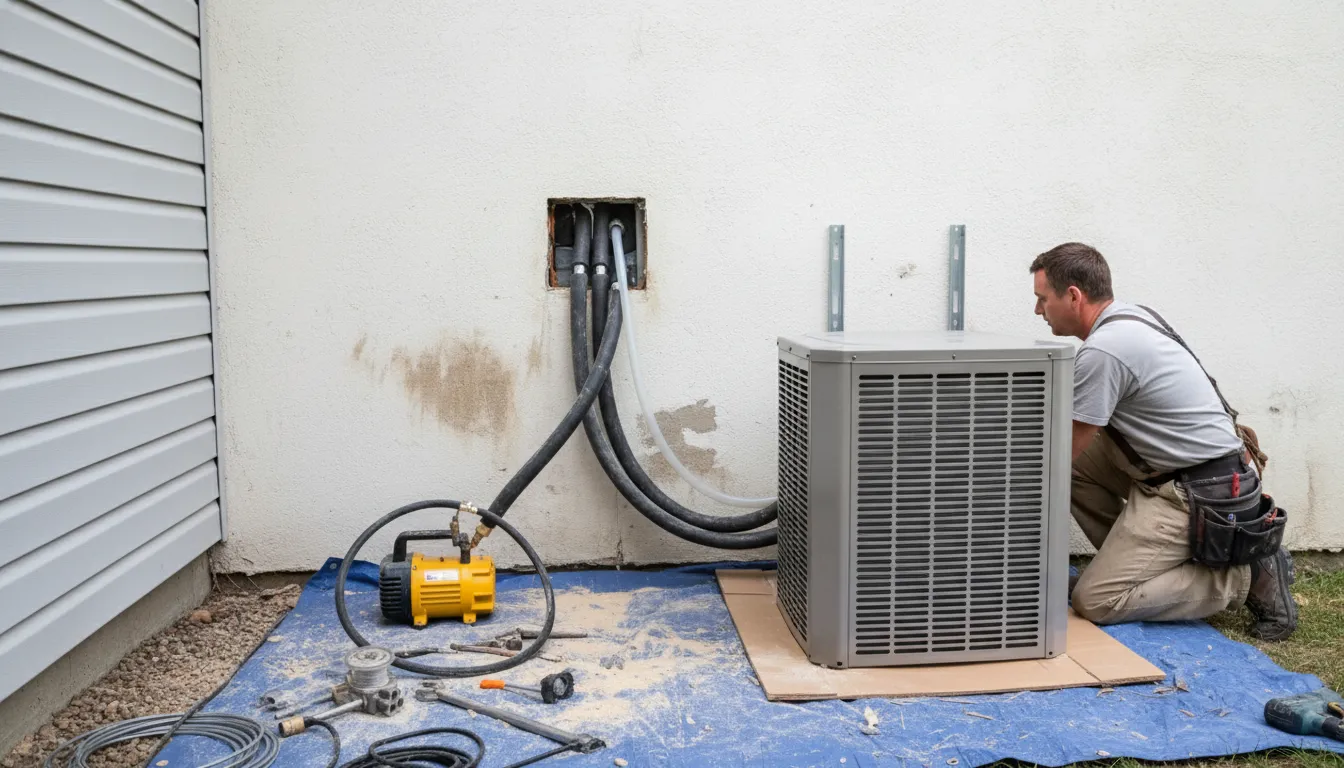
Find the Best Heat Pump Installation & Replacement Contractors for Your Business
No obligation • Fast responses • Nationwide coverage

Why you can trust HVAC Firms
HVAC Firms is a leading United States resource for evaluating HVAC service providers. Our team researches companies, checks credentials, and reviews customer feedback to present clear, unbiased information. Listings and rankings are based on merit, and companies cannot pay to change our editorial content.
Search providers near you
Top Heat Pump Installation & Replacement Contractors in Troy, Michigan Ranked
Upgrading your home's heating and cooling system with a heat pump is a smart move for Troy residents looking for year-round comfort, improved energy efficiency, and a reduced carbon footprint. These versatile systems provide both heating and cooling from a single unit, making them an excellent alternative to traditional furnaces and air conditioners. For homeowners in Troy, navigating the options-from cold-climate air-source models to geothermal systems-requires local expertise. This guide will help you understand the key considerations, costs, and incentives specific to our climate, empowering you to connect with qualified professionals for your project.
Airman Heat & Air LLC
5129 8 Mile Rd, Warren, MI 48091
Airman Heat & Air LLC is a family-owned HVAC company serving Detroit, MI. They provide residential and commercial heating and cooling services, including installation and repair of air conditioners, furnaces, and heat pumps. The company uses factory-authorized brand name equipment and offers a labor warranty alongside the manufacturer's warranty. Established in 2001, Airman Heat & Air LLC emphasizes professionalism and a personalized approach to customer service.
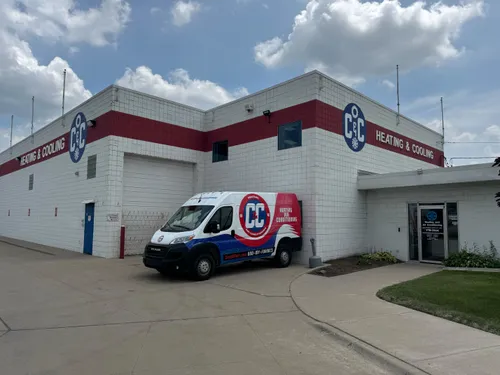
C & C Heating & Air Conditioning
29420 Groesbeck Hwy, Roseville, MI 48066
C & C Heating & Air Conditioning is an HVAC company based in Detroit, MI, offering a full range of heating and cooling services. They install and repair air conditioners, furnaces, heat pumps, and indoor air quality products from major manufacturers like Carrier, Lennox, and Trane. The company also provides humidifiers, generators, hot water heaters, and advanced air purification systems including UV lamps and germicidal lights. Their technicians are trained to handle installation and repair for all makes and models, ensuring comprehensive indoor air control solutions.
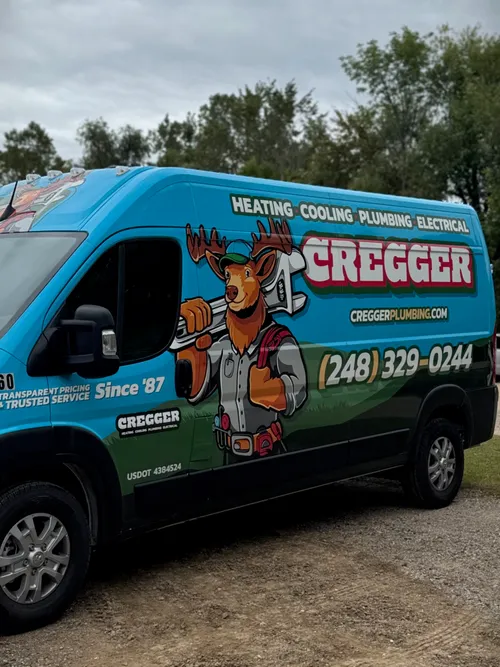
Cregger Plumbing, Heating & Cooling
2335 Goodrich St, Ferndale, MI 48220
Cregger Plumbing, Heating & Cooling is a third-generation, locally operated company serving Detroit, MI. They provide a range of HVAC and plumbing services including repair and installation of air conditioners, furnaces, heat pumps, and boilers. Their licensed and insured team is experienced in handling plumbing and HVAC needs throughout Michigan, with a capability in hydro jetting and emergency plumbing services. Established in 1987, Cregger offers 24/7 emergency plumbing support to address urgent issues at any time.
Detroit Furnace LLC
31313 Kendall, Fraser, MI 48026
Detroit Furnace LLC provides heating, cooling, and plumbing services in Detroit, MI. They offer repair, installation, and maintenance for furnaces, air conditioners, heat pumps, boilers, and mini-split systems. Their team services all brands and models and is equipped to handle plumbing needs such as water heater installation, leak repairs, and drain cleaning. Detroit Furnace LLC offers 24/7 emergency service to address urgent issues promptly. They serve the Detroit Metro area and surrounding communities, ensuring comprehensive home comfort solutions.

Absolute Comfort Control Services
4080 North Service Rd E #2, Windsor, ON N8W 5X2, Canada
Absolute Comfort Control Services is a family-owned HVAC company serving Detroit, MI. They offer a range of services including air conditioner and furnace repair, installation of HVAC systems, heat pumps, and duct cleaning. The company is an authorized dealer of Lennox, Carrier, Goodman air conditioners, and Rheem and Navien tankless water heaters. They provide comprehensive furnace repair solutions and maintenance plans to help maintain indoor air quality and system efficiency. Absolute Comfort Control Services is fully licensed and insured, with a focus on respectful and clean service.
Understanding Heat Pump Technology for Michigan Homes
A heat pump doesn't generate heat; it moves it. In the winter, it extracts heat energy from the outside air (or ground) and transfers it indoors. In the summer, the process reverses, pulling heat from your home and releasing it outside, functioning as an air conditioner. This efficient transfer of energy is what makes heat pumps significantly more efficient than standard electric resistance heating or even many gas furnaces under the right conditions.
Modern advancements, especially in cold-climate air-source heat pumps (ASHPs), have made this technology viable for Michigan winters. These units are specifically engineered to operate efficiently in sub-freezing temperatures, some down to -10°F or lower. This is a crucial consideration for any heat pump setup in Troy, ensuring your home stays warm even during our coldest snaps.
Types of Heat Pump Systems Available in Troy
Choosing the right type of system depends on your home's existing infrastructure, budget, and efficiency goals. Here are the primary configurations available from local providers:
- Ducted Air-Source Heat Pumps (ASHPs): This is the most common type for whole-home replacement. It utilizes your home's existing ductwork to distribute conditioned air, making it a straightforward swap for an old furnace and central AC system. It's an excellent choice for comprehensive heat pump replacement.
- Ductless Mini-Split Heat Pumps: These systems consist of an outdoor compressor unit connected to one or more indoor air handlers mounted on walls or ceilings. They are ideal for homes without existing ducts, for room additions, or for creating "zones" with independent temperature control. They are known for high efficiency and flexible installation 1.
- Geothermal Heat Pumps (Ground-Source): The most efficient type available, geothermal systems use the stable temperature of the earth a few feet below the surface to heat and cool your home. While they have a significantly higher upfront cost for the ground loop installation, they offer the lowest operating costs and largest long-term savings, along with a very long lifespan.
- Hybrid or Dual-Fuel Systems: This popular configuration in Michigan pairs a heat pump with a traditional gas furnace. The heat pump handles moderate heating and all cooling needs efficiently. When outdoor temperatures drop below a set point where the heat pump becomes less economical, the system automatically switches to the gas furnace for backup heat. This provides a balance of efficiency, comfort, and fuel-cost flexibility.
Key Performance Metrics: SEER2 and HSPF2
When evaluating heat pump installation quotes, you'll encounter two critical efficiency ratings:
- SEER2 (Seasonal Energy Efficiency Ratio): Measures cooling efficiency. A higher SEER2 number means greater cooling efficiency and lower summer electricity bills. Modern units often start at SEER2 18+.
- HSPF2 (Heating Seasonal Performance Factor): Measures heating efficiency. A higher HSPF2 indicates better heating performance. For cold climates like Troy, seeking a high HSPF2 rating is essential for winter efficiency and cost savings 2.
Investing in a unit with superior SEER2 and HSPF2 ratings will pay dividends on your DTE energy bills for the life of the system.
Climate and Cost Considerations for Troy Homeowners
Troy's climate presents specific factors to weigh when planning a heat pump upgrade.
- Cold Weather Performance: The good news is that today's cold-climate ASHPs are designed to perform in our winters. However, system sizing and selection are critical. An undersized unit will struggle, while an oversized one will short-cycle, reducing efficiency and comfort. A professional load calculation is non-negotiable.
- Operating Cost Analysis: Whether a heat pump saves you money compared to a natural gas furnace depends heavily on the fluctuating prices of electricity (from DTE) and natural gas. When electricity is relatively cheap compared to gas, savings can be substantial. During periods of high electric rates, the advantage may narrow. A hybrid system offers a hedge against this volatility 3.
Find the perfect heat pump installation & replacement contractors for your needs
Get personalized recommendations and expert advice
Understanding Heat Pump Installation Costs
The total investment for a new heat pump system in Troy varies widely based on system type, home size, and installation complexity. Here's a general breakdown:
- Total Installed Cost Range: Projects can range from $5,000 to over $25,000 4.
- Standard Ducted ASHP: For a full system replacement including an air handler or compatible furnace, homeowners can expect to invest between $6,000 and $15,000 on average, with higher-efficiency models commanding premium prices 5 6.
- Ductless Mini-Split System: Cost depends on the number of indoor zones (heads). A single-zone system may start around $5,000, while multi-zone whole-home solutions can reach $12,000 or more 7.
- Geothermal System: These have the highest upfront cost due to the ground loop excavation or drilling, often starting in the $20,000 to $30,000+ range before incentives. The long-term energy savings are the primary payoff 8.
- Potential Additional Costs: Be prepared for possible ancillary expenses like upgrading your electrical service panel (can add $1,000 - $3,000+) or modifying existing ductwork to optimize airflow 9 10.
Financial Incentives and Rebates
Significant incentives can dramatically reduce your net cost:
- Federal Tax Credit: The Residential Clean Energy Credit offers 30% of the total cost (including equipment and labor) for qualifying heat pump installations, with a maximum credit of $2,000 per year. This credit applies through 2032 11 12.
- DTE Energy Rebates: DTE frequently offers rebates for the installation of high-efficiency air-source heat pumps. These rebates change periodically, so checking DTE's website or consulting with a participating contractor for the most current offers is a vital step in your planning process.
The Path to a Successful Installation
- Get Multiple Quotes: Always obtain detailed estimates from three or four licensed, insured, and experienced local HVAC contractors who specialize in heat pump service and installation. Look for companies with strong references in the Troy area.
- Focus on the Details: Quotes should include a manual J load calculation to determine the correct size, specific model numbers (so you can verify SEER2/HSPF2 ratings), a clear scope of work, and a breakdown of all costs.
- Ask About Incentives: A knowledgeable contractor should be able to guide you through the federal tax credit and DTE rebate application processes.
- Consider the Long Term: While upfront cost is important, also factor in estimated energy savings, the warranty terms, and the company's reputation for quality installation and future heat pump maintenance.
Frequently asked questions
Sources
Footnotes
-
Heat Pump Types & Systems - https://www.miheatpumps.com/resources/heat-pump-types-systems/ ↩
-
Heat Pump Installation & Replacement - https://www.troyair.com/heat-pump/heat-pump-install/ ↩
-
DTE Heat Pump Breakeven Analysis - State of Michigan - https://www.michigan.gov/mpsc/-/media/Project/Websites/mpsc/workgroups/EWR_Collaborative/2022/DTE-HP-Breakeven-Analysis.pdf ↩
-
Heat Pumps in Michigan: Can They Handle the Cold? - https://mooremech.net/what-is-a-heat-pump/ ↩
-
2026 Heat Pump Cost Guide: Purchase, Installation & Repair - Carrier - https://www.carrier.com/residential/en/us/products/heat-pumps/how-much-does-a-heat-pump-cost/ ↩
-
How Much Does a Heat Pump Cost in Detroit? [2026 Data] - https://www.angi.com/articles/how-much-does-heat-pump-cost/mi/detroit ↩
-
GUIDE: What Michiganders need to know about heat pumps - https://planetdetroit.org/2023/12/guide-what-michiganders-need-to-know-about-heat-pumps/ ↩
-
The Heat Pump Buyer's Guide - Mattioni Plumbing - https://www.callmattioni.com/blog/t-homeowners-guide-heat-pump/ ↩
-
Heat Pump Cost Explained: What to Expect for Your Home Upgrade - https://www.leokobco.com/post/heat-pump-cost-explained ↩
-
How Much Does It Cost to Replace Your Old Air Conditioner in Michigan? - https://mooremech.net/how-much-does-it-cost-to-replace-your-old-air-conditioner-in-michigan/ ↩
-
Heat Pump Tax Credit 2025 Michigan: Complete Guide To ... - https://zilkaheatingcooling.com/heat-pump-tax-credit-2025-michigan-complete-guide-to-federal-incentives/ ↩
-
Air Source Heat Pumps | DTE Energy - https://www.dteenergy.com/us/en/residential/service-request/electric/air-source-heat-pump.html ↩