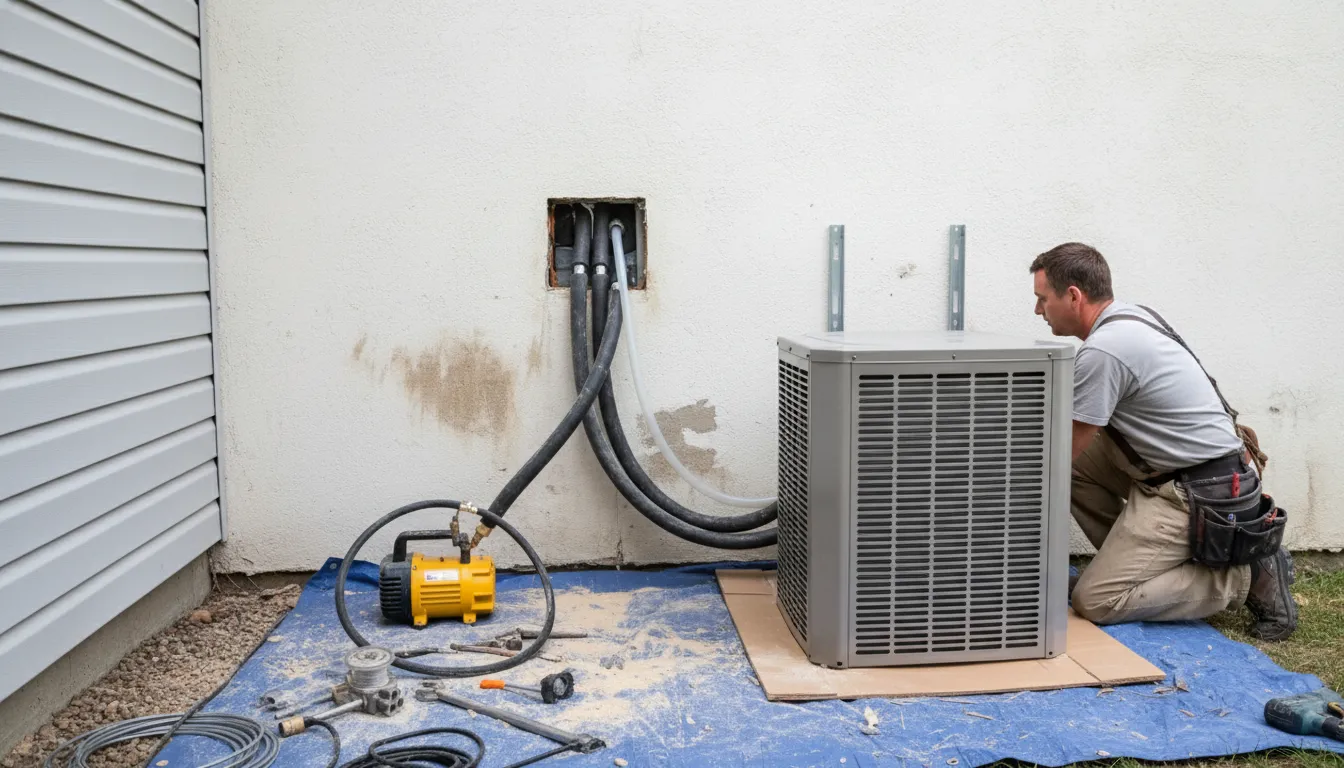
Find the Best Heat Pump Installation & Replacement Contractors for Your Business
No obligation • Fast responses • Nationwide coverage

Why you can trust HVAC Firms
HVAC Firms is a leading United States resource for evaluating HVAC service providers. Our team researches companies, checks credentials, and reviews customer feedback to present clear, unbiased information. Listings and rankings are based on merit, and companies cannot pay to change our editorial content.
Search providers near you
Top Heat Pump Installation & Replacement Contractors in Peabody, Massachusetts Ranked
Upgrading your home's heating and cooling with a heat pump is a smart investment in year-round comfort, lower energy bills, and a reduced carbon footprint. For Peabody homeowners, selecting the right system involves understanding the unique demands of Massachusetts winters and the significant financial incentives available. This guide will help you navigate the options for heat pump installation and replacement, from system types and efficiency ratings to local costs and rebates, so you can make an informed decision for your home.
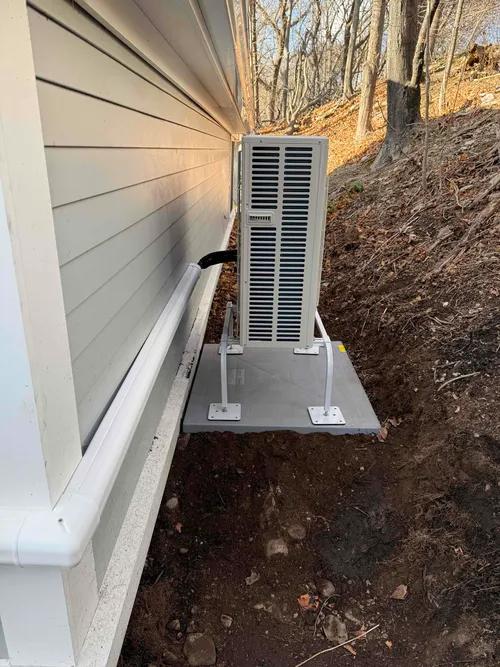
Yellow Dog Plumbing, Heating & Cooling
19 Kearney Rd, Needham, MA 02494
Yellow Dog Plumbing, Heating & Cooling is a plumbing and HVAC company serving Boston, MA, and nearby areas. They offer a wide range of services including air conditioning, furnace, heat pump, and boiler repair and installation, as well as HVAC tune-ups and indoor air quality solutions. Their technicians are equipped to handle both residential and light commercial HVAC needs, with well-stocked trucks to complete most repairs on the first visit. Yellow Dog emphasizes clear communication and customer care, providing same-day service and 24/7 live answering to support their clients' comfort and safety.
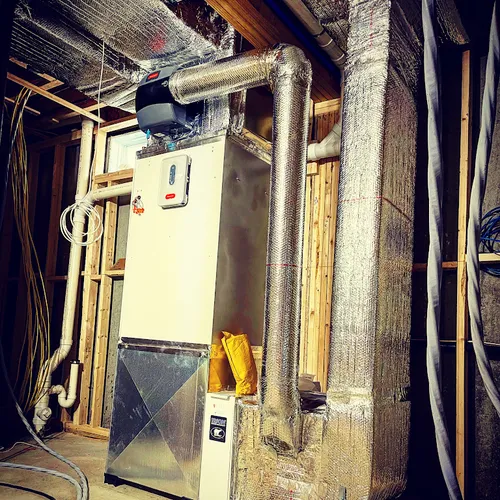
EML Mechanical
28 Pine St, Stoneham, MA 02180
EML Mechanical is an HVAC company serving Boston, MA, and the Greater Northshore Community. They provide residential and commercial heating, ventilation, and air conditioning services, including installation, repair, and tune-ups for systems like furnaces, heat pumps, and air conditioners. EML Mechanical is a MassSave-approved contractor, offering access to energy efficiency rebates and financing options. Their services also include indoor air quality solutions and thermostat installation. The company emphasizes integrity, expertise, and customer-focused service, with 24/7 emergency support available through their service membership plans.
Royal Air Systems, Inc.
210 Main St, North Reading, MA 01864
Royal Air Systems, Inc. is an HVAC company serving Boston, MA, and the surrounding North Shore communities. They offer a wide range of services including repair and installation of air conditioners, furnaces, heat pumps, and boilers. The company is known for its expertise in heat pump systems, providing flexible heating and cooling solutions that adapt to seasonal changes. Established in 1980, Royal Air Systems has over 46 years of experience in the HVAC industry. They also provide emergency after-hours service for heating repairs.
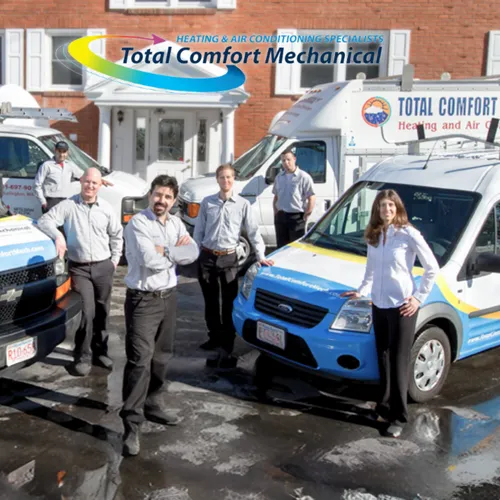
Total Comfort Mechanical
4 Garfield Cir, Burlington, MA 01803
Total Comfort Mechanical is an HVAC company based in Boston, MA, specializing in air conditioning repair, installation, and heat pump services. They provide comprehensive HVAC tune-ups and system replacements, with expertise in multi-zone AC and heating units. The team is experienced in managing projects efficiently, ensuring clean and neat installations. Total Comfort Mechanical has built a reputation for knowledgeable and resourceful solutions, with direct involvement from the owner throughout each project.
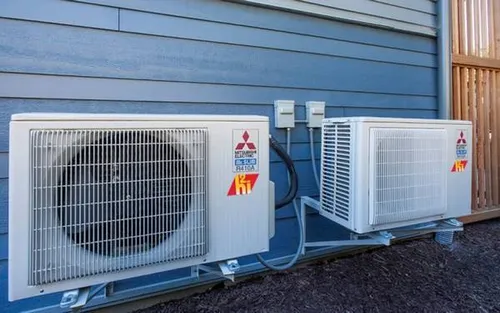
Frontier Air HVAC in Stoneham MA
92 William St #3, Stoneham, MA 02180
Frontier Air HVAC in Stoneham MA offers heating and cooling services including installation, repair, and maintenance of air conditioning systems, furnaces, heat pumps, and mini-splits. Located near Boston, MA, the company is a Mitsubishi Diamond Contractor, providing expert installation and up to a 12-year manufacturer's warranty on Mitsubishi equipment. They also assist customers with MassSave loan and rebate paperwork for heat pump installations.
Understanding Heat Pump Technology for Peabody Homes
A heat pump is an all-in-one HVAC solution that provides both heating and cooling by moving heat rather than generating it. In the summer, it extracts heat from inside your home and releases it outdoors. In the winter, the process reverses, pulling ambient heat from the outside air-even in cold weather-and transferring it indoors. This technology is exceptionally efficient, often delivering more than three units of heat for every unit of electricity consumed.
For a climate like Peabody's, with its cold, snowy winters, choosing a system specifically designed for cold climates is non-negotiable. Modern cold-climate air-source heat pumps are engineered to operate efficiently at temperatures well below freezing, making them a reliable primary heat source for most of the year. This efficiency translates directly into savings on your utility bills, especially when replacing an older, less efficient oil or electric resistance heating system.
Types of Heat Pump Systems
The right heat pump setup for your home depends on its existing infrastructure, layout, and your comfort goals. Here are the primary configurations available.
Ductless Mini-Split Systems
Ideal for homes without existing ductwork, for room additions, or for creating customized comfort zones, ductless mini-splits are a popular choice. They consist of one outdoor condenser unit connected to one or more indoor air-handling units mounted on walls or ceilings.
- Best For: Retrofits, older homes, room-specific zoning, and maximizing efficiency by heating or cooling only occupied spaces.
- Considerations: Each indoor head requires its own refrigerant line set running from the outdoor unit, which involves careful placement and installation.
Ducted Central Systems
If your home already has a functional duct system from a central air conditioner or furnace, a ducted heat pump can seamlessly replace your old equipment. These systems use a single indoor air handler connected to your home's duct network to distribute conditioned air throughout the house.
- Best For: Whole-home heating and cooling replacement, especially when integrating with existing ductwork. If ducts need modification or replacement, this will add to the project cost.
Hybrid or Dual-Fuel Systems
This configuration pairs an air-source heat pump with a traditional furnace (typically gas or oil). The system intelligently switches between the two heat sources based on outdoor temperature. The heat pump handles moderate heating needs efficiently, while the furnace takes over during periods of extreme cold, ensuring reliability and optimizing operating costs 1.
- Best For: Homeowners who want maximum efficiency without sacrificing the backup security of their existing furnace, particularly during the coldest Peabody nights.
Geothermal (Ground-Source) Heat Pumps
Geothermal systems use the stable temperature of the earth, rather than outdoor air, as a heat exchange medium. They are the most efficient heating and cooling systems available but involve a significant upfront investment due to the need for ground loop installation.
- Best For: Properties with adequate land for horizontal loops or suitable geology for vertical boreholes. The exceptional long-term efficiency and potential utility savings can offset the higher initial cost over time.
Key Efficiency Ratings: What to Look For
When comparing heat pump models, three key metrics will tell you about their performance, especially crucial for our Massachusetts climate.
- HSPF (Heating Seasonal Performance Factor): This is the most important rating for Peabody homeowners. It measures a heat pump's heating efficiency over a typical heating season. The higher the HSPF, the more efficient the unit is at heating. For reliable winter performance, insist on a high HSPF rating 2 3.
- SEER (Seasonal Energy Efficiency Ratio): This measures cooling efficiency. Like HSPF, a higher SEER number indicates greater cooling efficiency and lower summer electricity costs.
- Variable-Speed Compressors: Systems with inverter-driven, variable-speed compressors adjust their output to match your home's exact heating or cooling demand. This provides more consistent temperatures, better humidity control, and quieter operation compared to older single-speed models.
Find the perfect heat pump installation & replacement contractors for your needs
Get personalized recommendations and expert advice
Cost Overview for Heat Pump Installation in Peabody
Installation costs vary widely based on system type, home size, and project complexity. It's essential to get detailed quotes from qualified local installers. The following ranges provide a general framework, but remember that substantial rebates can dramatically reduce your final out-of-pocket expense 4.
- Single-Zone Ductless Mini-Split: Installing one outdoor unit with one indoor head typically ranges from $4,000 to $7,500 before incentives. This is an excellent solution for adding comfort to a specific area, like a finished basement or sunroom.
- Multi-Zone or Whole-Home Ducted System: For a complete home system, whether using multiple ductless heads or a central ducted unit, costs generally start around $12,000 and can exceed $20,000. Factors include the number of zones, home square footage, the condition of existing ductwork, and whether electrical service upgrades are needed 5 6.
- Geothermal System: Given the extensive ground work required, geothermal installations are a significant investment, often ranging from $20,000 to $45,000 or more 7 8.
Maximizing Incentives and Rebates
One of the most compelling reasons for Peabody residents to consider a heat pump upgrade is the generous financial assistance available through Mass Save®. This program, sponsored by Massachusetts gas and electric utilities, offers rebates that can reduce the net cost of a qualifying heat pump installation by $10,000 to $16,000 or more 9 10.
To access these rebates, your installation must be performed by a Mass Save-approved heat pump contractor. These professionals are trained to ensure installations meet specific program standards for efficiency and performance. The process typically involves a pre-installation home energy assessment, which can also identify cost-effective air sealing and insulation improvements that will make your new heat pump even more effective and efficient 11.
The Installation Process: What to Expect
A professional heat pump installation is a multi-step process that ensures optimal performance and longevity.
- Consultation and Load Calculation: A reputable installer will perform a Manual J load calculation. This is not a simple rule-of-thumb based on square footage; it's a detailed analysis of your home's insulation, windows, air leakage, and layout to determine the precise heating and cooling capacity (in BTUs) your system needs. An oversized or undersized system will lead to comfort issues, short cycling, and higher costs.
- System Design and Proposal: Based on the load calculation and your home's layout, the contractor will design a system, recommend specific equipment, and provide a detailed written proposal outlining costs, timelines, and expected performance.
- Site Preparation and Installation: The installation crew will place the outdoor unit(s) on a stable pad, run refrigerant and electrical lines, and install the indoor units or air handler. For ducted systems, they will inspect and often seal existing ductwork to prevent energy loss.
- Commissioning and Testing: After installation, the technician will charge the system with refrigerant, test all components, calibrate the thermostat, and ensure the system is operating at its specified efficiency. They should also walk you through basic operation and maintenance.
Preparing Your Home for a Heat Pump
To get the most out of your investment, your home should be as efficient as possible. Before or during your heat pump installation, consider:
- Air Sealing: Plugging leaks around windows, doors, and penetrations in your building envelope prevents cold drafts and keeps the conditioned air inside.
- Insulation: Ensuring your attic, walls, and basement are properly insulated reduces the overall heating and cooling load on your new system.
- Duct Evaluation: If using a ducted system, having your ducts professionally cleaned, tested for leaks, and sealed can improve system efficiency by up to 20% or more.
Frequently asked questions
Sources
Footnotes
-
Cost of Installing Dual Fuel Heat Pumps in Massachusetts - https://www.sumzeroenergysystems.com/blog/how-much-does-a-dual-fuel-heat-pump-system-cost-to-install ↩
-
How To Choose The Right Heat Pump For Your Climate - https://high-efficiencyllc.com/choose-right-heat-pump-climate/ ↩
-
Heat Pump Systems - Department of Energy - https://www.energy.gov/energysaver/heat-pump-systems ↩
-
Heat pump installation in Massachusetts cost | Save energy & money - https://www.sumzeroenergysystems.com/blog/how-much-does-heat-pump-installation-cost-in-massachusetts ↩
-
Opportunities for Cost-Effective Residential Heat Pump ... - https://www.belfercenter.org/research-analysis/opportunities-cost-effective-residential-heat-pump-adoption-massachusetts ↩
-
Heat Pump Cost in Massachusetts: 2026 MA Pricing Guide - https://modernize.com/hvac/heating-repair-installation/heat-pump/massachusetts-cost ↩
-
Heat Pump Guide: Cost, Rebates, and Efficiency Explained - https://www.sumzeroenergysystems.com/blog/heat-pump-guide-cost-rebates-efficiency-explained ↩
-
Geothermal Heat Pump Guide: Installation Costs, Types And Benefits - https://modernize.com/hvac/heating-repair-installation/heat-pump/geothermal ↩
-
Heat Pumps - Mass Save - https://www.masssave.com/heatpump ↩
-
How Much Should You Expect to Pay for a Heat Pump in Massachusetts? - Endless Energy - https://goendlessenergy.com/blog/heat-pumps/cost-of-heat-pump-installation-massachusetts-2025/ ↩
-
How Much Does a Heat Pump Replacement Cost in 2025? - https://www.sumzeroenergysystems.com/blog/how-much-does-a-heat-pump-replacement-cost-in-2025 ↩