Find the Best Heat Pump Installation & Replacement Contractors for Your Business
No obligation • Fast responses • Nationwide coverage

Why you can trust HVAC Firms
HVAC Firms is a leading United States resource for evaluating HVAC service providers. Our team researches companies, checks credentials, and reviews customer feedback to present clear, unbiased information. Listings and rankings are based on merit, and companies cannot pay to change our editorial content.
Search providers near you
Top Heat Pump Installation & Replacement Contractors in Boston, Massachusetts Ranked
Upgrading your home's heating and cooling system with a heat pump is a smart investment for Boston homeowners. This technology provides efficient, year-round comfort by moving heat rather than generating it, offering both warmth in the winter and cooling in the summer. Finding the right local professional for your heat pump project is key to ensuring optimal performance, maximizing available financial incentives, and achieving long-term energy savings for your Massachusetts home.
Yellow Dog Plumbing, Heating & Cooling
19 Kearney Rd, Needham, MA 02494
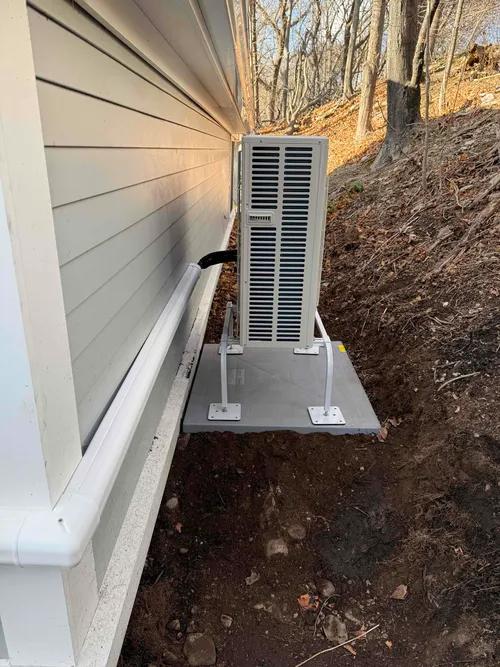
Yellow Dog Plumbing, Heating & Cooling is a plumbing and HVAC company serving Boston, MA, and nearby areas. They offer a wide range of services including air conditioning, furnace, heat pump, and boiler repair and installation, as well as HVAC tune-ups and indoor air quality solutions. Their technicians are equipped to handle both residential and light commercial HVAC needs, with well-stocked trucks to complete most repairs on the first visit. Yellow Dog emphasizes clear communication and customer care, providing same-day service and 24/7 live answering to support their clients' comfort and safety.
EML Mechanical
28 Pine St, Stoneham, MA 02180
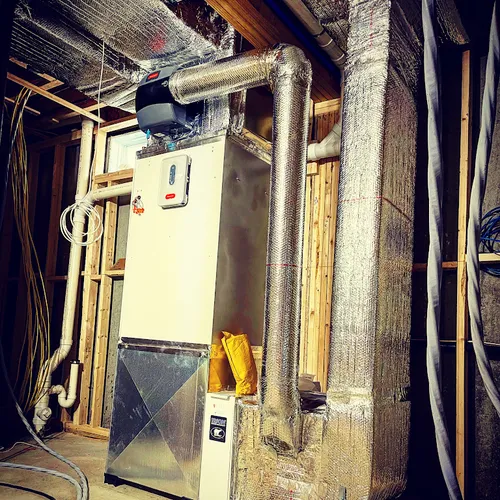
EML Mechanical is an HVAC company serving Boston, MA, and the Greater Northshore Community. They provide residential and commercial heating, ventilation, and air conditioning services, including installation, repair, and tune-ups for systems like furnaces, heat pumps, and air conditioners. EML Mechanical is a MassSave-approved contractor, offering access to energy efficiency rebates and financing options. Their services also include indoor air quality solutions and thermostat installation. The company emphasizes integrity, expertise, and customer-focused service, with 24/7 emergency support available through their service membership plans.
Royal Air Systems, Inc.
210 Main St, North Reading, MA 01864
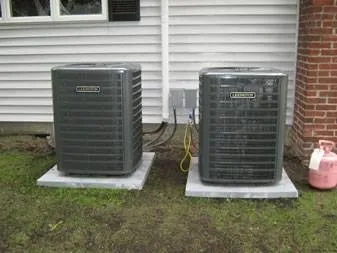
Royal Air Systems, Inc. is an HVAC company serving Boston, MA, and the surrounding North Shore communities. They offer a wide range of services including repair and installation of air conditioners, furnaces, heat pumps, and boilers. The company is known for its expertise in heat pump systems, providing flexible heating and cooling solutions that adapt to seasonal changes. Established in 1980, Royal Air Systems has over 46 years of experience in the HVAC industry. They also provide emergency after-hours service for heating repairs.
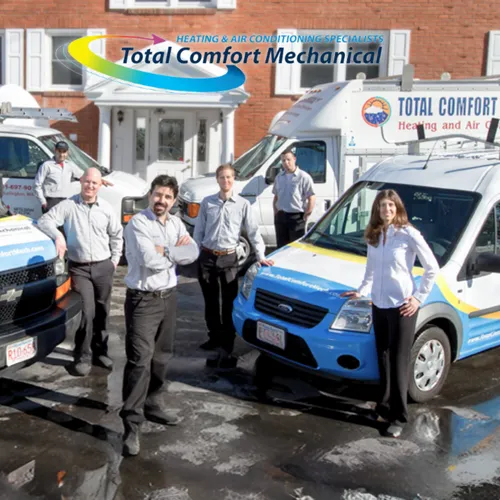
Total Comfort Mechanical
4 Garfield Cir, Burlington, MA 01803
Total Comfort Mechanical is an HVAC company based in Boston, MA, specializing in air conditioning repair, installation, and heat pump services. They provide comprehensive HVAC tune-ups and system replacements, with expertise in multi-zone AC and heating units. The team is experienced in managing projects efficiently, ensuring clean and neat installations. Total Comfort Mechanical has built a reputation for knowledgeable and resourceful solutions, with direct involvement from the owner throughout each project.
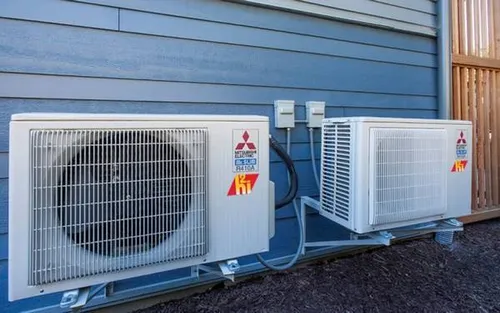
Frontier Air HVAC in Stoneham MA
92 William St #3, Stoneham, MA 02180
Frontier Air HVAC in Stoneham MA offers heating and cooling services including installation, repair, and maintenance of air conditioning systems, furnaces, heat pumps, and mini-splits. Located near Boston, MA, the company is a Mitsubishi Diamond Contractor, providing expert installation and up to a 12-year manufacturer's warranty on Mitsubishi equipment. They also assist customers with MassSave loan and rebate paperwork for heat pump installations.
Why Choose a Heat Pump for Your Boston Home?
For residents of Boston and the surrounding New England area, modern heat pumps represent a significant advancement over traditional heating systems like oil or gas furnaces. The primary advantage is their remarkable efficiency; they can deliver three to four times more heat energy than the electrical energy they consume 1. This translates directly to lower utility bills, especially when replacing older, less efficient systems. Furthermore, a single heat pump system provides both heating and highly efficient air conditioning, a dual functionality that is increasingly valuable given Boston's hot and humid summers.
Perhaps most critically for our climate, today's cold-climate air-source heat pumps (ASHPs) are engineered to perform reliably in sub-freezing temperatures. These advanced models can efficiently extract heat from the outdoor air even during a classic New England winter, making them a viable primary heating source for most homes in the region 2 3. By choosing a heat pump, you're not only improving home comfort but also reducing your carbon footprint and reliance on fossil fuels.
Understanding Heat Pump System Types
Selecting the right type of heat pump system depends on your home's existing infrastructure and your specific comfort goals. The main configurations available include:
Ductless Mini-Split Systems: This is an ideal solution for homes without existing ductwork, for room additions, or for creating zoned comfort. A ductless system consists of an outdoor compressor unit connected to one or more indoor air-handling units mounted on walls or ceilings. Each indoor unit can be controlled independently, allowing you to heat or cool only the rooms you're using. Installation is generally less invasive than ducted systems.
Ducted or Central Heat Pumps: If your home already has a functional duct system for forced-air heating or cooling, a ducted heat pump can be a perfect replacement. It utilizes the existing ducts to provide whole-home, uniform heating and cooling from a single outdoor unit. This option is often the most straightforward swap for an old central air conditioner and furnace combo.
Hybrid or Dual-Fuel Systems: These systems pair an air-source heat pump with a traditional furnace (often gas or oil). The heat pump handles the heating load for most of the year, and the furnace automatically kicks in as a backup during periods of extreme cold. This setup can optimize operating costs depending on local fuel prices and provides peace of mind during the coldest snaps.
Geothermal Heat Pumps (Ground-Source): While less common due to higher installation costs, geothermal systems offer the highest efficiency. They exchange heat with the relatively constant temperature of the earth through buried loops. The significant upfront investment is offset by extremely low operating costs and potential long-term savings 4.
Key Considerations for Installation & Replacement
A successful heat pump installation in Boston requires careful planning. The first step is a professional load calculation, often called a Manual J assessment. This determines the precise heating and cooling capacity your home needs-a system that is too large or too small will be inefficient and uncomfortable. Proper sizing is non-negotiable for performance and efficiency 5.
The choice between a ductless or ducted system will heavily influence the project scope and cost. For ducted systems, the condition of your existing ductwork must be evaluated; leaky or poorly insulated ducts can drastically reduce system efficiency and may need sealing or modification. Electrical service is another critical factor, as heat pumps may require a dedicated circuit or an upgrade to your home's electrical panel.
Finally, selecting the equipment itself involves reviewing key efficiency metrics. For heating performance in our climate, look for a high Heating Seasonal Performance Factor (HSPF) rating. Models with an HSPF of 9.1 or higher are considered high-efficiency and are better suited for cold-climate operation, ensuring they deliver warmth efficiently throughout a Boston winter 6.
Find the perfect heat pump installation & replacement contractors for your needs
Get personalized recommendations and expert advice
Navigating Costs and Incentives in Massachusetts
The cost of a heat pump installation in Boston varies widely based on system type, capacity, and home-specific factors. Understanding the range helps in budgeting and evaluating quotes.
- Ductless Mini-Split Systems: A single-zone system (one outdoor unit and one indoor head) typically ranges from $4,000 to $8,000 installed. Multi-zone systems serving several rooms will cost more.
- Whole-Home Ducted Systems: Replacing a central system with a ducted heat pump generally falls between $12,000 and $25,000 or more. The final price depends heavily on whether existing ductwork can be used or if new ducts are needed 7 8 9.
The excellent news for Massachusetts homeowners is the availability of substantial rebates that can dramatically reduce these upfront costs. The Mass Save® program offers some of the most generous incentives in the country, with rebates for qualifying high-efficiency heat pumps that can reach up to $10,000 for a whole-home system 10 11. These incentives, combined with potential federal tax credits, make the net cost of a high-efficiency heat pump system highly competitive with traditional HVAC replacements. It's essential to work with a participating Mass Save contractor to access these rebates.
The Installation Process: What to Expect
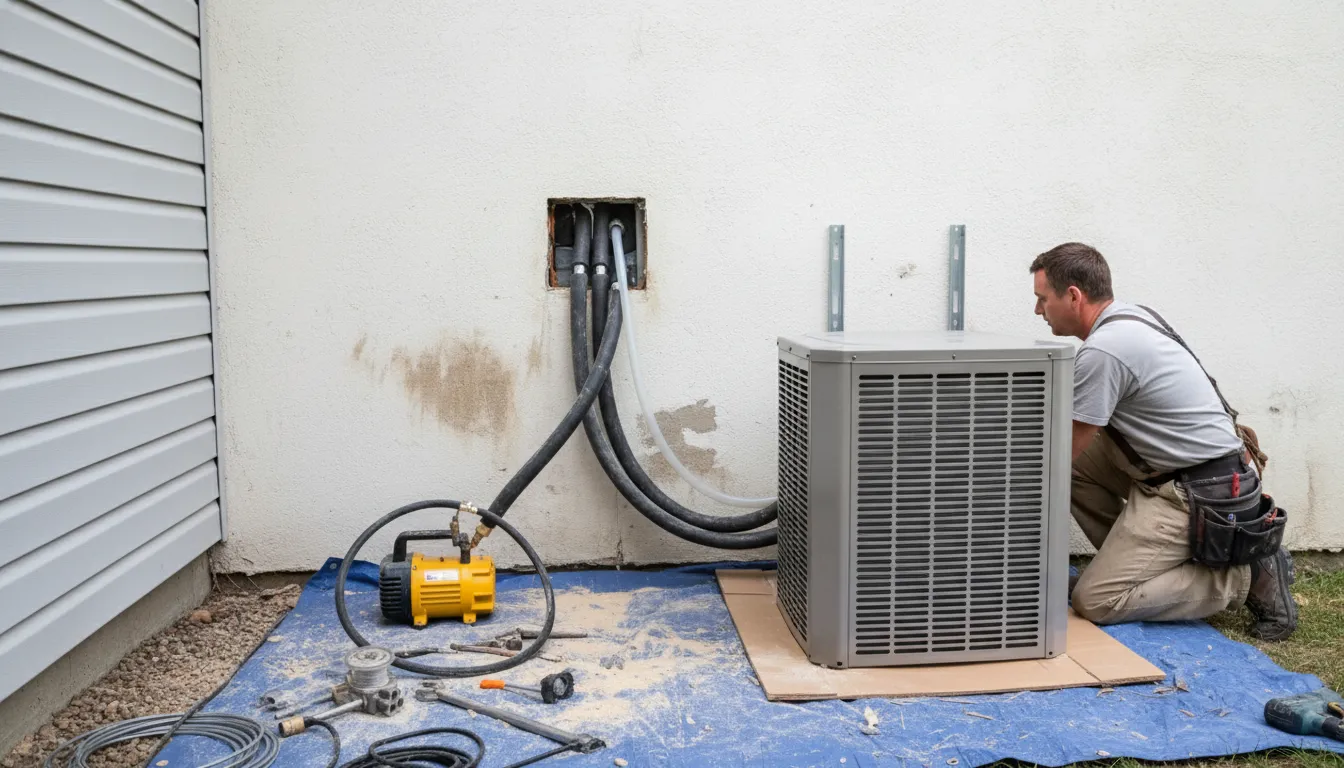
A professional heat pump installation typically follows a structured process. It begins with an in-home consultation where a technician assesses your needs, discusses options, and performs the necessary load calculations. Once a system is selected and contracts are signed, the installation day involves mounting the outdoor condenser unit on a stable pad, installing the indoor unit(s) (either ducted air handler or wall-mounted heads), and connecting the refrigerant and electrical lines.
For ductless systems, a small hole is drilled in the wall to connect the indoor and outdoor units. The system is then vacuumed, charged with refrigerant, and tested. The installer will commission the system, ensuring all components communicate properly and demonstrate how to use the thermostat and remote controls. A quality installer will also handle all necessary permits and coordinate post-installation inspections required for rebate processing.
Maintaining Your New Heat Pump System
To protect your investment and ensure it operates at peak efficiency for its full lifespan (typically 15+ years), regular maintenance is key. Homeowners should perform simple tasks like keeping the outdoor unit clear of snow, leaves, and debris, and cleaning or replacing indoor air filters every 1-3 months. Annual professional maintenance is highly recommended. A technician will check refrigerant levels, inspect electrical components, clean coils, and verify system performance. This proactive service can prevent minor issues from becoming major repairs and helps maintain the high efficiency that saves you money on your energy bills every month.
Frequently asked questions
Sources
Footnotes
-
The Most Cost-Effective Heating Systems - DeWolfe Contracting - https://www.dewolfecontracting.com/the-most-cost-effective-heating-systems-for-massachusetts-homes/ ↩
-
Efficient Cold Climate Heat Pumps for Boston Homes - https://www.sumzeroenergysystems.com/heat-pump-location/cold-climate-heat-pumps-boston-ma ↩
-
Home Heat Pumps in Massachusetts - Squarespace - https://static1.squarespace.com/static/5936d98f6a4963bcd1ed94d3/t/5d24dd1ec22927000120e025/1562696991620/Updated+AEC+MA+Heat+Pump+9July2019.pdf ↩
-
Heat Pump: Massachusetts Efficient Heating - Elephant Energy - https://elephantenergy.com/heat-pump-massachusetts/ ↩
-
Air-Source Heat Pumps (ASHP) - Abode Energy Management - https://abodeenergy.com/wp-content/uploads/2022/07/MassCEC_ASHP_GUIDE.pdf ↩
-
Heat Pump Cost in Massachusetts: 2026 MA Pricing Guide - https://modernize.com/hvac/heating-repair-installation/heat-pump/massachusetts-cost ↩
-
Heat Pump Guide: Cost, Rebates, and Efficiency Explained - https://www.sumzeroenergysystems.com/blog/heat-pump-guide-cost-rebates-efficiency-explained ↩
-
How Much Should You Expect to Pay for a Heat Pump - https://goendlessenergy.com/blog/heat-pumps/cost-of-heat-pump-installation-massachusetts-2025/ ↩
-
How Much Does a Heat Pump Cost in Boston, MA? - Angie's List - https://www.angi.com/articles/how-much-does-heat-pump-cost/ma/boston ↩
-
Heat pump installation in Massachusetts cost - https://www.sumzeroenergysystems.com/blog/how-much-does-heat-pump-installation-cost-in-massachusetts ↩
-
Air Source Heat Pumps | Residential - Mass Save - https://www.masssave.com/residential/rebates-offers-services/heating-and-cooling/heat-pumps/air-source-heat-pumps ↩