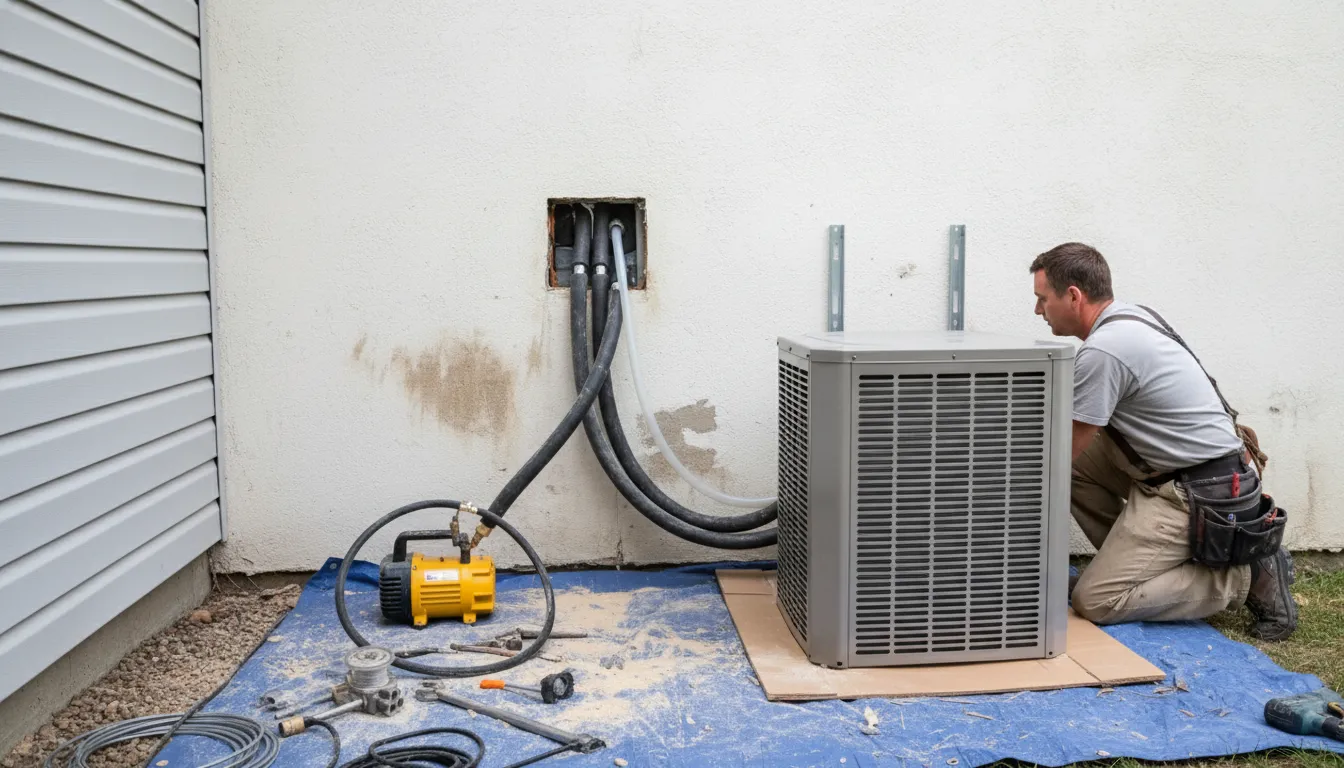
Find the Best Heat Pump Installation & Replacement Contractors for Your Business
No obligation • Fast responses • Nationwide coverage

Why you can trust HVAC Firms
HVAC Firms is a leading United States resource for evaluating HVAC service providers. Our team researches companies, checks credentials, and reviews customer feedback to present clear, unbiased information. Listings and rankings are based on merit, and companies cannot pay to change our editorial content.
Search providers near you
Best Heat Pump Installation & Replacement Contractors in Kansas Ranked
Upgrading to a heat pump is a smart investment for Kansas homeowners seeking year-round comfort, lower energy bills, and a reduced carbon footprint. These efficient systems provide both heating and cooling from a single unit, making them an excellent choice for the state's varied climate. This guide will help you understand your options, the available financial incentives, and how to connect with qualified local professionals to ensure a successful installation.
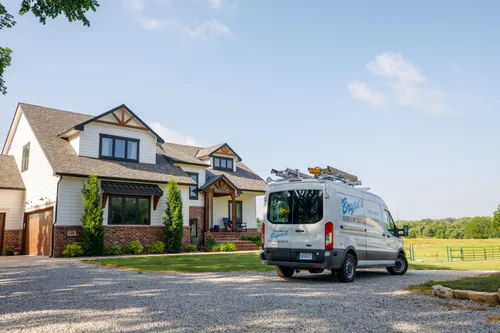
Bryan's Heating & Air Conditioning, Inc.
700 S Ramsey Dr, Valley Center, KS 67147
Bryan's Heating & Air Conditioning, Inc. has been providing residential and commercial HVAC services in Wichita, KS since 1986. They offer a wide range of heating and cooling solutions including repair, installation, and maintenance for furnaces, heat pumps, boilers, geothermal systems, central air conditioners, and ductless mini splits. The company also specializes in indoor air quality services such as humidity control and air purification, as well as custom ductwork fabrication and repair through their in-house sheet metal shop. Bryan's serves the Greater Wichita area with a focus on energy-efficient commercial HVAC solutions and comprehensive maintenance plans.
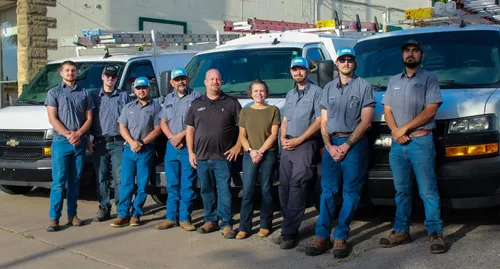
Kelley & Dawson Service
1741 N Broadway St, Wichita, KS 67214
Kelley & Dawson Service is a family-owned heating and cooling company based in Wichita, KS. They offer a full range of HVAC services including repair, installation, and maintenance for air conditioners, furnaces, heat pumps, and ductless mini-split systems. Their expertise also extends to indoor air quality solutions such as whole-house humidifiers, air scrubbers, and thermostat installations. The company has nearly 60 years of experience serving the Wichita area and is an authorized dealer for Trane and Daikin products, known for their energy-efficient and reliable HVAC systems.
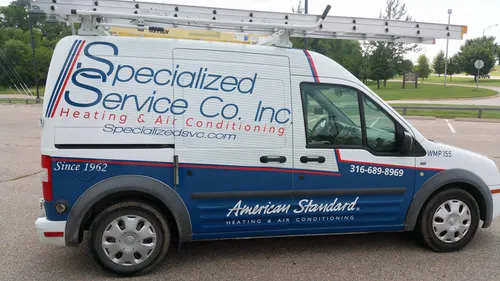
Specialized Service Heat & Air
350 N Indiana Ave, Wichita, KS 67214
Specialized Service Heat & Air is a family-focused HVAC company serving Wichita, KS. They provide a range of heating and cooling services including air conditioning, furnace, and heat pump repair and installation, as well as HVAC tune-ups. Established in 1962, the company has a long history of delivering heating and air solutions with an emphasis on trust and integrity.
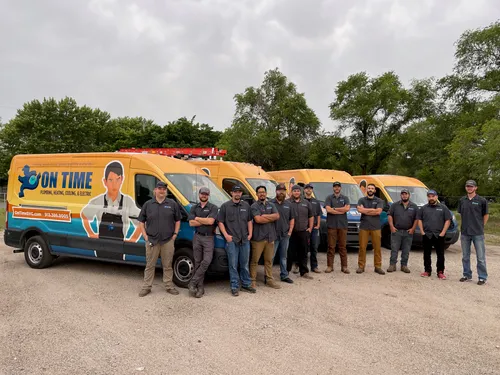
On Time Plumbing, Heating, Cooling & Electric
4065 N Woodlawn Blvd Suite 3, Bel Aire, KS 67220
On Time Plumbing, Heating, Cooling & Electric is a full-service provider based in Wichita, KS, offering plumbing, electrical, and HVAC services. They serve residential customers with repairs, installations, and maintenance for heating systems including furnaces, heat pumps, geothermal systems, and boilers, as well as air conditioning units and mini-splits. The company has been operating since 2004 and provides 24/7 emergency service to address urgent plumbing, heating, cooling, and electrical needs.
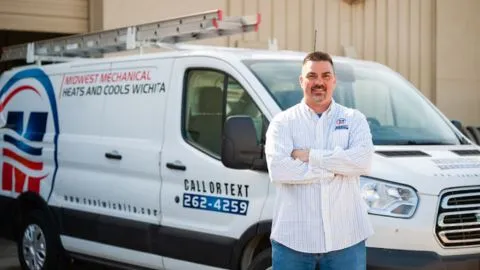
Midwest Mechanical
2111 W Harry St, Wichita, KS 67213
Midwest Mechanical is an HVAC and plumbing service provider based in Wichita, KS. They offer a wide range of services including air conditioning repair and installation, furnace and heat pump repair and installation, HVAC tune-ups, duct cleaning, and indoor air quality solutions. Their indoor air quality services include advanced air filtration, humidity control, and duct cleaning to help improve home comfort and health. Midwest Mechanical serves residential and commercial customers throughout Wichita, focusing on maintaining efficient and reliable heating and cooling systems year-round.
Understanding Heat Pump Technology for Kansas Homes
A heat pump doesn't generate heat by burning fuel; instead, it moves existing heat from one place to another. In the winter, it extracts heat from the outside air (or ground) and transfers it indoors. In the summer, the process reverses, pulling heat from your home and releasing it outside, functioning as an air conditioner. This efficient transfer of energy is what makes heat pumps significantly more efficient than traditional furnaces and air conditioners.
For Kansas, where summers can be hot and humid and winters bring cold snaps, choosing the right type of heat pump is crucial. The two primary categories are:
- Air-Source Heat Pumps (ASHPs): This is the most common type for residential upgrades. They exchange heat with the outside air and come in two main styles:
- Ducted Systems: These connect to your home's existing ductwork, similar to a central air conditioner or furnace.
- Ductless Mini-Split Systems: These consist of an outdoor unit connected to one or more indoor wall-mounted units. They are ideal for homes without ducts, for room additions, or for providing zoned comfort control.
- Geothermal (Ground-Source) Heat Pumps: These systems exchange heat with the more stable temperatures of the earth through underground loops. They offer the highest efficiency and operating savings but come with a significantly higher upfront installation cost due to the required excavation or drilling.
Key Efficiency Metrics: SEER2, HSPF2, and EER2
When comparing heat pumps, you'll encounter new efficiency ratings: SEER2, HSPF2, and EER2. These updated metrics provide a more realistic measure of performance under real-world conditions.
- SEER2 (Seasonal Energy Efficiency Ratio 2): Measures cooling efficiency. A higher SEER2 rating means greater cooling efficiency and lower summer electricity costs.
- HSPF2 (Heating Seasonal Performance Factor 2): Measures heating efficiency. A higher HSPF2 rating indicates better heating performance during colder weather.
- EER2 (Energy Efficiency Ratio 2): Measures cooling efficiency at peak outdoor temperatures (e.g., a 95°F day).
For Kansas, a system with a high HSPF2 is particularly important for effective and affordable winter heating. Importantly, qualifying for most rebates and tax credits requires your system to meet specific SEER2 and HSPF2 thresholds, often aligned with ENERGY STAR certification 1.
Financial Incentives and Rebates for Kansas Residents
One of the most compelling reasons to install a heat pump in Kansas now is the substantial financial support available from federal and local programs. These incentives can dramatically reduce your net investment.
Federal Tax Credits
The federal Residential Clean Energy Tax Credit (25C) provides a significant benefit. You can claim 30% of the total project cost, up to $2,000, for the purchase and installation of an ENERGY STAR-certified air-source heat pump 2 3 4. This credit is applied directly to your federal income tax liability.
Kansas Utility and Cooperative Rebates
Many local energy providers offer direct rebates that lower your upfront installation cost. These are typically tiered based on the system's efficiency (SEER2 rating).
- Evergy: Offers tiered rebates for qualifying high-efficiency heat pumps. For example, rebates can be $400 for a SEER2 15 system or $700 for a SEER2 16 system 5.
- Kansas Electric Power Cooperative (KEPCo): Provides rebates per half-ton of capacity based on SEER2 rating: $50 for SEER2 14.3, $75 for SEER2 16, and $100 for SEER2 17 or higher 6.
- 4 Rivers Electric Cooperative: Has a similar tiered incentive program based on SEER/SEER2 ratings for qualifying systems 7.
- Other Cooperatives: Many other electric co-ops across Kansas have their own programs. It is essential to contact your specific utility provider for details.
Home Energy Efficiency and Electrification Rebates (HEEHRA)
Coming soon to Kansas are the Home Energy Rebates authorized by the Inflation Reduction Act. These include the Home Efficiency Rebates (HOMES) and Home Electrification and Appliance Rebates (HEEHRA) programs. These are income-dependent and will provide point-of-sale discounts for qualified homeowners making energy upgrades. For low- and moderate-income households, these rebates can be substantial-covering up to 100% of project costs for the lowest incomes, with maximum rebates potentially reaching $8,000 or more for comprehensive upgrades like a heat pump installation. These programs may also assist with necessary supporting upgrades, like electrical panel updates 8 9 10.
Find the perfect heat pump installation & replacement contractors for your needs
Get personalized recommendations and expert advice
Cost Considerations for Heat Pump Installation
The total cost for a new heat pump installation in Kansas is influenced by several factors, but homeowners should generally expect an investment starting around $10,000 and increasing from there 11.
Key factors that determine the final price include:
- System Size (Tonnage): An undersized or oversized unit will perform poorly. A professional load calculation is required. The unit itself for a standard 2-ton system can range from $4,000 to $6,000 before installation 12.
- System Type and Efficiency: Ductless mini-splits, multi-zone systems, and geothermal units cost more than a standard single-zone, ducted air-source heat pump. Higher SEER2/HSPF2 models also command a premium.
- Installation Complexity: The condition of existing ductwork, the need for new electrical lines, and the physical layout of your home all impact labor costs.
- Brand and Features: Different manufacturers offer varying warranties, reliability, and smart features.
Remember, the net cost after applying all eligible rebates and tax credits will be considerably lower than the initial quote. A $12,000 system could have a net cost of $8,000 or less after incentives.
Choosing the Right Contractor in Kansas
A proper installation is just as important as the equipment itself. Follow these steps to find a reliable professional:
- Verify Licenses and Insurance: Ensure the contractor is licensed to work in Kansas and carries both liability and worker's compensation insurance.
- Seek Specialized Experience: Look for companies that specifically list heat pump installation as a core service and have experience with the type of system you're considering (ducted, ductless, or geothermal).
- Get Detailed, Written Quotes: Obtain at least three written estimates. Each should include a detailed load calculation (Manual J), the specific model numbers with SEER2/HSPF2 ratings, a breakdown of all costs (equipment, labor, materials), and a clear explanation of the work to be done.
- Check References and Reviews: Ask for local references and read online reviews on independent platforms to gauge customer satisfaction and service quality.
- Discuss Incentives: A knowledgeable contractor should be able to guide you on which rebates and tax credits your chosen system qualifies for and may even help with the rebate paperwork.
Preparing for Your Installation
To ensure a smooth process, you can prepare by:
- Gathering Past Utility Bills: This helps contractors understand your home's energy usage patterns.
- Identifying Your Electrical Panel: Know its location and amperage (e.g., 100-amp, 200-amp). An upgrade may be necessary for a new heat pump.
- Clearing Access: Ensure clear access to your furnace/air handler, outdoor condenser area, and attic or crawlspace.
- Creating a List of Questions: Write down any concerns about operation, thermostat use, maintenance, and warranties.
Frequently asked questions
Sources
Footnotes
-
Kansas Energy Rebate Program | HVAC Rebates - https://santafeair.com/blog/energy-rebates ↩
-
Home Upgrades | Department of Energy - https://www.energy.gov/save/home-upgrades ↩
-
2025 HVAC Tax Credits In Kansas City | Save Today - https://polestarcomfort.com/blog/2025-hvac-tax-credits-kansas-city/ ↩
-
Heat Pump Tax Credit | Federal Incentives for Energy Savings - https://www.carrier.com/residential/en/us/products/heat-pumps/heat-pump-tax-credits/ ↩
-
HEATING, COOLING AND HOME COMFORT REBATE CHART - https://www.evergy.com/-/media/documents/ways-to-save/discounts/kansas-rebate-incentive-chart.pdf ↩
-
Energy Efficiency Rebate Program | Kansas Electric Power Cooperative, Inc. - https://www.kepco.org/energy-efficiency-rebate-program/ ↩
-
Energy Efficiency Rebate Program | 4 Rivers Electric Cooperative. - https://4riverselectric.com/energy-efficiency-rebate-program ↩
-
Inflation Reduction Act Tax Credits Rebates | KB Complete® - https://kbcomplete.com/about-us/inflation-reduction-act/ ↩
-
Home Energy Rebate$ - Kansas Corporation Commission - https://www.kcc.ks.gov/images/PDFs/kansas-energy-office/HomeEnergyRebates_2024.pdf ↩
-
HEEHRA Rebate Program: What It Is & How It Works - https://www.searshomeservices.com/blog/what-is-heehra ↩
-
Heat Pump Installation & Replacement In Kansas City, MO - https://www.climatecontrolkc.com/air-conditioning/heat-pump-install/ ↩
-
Understanding the Cost to Replace a 2-Ton Heat Pump - https://thefurnaceoutlet.com/blogs/news/understanding-the-cost-to-replace-a-2-ton-heat-pump-a-homeowners-guide ↩