Find the Best Heat Pump Installation & Replacement Contractors for Your Business
No obligation • Fast responses • Nationwide coverage

Why you can trust HVAC Firms
HVAC Firms is a leading United States resource for evaluating HVAC service providers. Our team researches companies, checks credentials, and reviews customer feedback to present clear, unbiased information. Listings and rankings are based on merit, and companies cannot pay to change our editorial content.
Search providers near you
Top Heat Pump Installation & Replacement Contractors in Smyrna, Georgia Ranked
Considering a new heat pump for your Smyrna home? You're looking at a smart upgrade for year-round comfort. Heat pump systems provide efficient heating and cooling by transferring heat rather than generating it, which can lead to significant energy savings in Middle Tennessee's climate. This guide will help you understand your options, from system types and efficiency ratings to local cost considerations, so you can make an informed decision and connect with qualified professionals for your project.
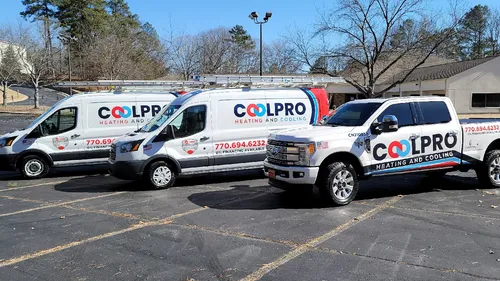
Coolpro Heating and Cooling
161 Austin Ave NE, Marietta, GA 30060
Coolpro Heating and Cooling provides residential and commercial HVAC services in Atlanta, GA. They offer repair, installation, and tune-up services for air conditioners, furnaces, heat pumps, and full HVAC systems. The company services all makes and models and emphasizes energy-efficient solutions to help manage comfort and reduce energy use. With over 30 years of experience, Coolpro serves Cobb, Cherokee, Paulding counties, and the Atlanta area, focusing on reliable heating and cooling solutions.

Summit
51 Austin Ave NE, Marietta, GA 30060
Summit is an HVAC company serving Atlanta, GA, specializing in repair, installation, and maintenance of air conditioning, furnaces, heat pumps, and HVAC systems. They focus on diagnosing and fixing issues to extend system life before recommending replacements. Operating since 2015, Summit serves the local community with timely appointments and personalized service.

Self Brothers Heating & Cooling
1700 Cumberland Point Dr UNIT 14, Marietta, GA 30067
Self Brothers Heating & Cooling is an HVAC company serving Atlanta, GA, and the surrounding Metro Atlanta area. Since 2000, this family-owned business has provided heating and cooling services including AC repair and installation, furnace repair and installation, heat pump services, indoor air quality solutions, and HVAC maintenance. Their factory-trained team offers clear pricing and a protection plan for ongoing energy savings and priority service, emphasizing local community roots and personalized care.

Arcadia HVAC
3288 Duluth Hwy, Duluth, GA 30096
Arcadia HVAC is an HVAC company serving Atlanta, GA, and surrounding areas including Duluth, Norcross, and Roswell. They provide a range of services such as air conditioning, furnace, heat pump, and mini-split installation and repair, along with indoor air quality solutions and thermostat upgrades. The company has been in business since 1974 and offers extended labor warranties and complimentary service after installations. Their technicians have over 80 years of combined experience and focus on honest pricing without unnecessary upselling.
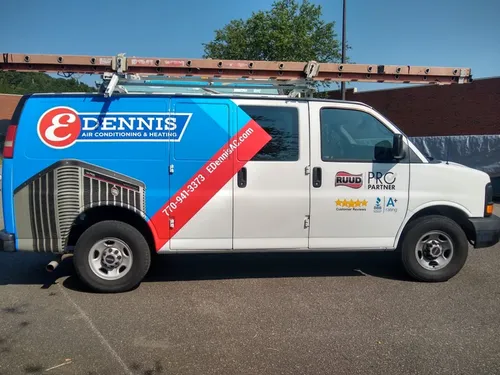
E. Dennis Heating, Cooling, Plumbing & Electrical
425 Franklin Gateway SE # 530, Marietta, GA 30067
E. Dennis Heating, Cooling, Plumbing & Electrical is a home service provider based in Atlanta, GA, offering a wide range of plumbing, electrical, and HVAC services. With over 30 years of experience, they serve customers throughout Georgia, providing heating and cooling system repairs, installations, indoor air quality solutions, and electrical work. Their certified technicians are available 24/7 to assist with emergencies and routine maintenance. One notable capability is their comprehensive HVAC service, including air conditioning and furnace repair and installation, ensuring year-round comfort for clients.
Understanding Heat Pumps for Smyrna Homes
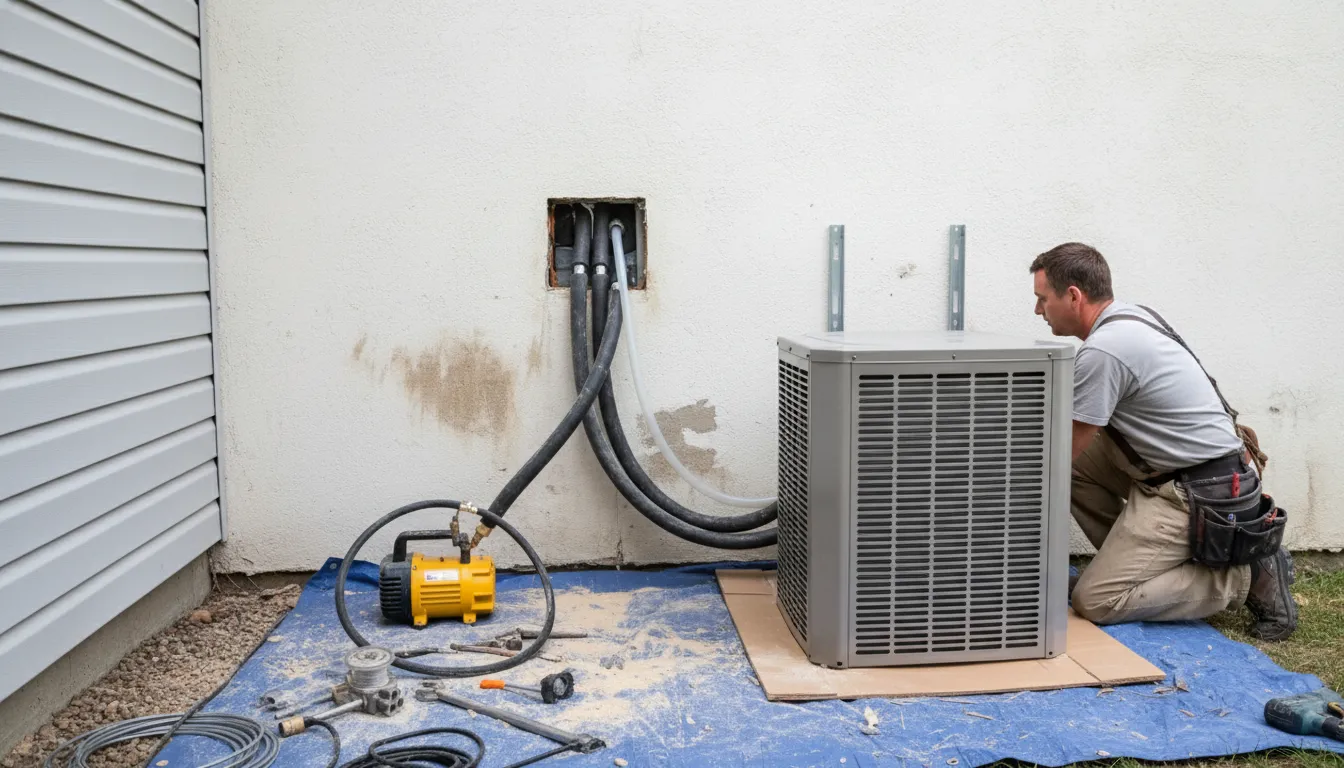
A heat pump is a versatile HVAC unit that functions as both a heater and an air conditioner. In cooling mode, it works like a standard AC, removing heat from your home and releasing it outdoors. Its true advantage shines in heating mode, where it reverses the process, extracting available heat from the outside air (or ground) and moving it indoors. This method of heat transfer is far more energy-efficient than traditional electric resistance heating or even gas furnaces in many cases. For homeowners in Smyrna, this means a single system can manage your comfort across all seasons, often with lower operating costs.
How Climate Impacts Your Heat Pump Choice
Smyrna's climate is a key factor in selecting the right system. Our area features hot, humid summers and generally mild winters, which is well-suited for heat pump technology. However, it's crucial to understand performance during colder snaps. Standard air-source heat pumps become less efficient as outdoor temperatures drop below approximately 40°F. At these lower temperatures, the system relies on built-in auxiliary electric resistance heat (often called "strip" or "emergency" heat) to maintain indoor comfort, which can increase energy use 1. Proper system sizing and selecting a model with a high Heating Seasonal Performance Factor (HSPF) rating are essential to minimize reliance on this more expensive backup heat.
Types of Heat Pump Systems Available
Not all heat pumps are the same. The right choice depends on your home's existing infrastructure, your budget, and your efficiency goals. Here are the most common types installed in the Smyrna area.
Ducted Air-Source Heat Pumps
This is the most popular and common type of heat pump in Tennessee. If your home already has a functional ductwork system for central air, a ducted air-source heat pump is often a straightforward replacement for an old air conditioner and furnace. It uses an outdoor unit connected to an indoor air handler to transfer heat, utilizing your existing ducts to distribute conditioned air throughout your home.
Ductless Mini-Split Heat Pumps
For homes without existing ductwork (like additions, sunrooms, or older houses), or for those seeking zoned temperature control, ductless mini-splits are an excellent solution. These systems consist of an outdoor compressor unit connected to one or more indoor air-handling units mounted on walls or ceilings. They offer independent control for different "zones" in your home, which can enhance comfort and reduce energy waste in unused rooms.
Geothermal (Ground-Source) Heat Pumps
For the ultimate in efficiency and long-term savings, geothermal systems are unmatched. Instead of exchanging heat with the outside air, they use a loop system buried in the ground to exchange heat with the earth, which maintains a more stable temperature year-round. While they have the highest upfront installation cost due to the required ground loop, they offer the lowest operating costs, are incredibly durable, and provide consistent comfort regardless of how cold it gets outside.
Hybrid or Dual-Fuel Systems
This innovative setup pairs an air-source heat pump with a traditional gas furnace 2. The system intelligently switches between the two fuel sources based on outdoor temperature. The heat pump handles heating during milder weather (above 35-40°F) for maximum efficiency, and the gas furnace takes over during deeper cold spells when the heat pump is less effective. This can be a cost-effective solution for managing energy expenses in a variable climate.
Find the perfect heat pump installation & replacement contractors for your needs
Get personalized recommendations and expert advice
Efficiency Ratings: SEER2 and HSPF Explained
When comparing heat pump models, you'll encounter two critical efficiency metrics: SEER2 and HSPF. Understanding these will help you calculate potential savings.
- SEER2 (Seasonal Energy Efficiency Ratio): This measures the cooling efficiency of the heat pump (and all air conditioners). The higher the SEER2 number, the more efficient the unit is at cooling your home. Modern standards require a minimum, but many high-performance models offer ratings significantly above the baseline.
- HSPF (Heating Seasonal Performance Factor): This is the key rating for heating efficiency specific to heat pumps. A higher HSPF indicates a unit that provides more heat output per unit of electricity consumed over a typical heating season 3. Given Smyrna's winter temperatures, a high HSPF is particularly valuable as it reduces the runtime and cost of the auxiliary electric heat.
Investing in a unit with higher SEER2 and HSPF ratings will cost more initially but can lead to substantial savings on your monthly energy bills from Middle Tennessee Electric, especially as you minimize the use of auxiliary heat strips.
What to Expect: Heat Pump Costs in Smyrna
The cost of a heat pump installation or replacement is not a single figure; it's a range influenced by several variables specific to your home. For a standard, full-system replacement of a ducted air-source heat pump in Smyrna, homeowners can expect an average range of $8,000 to $17,000 4 5 6. High-efficiency models, complex installations, or larger homes can push costs toward $20,000 or more. Geothermal system installations start at a higher price point, typically ranging from $10,000 to $25,000+, reflecting the ground-loop excavation and installation 7 8.
Key Factors Influencing Your Final Price
- System Capacity: Measured in tons or BTUs, correctly sizing the unit for your home's square footage and insulation level is paramount.
- Efficiency Rating: As discussed, units with higher SEER2 and HSPF ratings command a premium.
- Equipment Brand: Different manufacturers offer varying price points and features.
- Installation Labor: This includes the complexity of removing the old system, installing the new outdoor unit and indoor coil/air handler, and integrating electrical and refrigerant lines.
- Ductwork Modifications: If your existing ducts need sealing, resizing, or repairs, this will add to the project cost.
- Backup Heat Type: The type and capacity of the auxiliary heating system (electric strips) will affect the price.
The Installation Process: From Quote to Comfort
A professional installation is just as important as the equipment you choose. A proper installation ensures efficiency, reliability, and the full lifespan of your investment. The process typically involves an initial consultation and load calculation, system selection, removal of old equipment, careful installation of new components, thorough testing, and a final walkthrough. It's highly recommended to obtain detailed written quotes from several licensed and insured local providers. These quotes should break down equipment models, efficiency ratings, labor, warranty terms, and any ancillary costs. This allows for an apples-to-apples comparison.
Maintaining Your New Heat Pump System
To protect your investment and ensure it operates at peak efficiency for its entire lifespan (typically 10-15 years), regular maintenance is essential. This includes simple homeowner tasks like keeping the outdoor unit clear of debris, leaves, and snow, and changing the indoor air filter regularly. Professional maintenance, ideally performed twice a year in the spring and fall, should include a thorough inspection, coil cleaning, refrigerant level checks, electrical component testing, and calibration of the thermostat and system controls.
Frequently asked questions
Sources
Footnotes
-
2026 Heat Pump Replacement Cost | Heat Pump Installation Pricing - https://www.watkinsheating.com/replace/new-heat-pump-pricing/ ↩
-
Types of Heat Pumps - The Tennessee Magazine - https://www.tnmagazine.org/types-of-heat-pumps/ ↩
-
Heat Pumps & Outside Weather | Middle Tennessee Electric - https://mte.com/cooperative/news-media/blog/heat-pumps-outside-weather ↩
-
2026 Heat Pump Cost Guide: Purchase, Installation & Repair - https://www.carrier.com/residential/en/us/products/heat-pumps/how-much-does-a-heat-pump-cost/ ↩
-
2025 Heat Pump Replacement Costs - What Homeowners Can ... - https://heatpumppriceguides.com/heat-pump-replacement-costs-this-year/ ↩
-
Understanding HVAC system costs | Tennessee Mechanical Corporation - https://tmcservice.com/understanding-hvac-system-costs/ ↩
-
Heat Pump Price Guides - https://heatpumppriceguides.com/ ↩
-
Heat Pump Cost Analysis: What To Expect & How It's ... - https://clinesairconditioning.com/heat-pump-cost/ ↩