Find the Best Heat Pump Installation & Replacement Contractors for Your Business
No obligation • Fast responses • Nationwide coverage

Why you can trust HVAC Firms
HVAC Firms is a leading United States resource for evaluating HVAC service providers. Our team researches companies, checks credentials, and reviews customer feedback to present clear, unbiased information. Listings and rankings are based on merit, and companies cannot pay to change our editorial content.
Search providers near you
Top Heat Pump Installation & Replacement Contractors in Atlanta, Georgia Ranked
Upgrading your home's heating and cooling system to a heat pump is a smart move for Atlanta homeowners. This versatile technology provides efficient year-round comfort by moving heat rather than generating it, making it ideal for our region's hot, humid summers and relatively mild winters. Finding the right local professional for your heat pump project is crucial, as proper sizing, selection, and installation directly impact your home's comfort, energy bills, and system longevity. This guide will help you understand your options, what to expect, and how to connect with qualified specialists in the Atlanta area.

Wall Heating & Air Conditioning, Inc.
485 Scenic Hwy S, Lawrenceville, GA 30046
Wall Heating & Air Conditioning, Inc. is an HVAC company serving Atlanta, GA, specializing in air conditioning, heating, and indoor air quality services. They handle installation, repair, and maintenance for central air conditioners, ductless mini splits, heat pumps, furnaces, and rooftop or packaged units for both residential and commercial properties. The company also offers indoor air quality solutions including air cleaners, humidifiers, dehumidifiers, and UV germicidal lights, with a focus on Aprilaire products. Their certified technicians provide expertise in eco-friendly heat pump systems and climate control efficiency.
Techmazing Heating and Cooling
4931 Hwy 81, Loganville, GA 30052
Techmazing Heating and Cooling provides a full range of HVAC services in Atlanta, GA, including air conditioning, furnace, heat pump, and ductless mini-split installation and repair. They also offer indoor air quality solutions and commercial refrigeration services. The company is experienced in servicing all major brands and models, with certified technicians who provide warranties on parts and labor. Techmazing Heating and Cooling serves Northeast Georgia communities such as Braselton, Buford, Dacula, Duluth, Gainesville, Lawrenceville, Loganville, and Snellville. Their capabilities include expert diagnostics and repairs, as well as custom installations of Trane heating and cooling systems.
Coolpro Heating and Cooling
161 Austin Ave NE, Marietta, GA 30060
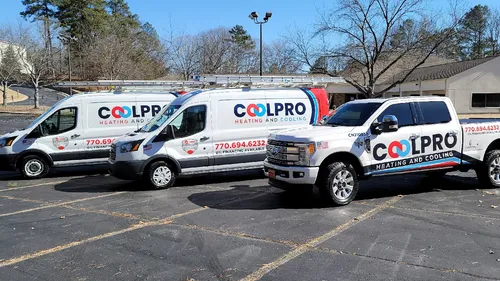
Coolpro Heating and Cooling provides residential and commercial HVAC services in Atlanta, GA. They offer repair, installation, and tune-up services for air conditioners, furnaces, heat pumps, and full HVAC systems. The company services all makes and models and emphasizes energy-efficient solutions to help manage comfort and reduce energy use. With over 30 years of experience, Coolpro serves Cobb, Cherokee, Paulding counties, and the Atlanta area, focusing on reliable heating and cooling solutions.

Summit
51 Austin Ave NE, Marietta, GA 30060
Summit is an HVAC company serving Atlanta, GA, specializing in repair, installation, and maintenance of air conditioning, furnaces, heat pumps, and HVAC systems. They focus on diagnosing and fixing issues to extend system life before recommending replacements. Operating since 2015, Summit serves the local community with timely appointments and personalized service.

Self Brothers Heating & Cooling
1700 Cumberland Point Dr UNIT 14, Marietta, GA 30067
Self Brothers Heating & Cooling is an HVAC company serving Atlanta, GA, and the surrounding Metro Atlanta area. Since 2000, this family-owned business has provided heating and cooling services including AC repair and installation, furnace repair and installation, heat pump services, indoor air quality solutions, and HVAC maintenance. Their factory-trained team offers clear pricing and a protection plan for ongoing energy savings and priority service, emphasizing local community roots and personalized care.
Why a Heat Pump is a Great Fit for Atlanta
Atlanta's climate presents unique challenges for home comfort systems. Our long, sweltering summers demand powerful cooling and, critically, effective dehumidification. Our winters are generally mild, with average lows in the 30s, which is the perfect operating range for modern heat pump technology 1. Unlike traditional furnaces that burn fuel to create heat, a heat pump transfers existing heat from the outside air (or ground) into your home. This process of moving energy is inherently more efficient, potentially saving Atlanta homeowners hundreds of dollars annually on their energy bills2.
The primary advantage for our area is the dual functionality. A single heat pump system replaces both your air conditioner and your furnace, streamlining your HVAC equipment. For homes using electric resistance heat (like baseboard heaters or an electric furnace), the savings from switching to a heat pump can be particularly significant. Furthermore, because they don't rely on combustion, heat pumps improve indoor air quality and safety by eliminating the risk of carbon monoxide leaks from a furnace.
Types of Heat Pump Systems
Choosing the right type of heat pump depends on your home's existing infrastructure and your specific comfort goals. Here are the most common configurations available from Atlanta installers.
Air-Source Split Systems
This is the most common type of heat pump, similar in appearance to a standard central air conditioner. It consists of an outdoor unit (containing the compressor and condenser coil) and an indoor air handler. The two units are connected by refrigerant lines. This system uses your home's existing ductwork to distribute conditioned air. It's a versatile and cost-effective choice for most homes that already have ducts in good condition.
Ductless Mini-Split Systems
Mini-splits are ideal for homes without existing ductwork, such as older homes, room additions, or converted spaces like garages or sunrooms. They consist of a compact outdoor unit connected to one or more indoor wall-mounted units. Each indoor unit can be controlled independently, allowing for "zoning," where you heat or cool only the rooms you're using. While the upfront cost per zone can be higher, the targeted efficiency and lack of duct losses can lead to operational savings.
Packaged Heat Pump Units
In this configuration, all components-the compressor, heat exchanger, and air handler-are housed in a single cabinet, typically installed on a rooftop or a concrete slab beside the home. The conditioned air is then ducted into the house. Packaged units are often a good solution for homes with limited indoor space, such as those on crawl spaces or with tight mechanical closets.
Geothermal (Ground-Source) Heat Pumps
Geothermal systems offer the highest efficiency by exchanging heat with the relatively constant temperature of the earth via a buried loop system. While they have the highest upfront cost due to the required excavation or drilling for the ground loops, they provide unparalleled efficiency and low operating costs, making them a compelling long-term investment. They are also exceptionally quiet and have a very long lifespan 3.
Key Features for Atlanta's Climate
Not all heat pumps are created equal, especially when facing a Southern summer. When evaluating systems with an Atlanta installer, pay close attention to these features.
- High SEER2 and HSPF2 Ratings: SEER2 (Seasonal Energy Efficiency Ratio) measures cooling efficiency, while HSPF2 (Heating Seasonal Performance Factor) measures heating efficiency. Georgia mandates a minimum of 15 SEER for new installations, but modern high-efficiency models reach 20 SEER2 and above 4. Higher ratings mean lower utility bills.
- Variable-Speed Compressors: This is arguably the most important feature for comfort and efficiency in our climate. Unlike single-speed units that simply turn on and off, variable-speed compressors can adjust their output in small increments. This allows the system to run longer at a lower speed, which maintains a more consistent temperature, removes significantly more humidity from the air, and uses less energy5.
- Enhanced Dehumidification: Atlanta's humidity is a major comfort factor. Look for systems with specific dehumidification modes or those that pair well with a variable-speed air handler to remove moisture without overcooling your home.
- Cold Climate Performance: While our winters are mild, we do experience freezing temperatures. Many standard heat pumps lose efficiency as it gets colder. "Cold climate" heat pump models are specifically engineered to provide efficient heating at much lower outdoor temperatures, ensuring reliable warmth all season6.
Find the perfect heat pump installation & replacement contractors for your needs
Get personalized recommendations and expert advice
Understanding Heat Pump Costs in Atlanta
The total investment for a new heat pump system in Atlanta varies widely based on the type, size, efficiency, and complexity of the installation. Understanding the cost components helps in budgeting and evaluating quotes.
Cost Ranges by System Type
- Air-Source Split System: For a standard, ducted system replacing an old unit, homeowners can expect a range of approximately $8,900 to $14,000 or more. This wide range accounts for system capacity (measured in tons), efficiency rating (SEER2), and the quality of the equipment7 8.
- Ductless Mini-Split System: Costs are typically quoted per zone (one outdoor unit + one indoor head). A single-zone system can start around $3,900, while multi-zone systems for a whole home can range from $10,000 to $21,000+, depending on the number of indoor units and their features9 10.
- Geothermal System: Given the extensive ground loop installation, these systems represent a significant investment, often starting in the $20,000 to $30,000+ range. However, their ultra-low operating costs and available incentives can improve the long-term financial picture11.
What Influences the Final Price?
- System Size (Tonnage): An undersized unit will struggle, and an oversized unit will short-cycle, leading to poor humidity control and wasted energy. A professional will perform a Manual J load calculation to determine the perfect size for your home.
- Efficiency Rating: Higher SEER2/HSPF2 models come with a higher price tag for the equipment but offer greater monthly savings.
- Labor & Installation Complexity: Labor typically constitutes 25-40% of the total project cost12. Factors like the condition of existing ducts, electrical upgrades needed, and the physical accessibility of the installation site all affect labor time and cost.
- Additional Components: You may need to upgrade your thermostat to a modern model compatible with your new system, or you might choose to add indoor air quality products like advanced air filters or UV lights.
Financial Incentives and Rebates
A major factor in affordability is the availability of incentives. The federal Inflation Reduction Act (IRA) provides a tax credit for qualified heat pump installations, which can cover 30% of the project cost, up to $2,00013 14. Additionally, local utility companies in Georgia, such as Georgia Power, often offer rebates for installing high-efficiency HVAC equipment. Your installer should be knowledgeable about current rebates and help you with the paperwork.
The Professional Installation Process
A proper installation is just as important as the equipment you choose. A reputable Atlanta professional will follow a meticulous process.
- Consultation and Load Calculation: The process begins with a home evaluation. A technician will assess your current system, inspect your ductwork, and perform a Manual J calculation to determine the precise heating and cooling needs of your home. This step is non-negotiable for a correctly sized system.
- System Recommendation and Quote: Based on the assessment, the professional will recommend a few system options that fit your home and budget, providing a detailed, written quote that includes equipment model numbers, labor scope, warranty information, and a projected timeline.
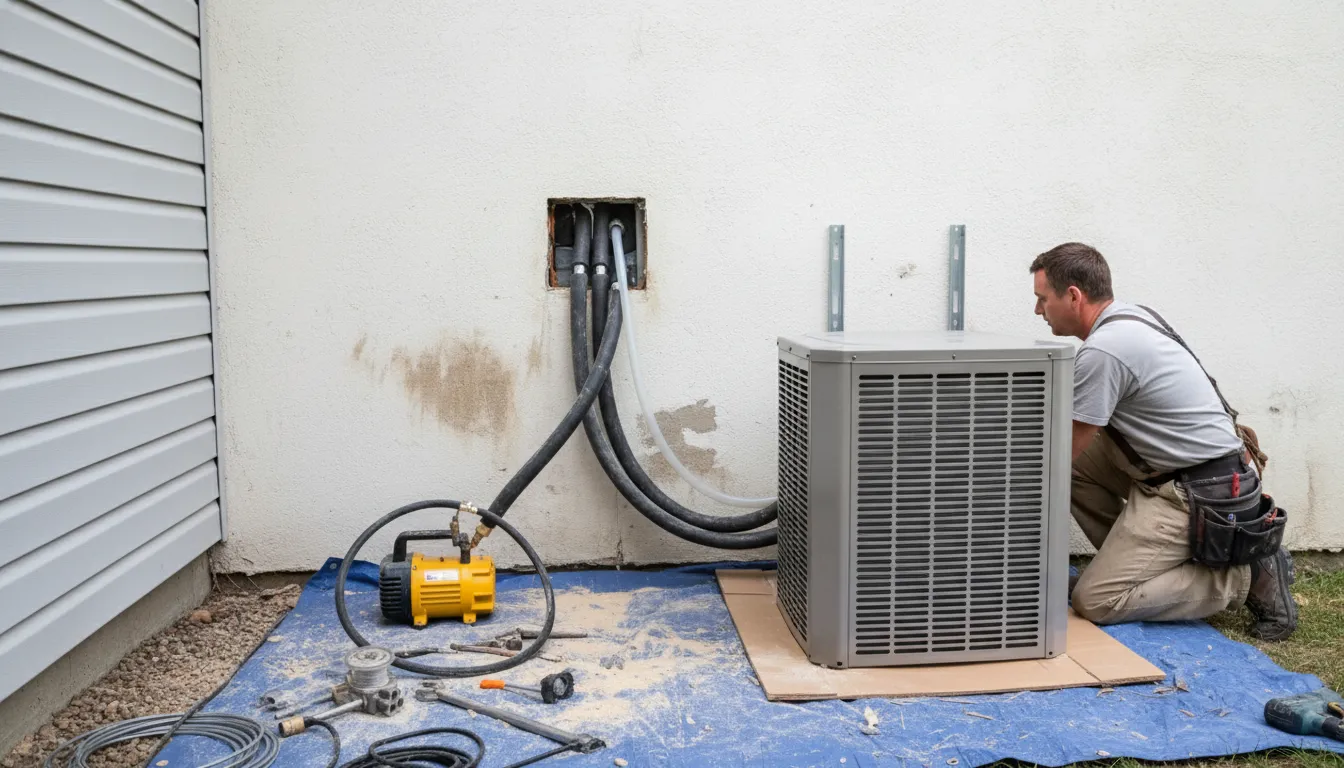
- Preparation and Removal: On installation day, the crew will prepare the work area with drop cloths. They will safely recover refrigerant from your old system (if applicable) and remove the old outdoor and indoor units.
- New Installation: This involves setting the new outdoor unit on a stable pad, installing the new indoor air handler or coil, connecting refrigerant lines with proper brazing techniques, updating electrical connections, and integrating the system with your thermostat and ductwork.
- Testing and Commissioning: After installation, the technician will start the system, check refrigerant charge with precision instruments, test all modes of operation (heating and cooling), verify airflow, and ensure the thermostat is programmed correctly. They will also review the system's operation and maintenance requirements with you.
Maintaining Your New Heat Pump
To protect your investment and ensure peak efficiency, regular maintenance is key. This includes simple homeowner tasks like keeping the outdoor unit clear of leaves, grass, and debris, and changing the indoor air filter every 1-3 months. It is also highly recommended to schedule a professional maintenance visit twice a year-once in the spring before cooling season and once in the fall before heating season. A professional tune-up includes cleaning coils, checking refrigerant levels, inspecting electrical components, and ensuring the system is operating safely and at its rated efficiency.
Frequently asked questions
Sources
Footnotes
-
How Much Does it Cost to Install a Heat Pump in Atlanta, GA - https://www.coolray.com/help-guides/how-much-does-it-cost-to-install-a-heat-pump-in-atlanta-ga ↩
-
HVAC System Atlanta: How to Choose the Right One for Your ... - https://inairusa.com/blog/hvac-system-atlanta-homes/ ↩
-
2026 Heat Pump Costs | Purchase, Installation & Repair - Carrier - https://www.carrier.com/residential/en/us/products/heat-pumps/how-much-does-a-heat-pump-cost/ ↩
-
How to Budget for a New HVAC Unit - https://stradaservices.com/about-us/blog/how-to-budget-for-a-new-hvac-unit/ ↩
-
Heat Pump Replacement Atlanta, GA-Rebates & Savings - https://www.pvhvac.com/heating/heat-pumps/ ↩
-
Heat Pump Buying Guide 2026: Compare Models and Save ... - https://www.pvhvac.com/blog/heat-pump-buying-guide-2025-compare-models-and-save-with-georgia-rebates/ ↩
-
How Much Does a Heat Pump Cost in Atlanta, GA? - Angie's List - https://www.angi.com/articles/how-much-does-heat-pump-cost/ga/atlanta ↩
-
2025 Heat Pump Replacement Costs - What Homeowners Can ... - https://heatpumppriceguides.com/heat-pump-replacement-costs-this-year/ ↩
-
Heat Pump Price Guides - Heat Pump Prices and Replacement Costs - https://heatpumppriceguides.com/ ↩
-
Heating System Replacement Costs in Georgia - https://toptechmech.com/heating-system-replacement-costs/ ↩
-
How Much Does a Heat Pump Cost in 2025? - EnergySage - https://www.energysage.com/heat-pumps/costs-and-benefits-air-source-heat-pumps/ ↩
-
Heat Pump Installation: Step-by-Step Process and Considerations - https://www.weathermastersga.com/heat-pump-installation/ ↩
-
2026 Heat Pump Cost Guide: Purchase, Installation & Repair - Carrier - https://www.carrier.com/residential/en/us/products/heat-pumps/how-much-does-a-heat-pump-cost/ ↩
-
Heat Pump Installation & Replacement | Reliable Heating & Air - https://reliableair.com/heating/heat-pump-install ↩