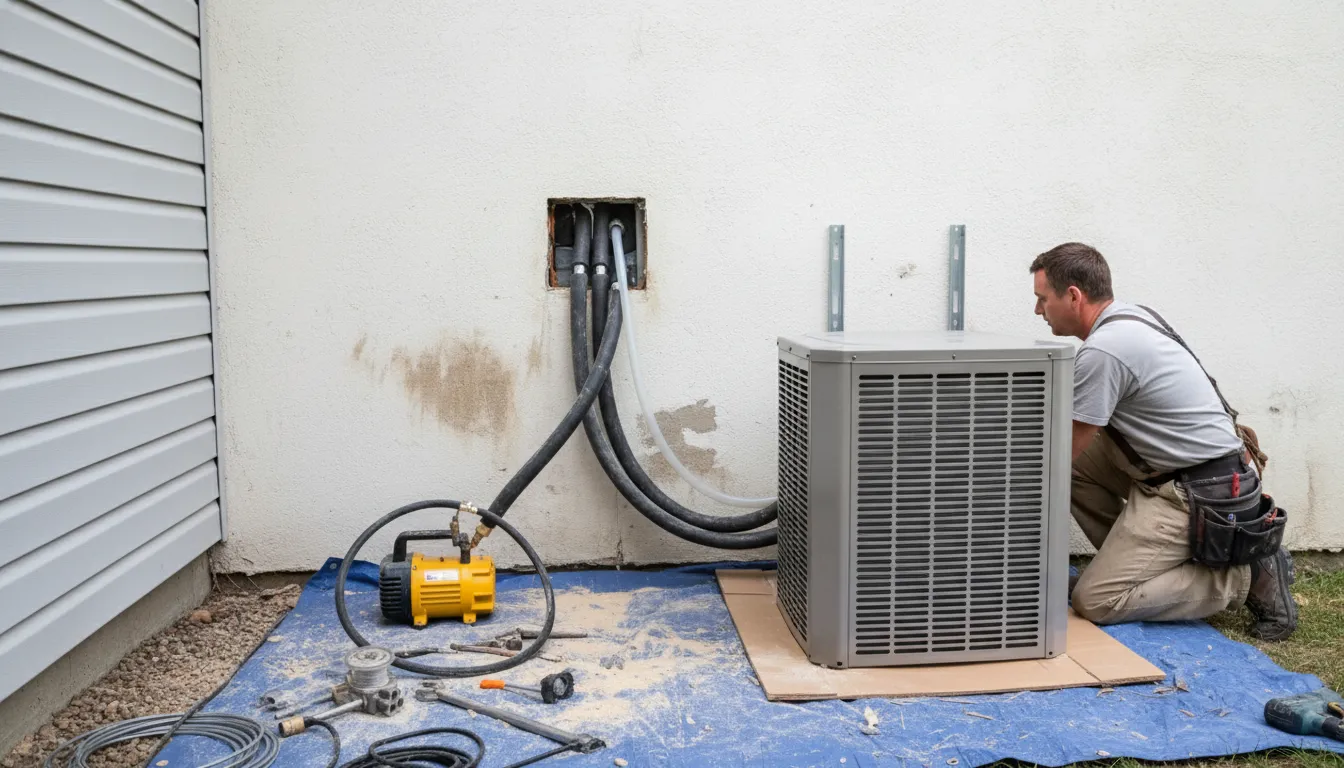
Find the Best Heat Pump Installation & Replacement Contractors for Your Business
No obligation • Fast responses • Nationwide coverage

Why you can trust HVAC Firms
HVAC Firms is a leading United States resource for evaluating HVAC service providers. Our team researches companies, checks credentials, and reviews customer feedback to present clear, unbiased information. Listings and rankings are based on merit, and companies cannot pay to change our editorial content.
Search providers near you
Top Heat Pump Installation & Replacement Contractors in Johns Creek, Georgia Ranked
A heat pump is a versatile, all-in-one system that provides both efficient heating and cooling for your home, making it an ideal choice for Johns Creek's climate. This guide is designed to help you understand your options for heat pump installation and replacement, from selecting the right system to navigating available financial incentives. You can use this information to connect with qualified local professionals who can assess your home and provide a detailed quote for your project.

Wall Heating & Air Conditioning, Inc.
485 Scenic Hwy S, Lawrenceville, GA 30046
Wall Heating & Air Conditioning, Inc. is an HVAC company serving Atlanta, GA, specializing in air conditioning, heating, and indoor air quality services. They handle installation, repair, and maintenance for central air conditioners, ductless mini splits, heat pumps, furnaces, and rooftop or packaged units for both residential and commercial properties. The company also offers indoor air quality solutions including air cleaners, humidifiers, dehumidifiers, and UV germicidal lights, with a focus on Aprilaire products. Their certified technicians provide expertise in eco-friendly heat pump systems and climate control efficiency.
Techmazing Heating and Cooling
4931 Hwy 81, Loganville, GA 30052
Techmazing Heating and Cooling provides a full range of HVAC services in Atlanta, GA, including air conditioning, furnace, heat pump, and ductless mini-split installation and repair. They also offer indoor air quality solutions and commercial refrigeration services. The company is experienced in servicing all major brands and models, with certified technicians who provide warranties on parts and labor. Techmazing Heating and Cooling serves Northeast Georgia communities such as Braselton, Buford, Dacula, Duluth, Gainesville, Lawrenceville, Loganville, and Snellville. Their capabilities include expert diagnostics and repairs, as well as custom installations of Trane heating and cooling systems.

Coolpro Heating and Cooling
161 Austin Ave NE, Marietta, GA 30060
Coolpro Heating and Cooling provides residential and commercial HVAC services in Atlanta, GA. They offer repair, installation, and tune-up services for air conditioners, furnaces, heat pumps, and full HVAC systems. The company services all makes and models and emphasizes energy-efficient solutions to help manage comfort and reduce energy use. With over 30 years of experience, Coolpro serves Cobb, Cherokee, Paulding counties, and the Atlanta area, focusing on reliable heating and cooling solutions.

Summit
51 Austin Ave NE, Marietta, GA 30060
Summit is an HVAC company serving Atlanta, GA, specializing in repair, installation, and maintenance of air conditioning, furnaces, heat pumps, and HVAC systems. They focus on diagnosing and fixing issues to extend system life before recommending replacements. Operating since 2015, Summit serves the local community with timely appointments and personalized service.

Self Brothers Heating & Cooling
1700 Cumberland Point Dr UNIT 14, Marietta, GA 30067
Self Brothers Heating & Cooling is an HVAC company serving Atlanta, GA, and the surrounding Metro Atlanta area. Since 2000, this family-owned business has provided heating and cooling services including AC repair and installation, furnace repair and installation, heat pump services, indoor air quality solutions, and HVAC maintenance. Their factory-trained team offers clear pricing and a protection plan for ongoing energy savings and priority service, emphasizing local community roots and personalized care.
Why a Heat Pump is a Smart Choice for Johns Creek
Johns Creek's humid subtropical climate, characterized by hot, muggy summers and relatively mild winters, is perfectly suited for heat pump technology. Unlike a traditional air conditioner paired with a furnace, a single heat pump system handles year-round comfort by moving heat rather than generating it. In summer, it extracts heat from inside your home and releases it outdoors. In winter, the process reverses, pulling ambient heat from the outside air (even in cool temperatures) and transferring it indoors. This efficient method of heat transfer can lead to significant energy savings compared to conventional systems, especially during our long cooling season.
Modern advancements have made heat pumps, particularly cold-climate models, highly effective even during Georgia's cooler nights 1. For homeowners looking to upgrade an aging HVAC system, improve home efficiency, or eliminate reliance on fossil fuels like natural gas or propane, a heat pump installation or replacement is a forward-thinking investment.
Types of Heat Pump Systems
Understanding the different types of heat pump systems is the first step in choosing the right one for your Johns Creek home. The main categories are defined by their heat source: air or ground.
Air-Source Heat Pumps
This is the most common type of residential heat pump. Air-source systems exchange heat with the outdoor air and come in two primary configurations:
- Ducted Systems: These units connect to your home's existing network of air ducts, providing centralized heating and cooling throughout the house. They are a straightforward replacement for a traditional central air conditioner and furnace setup.
- Ductless Mini-Split Systems: Comprising an outdoor compressor unit and one or more indoor air handlers mounted on walls or ceilings, mini-splits are ideal for homes without existing ductwork. They are perfect for room additions, sunrooms, or for creating "zones" with independent temperature control in different parts of the house.
Geothermal (Ground-Source) Heat Pumps
Geothermal systems use the stable temperature of the earth several feet below the surface as a heat exchange source. While they boast the highest efficiency ratings and lowest operating costs, they involve a more complex and costly installation process that requires burying loops of pipe in the ground 2. They are an excellent long-term investment for properties with adequate space for the ground loop.
Key Factors for Your Installation
Several critical factors will influence the performance, cost, and suitability of your new heat pump system.
Efficiency Ratings: SEER2 and HSPF
Efficiency is measured by two key metrics:
- SEER2 (Seasonal Energy Efficiency Ratio): Rates cooling efficiency. A higher SEER2 number means greater cooling efficiency and lower electricity bills. Current standards often start around 15-17 SEER2 3.
- HSPF (Heating Seasonal Performance Factor): Rates heating efficiency. Similarly, a higher HSPF indicates more efficient heating performance.
Choosing a unit with high ratings in both categories is crucial for maximizing year-round savings in Johns Creek. Importantly, systems with a SEER2 rating of 17 or higher may qualify for valuable federal tax credits.
Proper Sizing and Load Calculation
An improperly sized heat pump-whether too large or too small-will lead to comfort issues, frequent cycling, and reduced efficiency. A professional installer will perform a Manual J load calculation, which considers your home's square footage, insulation levels, window quality, and local climate to determine the exact capacity (measured in tons) needed.
Compatibility with Existing Infrastructure
For a replacement project, your technician will assess whether your current electrical service, ductwork, and thermostat are compatible with a new heat pump. Older ductwork may need sealing or modifications, and an electrical panel upgrade might be necessary to handle the new system's requirements.
Find the perfect heat pump installation & replacement contractors for your needs
Get personalized recommendations and expert advice
Understanding Costs and Incentives
The cost of a heat pump installation in Johns Creek can vary widely based on system type, efficiency, and home complexity. However, substantial rebates and tax credits can dramatically reduce your final out-of-pocket expense.
Typical Installation Cost Ranges
For a standard air-source heat pump replacement in a typical Johns Creek home, homeowners can expect a total installed cost ranging from $8,000 to over $20,000 4 5. This range accounts for the equipment, all labor, materials, permits, and any necessary ancillary work like duct modifications or electrical updates. A ductless mini-split system for a single zone may start lower, while a whole-home geothermal system will be at the higher end of the spectrum.
Financial Incentives to Lower Your Cost
The effective cost can be significantly lower thanks to federal and local incentives:
- Federal Tax Credit: The federal government offers a tax credit of up to $2,000 for the installation of a qualifying high-efficiency heat pump 6. This is a dollar-for-dollar reduction of your tax liability.
- Utility and State Rebates: Georgia Power and other local utilities often offer rebates for upgrading to high-efficiency equipment. These can provide thousands of dollars in direct savings. Some programs are specifically designed for income-qualified homeowners, offering even greater financial assistance.
Example Scenario: A homeowner installs a high-efficiency air-source heat pump for a total cost of $12,000. After applying a $2,000 federal tax credit and a $3,000 utility rebate, the final out-of-pocket cost could be reduced to around $7,0007 8 9. In some cases, with additional incentives, net costs have been reported to fall into the $4,000-$7,000 range.
The Professional Installation Process
A proper installation is just as important as the equipment itself. A reputable local provider will typically follow a structured process:
- In-Home Consultation and Load Calculation: A technician assesses your home, discusses your needs, and performs the essential load calculation.
- System Design and Proposal: You receive a detailed quote outlining the recommended equipment, efficiency ratings, project scope, timeline, and total cost.
- Preparation and Removal: The crew prepares the work area, safely disconnects and removes the old HVAC equipment.
- Installation: This includes setting the new outdoor unit, installing or modifying refrigerant lines and electrical connections, and integrating the indoor coil or air handler. For ducted systems, ductwork is inspected and sealed.
- Testing and Commissioning: The system is charged with refrigerant, started, and thoroughly tested for proper operation, airflow, and thermostat control. The technician will ensure it meets all performance specifications.
- Cleanup and Orientation: The work area is cleaned, and the installer walks you through the basic operation and maintenance of your new heat pump.
Choosing a Local Johns Creek Provider
Selecting the right contractor is paramount. Look for a licensed, insured company with specific experience in heat pump installations. Ask for references from recent projects and verify they will pull the required local permits. A trustworthy provider will conduct a thorough home assessment, not just give a phone quote, and will be transparent about all costs, warranties, and the incentive application process.
Frequently asked questions
Sources
Footnotes
-
Best Heat Pump Brands 2026 | Compare Bosch, Carrier, Mitsubishi - https://www.edge-gogreen.com/hvac/best-heat-pump-brands/ ↩
-
Types of Heat Pump Systems: Air-Source, Geothermal & More | Bryant - https://www.bryant.com/en/us/products/heat-pumps/types-of-systems/ ↩
-
Understanding Heat Pump Efficiency and Ratings - Carrier - https://www.carrier.com/residential/en/us/products/heat-pumps/heat-pump-efficiency/ ↩
-
2026 Heat Pump Costs | Purchase, Installation & Repair - Carrier - https://www.carrier.com/residential/en/us/products/heat-pumps/how-much-does-a-heat-pump-cost/ ↩
-
How much does it cost for a heat pump - https://comforttemp.com/how-much-does-it-cost-for-a-heat-pump/ ↩
-
Central Air Conditioners Tax Credit | ENERGY STAR - https://www.energystar.gov/about/federal-tax-credits/central-air-conditioners ↩
-
How Much Does it Cost to Install a Heat Pump in Atlanta, GA - https://www.coolray.com/help-guides/how-much-does-it-cost-to-install-a-heat-pump-in-atlanta-ga ↩
-
Heat Pump Installation: Step-by-Step Process and ... - https://www.weathermastersga.com/heat-pump-installation/ ↩
-
Heat Pump Buying Guide 2026: Compare Models and Save ... - https://www.pvhvac.com/blog/heat-pump-buying-guide-2025-compare-models-and-save-with-georgia-rebates/ ↩