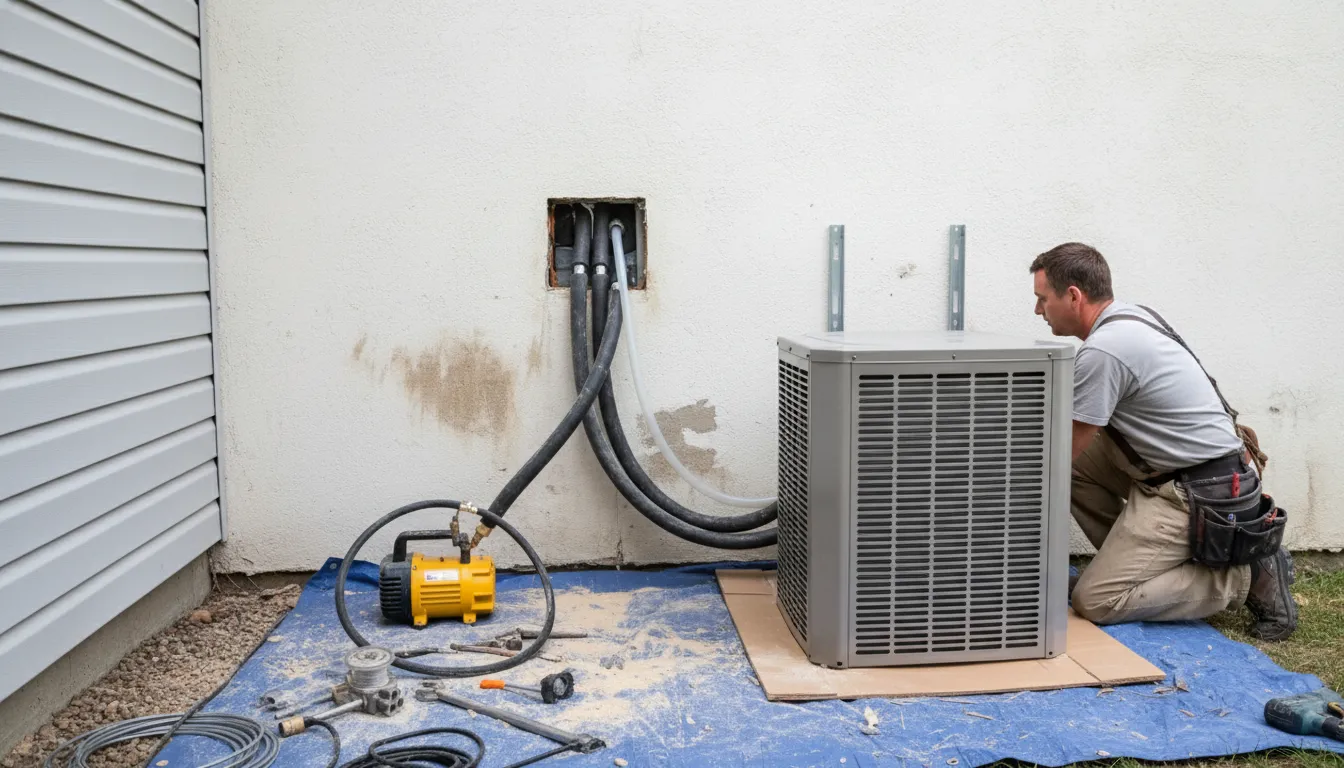
Find the Best Heat Pump Installation & Replacement Contractors for Your Business
No obligation • Fast responses • Nationwide coverage

Why you can trust HVAC Firms
HVAC Firms is a leading United States resource for evaluating HVAC service providers. Our team researches companies, checks credentials, and reviews customer feedback to present clear, unbiased information. Listings and rankings are based on merit, and companies cannot pay to change our editorial content.
Search providers near you
Top Heat Pump Installation & Replacement Contractors in Westminster, Colorado Ranked
Upgrading your home's heating and cooling system to a heat pump is a smart, energy-efficient choice for Westminster residents. This technology provides both heating and air conditioning in a single, highly efficient unit, moving heat rather than generating it, which can lead to significant energy savings. For homeowners, selecting the right type of system and navigating installation options is key to maximizing comfort and long-term value. This guide will help you understand the types of heat pumps available, their benefits for our local climate, and how to find qualified professionals for your project.
True Heating & Cooling
1351 W 121st Ave, Westminster, CO 80234
True Heating & Cooling is an HVAC company based in Denver, CO, offering heating, air conditioning, and indoor air quality services. They serve Westminster and nearby areas including Broomfield and Boulder. Their services include installation, repair, and maintenance of furnaces, boilers, air conditioners, heat pumps, ductless mini-split systems, and thermostats. As NATE-certified technicians and official Lennox dealers, they provide skilled work with access to quality equipment. True Heating & Cooling has 24/7 emergency availability to address urgent HVAC needs.

Efficient Comfort: Heating, Cooling & Mechanical
10835 N Dover St #100, Westminster, CO 80021
Efficient Comfort: Heating, Cooling & Mechanical is a family owned and operated HVAC company serving Aurora, CO, and the surrounding Denver metro areas. Founded in 2007, the company offers a wide range of heating and cooling services including installation, repair, and maintenance of furnaces, air conditioners, heat pumps, boilers, and ductless mini splits. As Bryant Factory Authorized Dealers, they provide expertise in managing indoor air quality with accessories like air cleaners, humidifiers, ventilators, and UV lights. The company emphasizes ethical business practices and community involvement.
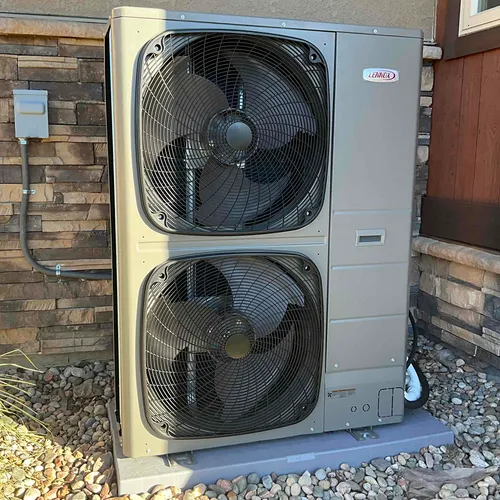
Aim High HVAC
9933 Titan Park Cir, Littleton, CO 80125
Aim High HVAC is a heating and cooling service provider based in Aurora, CO. They specialize in HVAC installation and repair, including air conditioning, furnaces, heat pumps, and indoor air quality services. Serving the greater Colorado area, Aim High HVAC offers same-day repairs and supports various home comfort needs with certified technicians. Established in 2016, the company has built a reputation for integrity and commitment to customer service.
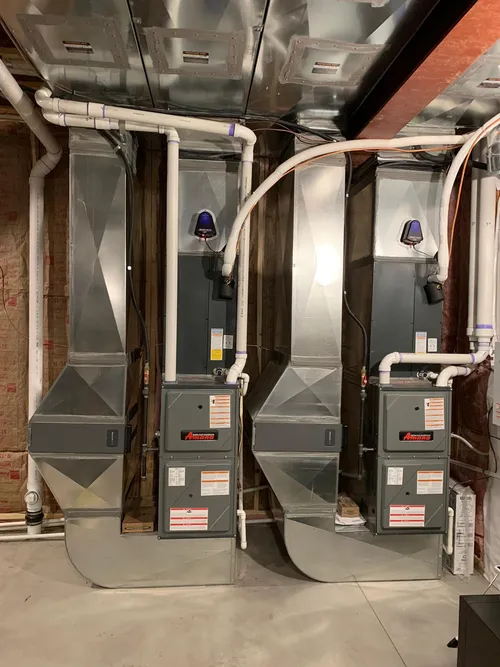
Tuscan Electric Heating & Plumbing
4301 S Federal Blvd suite 116, Sheridan, CO 80110
Tuscan Electric Heating & Plumbing is a multi-licensed home services provider based near Aurora, CO, offering integrated electrical, plumbing, and HVAC solutions. They serve the greater Denver metro area with services including AC and heat pump installation and repair, furnace repair, and HVAC tune-ups. Their team holds Master Electrical, Mechanical, and Plumbing licenses, allowing them to handle complex projects like heat pump installations combined with electrical panel upgrades without subcontractors. Tuscan Electric Heating & Plumbing emphasizes honest recommendations and offers emergency and same-day services to address urgent home system issues promptly.
Comfort Pros Heating and Air Conditioning
7270 Gilpin Way #220, Denver, CO 80229
Comfort Pros Heating and Air Conditioning is a family-owned HVAC company serving Denver, CO, with over 15 years of experience. They specialize in the installation, repair, and maintenance of heat pumps, furnaces, air conditioners, boilers, and mini-split systems. Comfort Pros is known for working with high-quality manufacturers and providing thorough system analyses to help customers understand their options. Their team emphasizes clear communication and detailed explanations throughout each project.
Why Choose a Heat Pump in Westminster?
Westminster's climate is exceptionally well-suited for air-source heat pump technology. Our mild winters, with temperatures rarely dipping below freezing, allow heat pumps to operate at peak efficiency year-round1 2 3. Unlike traditional furnaces that burn fuel to create heat, a heat pump simply transfers existing heat from the outside air into your home during winter, and reverses the process to cool your home in summer. This method of heat transfer is far more energy-efficient, often resulting in 30-50% less energy use compared to conventional systems 4 2.
The dual functionality is a major advantage. By installing a single heat pump system, you effectively replace both your air conditioner and your furnace, simplifying your home's mechanical systems and reducing maintenance needs to one primary unit. This makes a heat pump replacement or new installation a compelling option for whole-home comfort.
Types of Heat Pump Systems
Understanding the different configurations available is the first step in planning your installation. The right choice depends on your home's existing infrastructure and your specific comfort goals.
Ducted Air-Source Heat Pumps
This is the most common type for whole-home replacements. A ducted system uses your home's existing network of air ducts to distribute conditioned air. It typically consists of an outdoor unit (condenser) and an indoor air handler, seamlessly replacing a traditional central air conditioner and gas furnace. This is an excellent option if your current ductwork is in good condition and you prefer a centralized approach to temperature control.
Ductless Mini-Split Heat Pumps
For homes without existing ductwork, such as additions, converted garages, or older properties, ductless mini-splits are an ideal solution. These systems involve one or more quiet, wall-mounted indoor units connected to a single outdoor condenser via a small refrigerant line 5. Key benefits include:
- Zoned Comfort: Each indoor unit can be controlled independently, allowing for different temperatures in different rooms.
- Flexible Installation: The small lines require only a 3-inch hole in the wall, avoiding major renovation work.
- High Efficiency: With no ductwork losses, mini-splits are often the most efficient option available.
Packaged Heat Pump Units
A packaged unit contains all components-the compressor, heat exchanger, and air handler-in a single cabinet typically installed on the roof or a concrete slab beside the home. These are common in homes without basements or crawlspaces where indoor space is limited. They connect directly to the home's duct system and can be a space-saving solution for certain property layouts.
Key Efficiency Metrics: SEER and HSPF
When comparing systems, efficiency ratings are paramount for long-term savings. The primary rating for cooling efficiency is the Seasonal Energy Efficiency Ratio (SEER). In Westminster's climate, a high SEER rating directly translates to lower electricity bills during our warm seasons. Modern high-efficiency heat pumps have SEER ratings of 18 and above, with some models reaching into the mid-20s. Investing in a higher SEER unit, while having a higher upfront cost, pays dividends through reduced operating expenses for years to come.
For heating performance, look at the Heating Seasonal Performance Factor (HSPF). This measures a heat pump's heating efficiency over a typical season. A higher HSPF indicates more efficient heating. Given our mild winters, a heat pump with a strong HSPF rating will provide reliable and affordable warmth.
Understanding Costs and Financial Incentives
The cost of a new heat pump installation in Westminster can vary widely, typically ranging from $7,000 to over $25,0006 7. This broad range is influenced by several factors:
- System Type & Size: A ductless mini-split for a single zone starts on the lower end, while a whole-home, high-capacity ducted system with complex installation requirements will be at the higher end.
- Equipment Efficiency: Units with higher SEER and HSPF ratings generally cost more.
- Installation Complexity: The condition of existing ductwork, electrical upgrades needed, and the physical layout of your home all impact labor costs.
Find the perfect heat pump installation & replacement contractors for your needs
Get personalized recommendations and expert advice
Fortunately, significant financial incentives are available to make this upgrade more accessible. California's TECH Clean California program offers direct rebates for installing qualifying heat pumps. Furthermore, the federal Inflation Reduction Act (IRA) provides tax credits for energy-efficient home improvements, including heat pump installations. A qualified installer can help you navigate these programs to substantially reduce your net project cost, improving the return on your investment.
The Professional Installation Process
A successful heat pump project hinges on proper installation. The process generally involves several key steps:
- Consultation and Load Calculation: A reputable contractor will perform a Manual J calculation to determine the precise heating and cooling capacity (in tons) your home requires. Oversizing or undersizing the system leads to inefficiency and comfort issues.
- System Design and Selection: Based on the load calculation and your home's layout, the contractor will recommend the best system type and model to meet your needs and budget.
- Site Preparation and Installation: This includes setting the outdoor unit on a stable pad, installing the indoor unit or air handler, making electrical and refrigerant line connections, and integrating with existing ductwork or installing new lines for a mini-split.
- Testing and Commissioning: The system is charged with refrigerant, started, and tested to ensure it operates at specified efficiency levels and delivers the correct airflow to each room.
- Owner Education: The installer should walk you through basic operation, maintenance, and the features of your thermostat or control system.
Choosing a licensed, insured, and experienced installer with specific expertise in heat pumps is non-negotiable. Their skill ensures the system delivers its promised efficiency, reliability, and lifespan.
Long-Term Benefits and Maintenance
Once installed, a heat pump requires regular maintenance to keep it running efficiently. This includes cleaning or replacing air filters monthly, keeping the outdoor unit clear of debris and vegetation, and scheduling an annual professional tune-up. A maintenance visit typically involves checking refrigerant levels, cleaning coils, inspecting electrical components, and verifying system performance.
The long-term benefits for Westminster homeowners are clear:
- Lower Utility Bills: Reduced energy consumption directly lowers monthly electricity costs.
- Increased Home Comfort: Consistent temperatures and dual heating/cooling capability.
- Reduced Carbon Footprint: Using electricity, especially from a growing grid of renewable sources, is cleaner than burning natural gas on-site.
- Potential Home Value Increase: Modern, efficient HVAC systems are an attractive feature for future home buyers.
Frequently asked questions
Sources
Footnotes
-
Heat Pumps Are Coming to New CA Homes. What About Existing ... - https://www.nrdc.org/bio/merrian-borgeson/heat-pumps-are-coming-new-ca-homes-what-about-existing-homes ↩
-
Cost to Add HVAC to Your House in 2025 - Power Pro Plumbing - https://www.powerproplumbing.com/blog/cost-to-add-hvac-to-house ↩ ↩2
-
Complete Guide to Heat Pump Installation in CA - https://www.calveyheatingandair.com/blog/heat-pump-installation-california-guide/ ↩
-
Heat Pumps in California: Everything You Need to Know - https://www.quitcarbon.com/blog/heat-pumps/california ↩
-
Heat Pump Price Guides - Heat Pump Prices and Replacement Costs - https://heatpumppriceguides.com/ ↩
-
Heat Pumps vs. Traditional HVAC: Which is Right for Orange County? - https://www.jmartiniaq.com/blog/heat-pumps-vs-traditional-hvac-which-is-right-for-orange-county ↩
-
New Heat Pump Installation Costs in Southern California - https://www.callwiseowl.com/blog/new-heat-pump-installation-costs-in-southern-california/ ↩