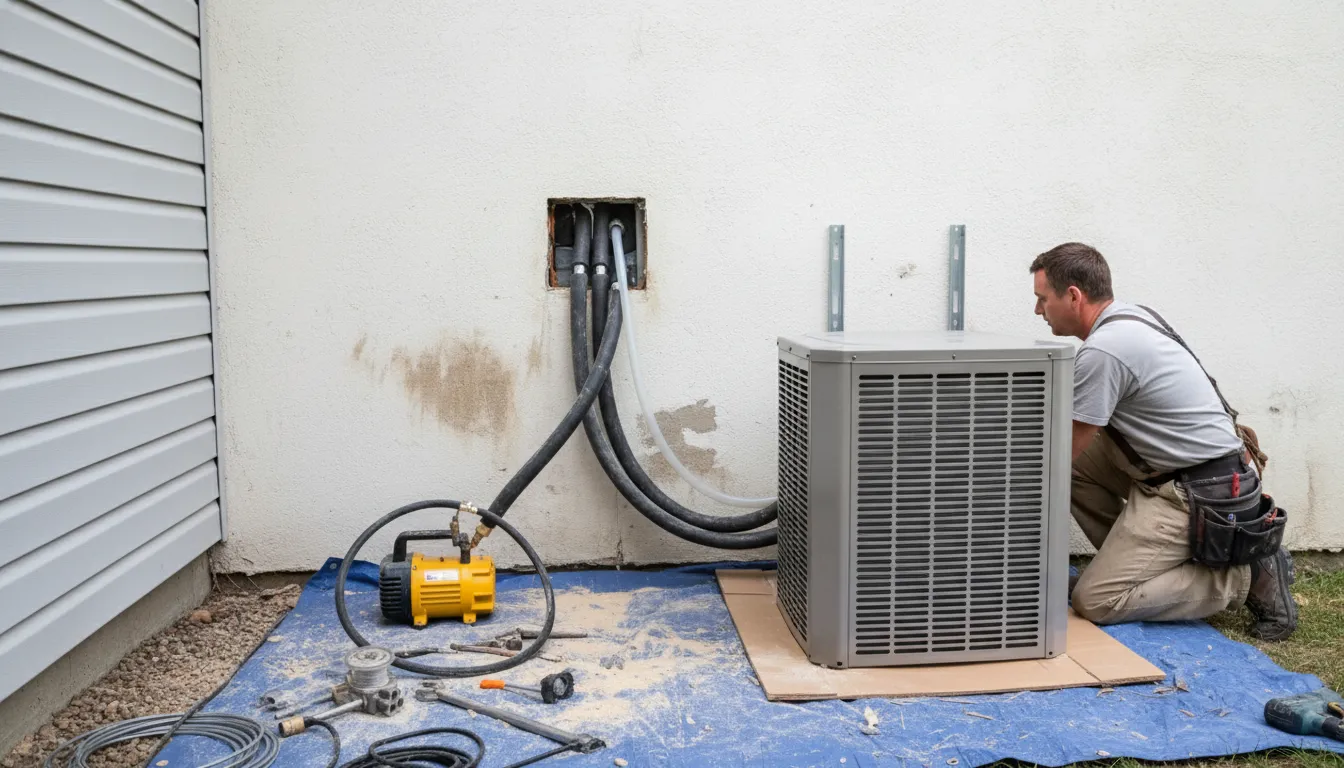
Find the Best Heat Pump Installation & Replacement Contractors for Your Business
No obligation • Fast responses • Nationwide coverage

Why you can trust HVAC Firms
HVAC Firms is a leading United States resource for evaluating HVAC service providers. Our team researches companies, checks credentials, and reviews customer feedback to present clear, unbiased information. Listings and rankings are based on merit, and companies cannot pay to change our editorial content.
Search providers near you
Best Heat Pump Installation & Replacement Contractors in Colorado Ranked
Upgrading your home's heating and cooling with a heat pump is a smart investment in year-round comfort and energy efficiency. For Colorado homeowners, this technology is particularly valuable, offering a cleaner alternative to traditional furnaces and air conditioners that can handle the state's diverse climate. This guide explains the types of heat pumps available, the substantial financial incentives that can dramatically lower your project cost, and how to connect with qualified local professionals to ensure a successful installation.
True Heating & Cooling
1351 W 121st Ave, Westminster, CO 80234
True Heating & Cooling is an HVAC company based in Denver, CO, offering heating, air conditioning, and indoor air quality services. They serve Westminster and nearby areas including Broomfield and Boulder. Their services include installation, repair, and maintenance of furnaces, boilers, air conditioners, heat pumps, ductless mini-split systems, and thermostats. As NATE-certified technicians and official Lennox dealers, they provide skilled work with access to quality equipment. True Heating & Cooling has 24/7 emergency availability to address urgent HVAC needs.

Efficient Comfort: Heating, Cooling & Mechanical
10835 N Dover St #100, Westminster, CO 80021
Efficient Comfort: Heating, Cooling & Mechanical is a family owned and operated HVAC company serving Aurora, CO, and the surrounding Denver metro areas. Founded in 2007, the company offers a wide range of heating and cooling services including installation, repair, and maintenance of furnaces, air conditioners, heat pumps, boilers, and ductless mini splits. As Bryant Factory Authorized Dealers, they provide expertise in managing indoor air quality with accessories like air cleaners, humidifiers, ventilators, and UV lights. The company emphasizes ethical business practices and community involvement.
Aim High HVAC
9933 Titan Park Cir, Littleton, CO 80125
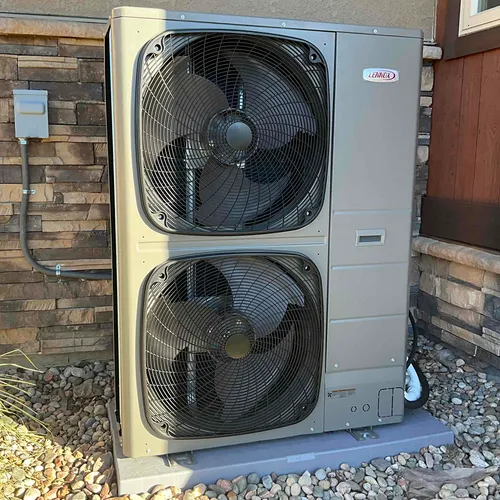
Aim High HVAC is a heating and cooling service provider based in Aurora, CO. They specialize in HVAC installation and repair, including air conditioning, furnaces, heat pumps, and indoor air quality services. Serving the greater Colorado area, Aim High HVAC offers same-day repairs and supports various home comfort needs with certified technicians. Established in 2016, the company has built a reputation for integrity and commitment to customer service.
Tuscan Electric Heating & Plumbing
4301 S Federal Blvd suite 116, Sheridan, CO 80110
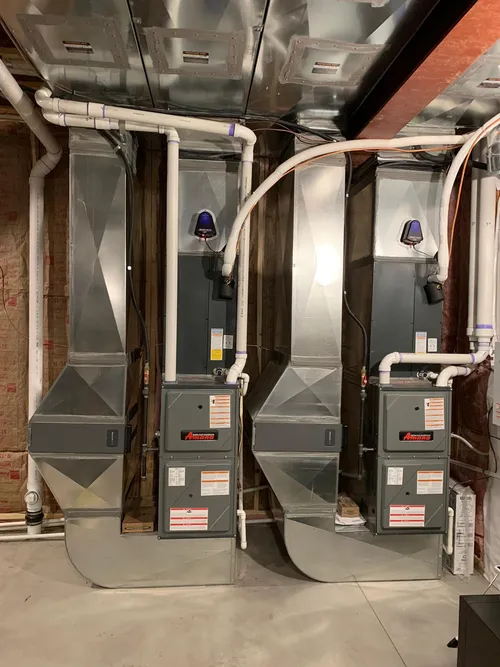
Tuscan Electric Heating & Plumbing is a multi-licensed home services provider based near Aurora, CO, offering integrated electrical, plumbing, and HVAC solutions. They serve the greater Denver metro area with services including AC and heat pump installation and repair, furnace repair, and HVAC tune-ups. Their team holds Master Electrical, Mechanical, and Plumbing licenses, allowing them to handle complex projects like heat pump installations combined with electrical panel upgrades without subcontractors. Tuscan Electric Heating & Plumbing emphasizes honest recommendations and offers emergency and same-day services to address urgent home system issues promptly.
Comfort Pros Heating and Air Conditioning
7270 Gilpin Way #220, Denver, CO 80229
Comfort Pros Heating and Air Conditioning is a family-owned HVAC company serving Denver, CO, with over 15 years of experience. They specialize in the installation, repair, and maintenance of heat pumps, furnaces, air conditioners, boilers, and mini-split systems. Comfort Pros is known for working with high-quality manufacturers and providing thorough system analyses to help customers understand their options. Their team emphasizes clear communication and detailed explanations throughout each project.
Why Choose a Heat Pump in Colorado?
Colorado's climate presents a unique challenge: hot, dry summers and cold, snowy winters. Modern heat pumps, especially cold-climate models, are engineered to perform efficiently in both extremes. They work by transferring heat rather than generating it, pulling warmth from the outdoor air (or ground) to heat your home in winter and reversing the process to cool it in summer. This dual functionality means you can replace both your furnace and air conditioner with a single, efficient system. With significant state and federal rebates now available, making the switch is more affordable than ever and can lead to lower monthly utility bills and a reduced carbon footprint.
Types of Heat Pump Systems
Understanding the different technologies available is the first step in choosing the right system for your Colorado home.
Air-Source Heat Pumps (ASHPs): This is the most common type, extracting heat from the outdoor air. They come in two main configurations:
- Ducted Systems: These connect to your home's existing ductwork, functioning like a traditional central forced-air system for whole-home heating and cooling.
- Ductless Mini-Splits: These systems consist of an outdoor unit connected to one or more indoor wall-mounted units. They are ideal for homes without ducts, room additions, or for providing zoned comfort control.
Cold Climate Heat Pumps (CCHPs): A specialized category of air-source heat pump designed to maintain high efficiency in sub-freezing temperatures, making them an excellent choice for Colorado's mountain towns and colder regions.
Heat Pump Water Heaters (HPWHs): A separate appliance that uses heat pump technology to provide domestic hot water, often using 50-75% less energy than a standard electric water heater.
Ground-Source Heat Pumps (Geothermal): These systems exchange heat with the ground, which maintains a stable temperature year-round. They are the most efficient type of heat pump but involve higher upfront costs due to the required ground loop installation.
Financial Incentives and Rebates in Colorado
A major advantage for Colorado residents is the extensive network of financial incentives that can reduce the cost of a heat pump installation by thousands of dollars. These programs are layered, meaning you can often combine them for maximum savings.
Federal and State Rebate Programs
Colorado Home Energy Rebates (HER/HEAR): Administered by the state, these programs offer significant point-of-sale discounts through participating contractors.
- Home Efficiency Rebates (HER): Offers up to $8,000 for Cold Climate Heat Pumps and $3,000 for standard air-source heat pumps for income-qualified households 1.
- Home Electrification Rebates (HEAR): Provides upfront discounts on qualifying heat pumps, with higher rebate amounts for low- and moderate-income households (based on Area Median Income, or AMI) 2. For example, a household at 80% of AMI could receive an $8,000 rebate on a CCHP 3.
Federal Tax Credits: The federal Residential Clean Energy Tax Credit offers a credit of up to 30% of the project cost, with a maximum of $2,000 for qualified air-source heat pumps. Many Colorado contractors are registered to provide this credit as an upfront discount at the time of purchase 4.
Utility-Specific Rebates
Many local utilities offer additional incentives on top of state and federal programs:
- Xcel Energy: Offers rebates for qualifying heat pump installations, which are processed directly through registered contractors.
- City of Denver: The Denver Climate Action Rebate program provides extra savings for Denver residents installing high-efficiency heat pumps.
Total Potential Savings: When you combine these layered incentives, the total savings can be substantial. It is possible to see over $14,000 in combined rebates and discounts, drastically reducing the out-of-pocket cost for a qualifying installation 5 6.
Find the perfect heat pump installation & replacement contractors for your needs
Get personalized recommendations and expert advice
Understanding Installation Costs and Requirements
While incentives lower the cost, understanding the baseline investment is important.
Typical Cost Range: For a standard air-source heat pump system in Colorado, homeowners can expect an installation cost ranging from $8,000 to $12,000 or more 7 8. Ground-source (geothermal) systems start at a significantly higher price point due to excavation costs. The final price depends on several key factors:
- System Size and Type: Measured in tons, correctly sizing the unit for your home is critical.
- Existing Infrastructure: The condition of your ductwork (for ducted systems) or the need to run new electrical lines.
- Electrical Panel Upgrade: Many older homes may require a panel upgrade to support a heat pump, which can add $3,000 to $5,000+ to the project 9.
After-Rebate Costs: With the available incentives, the net cost can drop dramatically. For households that qualify for maximum income-based rebates, the final expense can sometimes be reduced to below $1,000 for a new system 10.
Key Program Requirements
To qualify for most rebates, your project and contractor must meet specific criteria:
- Energy Star Certification: The installed equipment must be Energy Star certified.
- AHRI Matched System: For air-source systems, the outdoor and indoor units must be a matched pair listed in the AHRI directory to ensure rated efficiency.
- Replacement-Only: Most rebate programs require the heat pump to replace an existing functioning heating or cooling system, not be for new construction.
- Registered Contractor: This is essential. All work for rebate-eligible projects must be performed by a contractor registered with the applicable state or utility program. They handle the rebate paperwork and often provide the discount upfront.
Finding the Right Professional in Colorado
A successful heat pump installation hinges on working with a skilled, knowledgeable contractor. Here's how to find the right partner for your project:
- Verify Registration: Confirm that any contractor you consider is actively registered with the Colorado Energy Office's rebate programs and your local utility (e.g., Xcel Energy). They should be able to provide their registration number.
- Check for Specialization: Look for companies that specifically advertise expertise in heat pumps and cold-climate installations. Ask about their experience with the brand and model you are considering.
- Get a Comprehensive Assessment: A reputable contractor will perform a detailed Manual J load calculation to determine the correct system size for your home, rather than simply matching your old unit's size. They should also assess your ductwork, insulation, and electrical panel.
- Review the Quote in Detail: Your written estimate should clearly separate equipment, labor, and any ancillary costs (like electrical work or duct modifications). It should also specify the exact make and model of the proposed system and outline the rebates they will apply for on your behalf.
- Ask for References and Reviews: Check the company's rating with the Better Business Bureau and read customer reviews on independent platforms. Don't hesitate to ask for references from recent heat pump installation projects.
Taking these steps will help you find a qualified professional who can ensure your new system is installed correctly, performs efficiently, and qualifies for all available financial incentives.
Frequently asked questions
Sources
Footnotes
-
Colorado Home Energy Rebate Program - https://energyoffice.colorado.gov/home-energy-rebates ↩
-
Colorado Home Energy Rebate Program Frequently Asked Questions - https://energyoffice.colorado.gov/ira-rebate-faq ↩
-
Colorado HEAR Rebates Are Live - 2026 Update - UniColorado - https://unicolorado.com/colorado-hear-rebates-2026/ ↩
-
Colorado Heat Pump Tax Credits - https://energyoffice.colorado.gov/hptc ↩
-
Colorado Heat Pump Rebates: 2025 Guide - UniColorado - https://unicolorado.com/colorado-heat-pump-rebates-and-incentives/ ↩
-
How Xcel Energy Heat Pump Rebates Work in Colorado (2025 Update) - https://unicolorado.com/xcel-energy-heat-pump-rebate-guide/ ↩
-
Denver Heat Pump Rebates | Denver Climate Action Rebates 2025 - https://unicolorado.com/denver-heat-pump-rebates/ ↩
-
How Much Does a Heat Pump Cost in Denver? [2025 Data] - Angie's List - https://www.angi.com/articles/how-much-does-heat-pump-cost/co/denver ↩
-
Residential Heat Pump Installation Fort Collins CO - https://nocoenergysolutions.com/heating/residential-heat-pump-installation/ ↩
-
How The Colorado HEAR Heat Pump Rebates Work (How To ... - https://justheatpumpsllc.com/how-the-colorado-hear-heat-pump-rebates-work-how-to-apply/ ↩