Find the Best Geothermal Heat Pump Contractors for Your Business
No obligation • Fast responses • Nationwide coverage

Why you can trust HVAC Firms
HVAC Firms is a leading United States resource for evaluating HVAC service providers. Our team researches companies, checks credentials, and reviews customer feedback to present clear, unbiased information. Listings and rankings are based on merit, and companies cannot pay to change our editorial content.
Search providers near you
Best Geothermal Heat Pump Contractors in Wisconsin Ranked
Geothermal heat pumps are a highly efficient heating and cooling technology that leverages the stable temperatures underground to provide year-round comfort for Wisconsin homes and businesses. This system is particularly well-suited to the state's cold climate, offering significant energy savings and reduced environmental impact. The following information will help you understand the key considerations for geothermal systems in Wisconsin and connect you with qualified local professionals for installation and service.

How Geothermal Systems Work in Wisconsin's Climate
A geothermal heat pump, often called a ground-source heat pump, doesn't create heat by burning fuel. Instead, it moves heat. In the winter, it extracts heat from the earth and transfers it indoors. In the summer, the process reverses, pulling heat from your building and depositing it into the cooler ground. This exchange happens through a loop of pipes buried in your yard, called a ground loop, which is filled with a water-based solution.
Wisconsin's deep ground temperature remains a relatively constant 45-55°F year-round, just a few feet below the surface. This provides a perfect, consistent heat source in winter and a reliable heat sink in summer, making the technology exceptionally effective even during sub-zero weather 1. For homes with poor insulation or in extremely cold pockets, some systems are designed as dual-fuel, pairing the geothermal unit with a gas furnace backup for supplemental heat on the coldest days 2.
Soil Conditions and Loop System Design
The design of your ground loop is the most critical site-specific factor and depends heavily on your soil composition and available land. Wisconsin's geology varies, and a professional installer will conduct a test bore to analyze soil thermal conductivity.
There are two primary loop configurations:
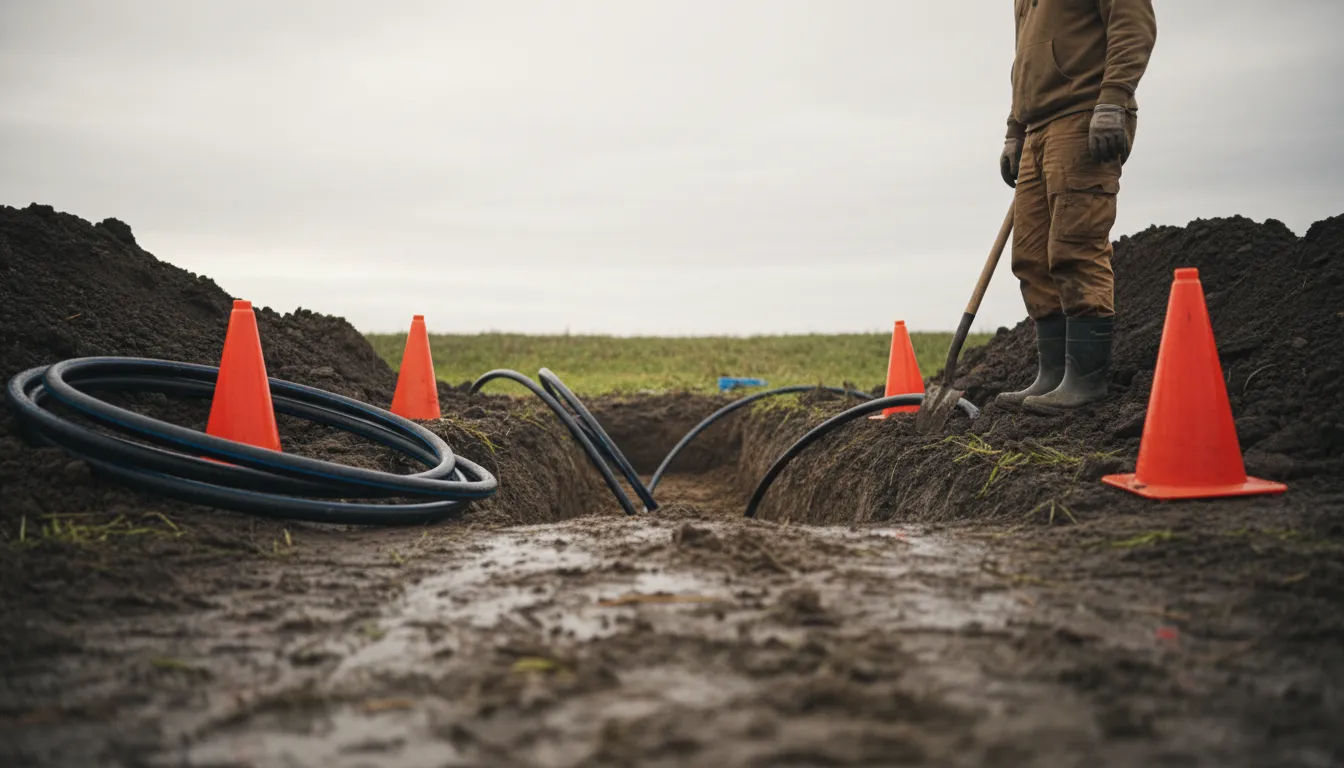
- Horizontal Loops: Pipes are laid in trenches 4 to 6 feet deep. This is often the most cost-effective option but requires a significant amount of open land.
- Vertical Loops: Pipes are inserted into boreholes drilled 150 to 400 feet deep. This is the preferred method for smaller residential lots or where soil conditions are rocky, which is common in parts of Wisconsin 3 4.
The loop design directly impacts system efficiency and cost, making professional assessment non-negotiable.
Understanding Costs, Savings, and Payback
The upfront investment for a geothermal system is higher than for conventional HVAC equipment, but the long-term operational savings are substantial.
Installation Costs: A complete residential geothermal system in Wisconsin typically ranges from $20,000 to $40,000 or more before incentives 5. The drilling and ground loop installation alone can account for about half of the total cost. For example, a 3-ton system suitable for an average home might have a total installed cost in the $20,000 to $25,000 range 6.
Energy Savings: Homeowners can expect to save 40% to 60% on heating and cooling energy bills compared to conventional systems 7 8. Because the system is also highly efficient at cooling, it replaces central air conditioning costs as well.
Payback Period: The combination of energy savings and available financial incentives typically results in a payback period of 5 to 15 years 9. With a ground loop lifespan exceeding 50 years and a heat pump unit lasting 20-25 years, the long-term value is excellent 9.
Find the perfect geothermal heat pump contractors for your needs
Get personalized recommendations and expert advice
Wisconsin Regulations and Permitting
Installing a geothermal system in Wisconsin involves specific regulatory oversight to protect groundwater resources.
DNR Approval: The Wisconsin Department of Natural Resources (DNR) requires approval for geothermal drilling projects that involve 10 or more boreholes, any single borehole deeper than 400 feet, or drilling in sensitive areas like near municipal wells (e.g., in Outagamie or Winnebago Counties). Your installer should handle this permitting process.
Licensed Drillers: State law requires that the drilling for the ground loop heat exchangers be performed by a licensed well driller or pump installer registered with the DNR 10. Reputable geothermal contractors either employ licensed drillers or subcontract this specialized work.
Master Geothermal Installer: For added assurance, look for contractors who have personnel designated as Master Geothermal Installers by the Wisconsin Geothermal Association. This certification signifies advanced training and experience in system design and installation.
Financial Incentives and Rebates
A robust package of incentives significantly reduces the net cost of a geothermal installation in Wisconsin.
Federal Tax Credit: The Inflation Reduction Act provides a 30% federal tax credit on the total installed cost of a qualified geothermal heat pump system. This credit is available through 2032 11 12 13.
Focus on Energy Rebates: Wisconsin's statewide energy program, Focus on Energy, offers rebates for the installation of ENERGY STAR-certified geothermal heat pump systems. The rebate amount can be substantial and is applied directly through your participating contractor 14.
Utility Incentives: Many local electric cooperatives and utilities, such as Eau Claire Energy Cooperative, offer additional rebates or low-interest financing for geothermal installations. It's essential to check with your specific energy provider for current offers.
Net Cost Example: After applying the 30% federal tax credit and available state/utility rebates, the final net investment for a system can be dramatically lower, improving the payback period and return on investment.
Choosing a Qualified Wisconsin Installer
Given the complexity and site-specific nature of geothermal systems, selecting the right professional is paramount. Look for a licensed HVAC contractor with proven experience in geothermal design. They should conduct a detailed load calculation for your home (Manual J) and a site survey before proposing a system. Ask for references from past geothermal projects and verify they work with DNR-licensed drillers. A contractor holding the Master Geothermal Installer designation is a strong indicator of expertise 15. A proper design and quality installation are critical to achieving the promised efficiency, comfort, and longevity.
Frequently asked questions
Sources
Footnotes
-
Geothermal Heat Pumps - Department of Energy - https://www.energy.gov/energysaver/geothermal-heat-pumps ↩
-
Geothermal Heat Pump Guide: Installation Costs, Types And Benefits - https://modernize.com/hvac/heating-repair-installation/heat-pump/geothermal ↩
-
Geothermal System Installation Madison WI - https://www.wohlersheating.com/geothermal-service ↩
-
PSC Heat Pumps - Public Service Commission of Wisconsin - https://psc.wi.gov/Pages/ServiceType/OEI/HeatPumps.aspx ↩
-
Ground Source Heat Pump Cost: How Much Will You Pay in 2025? - https://www.energysage.com/heat-pumps/costs-benefits-geothermal-heat-pumps/ ↩
-
Guide to Geothermal Heat Pumps - https://www.energy.gov/sites/prod/files/guide_to_geothermal_heat_pumps.pdf ↩
-
Geothermal Heat Pumps: Cost and Installation - https://www.energyhomes.org/renewable-technology/geoinstallation.html ↩
-
Why Geothermal Heat Pumps Make a Great Choice for Wisconsin Homeowner - https://comfortbydesign.com/blog/geothermal-for-wisconsin-homeowners/ ↩
-
Geothermal Energy Pros and Cons: Complete Guide 2025 - https://a1solarstore.com/blog/pros-and-cons-of-geothermal-energy-digging-deep.html ↩ ↩2
-
Heat exchange drilling (geothermal systems) | | Wisconsin DNR - https://dnr.wisconsin.gov/topic/Wells/Geothermal.html ↩
-
Geothermal Heat Pumps | Focus on Energy - https://focusonenergy.com/residential/geothermal ↩
-
Available Tax Credits For Geothermal Heat Pumps In 2023 | WI - https://kkomfort.com/available-tax-credits-for-geothermal-heat-pumps-in-2023/ ↩
-
Geothermal - Eau Claire Energy Cooperative - https://www.ecec.com/energy-efficiency/renewable-energy/geothermal ↩
-
Geothermal Energy in Wisconsin - What it is, How It Works ... - https://www.renewwisconsin.org/geothermal-energy-in-wisconsin-2/ ↩
-
Master Geothermal Installer - https://wisgeo.org/master-installer-designation/ ↩