Find the Best Geothermal Heat Pump Contractors for Your Business
No obligation • Fast responses • Nationwide coverage

Why you can trust HVAC Firms
HVAC Firms is a leading United States resource for evaluating HVAC service providers. Our team researches companies, checks credentials, and reviews customer feedback to present clear, unbiased information. Listings and rankings are based on merit, and companies cannot pay to change our editorial content.
Search providers near you
Top Geothermal Heat Pump Contractors in Vineland, New Jersey Ranked
A geothermal heat pump, also known as a ground-source heat pump, is a highly efficient system that uses the earth's stable underground temperature to heat and cool your home. For Vineland residents, this technology offers a powerful way to slash energy bills and reduce environmental impact. This guide explains how these systems work, what installation involves, and how you can find qualified local experts to assess your property for this sustainable upgrade.
How Geothermal Heating and Cooling Works
The core principle behind a geothermal system is remarkably simple: it moves heat rather than creating it. The earth just a few feet below the surface maintains a nearly constant temperature between 50°F and 60°F year-round, regardless of the weather above ground. A geothermal heat pump harnesses this stable thermal energy through a process of continuous heat exchange.
In the winter, a water-based solution circulates through a loop of pipes buried in your yard, absorbing the earth's natural warmth. This warmed fluid is brought to an indoor heat pump unit, which concentrates the heat and distributes it throughout your home via your existing ductwork or radiant floor system 1 2. In the summer, the process reverses: the system extracts heat and humidity from your indoor air and transfers it into the cooler ground loop, providing air conditioning 3. This efficient transfer of energy is why geothermal systems can reduce heating and cooling costs by up to 70% compared to traditional HVAC systems.
Common Ground-Source System Types for Vineland Properties
The underground pipe network, or "ground loop," is the heart of the system. The right configuration for your Vineland home depends on your lot size, soil composition, and local geology. The most common type installed in New Jersey is the closed-loop system, which uses a continuous, sealed circuit of pipes.
- Vertical Closed-Loop: This is often the preferred choice for residential properties in more densely populated areas or those with limited yard space. Contractors use a drilling rig to bore holes typically 150 to 400 feet deep. U-shaped pipes are inserted into each borehole, which are then connected at the surface and backfilled. This method minimizes surface disruption and is well-suited to the varied geology found in New Jersey.
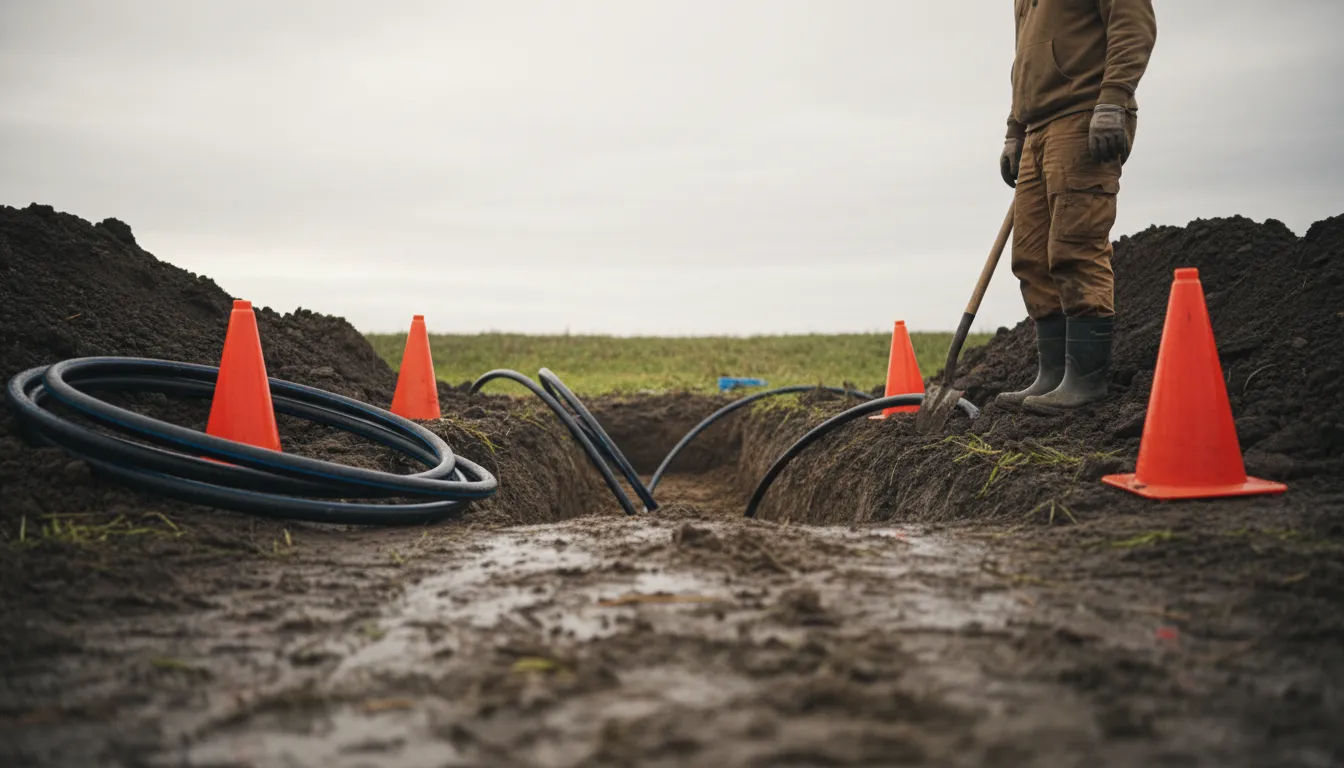
- Horizontal Closed-Loop: If you have ample land, a horizontal loop can be a cost-effective option. Contractors excavate trenches four to six feet deep and lay pipes in a series of parallel runs. While generally less expensive to install than vertical loops, this method requires significantly more land area 4.
- Open-Loop System: This less common configuration uses groundwater from a well as the direct heat exchange fluid. After circulating through the heat pump, the water is discharged back into a second well or a suitable surface body of water. Its feasibility is highly dependent on local water availability, quality, and regulations, making it less frequently used in many New Jersey settings.
The Geothermal Installation Process: What to Expect
Installing a geothermal heating and cooling system is a significant project that requires specialized expertise. Understanding the steps can help you prepare.
- Comprehensive Site Assessment: A qualified installer will begin with a thorough evaluation of your property. They will assess your soil and rock composition, available land, your home's current heating and cooling loads, and the layout of your existing ductwork or radiant system. This assessment is critical for determining the optimal loop type and size 5.
- Loop Field Installation: For a vertical system, a drilling rig will be brought in to create the necessary boreholes. For a horizontal system, a backhoe will dig the trenches. The high-density polyethylene pipes are then placed, connected, and pressure-tested to ensure there are no leaks before the holes or trenches are carefully backfilled.
- Heat Pump and Distribution Connection: The indoor heat pump unit, which is typically about the size of a traditional furnace, is installed in your basement, garage, or mechanical closet. It is connected to the ground loop and to your home's interior distribution system-whether that's forced-air ducts, hydronic tubing for radiant floors, or a combination system 6.
- System Startup and Commissioning: Once everything is connected, the system is charged with fluid, powered up, and meticulously tested. The contractor will calibrate the controls, check the refrigerant charge, and ensure the entire system is operating at peak efficiency before handing it over to you 7.
Find the perfect geothermal heat pump contractors for your needs
Get personalized recommendations and expert advice
Energy Savings, Costs, and Long-Term Value in Vineland
The upfront investment for a geothermal system is typically higher than for a conventional air-source heat pump or furnace. However, the dramatic reduction in operating costs creates compelling long-term savings. Homeowners can see their heating, cooling, and even hot water costs drop by up to 70% 8 9. With these savings, the payback period-the time it takes for energy savings to equal the initial investment-often falls between 5 and 10 years, heavily influenced by local energy prices and available financial incentives 10 11.
The durability of these systems further enhances their value. The indoor heat pump components are designed to last 20 years or more, while the underground polyethylene piping often carries warranties of 50 years and can potentially last for generations 12. When you combine substantial utility savings with exceptional longevity and increased home comfort, a geothermal heat pump becomes a wise investment in your property's future.
Key Considerations for Vineland Homeowners
Before moving forward, there are a few local factors to keep in mind. First, the success and efficiency of your system are directly tied to Vineland's specific geology and soil thermal properties. A professional site evaluation is non-negotiable 13. Second, take full advantage of financial incentives. New Jersey offers supportive programs, such as rebates through the NJ Clean Energy Program, and federal tax credits may also apply, significantly reducing the net installed cost 14. Always verify the latest incentives with your installer or through official state websites.
Choosing an experienced, certified installer is the most critical step. Look for contractors who are accredited by organizations like the International Ground Source Heat Pump Association (IGSHPA) and have a proven track record with local installations. They will navigate permits, drilling, and system design to ensure you get a reliable, high-performance geothermal system tailored to your Vineland home.
Frequently asked questions
Sources
Footnotes
-
NJDEP| Clean Buildings | GSHP - https://dep.nj.gov/cleanbuildings/gshp/ ↩
-
All You Need to Know About Home Geothermal Heating & ... - https://dandelionenergy.com/all-you-need-to-know-about-home-geothermal-heating-cooling ↩
-
How do geothermal heat pumps work step by step? - Miami Heat Pump - https://www.miamihp.com/how-do-geothermal-heat-pumps-work-step-by-step/ ↩
-
What Does A Geothermal System Cost? | Galloway, NJ - https://www.iwantcomfortnow.com/what-does-a-geothermal-system-cost/ ↩
-
Ground Source Heat Pumps: Distribution System Types and ... - https://goclean.masscec.com/article/gshp-distribution-system-types-and-configurations/ ↩
-
Geothermal Heat Pump Installation: What To Expect For Your Property - https://jomory.com/geothermal-heat-pump-installation-what-to-expect-for-your-property/ ↩
-
Geothermal Installation Steps Explained - https://ultrageothermal.com/geothermal-installation-steps-explained/ ↩
-
Geothermal Heat Pumps - Department of Energy - https://www.energy.gov/energysaver/geothermal-heat-pumps ↩
-
New Jersey Ground Source Heat Pump Baseline Report - https://dep.nj.gov/wp-content/uploads/cleanenergy/new-jersey-ground-source-heat-pump-baseline-report_final.pdf ↩
-
How Does a Geothermal System Work? - ClimateMaster - https://www.climatemaster.com/homeowner/side-links/how-it-works ↩
-
5 Things You Should Know about Geothermal Heat Pumps - https://www.energy.gov/cmei/articles/5-things-you-should-know-about-geothermal-heat-pumps ↩
-
Guide to Geothermal Heat Pumps - https://www.energy.gov/sites/prod/files/guide_to_geothermal_heat_pumps.pdf ↩
-
Geothermal Heating and Cooling - Open Energy Information - https://openei.org/wiki/GeoBridge/Heating_and_Cooling ↩
-
NR Geothermal Heat Pumps - NJ Green Building Manual - https://greenmanual.rutgers.edu/nr-geothermal-heat-pumps/ ↩