Find the Best Geothermal Heat Pump Contractors for Your Business
No obligation • Fast responses • Nationwide coverage

Why you can trust HVAC Firms
HVAC Firms is a leading United States resource for evaluating HVAC service providers. Our team researches companies, checks credentials, and reviews customer feedback to present clear, unbiased information. Listings and rankings are based on merit, and companies cannot pay to change our editorial content.
Search providers near you
Top Geothermal Heat Pump Contractors in Paterson, New Jersey Ranked
A geothermal heat pump, or ground-source heat pump, is a highly efficient heating and cooling system that uses the earth's constant temperature to regulate your home's climate. For Paterson residents, this technology offers a powerful way to reduce energy bills and environmental impact by tapping into a renewable resource right beneath your property. This guide will help you understand how these systems work, their benefits, and what to consider when looking for a qualified local installer to handle your project.
MDL Electric Cooling & Heating
4 Harrison Ave, West Orange, NJ 07052
MDL Electric Cooling & Heating is a family-owned company serving Newark, NJ, and the surrounding North Jersey area. With over 30 years of experience, they provide a wide range of HVAC and electrical services including installation, repair, and maintenance of air conditioning, furnaces, heat pumps, boilers, and geothermal heat pumps. Their team is EPA certified and offers advanced solutions such as inverter-driven compressors and natural gas conversions. MDL Electric Cooling & Heating is available 24/7 to support residential and commercial customers with licensed and trained technicians.
Geothermal Works, Inc.
New York, NY
Geothermal Works, Inc. is a geothermal heat pump contractor based in New York, NY. They specialize in installing efficient geothermal heating and cooling systems that transfer heat energy between the ground and buildings. This technology helps reduce energy use and environmental impact. The company shares extensive knowledge about geothermal systems and supports clients through the installation process.
Lightning Mechanical LLC
65 Newark Way, Maplewood, NJ 07040
Lightning Mechanical LLC is an HVAC service provider based in Newark, NJ, offering repair, installation, and maintenance for residential and commercial heating and cooling systems. They specialize in a wide range of equipment including air conditioners, furnaces, heat pumps, boilers, and Daikin VRV systems. The company fabricates custom sheet metal in-house and serves clients throughout the New York metro area, including Newark. Since 2005, Lightning Mechanical has provided factory-trained technicians skilled in servicing multiple HVAC brands and advanced systems like Variable Refrigerant Volume (VRV). They also offer rapid response teams for mission-critical facilities and maintain an extensive inventory of Daikin VRV parts for quick repairs.
How Geothermal Systems Work: Tapping into the Earth's Stable Energy
Unlike traditional air-source heat pumps or furnaces that battle the fluctuating outdoor air, a geothermal system leverages the earth's remarkably stable temperature. Just a few feet below the surface, the ground in New Jersey maintains a consistent temperature between 45°F and 70°F year-round 1. This provides a reliable thermal battery for your home.
The process involves three key components:
- Ground Loop: A sealed network of pipes, buried in your yard, circulates a water-based solution. In winter, this fluid absorbs the earth's stored heat. In summer, it carries excess heat from your home back into the ground 2.
- Heat Pump Unit: Located inside your home, this unit concentrates the low-grade heat from the loop fluid to warm your house. In cooling mode, it works in reverse, extracting heat from your indoor air and rejecting it into the loop.
- Distribution System: The conditioned air is delivered throughout your home using your existing ductwork or a ductless mini-split system.
This elegant exchange of heat with the ground, rather than the outside air, is what makes ground-source heat pumps so exceptionally efficient.
Types of Ground Loops for Paterson Properties
The buried pipe system, or ground loop, is the heart of the installation. The right type for your Paterson home depends on your lot size, soil conditions, and budget.
Closed-Loop Systems
This is the most common type of geothermal installation in New Jersey. The fluid within the pipes never contacts the ground directly.
- Vertical Closed-Loop: Ideal for smaller residential lots common in many Paterson neighborhoods, this system uses a drilling rig to create boreholes 150 to 450 feet deep. U-shaped pipes are inserted into each hole. While drilling costs can be higher, this method minimizes landscape disruption and is very effective.
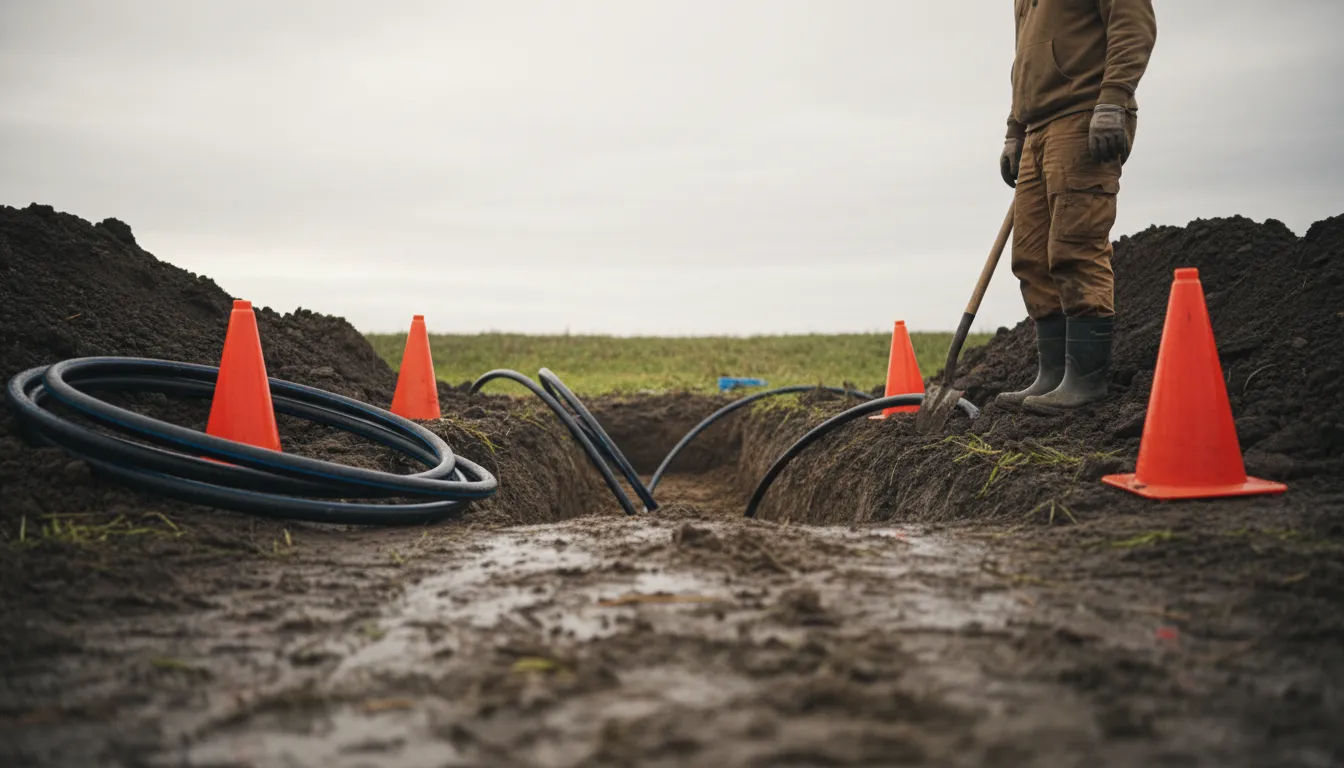
- Horizontal Closed-Loop: This requires more land area. Contractors dig trenches 4 to 6 feet deep and lay pipes in a series of loops. It's often less expensive than vertical drilling if space is available, but it involves more significant excavation of your yard 3.
Open-Loop Systems
This system uses groundwater from a well as the heat exchange fluid, circulating it directly through the heat pump before discharging it. While sometimes less costly to install, open-loop systems are less common in New Jersey due to strict groundwater regulations and potential water quality issues 4 5. They require an abundant, clean water source and appropriate discharge method, making them a less frequent choice for local installations.
The Installation Process: What to Expect
Installing a geothermal heating and cooling system is a significant project that requires specialized expertise. Understanding the steps can help you prepare.
- Site Evaluation and Design: A qualified installer will assess your property, including soil composition, lot size, and existing HVAC layout. They will design a system sized correctly for your home's heating and cooling loads.
- Loop Installation: This is the major excavation phase. For a vertical system, a drilling rig will be brought in. For a horizontal system, a backhoe will dig the necessary trenches. Expect some temporary disruption to your landscaping 6.
- Loop Connection and Pressure Testing: The pipe sections are connected, buried, and tested to ensure the loop is perfectly sealed.
- Indoor Unit Installation: The geothermal heat pump unit is installed inside your home, typically in a basement, utility room, or garage. It is connected to your ductwork or to new ductless heads.
- System Startup and Commissioning: The loop is filled, the system is charged, and all components are tested to ensure efficient and safe operation.
Find the perfect geothermal heat pump contractors for your needs
Get personalized recommendations and expert advice
Long-Term Benefits and Financial Considerations
The decision to install a geothermal system is an investment in long-term comfort, savings, and sustainability.
Dramatic Energy Savings
The primary benefit is drastically reduced energy consumption. Geothermal heat pumps can cut your heating and cooling costs by 50% to 65% or more compared to conventional systems like electric resistance heating or standard air conditioners 7 8 9. By moving heat instead of creating it through combustion, they achieve remarkably high efficiencies, often over 400%.
Understanding Costs and Payback
The upfront cost for a geothermal system is higher than for a traditional HVAC system, primarily due to the ground loop excavation and drilling 10. However, this cost is offset by:
- Lower Operating Costs: Your significantly reduced monthly utility bills start saving you money immediately.
- Federal and State Incentives: Tax credits and rebates can substantially lower the net installed cost. It's crucial to discuss current incentives with your installer.
- Exceptional Longevity: The underground loop is typically warranted for 50 years and can last generations. The indoor heat pump unit often lasts 20 years or more, much longer than conventional outdoor condensing units.
- Increased Home Value: This modern, efficient system is an attractive feature for future homebuyers.
For many homeowners, the payback period-the time it takes for energy savings to equal the initial investment-can range from 5 to 10 years, after which you enjoy essentially free heating and cooling for decades.
Environmental and Comfort Advantages
Beyond savings, geothermal systems offer quiet operation, eliminate the need for an outdoor condenser unit (reducing noise and visual impact), and provide perfectly even, draft-free heating and cooling year-round. They also dehumidify more effectively than standard air conditioners in the summer. By using electricity and the earth's renewable thermal energy, they drastically reduce your home's carbon footprint.
Is a Geothermal System Right for Your Home?
Geothermal technology is a superb option for many Paterson homes, particularly those undergoing major renovations, building additions, or constructing new homes. It's an ideal solution for homeowners planning to stay in their homes long enough to reap the full financial benefits and who are motivated by long-term savings, comfort, and environmental stewardship. Consulting with an experienced local installer is the best way to get a precise assessment for your specific property.
Frequently asked questions
Sources
Footnotes
-
About Geothermal - GeoComfort - https://geocomfort.com/about-geothermal ↩
-
Ground Source (Geothermal) Centrally Ducted System for a ... - https://cleanheat.ny.gov/ground-source-heat-pump-for-a-one-story-home/ ↩
-
Geothermal Installation Steps Explained - https://ultrageothermal.com/geothermal-installation-steps-explained/ ↩
-
NJDEP| Clean Buildings | GSHP - https://dep.nj.gov/cleanbuildings/gshp/ ↩
-
Geothermal heat pumps: The ultimate guide to ground-source ... - https://termo-plus.com/blog/geothermal-ultimate-guide-to-ground-source-heat-pumps/ ↩
-
All You Need to Know About Home Geothermal Heating & ... - https://dandelionenergy.com/all-you-need-to-know-about-home-geothermal-heating-cooling ↩
-
Ground Source (Geothermal) Centrally Ducted System for a Two- ... - https://cleanheat.ny.gov/ground-source-heat-pump-for-a-two-story-home/ ↩
-
5 Things You Should Know about Geothermal Heat Pumps - https://www.energy.gov/cmei/articles/5-things-you-should-know-about-geothermal-heat-pumps ↩
-
Geothermal Heat Pumps - Department of Energy - https://www.energy.gov/energysaver/geothermal-heat-pumps ↩
-
Geothermal Heat Pumps - EnergySmart CNY - https://www.energysmartcny.org/heat-pumps/geothermal/ ↩