
Find the Best Geothermal Heat Pump Contractors for Your Business
No obligation • Fast responses • Nationwide coverage

Why you can trust HVAC Firms
HVAC Firms is a leading United States resource for evaluating HVAC service providers. Our team researches companies, checks credentials, and reviews customer feedback to present clear, unbiased information. Listings and rankings are based on merit, and companies cannot pay to change our editorial content.
Search providers near you
Top Geothermal Heat Pump Contractors in Hillsborough, New Jersey Ranked
Geothermal heat pumps, also known as ground-source heat pump (GSHP) systems, offer a highly efficient method for heating and cooling your Hillsborough home by leveraging the earth's stable underground temperature. This sustainable technology can significantly reduce energy bills and environmental impact compared to traditional HVAC systems. This guide explains how these systems work locally, what to expect during installation, and how you can find qualified professionals in the Hillsborough area to explore this option for your property.
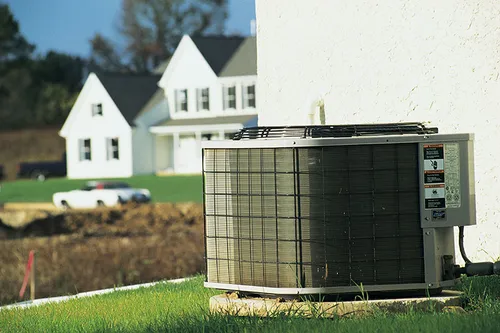
How Geothermal Systems Work in Our Climate
The principle behind a geothermal heating and cooling system is elegant in its simplicity. Instead of generating heat by burning fuel or using electricity to cool air, a ground-source heat pump moves existing heat. In the winter, it extracts heat from the ground and transfers it into your home. In the summer, the process reverses, pulling heat from your home and depositing it into the cooler earth.
This is possible because just a few feet below the surface, the earth in New Jersey maintains a relatively constant temperature between 50°F and 60°F year-round. This stable thermal mass acts as a giant, renewable battery for your home's comfort 1. The system's remarkable efficiency comes from this temperature differential; it typically moves 3 to 5 units of thermal energy for every 1 unit of electrical energy it consumes to run the pump and compressor.
Types of Ground-Source Systems for Hillsborough Properties
Not all geothermal installations are the same. The right system for your home depends on your lot size, soil composition, and budget. The two primary categories are closed-loop and open-loop systems.
Closed-Loop Systems are by far the most common type installed in New Jersey residential properties. In these systems, a mixture of water and environmentally safe antifreeze is continuously circulated through a network of durable, high-density polyethylene pipes buried in the ground.
- Vertical Closed-Loop: This is the most frequent choice for Hillsborough homes, especially for retrofits or properties with limited yard space. A drilling rig bores holes 150 to 450 feet deep. U-shaped pipe loops are inserted into each borehole, which are then sealed with a special grout to ensure good thermal conductivity. This vertical approach minimizes landscape disruption.
- Horizontal Closed-Loop: This method requires more land area. Trenches are dug 4 to 6 feet deep in a series of long runs or a slinky-coil pattern. The piping is laid in these trenches and then backfilled 2 3. This can be a cost-effective option if you have ample, unobstructed land.
Open-Loop Systems utilize groundwater from a well as the direct heat exchange fluid. After passing through the heat pump, the water is discharged, often back into a second well or a suitable surface drainage. These systems are less common in New Jersey due to stricter environmental regulations concerning groundwater use and discharge.
The Installation Process: What Homeowners Can Expect
Installing a geothermal system is a significant project that requires expert planning and execution. Here's a typical step-by-step overview:
- Home Assessment and System Sizing: A qualified installer will conduct a detailed evaluation of your home. This includes calculating heating and cooling loads based on square footage, insulation levels, window quality, and air leakage. Proper sizing is critical for efficiency, comfort, and system longevity.
- Site Evaluation and Loop Design: The installer will assess your property to determine the best loop type (vertical vs. horizontal). They'll consider soil and rock conditions (geology), available space, well locations, and landscaping to design an effective ground loop system.
- Ground Loop Installation: This is the major outdoor phase. For a vertical system, a drill rig will be brought in to create the boreholes. For a horizontal system, a backhoe or trencher will dig the necessary trenches. The pipes are then placed, connected, and pressure-tested to ensure there are no leaks before being sealed in the ground.
- Indoor Unit Connection: The underground pipes are connected to the heat pump unit located inside your home, typically in a basement, utility room, or garage. This unit, which is compact and quiet, then connects to your home's existing ductwork to distribute conditioned air, or to a hydronic system for radiant floor heating.
Find the perfect geothermal heat pump contractors for your needs
Get personalized recommendations and expert advice
Understanding Costs, Savings, and Financial Incentives
The upfront investment for a geothermal heat pump system is higher than for a conventional air-source system or furnace. This cost primarily stems from the ground loop excavation or drilling. However, this initial premium is offset by dramatically lower operating costs and available financial incentives.
Homeowners often see reductions of up to 65% on their heating and cooling bills 4 5 6. With these substantial energy savings, the system can often pay for itself through lower utility bills within a 5- to 10-year period 4 6. Furthermore, the indoor components of a geothermal system have a long lifespan, often exceeding 20 years, while the underground piping can last for 50 years or more 6.
To make geothermal more accessible, several incentives are available:
- Federal Tax Credits: The federal government offers a significant tax credit for the installation of qualified geothermal heat pump systems.
- State of New Jersey Support: The New Jersey Department of Environmental Protection (NJDEP) actively promotes ground-source heat pump technology as part of its clean energy initiatives, and various state-level programs or incentives may be available 7 8.
It's essential to consult with your installer and a tax professional about the specific incentives for which you may qualify at the time of your installation.
Key Local Considerations for Hillsborough Residents
Before moving forward with a geothermal system, consider these factors specific to our area:
- Property Characteristics: The size and layout of your lot are the primary determinants for your loop field type. Smaller or heavily landscaped lots typically necessitate vertical drilling.
- Soil and Geology: The composition of the soil and bedrock in Hillsborough can affect drilling speed, difficulty, and cost. A reputable installer will understand local conditions 9 10.
- Choosing the Right Professional: This is the most critical step. Look for installers with specific experience in geothermal or ground-source heat pump systems. They should be properly licensed, insured, and able to provide references from local installations. Proper design is as important as quality installation for system performance 11.
Frequently asked questions
Sources
Footnotes
-
Geothermal Heating and Cooling - https://geothermal.colorado.gov/geothermal-heating-and-cooling ↩
-
Geothermal heating & cooling, heat pumps, heat exchange ... - https://aztechgeo.com/residential-geothermal/how-it-works/ ↩
-
Geothermal Heat Pumps, Explained - Bosch Home Comfort - https://www.bosch-homecomfort.com/us/en/residential/connect/blog/geothermal-heat-pumps-go-green-save-green/ ↩
-
Geothermal Heat Pumps - EnergySmart CNY - https://www.energysmartcny.org/heat-pumps/geothermal/ ↩ ↩2
-
5 Things You Should Know about Geothermal Heat Pumps - https://www.energy.gov/cmei/articles/5-things-you-should-know-about-geothermal-heat-pumps ↩
-
Geothermal Heat Pumps - Department of Energy - https://www.energy.gov/energysaver/geothermal-heat-pumps ↩ ↩2 ↩3
-
NJDEP| Clean Buildings | GSHP - https://dep.nj.gov/cleanbuildings/gshp/ ↩
-
New Jersey Ground Source Heat Pump Baseline Report - https://dep.nj.gov/wp-content/uploads/cleanenergy/new-jersey-ground-source-heat-pump-baseline-report_final.pdf ↩
-
Geothermal heat pumps: The ultimate guide to ground-source ... - https://termo-plus.com/blog/geothermal-ultimate-guide-to-ground-source-heat-pumps/ ↩
-
Geothermal Heating & Cooling Systems in South Jersey - https://connmechanical.com/services/geothermal/ ↩
-
Guide to Geothermal Heat Pumps - https://www.energy.gov/sites/prod/files/guide_to_geothermal_heat_pumps.pdf ↩