Find the Best Geothermal Heat Pump Contractors for Your Business
No obligation • Fast responses • Nationwide coverage

Why you can trust HVAC Firms
HVAC Firms is a leading United States resource for evaluating HVAC service providers. Our team researches companies, checks credentials, and reviews customer feedback to present clear, unbiased information. Listings and rankings are based on merit, and companies cannot pay to change our editorial content.
Search providers near you
Top Geothermal Heat Pump Contractors in Hamilton, New Jersey Ranked
Geothermal heat pumps, also known as ground-source heat pumps, offer a remarkably efficient way to heat and cool your Hamilton home by tapping into the stable temperatures underground. This technology matters because it can dramatically reduce your energy bills and environmental footprint compared to conventional HVAC systems. For Hamilton residents, finding a qualified local installer is key to navigating site assessments, loop installation, and leveraging available incentives to make this long-term investment pay off.
Carney All Seasons
1100 Industrial Blvd, Southampton, PA 18966
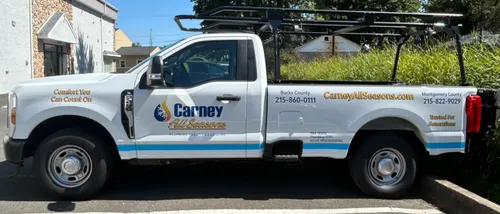
Carney All Seasons is a full-service HVAC and plumbing company serving Philadelphia, PA. They provide installation, repair, and maintenance for air conditioning, heating systems including furnaces, geothermal heat pumps, and HVAC tune-ups. The company also offers plumbing services such as water heater and sump pump installation and repair, as well as sewer and water line services. Carney All Seasons supports environmentally friendly geothermal systems and installs whole-house generators to help during power outages. Their team is EPA certified and experienced in working with high-efficiency and ENERGY STAR models.
Laury Heating Cooling & Plumbing
923 Haddonfield Rd, Cherry Hill Township, NJ 08002
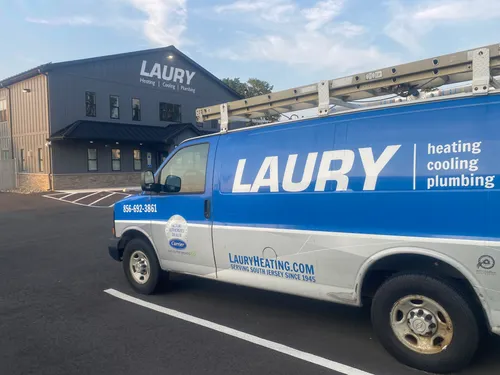
Laury Heating Cooling & Plumbing is a family-owned HVAC and plumbing company serving Philadelphia, PA, and South Jersey communities since 1945. They provide a range of services including furnace and AC repair, HVAC system installation, heat pump and geothermal system installation, as well as plumbing repairs and water heater services. The company is known for handling both traditional and energy-efficient systems, offering free estimates and flexible financing options. Their certified technicians are experienced in modern HVAC technologies and maintain a commitment to quality workmanship. Laury Heating Cooling & Plumbing also offers priority scheduling for members, ensuring faster service during peak seasons or emergencies.
D&L Custom Services, LLC
600 Deer Rd STE 5, Cherry Hill Township, NJ 08034
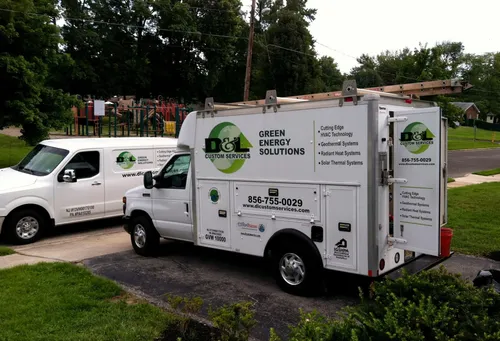
D&L Custom Services, LLC is a family-operated HVAC company serving Philadelphia, PA, and South Jersey, including Burlington, Camden, and Gloucester counties. Since 1979, they have specialized in residential and light commercial heating and cooling installations, with a focus on green and energy-efficient technologies such as geothermal and air source heat pumps. They offer a range of services including installation, repair, and tune-ups for air conditioners, furnaces, boilers, heat pumps, and mini splits. Their technicians are factory-trained and certified, and the company is fully licensed and insured.
Mount Laurel Heating & Cooling
7 Sherwood Ave, Mt Laurel Township, NJ 08054
Mount Laurel Heating & Cooling is a heating and air conditioning company serving Philadelphia, PA. They provide a range of HVAC services including installation and repair of air conditioners, furnaces, heat pumps, boilers, mini splits, and geothermal heat pumps. The company also offers HVAC tune-up services to maintain system efficiency. Their expertise covers both residential and commercial HVAC systems, ensuring comprehensive climate control solutions.
Fishers Trade Service LLC
324 Delaware Ave, Palmyra, NJ 08065
Fishers Trade Service LLC is an HVAC contractor based near Philadelphia, PA, specializing in heating, cooling, and geothermal heat pump services. They serve South Jersey and focus on geothermal heat pump installation, repair, and conversions, along with heater and air conditioner repair and replacement. The company is IGSHPA certified and a Bosch Geothermal Certified Installer, providing custom HVAC system design and inspections. With over 20 years of experience, Fishers Trade Service uses company employees rather than subcontractors and offers emergency services.
How Geothermal Systems Work in Hamilton
The principle behind a geothermal heating and cooling system is elegant in its simplicity. Just a few feet below the surface, the Earth in New Jersey maintains a relatively constant temperature between 50°F and 60°F year-round. A geothermal system uses this stable ground temperature as a renewable energy source. In the winter, it extracts heat from the earth to warm your home. In the summer, the process reverses, pulling heat from your home and transferring it back into the cooler ground1 2.
This is achieved through a ground loop-a network of pipes buried in your yard-and an indoor heat pump unit. A water or antifreeze solution circulates through the loop, absorbing or dissipating heat from the soil. The indoor unit then concentrates that thermal energy to provide comfortable air through your home's ductwork or another distribution system 3. Because the system moves existing heat rather than generating it by burning fuel, it operates with exceptional efficiency.
Types of Ground Loops for New Jersey Properties
Choosing the right type of ground loop is a critical decision that depends on your property's characteristics. The two main categories are closed-loop and open-loop systems, with closed-loop being the most common choice for Hamilton homes.
Closed-Loop Systems circulate an antifreeze solution through a sealed, continuous pipe. There are two primary configurations:
- Vertical Closed-Loop: This is often the best fit for smaller residential lots in Hamilton. Contractors use a drilling rig to bore holes 200 to 500 feet deep, inserting U-shaped loops of pipe into each hole 4. While drilling costs can be higher, this method requires minimal surface area.
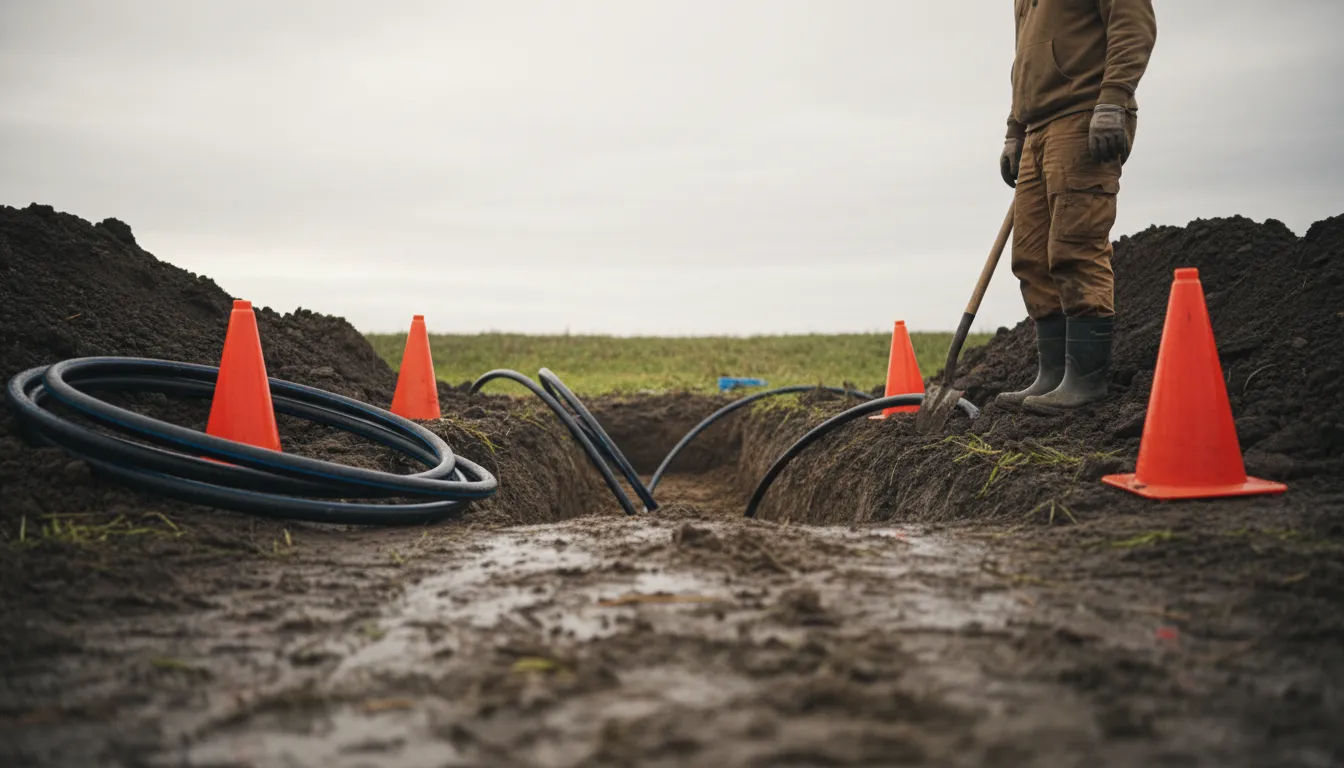
- Horizontal Closed-Loop: If you have ample land, this can be a cost-effective option. Excavators dig trenches four to six feet deep and several hundred feet long to lay loops of pipe horizontally 5. This method is less expensive than drilling but requires a significant amount of open space.
Open-Loop Systems utilize groundwater directly from a well. Water is pumped through the heat pump and then discharged back into a second well or a suitable surface body of water. These systems are less common today due to potential challenges with water quality, quantity, and local regulations regarding water discharge 6.
The Installation Process: What to Expect
Installing a geothermal system is a significant project that requires specialized expertise. Understanding the steps can help you prepare.
- Site Assessment: A qualified installer will evaluate your property's soil composition, bedrock depth, and available space. This assessment determines the most feasible and efficient loop type and size for your home's heating and cooling loads.
- Loop Installation: This is the major earthwork phase. For a vertical system, a drilling rig will create the boreholes. For a horizontal system, an excavator will dig the trenches. The high-density polyethylene pipe is then placed and the trenches or boreholes are backfilled.
- Plumbing and Indoor Unit Installation: The ground loops are connected to the manifold and pipes are run into your home to the location of the indoor heat pump unit. The geothermal heat pump, which resembles a traditional furnace, is installed and connected to your existing ductwork or a new air distribution system.
- Commissioning: Finally, the system is filled, purged of air, pressurized, and tested. The contractor will start up the system, ensure it's operating correctly, and balance the airflow for optimal comfort throughout your home.
Key Considerations for Hamilton Homeowners
Several local factors can influence the design, cost, and feasibility of your geothermal project.
- Land Availability: The horizontal trenching method requires a large, clear plot of land. If your lot is small or heavily landscaped, vertical drilling is likely the only viable closed-loop option, though it may involve higher upfront costs for the drilling rig work.
- Geology and Soil Conditions: The composition of the ground directly impacts installation. Sandy soil is ideal for trenching and heat transfer, while dense clay or shallow bedrock can increase the difficulty and cost of drilling7.
- Local Regulations and Permits: Installing a ground-source heat pump system typically requires building permits. If your system involves any well drilling or water use, it will also need permits from the New Jersey Department of Environmental Protection (NJDEP). A reputable local installer will handle this permitting process.
Find the perfect geothermal heat pump contractors for your needs
Get personalized recommendations and expert advice
The Financial and Environmental Payoff
The upfront investment for a geothermal heat pump system is higher than for a conventional air conditioner and furnace. However, the long-term savings and benefits are substantial.
- Significant Energy Savings: By leveraging the earth's consistent temperature, geothermal systems operate with much higher efficiency. Homeowners typically see a 30% to 70% reduction in their heating and cooling energy consumption, which translates directly to lower utility bills 8 9.
- Payback Period and Incentives: The combination of energy savings and financial incentives can lead to a payback period often estimated between 5 and 10 years10 11. A major incentive is the federal Residential Clean Energy Tax Credit, which currently offers a 30% credit on qualified geothermal system installations, including labor and site work12. This can significantly reduce the net cost.
- Durability and Longevity: The underground loop system is incredibly durable, with a lifespan often exceeding 50 years. The indoor heat pump unit typically lasts 20 to 25 years-longer than the average conventional furnace or air conditioner. This longevity means decades of reliable, low-cost comfort.
Maintenance and Performance
One of the advantages of a geothermal system is its relatively low maintenance requirements. The indoor components require similar basic maintenance as a standard HVAC system, such as checking air filters and ensuring coils are clean. The buried ground loop is virtually maintenance-free. To ensure peak performance and efficiency, it's wise to have a professional technician perform an annual check-up of the heat pump unit and overall system operation.
Frequently asked questions
Sources
Footnotes
-
Geothermal Heat Pumps - Department of Energy - https://www.energy.gov/energysaver/geothermal-heat-pumps ↩
-
Geothermal Heating & Cooling - Department of Energy - https://www.energy.gov/eere/geothermal/geothermal-heating-cooling ↩
-
Municipal Geothermal Energy System Why is it important? Who should lead and be involved with this action? Timeframe - https://www.sustainablejersey.com/actions/?type=1336777436&tx_sjcert_action%5BactionObject%5D=110&tx_sjcert_action%5Baction%5D=getPDF&tx_sjcert_action%5Bcontroller%5D=Action&cHash=06757621fed9aef4fa632d3cb6a6c106 ↩
-
All You Need to Know About Home Geothermal Heating & ... - https://dandelionenergy.com/all-you-need-to-know-about-home-geothermal-heating-cooling ↩
-
Ground-Source Heat Pumps | Building America Solution Center - https://basc.pnnl.gov/resource-guides/ground-source-heat-pumps ↩
-
New Jersey Ground Source Heat Pump Baseline Report - https://dep.nj.gov/wp-content/uploads/cleanenergy/new-jersey-ground-source-heat-pump-baseline-report_final.pdf ↩
-
NJDEP| Clean Buildings | GSHP - https://dep.nj.gov/cleanbuildings/gshp/ ↩
-
Geothermal Heat Pumps - EnergySmart CNY - https://www.energysmartcny.org/heat-pumps/geothermal/ ↩
-
Geothermal Heat Pumps - Department of Energy - https://www.energy.gov/energysaver/geothermal-heat-pumps ↩
-
5 Things You Should Know about Geothermal Heat Pumps - https://www.energy.gov/cmei/articles/5-things-you-should-know-about-geothermal-heat-pumps ↩
-
NR Geothermal Heat Pumps - NJ Green Building Manual - https://greenmanual.rutgers.edu/nr-geothermal-heat-pumps/ ↩
-
Guide to Geothermal Heat Pumps - https://www.energy.gov/sites/prod/files/guide_to_geothermal_heat_pumps.pdf ↩