Find the Best Geothermal Heat Pump Contractors for Your Business
No obligation • Fast responses • Nationwide coverage

Why you can trust HVAC Firms
HVAC Firms is a leading United States resource for evaluating HVAC service providers. Our team researches companies, checks credentials, and reviews customer feedback to present clear, unbiased information. Listings and rankings are based on merit, and companies cannot pay to change our editorial content.
Search providers near you
Top Geothermal Heat Pump Contractors in Gloucester, New Jersey Ranked
A geothermal heat pump is a highly efficient heating and cooling system that uses the earth's constant underground temperature to regulate your home's climate. For homeowners in Gloucester, this technology offers a path to significant energy savings and reduced environmental impact. This guide explains how these ground-source systems work locally, what installation involves, and how you can find qualified professionals to assess your property.
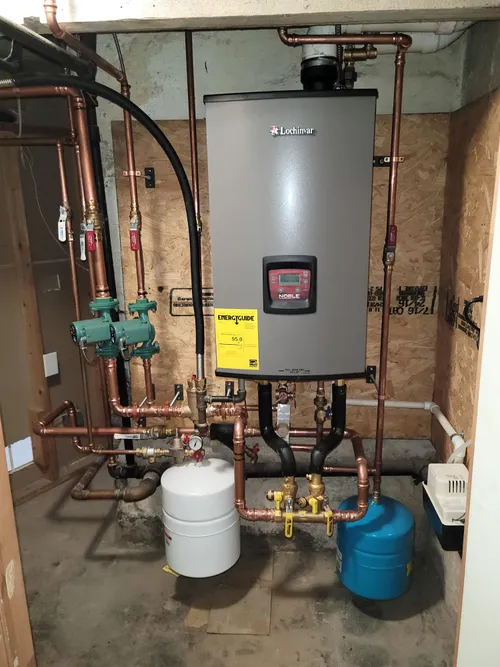
Comfort Home Heating and Cooling
1035 Milmont Ave, Swarthmore, PA 19081
Comfort Home Heating and Cooling is an HVAC company serving Philadelphia, PA, and the surrounding Delaware County area. They provide a range of heating and cooling services including furnace, air conditioning, heat pump, mini-split, and geothermal heat pump installation and repair. Their team handles thermostat installation, indoor air quality solutions, and HVAC tune-ups, ensuring systems operate efficiently. With over 15 years of industry experience, Comfort Home Heating and Cooling employs licensed professionals who perform all work without subcontractors, offering warranties on labor and equipment. They are known for fabricating parts on-site and providing after-hours service when needed.
Laury Heating Cooling & Plumbing
923 Haddonfield Rd, Cherry Hill Township, NJ 08002
Laury Heating Cooling & Plumbing is a family-owned HVAC and plumbing company serving Philadelphia, PA, and South Jersey communities since 1945. They provide a range of services including furnace and AC repair, HVAC system installation, heat pump and geothermal system installation, as well as plumbing repairs and water heater services. The company is known for handling both traditional and energy-efficient systems, offering free estimates and flexible financing options. Their certified technicians are experienced in modern HVAC technologies and maintain a commitment to quality workmanship. Laury Heating Cooling & Plumbing also offers priority scheduling for members, ensuring faster service during peak seasons or emergencies.
D&L Custom Services, LLC
600 Deer Rd STE 5, Cherry Hill Township, NJ 08034
D&L Custom Services, LLC is a family-operated HVAC company serving Philadelphia, PA, and South Jersey, including Burlington, Camden, and Gloucester counties. Since 1979, they have specialized in residential and light commercial heating and cooling installations, with a focus on green and energy-efficient technologies such as geothermal and air source heat pumps. They offer a range of services including installation, repair, and tune-ups for air conditioners, furnaces, boilers, heat pumps, and mini splits. Their technicians are factory-trained and certified, and the company is fully licensed and insured.

Matthew R. Borden Heating & Cooling, Inc.
501 Abbott Dr G3, Broomall, PA 19008
Matthew R. Borden Heating & Cooling, Inc. serves Philadelphia, PA, and nearby counties with heating, cooling, and water heating services. They provide design, installation, replacement, maintenance, and repair for systems including forced air heating, hydronic heating, geothermal heat pumps, ductless systems, and air quality accessories. The company specializes in whole-home air filter installations to improve indoor air quality. With nearly 30 years of experience, they focus on sustainable operation and long-term satisfaction, maintaining an A+ rating with the Better Business Bureau.
Edward Powell Pump and Well Drilling
17 B Mount Pleasant Rd, Aston Township, PA 19014
Edward Powell Pump and Well Drilling is a geothermal heat pump contractor based in Philadelphia, PA. They provide residential water well drilling, well pump and tank services, water treatment, and geothermal solutions. Their geothermal work includes installing loop fields designed for efficient and long-lasting performance. With over 45 years of experience, the company handles everything from permits and drilling to casing and final testing. They also offer routine well service, including inspections, troubleshooting, pump repairs, and upgrades to maintain system efficiency.
How Geothermal Systems Work in Gloucester's Climate
The principle behind a ground-source heat pump is elegant in its simplicity. Unlike air-source heat pumps that exchange heat with the outside air, a geothermal system uses a series of buried pipes, called a ground loop, filled with a water-based fluid. The earth beneath Gloucester maintains a remarkably stable temperature, typically between 45-75°F year-round, regardless of the weather above ground.
In the winter, this fluid circulates through the loop, absorbing the gentle warmth from the earth. It then travels to the heat pump unit inside your home, where the heat is concentrated and distributed as warm air through your existing ductwork or a hydronic system. During the summer, the process reverses: the system extracts heat from your home's air and transfers it into the cooler ground loop, effectively providing air conditioning 1 2 3 4. This efficient exchange is why geothermal systems can achieve efficiencies of 300-600%, far surpassing traditional furnaces and air conditioners 5 6.
Common Ground-Source Heat Pump System Types
Choosing the right type of geothermal system depends heavily on your property's characteristics, such as lot size, soil composition, and access to water. The two primary categories are closed-loop and open-loop systems.
Closed-Loop Systems
This is the most common installation type in New Jersey due to its reliability and minimal environmental impact. A sealed loop of high-density polyethylene pipe is buried underground and filled with an antifreeze solution. There are two main configurations:
- Vertical Closed-Loop: Ideal for smaller residential lots common in many Gloucester neighborhoods. Installers use a drilling rig to bore holes typically 150 to 450 feet deep. U-shaped loops of pipe are inserted into each borehole, which are then grouted. This design offers excellent performance with minimal land disturbance but often comes with a higher upfront cost due to the specialized drilling required 7.
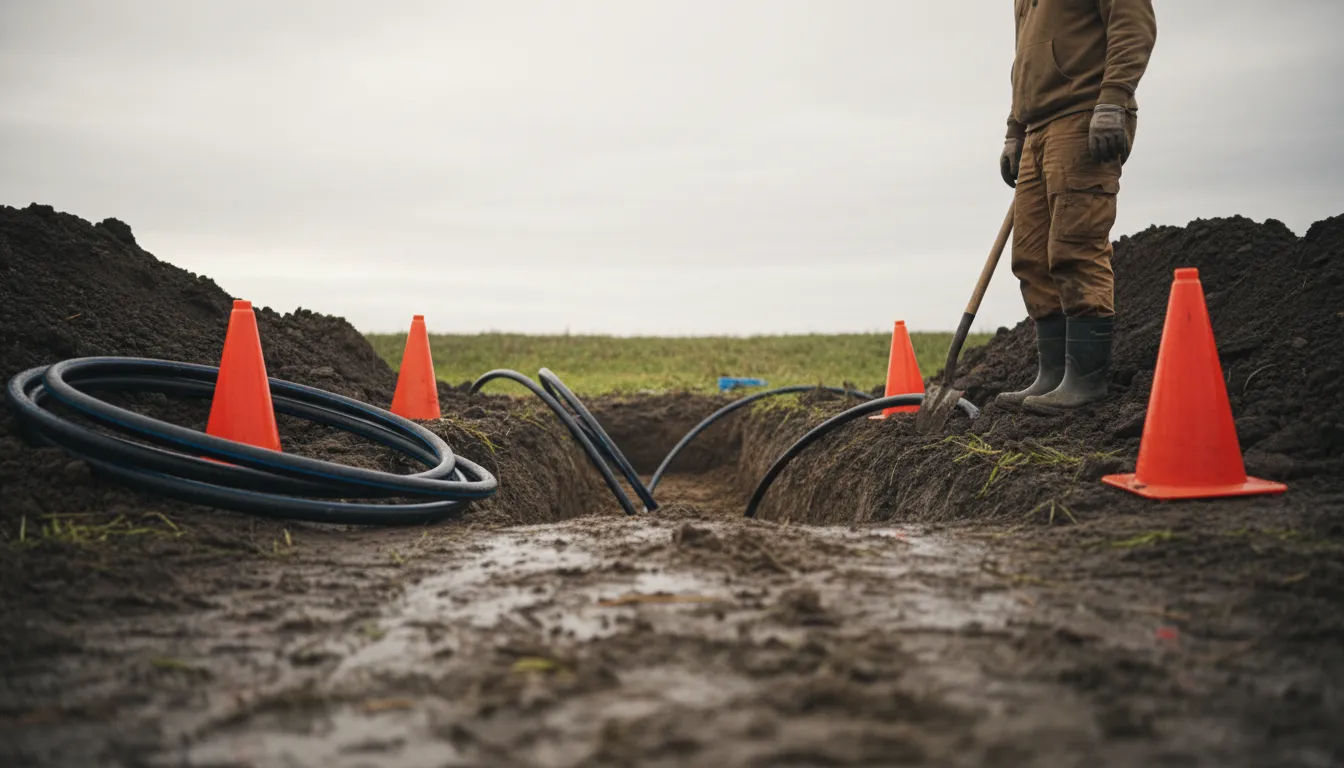
- Horizontal Closed-Loop: A suitable option if you have more available land. Trenches are excavated about four to six feet deep, and pipes are laid out in long, straight runs or coiled "slinky" patterns. This method generally has lower installation costs than vertical drilling but requires significantly more horizontal space 8.
Open-Loop Systems
This configuration uses groundwater from a well as the heat exchange fluid. After passing through the heat pump, the water is discharged back into a second well, a pond, or a stream, following strict regulations. While often less expensive to install because it avoids extensive trenching or drilling, an open-loop system requires an adequate supply of clean water and involves more complex permitting from the New Jersey Department of Environmental Protection (NJDEP).
The Installation Process: What Gloucester Homeowners Can Expect
Installing a geothermal heating and cooling system is a significant project that requires careful planning and professional expertise. The process typically follows these key steps:
- Site Assessment and Design: A qualified installer will evaluate your property to determine the best system type. They will consider soil conditions (which affect heat transfer), available space, landscaping, and access for drilling or excavation equipment. A proper load calculation for your home is essential to correctly size the system.
- Permitting and Regulations: In New Jersey, geothermal installations are regulated. Your installer should handle securing the necessary permits from local authorities and the NJDEP, especially for any drilling or water use. They must also be appropriately licensed for well drilling or HVAC contracting.
- Ground Loop Installation: This is the most visible phase. For a vertical system, a drilling rig will create the boreholes. For a horizontal system, a backhoe will dig the trenches. The pipe is then placed, connected, and pressure-tested to ensure there are no leaks.
- Indoor Unit and Connection: The geothermal heat pump unit, which is about the size of a small refrigerator, is installed indoors (often in a basement, utility room, or garage). It is connected to the ground loop and to your home's ductwork or radiant heating distribution system 9.
Find the perfect geothermal heat pump contractors for your needs
Get personalized recommendations and expert advice
Energy Savings, Costs, and Payback Period
The primary motivation for many Gloucester residents to consider a geothermal system is the dramatic reduction in energy bills. By leveraging the earth's stable temperature, these systems can cut heating, cooling, and even hot water costs by up to 70% compared to conventional systems like electric resistance heating or standard air conditioners 10 11 12.
While the initial investment for a ground-source heat pump is higher than for a traditional HVAC system-largely due to the cost of drilling or excavation-the operational savings are substantial. The high efficiency translates to much lower monthly utility bills. Furthermore, federal tax credits for renewable energy can significantly offset the upfront cost, improving the financial return.
For a typical home in South Jersey, the payback period-the time it takes for energy savings to equal the initial investment-often falls in the range of 5 to 10 years. After that, the continued savings go directly toward your household budget. When you consider that a well-maintained geothermal system can last 20-25 years for the indoor components and over 50 years for the underground loop, the long-term value becomes clear.
Maintenance and Longevity of Your System
One of the standout benefits of a geothermal heat pump is its durability and low maintenance requirements. The indoor unit has fewer mechanical parts exposed to the elements than an outdoor air conditioner or heat pump, leading to less wear and tear. Routine maintenance is similar to a traditional forced-air system: checking filters, ducts, and blower components annually.
The buried ground loop is famously long-lasting, with warranties often extending 50 years and an expected lifespan that can exceed it. With no external condenser unit, there's no equipment exposed to weather, vandalism, or falling debris. This reliability contributes to the system's excellent lifetime value and peace of mind for homeowners.
Finding the Right Professional in Gloucester
Success with geothermal technology hinges on proper design and installation. It's crucial to work with experienced, certified professionals who understand local geology and regulations. Look for installers who are accredited by organizations like the International Ground Source Heat Pump Association (IGSHPA) and who have specific experience with the soil conditions and permit requirements in Gloucester and Camden County. They should provide a detailed site evaluation, system design, and clear explanation of costs, available incentives, and expected performance.
Frequently asked questions
Sources
Footnotes
-
NJDEP| Clean Buildings | GSHP - https://dep.nj.gov/cleanbuildings/gshp/ ↩
-
NR Geothermal Heat Pumps - NJ Green Building Manual - https://greenmanual.rutgers.edu/nr-geothermal-heat-pumps/ ↩
-
About Geothermal - https://geocomfort.com/about-geothermal ↩
-
NC Geothermal Heat Pumps - NJ Green Building Manual - https://greenmanual.rutgers.edu/nc-geothermal-energy-systems/ ↩
-
Geothermal Heat Pumps - Department of Energy - https://www.energy.gov/energysaver/geothermal-heat-pumps ↩
-
5 Things You Should Know about Geothermal Heat Pumps - https://www.energy.gov/cmei/articles/5-things-you-should-know-about-geothermal-heat-pumps ↩
-
New Jersey Ground Source Heat Pump Baseline Report - https://dep.nj.gov/wp-content/uploads/cleanenergy/new-jersey-ground-source-heat-pump-baseline-report_final.pdf ↩
-
Geothermal Heat Pumps - EnergySmart CNY - https://www.energysmartcny.org/heat-pumps/geothermal/ ↩
-
How Does A Geothermal Heat Pump Work? Complete 2025 ... - https://solartechonline.com/blog/how-does-geothermal-heat-pump-work/ ↩
-
Geothermal Heating & Cooling Systems in South Jersey - https://connmechanical.com/services/geothermal/ ↩
-
How Does a Geothermal System Work? - ClimateMaster - https://www.climatemaster.com/homeowner/side-links/how-it-works ↩
-
Geothermal Heating System in Southern New Jersey - https://foleymech.com/products-services/geothermal-heating/ ↩