
Find the Best Geothermal Heat Pump Contractors for Your Business
No obligation • Fast responses • Nationwide coverage

Why you can trust HVAC Firms
HVAC Firms is a leading United States resource for evaluating HVAC service providers. Our team researches companies, checks credentials, and reviews customer feedback to present clear, unbiased information. Listings and rankings are based on merit, and companies cannot pay to change our editorial content.
Search providers near you
Top Geothermal Heat Pump Contractors in Evesham, New Jersey Ranked
A geothermal heat pump is a highly efficient heating and cooling system that leverages the Earth's stable underground temperature to regulate your home's climate. For Evesham residents, this technology offers a sustainable way to achieve significant energy savings and reduce reliance on traditional fossil fuels. This guide explains how ground-source systems work, what installation entails locally, and how you can find qualified professionals to assess your property.
Comfort Home Heating and Cooling
1035 Milmont Ave, Swarthmore, PA 19081
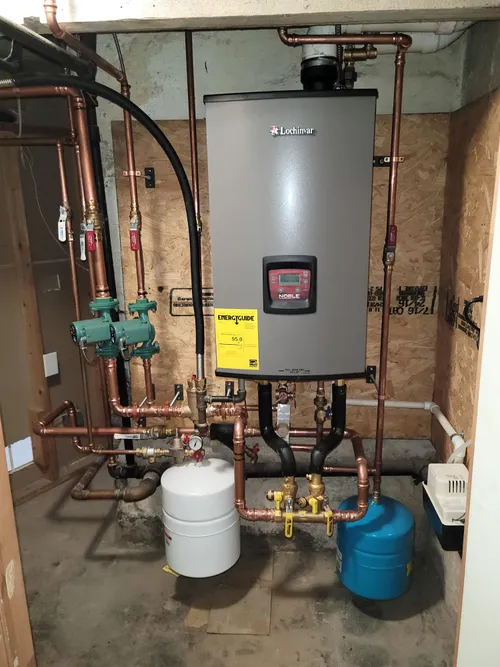
Comfort Home Heating and Cooling is an HVAC company serving Philadelphia, PA, and the surrounding Delaware County area. They provide a range of heating and cooling services including furnace, air conditioning, heat pump, mini-split, and geothermal heat pump installation and repair. Their team handles thermostat installation, indoor air quality solutions, and HVAC tune-ups, ensuring systems operate efficiently. With over 15 years of industry experience, Comfort Home Heating and Cooling employs licensed professionals who perform all work without subcontractors, offering warranties on labor and equipment. They are known for fabricating parts on-site and providing after-hours service when needed.
Carney All Seasons
1100 Industrial Blvd, Southampton, PA 18966
Carney All Seasons is a full-service HVAC and plumbing company serving Philadelphia, PA. They provide installation, repair, and maintenance for air conditioning, heating systems including furnaces, geothermal heat pumps, and HVAC tune-ups. The company also offers plumbing services such as water heater and sump pump installation and repair, as well as sewer and water line services. Carney All Seasons supports environmentally friendly geothermal systems and installs whole-house generators to help during power outages. Their team is EPA certified and experienced in working with high-efficiency and ENERGY STAR models.
Laury Heating Cooling & Plumbing
923 Haddonfield Rd, Cherry Hill Township, NJ 08002
Laury Heating Cooling & Plumbing is a family-owned HVAC and plumbing company serving Philadelphia, PA, and South Jersey communities since 1945. They provide a range of services including furnace and AC repair, HVAC system installation, heat pump and geothermal system installation, as well as plumbing repairs and water heater services. The company is known for handling both traditional and energy-efficient systems, offering free estimates and flexible financing options. Their certified technicians are experienced in modern HVAC technologies and maintain a commitment to quality workmanship. Laury Heating Cooling & Plumbing also offers priority scheduling for members, ensuring faster service during peak seasons or emergencies.
D&L Custom Services, LLC
600 Deer Rd STE 5, Cherry Hill Township, NJ 08034
D&L Custom Services, LLC is a family-operated HVAC company serving Philadelphia, PA, and South Jersey, including Burlington, Camden, and Gloucester counties. Since 1979, they have specialized in residential and light commercial heating and cooling installations, with a focus on green and energy-efficient technologies such as geothermal and air source heat pumps. They offer a range of services including installation, repair, and tune-ups for air conditioners, furnaces, boilers, heat pumps, and mini splits. Their technicians are factory-trained and certified, and the company is fully licensed and insured.
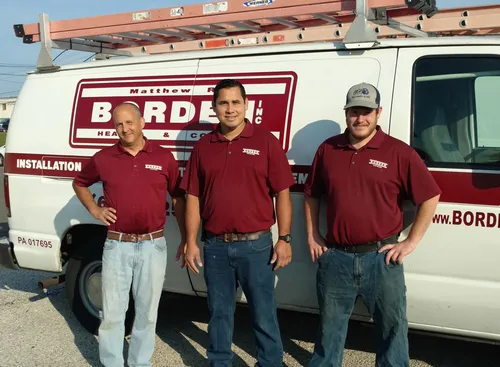
Matthew R. Borden Heating & Cooling, Inc.
501 Abbott Dr G3, Broomall, PA 19008
Matthew R. Borden Heating & Cooling, Inc. serves Philadelphia, PA, and nearby counties with heating, cooling, and water heating services. They provide design, installation, replacement, maintenance, and repair for systems including forced air heating, hydronic heating, geothermal heat pumps, ductless systems, and air quality accessories. The company specializes in whole-home air filter installations to improve indoor air quality. With nearly 30 years of experience, they focus on sustainable operation and long-term satisfaction, maintaining an A+ rating with the Better Business Bureau.
How Geothermal Heating and Cooling Works
The core principle behind a ground-source heat pump is remarkably simple: it uses the Earth as a thermal battery. Just a few feet below the surface, the ground maintains a nearly constant temperature year-round, typically between 50°F and 60°F in New Jersey. A geothermal system capitalizes on this stability.
Here's the basic process:
- Heat Exchange: A sealed loop of pipes, called a ground loop, is buried on your property. A water-based fluid circulates through this loop, absorbing heat from the ground in the winter.
- Heat Concentration: This warm fluid is pumped to an indoor heat pump unit. The unit uses a refrigeration cycle to concentrate the low-grade heat from the fluid, raising it to a temperature suitable for heating your home.
- Heat Distribution: The concentrated heat is then transferred to your home's air or water system-typically through existing ductwork or radiant floor tubing-to provide comfortable warmth.
- Cooling Cycle: In the summer, the process reverses. The system extracts heat from your home's air, transfers it to the fluid in the ground loop, and deposits it into the cooler earth, effectively providing air conditioning.
This elegant transfer of energy is what makes geothermal systems, also known as geoexchange systems, so efficient. Instead of creating heat by burning fuel, they simply move existing heat from one place to another.
Types of Ground Loop Systems for Evesham Properties
The design of the buried ground loop is critical and depends heavily on your property's characteristics. In Evesham and throughout New Jersey, the most common type is the closed-loop system, where a fluid is continuously circulated through a sealed, high-density polyethylene pipe. There are two primary configurations:
Vertical Closed-Loop Systems
This is the most prevalent installation method in New Jersey, particularly for residential properties with limited yard space 1. Contractors drill multiple boreholes, typically 150 to 450 feet deep, and insert U-shaped loop pipes into each hole. The holes are then grouted to ensure good thermal contact with the earth. While this method has a higher upfront installation cost due to the specialized drilling equipment required, it minimizes land disturbance and is ideal for smaller lots common in many Evesham neighborhoods. It's important to note that vertical drilling in New Jersey requires a licensed driller and oversight from the New Jersey Department of Environmental Protection (NJDEP) 1 2.
Horizontal Closed-Loop Systems
If you have ample land available, a horizontal loop may be an option. This involves trenching pipes in long, shallow trenches-usually 4 to 6 feet deep-over a large area. This method is generally less expensive to install than vertical drilling because it uses standard excavation equipment. However, it requires a significant amount of open, unobstructed land, which can be a limiting factor for many properties 3.
Open-Loop Systems
Less common in New Jersey is the open-loop system, which uses groundwater from a well or pond as the direct heat exchange fluid. After passing through the heat pump, the water is returned to a discharge well or surface body of water. These systems are highly dependent on water quality and availability and are subject to strict environmental regulations, making them a less frequent choice in the state 4.
The Geothermal Installation Process: What to Expect
Installing a ground-source heat pump is a significant project that requires careful planning and expert execution. Here's a step-by-step overview of what a typical installation in Evesham involves:
- Initial Site Assessment and Load Calculation: A qualified installer will visit your property to evaluate soil conditions, available land, and your home's existing ductwork or heating distribution system. They will perform a detailed heat load calculation to determine the exact size of the geothermal system needed for optimal efficiency 5.
- System Design and Permitting: Based on the assessment, a custom system is designed. For vertical loop systems, the installer will secure the necessary permits from local authorities and ensure compliance with NJDEP regulations for licensed drillers.
- Ground Loop Installation: This is the most substantial phase. For a vertical system, a drilling rig will create the boreholes and install the loop pipes. For a horizontal system, an excavator will dig the necessary trenches. This work usually takes several days 6.
- Heat Pump and Indoor Unit Installation: Once the loops are in place and connected (or "manifolded"), the indoor heat pump unit is installed, typically in a basement, utility room, or garage. It is connected to the ground loop and to your home's ductwork or hydronic system 7.
- System Startup and Testing: The system is filled with fluid, purged of air, and pressurized. The installer will then start the system, calibrate the controls, and test all components to ensure everything is operating safely and efficiently.
Find the perfect geothermal heat pump contractors for your needs
Get personalized recommendations and expert advice
Benefits and Long-Term Value for Evesham Homeowners
The decision to install a geothermal system is an investment in long-term comfort, savings, and sustainability.
- Substantial Energy Savings: Geothermal heat pumps are the most efficient heating and cooling technology available, often achieving efficiencies of 300-600% 8 9. Homeowners can see reductions of 50% to 70% on heating costs and 30% to 40% on cooling costs compared to conventional systems like furnaces and standard air conditioners 10 11. This translates to significantly lower monthly utility bills.
- Financial Payback and Incentives: While the upfront cost is higher than a traditional HVAC system, the dramatic energy savings lead to a typical payback period of 5 to 10 years. This timeline is accelerated by available financial incentives, including the federal Residential Clean Energy Tax Credit, which can cover a significant percentage of the installation cost. New Jersey may also offer additional state-level rebates or programs 12 13.
- Durability and Low Maintenance: The ground loop is designed to last for decades-often 50 years or more. The indoor heat pump unit also has a long lifespan, typically 20-25 years, which is longer than most conventional air conditioners and furnaces. Maintenance requirements are minimal, usually involving annual check-ups of the heat pump components 14.
- Comfort and Environmental Impact: Geothermal systems provide exceptionally even, draft-free heating and cooling. They also dehumidify more effectively than many standard air conditioners. By using renewable thermal energy from the ground and electricity (which is increasingly green), they drastically reduce your home's carbon footprint 15.
Is a Geothermal System Right for Your Home?
Geothermal technology is a superb choice for many, but not all, properties. It is an especially compelling option if:
- You are building a new home or replacing an aging, inefficient HVAC system.
- You have sufficient property for a ground loop (vertical systems require less surface area).
- You plan to stay in your home long enough to realize the full financial payback from energy savings.
- Reducing your environmental impact and achieving energy independence are priorities.
For Evesham homeowners, the combination of New Jersey's supportive regulatory framework for vertical drilling, the favorable ground conditions, and the powerful long-term savings make ground-source heat pumps a smart, sustainable home comfort solution worth serious consideration.
Frequently asked questions
Sources
Footnotes
-
New Jersey Ground Source Heat Pump Baseline Report - https://dep.nj.gov/wp-content/uploads/cleanenergy/new-jersey-ground-source-heat-pump-baseline-report_final.pdf ↩ ↩2
-
Geothermal Heat Pump Installation: What To Expect For Your ... - https://jomory.com/geothermal-heat-pump-installation-what-to-expect-for-your-property/ ↩
-
Ground Source Heat Pump Cost: How Much Will You Pay in 2025? - https://www.energysage.com/heat-pumps/costs-benefits-geothermal-heat-pumps/ ↩
-
4 Types of Geothermal HVAC Systems - https://www.sandhillsheating.com/article/4-types-of-geothermal-hvac-systems ↩
-
All You Need to Know About Home Geothermal Heating & Cooling - Dandelion Energy - https://dandelionenergy.com/all-you-need-to-know-about-home-geothermal-heating-cooling ↩
-
Geothermal heating & cooling, heat pumps, heat exchange ... - https://aztechgeo.com/residential-geothermal/how-it-works/ ↩
-
Geothermal Heat Pumps | WBDG - https://www.wbdg.org/resources/geothermal-heat-pumps ↩
-
5 Things You Should Know about Geothermal Heat Pumps - https://www.energy.gov/cmei/articles/5-things-you-should-know-about-geothermal-heat-pumps ↩
-
Geothermal Heat Pumps - Department of Energy - https://www.energy.gov/energysaver/geothermal-heat-pumps ↩
-
About Geothermal | International Ground Source Heat Pump ... - https://igshpa.org/about-geothermal/ ↩
-
Guide to Geothermal Heat Pumps - https://www.energy.gov/sites/prod/files/guide_to_geothermal_heat_pumps.pdf ↩
-
NJDEP| Clean Buildings | GSHP - https://dep.nj.gov/cleanbuildings/gshp/ ↩
-
Geothermal heat pumps: The ultimate guide to ground-source ... - https://termo-plus.com/blog/geothermal-ultimate-guide-to-ground-source-heat-pumps/ ↩
-
How Does a Geothermal System Work? - ClimateMaster - https://www.climatemaster.com/homeowner/side-links/how-it-works ↩
-
Geothermal (Ground Source) Heat Pumps - NY.gov - https://cleanheat.ny.gov/geothermal-heat-pumps/ ↩