
Find the Best Geothermal Heat Pump Contractors for Your Business
No obligation • Fast responses • Nationwide coverage

Why you can trust HVAC Firms
HVAC Firms is a leading United States resource for evaluating HVAC service providers. Our team researches companies, checks credentials, and reviews customer feedback to present clear, unbiased information. Listings and rankings are based on merit, and companies cannot pay to change our editorial content.
Search providers near you
Top Geothermal Heat Pump Contractors in Camden, New Jersey Ranked
Geothermal heat pumps, also known as ground-source heat pumps, are a highly efficient method for heating and cooling your home by leveraging the stable temperatures underground. For Camden residents, this technology offers a path to significant energy savings and reduced environmental impact. This guide explains how these systems work, what installation entails, and how you can find qualified local professionals to assess your property.
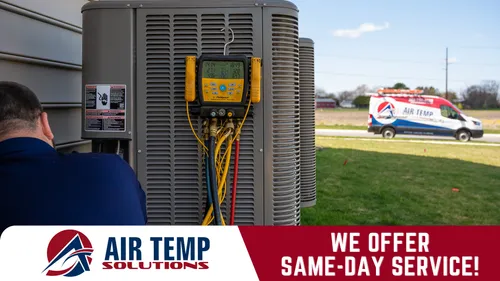
Air Temp Solutions - AC Repair, Heating Repair, Water Heater Repair & Plumbing Devon PA
Philadelphia, PA
Air Temp Solutions - AC Repair, Heating Repair, Water Heater Repair & Plumbing Devon PA is an HVAC and plumbing contractor serving Philadelphia, PA, and surrounding areas including Newark, DE. They offer a wide range of services such as heating repair and installation, furnace and boiler services, heat pump and geothermal system installation and maintenance, as well as ductless mini-split systems. Their plumbing services cover repairs, water heater installation and maintenance, gas line work, sump pump services, leak detection and repair, pipe and water line services, and comprehensive drain and sewer solutions including trenchless repairs. They also provide indoor air quality services like duct cleaning and UV light filtration installation. The company emphasizes specialized capabilities such as geothermal system installation and trenchless sewer line repairs to minimize disruption. While no specific business history is stated, their team includes technicians with an average of 16 years of experience in heating services.
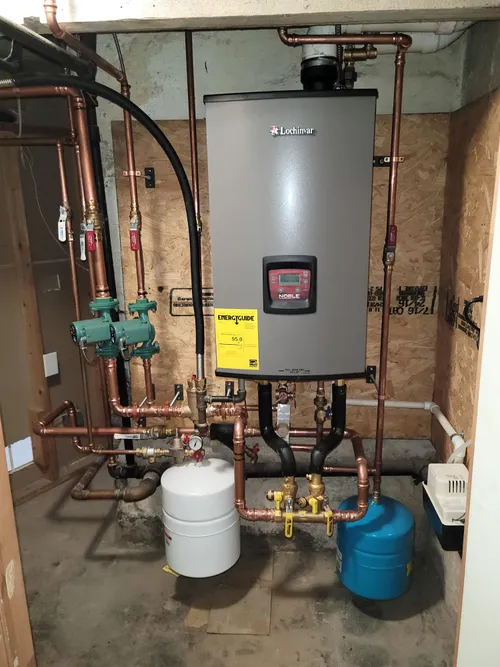
Comfort Home Heating and Cooling
1035 Milmont Ave, Swarthmore, PA 19081
Comfort Home Heating and Cooling is an HVAC company serving Philadelphia, PA, and the surrounding Delaware County area. They provide a range of heating and cooling services including furnace, air conditioning, heat pump, mini-split, and geothermal heat pump installation and repair. Their team handles thermostat installation, indoor air quality solutions, and HVAC tune-ups, ensuring systems operate efficiently. With over 15 years of industry experience, Comfort Home Heating and Cooling employs licensed professionals who perform all work without subcontractors, offering warranties on labor and equipment. They are known for fabricating parts on-site and providing after-hours service when needed.
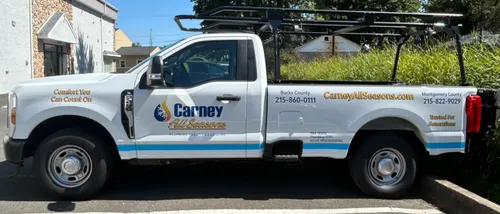
Carney All Seasons
1100 Industrial Blvd, Southampton, PA 18966
Carney All Seasons is a full-service HVAC and plumbing company serving Philadelphia, PA. They provide installation, repair, and maintenance for air conditioning, heating systems including furnaces, geothermal heat pumps, and HVAC tune-ups. The company also offers plumbing services such as water heater and sump pump installation and repair, as well as sewer and water line services. Carney All Seasons supports environmentally friendly geothermal systems and installs whole-house generators to help during power outages. Their team is EPA certified and experienced in working with high-efficiency and ENERGY STAR models.
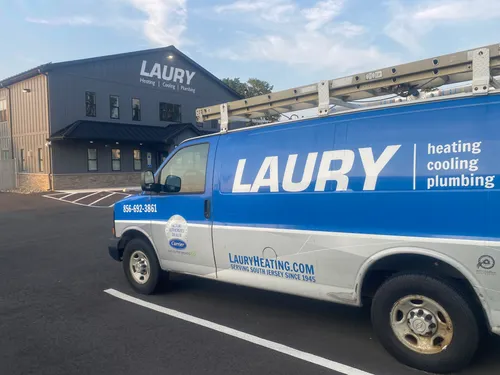
Laury Heating Cooling & Plumbing
923 Haddonfield Rd, Cherry Hill Township, NJ 08002
Laury Heating Cooling & Plumbing is a family-owned HVAC and plumbing company serving Philadelphia, PA, and South Jersey communities since 1945. They provide a range of services including furnace and AC repair, HVAC system installation, heat pump and geothermal system installation, as well as plumbing repairs and water heater services. The company is known for handling both traditional and energy-efficient systems, offering free estimates and flexible financing options. Their certified technicians are experienced in modern HVAC technologies and maintain a commitment to quality workmanship. Laury Heating Cooling & Plumbing also offers priority scheduling for members, ensuring faster service during peak seasons or emergencies.
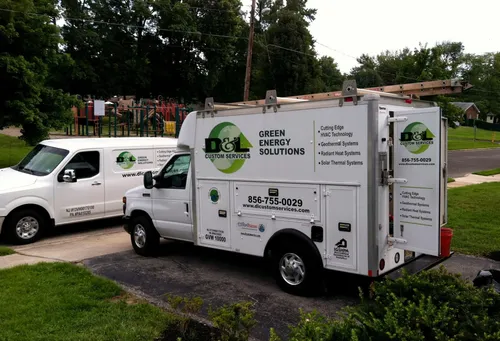
D&L Custom Services, LLC
600 Deer Rd STE 5, Cherry Hill Township, NJ 08034
D&L Custom Services, LLC is a family-operated HVAC company serving Philadelphia, PA, and South Jersey, including Burlington, Camden, and Gloucester counties. Since 1979, they have specialized in residential and light commercial heating and cooling installations, with a focus on green and energy-efficient technologies such as geothermal and air source heat pumps. They offer a range of services including installation, repair, and tune-ups for air conditioners, furnaces, boilers, heat pumps, and mini splits. Their technicians are factory-trained and certified, and the company is fully licensed and insured.
How Geothermal Systems Work in Camden
The core principle behind a geothermal heating and cooling system is remarkably simple: it uses the earth as a renewable energy source. Just a few feet below the surface, the ground in New Jersey maintains a nearly constant temperature between 50°F and 60°F year-round. A geothermal system taps into this stable resource to provide comfort in every season.
The process involves three key components:
- The Ground Loop: A network of pipes buried in your yard circulates a water-based fluid. In winter, this fluid absorbs the earth's natural heat. In summer, the system reverses, pulling excess heat from your home and depositing it into the cooler ground.
- The Heat Pump Unit: Located inside your home, this unit concentrates the thermal energy gathered from the loop. For heating, it amplifies the low-grade heat to a temperature suitable for warming your home. For cooling, it works like a refrigerator in reverse, removing heat from your indoor air.
- The Distribution System: The conditioned air is then distributed throughout your home via your existing ductwork or a hydronic system.
This elegant exchange of heat with the ground, rather than the outside air, is what makes geothermal technology so efficient, often achieving 300% to 500% efficiency.
Types of Ground Loop Systems for Camden Properties
The design of the underground loop system is critical and depends heavily on your property's characteristics. In New Jersey, closed-loop systems are most common, where the fluid is permanently sealed within high-density polyethylene pipes.
Horizontal Closed Loops
This configuration involves excavating long, shallow trenches-typically four to six feet deep-across a substantial area of your yard. It's generally the most cost-effective option if you have sufficient open land available. However, the extensive excavation can temporarily disrupt landscaping1 2.
Vertical Closed Loops
For properties with limited space, like many urban lots in Camden, vertical loops are the ideal solution. Contractors drill boreholes 150 to 400 feet deep and insert U-shaped loop pipes into each one. While the drilling requires specialized equipment and is often more expensive upfront, it minimizes surface disturbance and is highly effective.
Open-Loop Systems
Less common in our region, an open-loop system uses groundwater from a well as the heat exchange fluid, which is then returned to a discharge well or body of water. These systems are highly sensitive to local geology and water quality regulations and are less frequently installed in New Jersey.
The Geothermal Installation Process: What to Expect
Installing a ground-source heat pump is a significant project that requires careful planning and expert execution. Here's a step-by-step overview of what a professional installation entails.
- Initial Site Assessment & Design: A qualified installer will conduct a thorough evaluation of your property. This includes a soil analysis, calculating your home's precise heating and cooling loads, and determining the optimal loop type and size. They will also identify underground utilities.
- Securing Permits: In New Jersey, installing a vertical geothermal loop is regulated by the New Jersey Department of Environmental Protection (NJDEP). Your contractor must obtain the necessary well construction permits before any drilling begins.
- Loop Field Installation: For a vertical system, a drilling rig will create the boreholes. For a horizontal system, a backhoe will dig the trenches. The loop pipes are then placed, connected into a manifold, and pressure-tested to ensure there are no leaks.
- Indoor Unit & Connection: The geothermal heat pump unit is installed in your basement, utility room, or garage. The refrigerant lines are connected from the indoor unit to the ground loop manifold. The system is then integrated with your home's existing ductwork or air handlers.
- System Startup & Commissioning: Finally, the system is charged with refrigerant, electrical connections are finalized, and everything is tested. A smart thermostat is often installed to help you manage your new, highly efficient system3.
Find the perfect geothermal heat pump contractors for your needs
Get personalized recommendations and expert advice
Benefits for Camden Homeowners
Investing in a geothermal system offers compelling long-term advantages that go beyond simple temperature control.
- Dramatic Energy Savings: By moving heat instead of creating it through combustion, geothermal heat pumps can reduce energy consumption for heating, cooling, and even hot water by up to 70% compared to conventional systems like furnaces and standard air conditioners4 5. This translates to substantially lower utility bills.
- Long-Term Reliability & Low Maintenance: The underground loop system is designed to last for decades-often 50 years or more. The indoor heat pump unit also typically has a longer lifespan than conventional HVAC equipment because it operates in a sheltered, stable environment.
- Environmental Stewardship: Geothermal systems use renewable thermal energy from the ground, drastically reducing your home's carbon footprint. They use no fossil fuels on-site and have a minimal visual and environmental impact once installed6.
- Financial Incentives: The high efficiency of these systems often results in a payback period of 5 to 10 years, especially when combined with available federal tax credits for renewable energy installations7 8. Be sure to discuss current incentives with your installer.
Regulations and Choosing a Qualified Installer
Given the technical nature of the work, especially the drilling involved in vertical systems, selecting the right contractor is paramount. In New Jersey, firms that install vertical ground-source heat pump loops must be licensed by the state9.
When evaluating local geothermal companies, look for:
- Proper State Licensing: Confirm they hold the required NJDEP well drilling license for vertical loop installations.
- Industry Certifications: Seek out installers certified by organizations like the International Ground Source Heat Pump Association (IGSHPA).
- Local Experience: Choose a company familiar with Camden's specific soil conditions, climate, and permitting processes.
- Comprehensive Services: The best providers handle everything from the initial load calculation and design to drilling, indoor installation, and post-installation service.
Frequently asked questions
Sources
Footnotes
-
Geothermal heat pumps: The ultimate guide to ground-source ... - https://termo-plus.com/blog/geothermal-ultimate-guide-to-ground-source-heat-pumps/ ↩
-
NJDEP| Clean Buildings | GSHP - https://dep.nj.gov/cleanbuildings/gshp/ ↩
-
Geothermal Heat Pump Installation: What To Expect For Your Property - https://jomory.com/geothermal-heat-pump-installation-what-to-expect-for-your-property/ ↩
-
Geothermal Heat Pumps - EnergySmart CNY - https://www.energysmartcny.org/heat-pumps/geothermal/ ↩
-
How Does a Geothermal System Work? - ClimateMaster - https://www.climatemaster.com/homeowner/side-links/how-it-works ↩
-
5 Things You Should Know about Geothermal Heat Pumps - https://www.energy.gov/cmei/articles/5-things-you-should-know-about-geothermal-heat-pumps ↩
-
Geothermal Heat Pumps - Department of Energy - https://www.energy.gov/energysaver/geothermal-heat-pumps ↩
-
Guide to Geothermal Heat Pumps - https://www.energy.gov/sites/prod/files/guide_to_geothermal_heat_pumps.pdf ↩
-
New Jersey Ground Source Heat Pump Baseline Report - https://dep.nj.gov/wp-content/uploads/cleanenergy/new-jersey-ground-source-heat-pump-baseline-report_final.pdf ↩