Find the Best Geothermal Heat Pump Contractors for Your Business
No obligation • Fast responses • Nationwide coverage

Why you can trust HVAC Firms
HVAC Firms is a leading United States resource for evaluating HVAC service providers. Our team researches companies, checks credentials, and reviews customer feedback to present clear, unbiased information. Listings and rankings are based on merit, and companies cannot pay to change our editorial content.
Search providers near you
Top Geothermal Heat Pump Contractors in Bloomfield, New Jersey Ranked
A geothermal heat pump, or ground-source heat pump, is a highly efficient system for heating and cooling your home by leveraging the stable temperatures found underground. In Bloomfield, these systems offer a sustainable alternative to traditional HVAC, potentially leading to substantial energy savings and a reduced carbon footprint. This guide explains how geothermal technology works, what installation involves, and how you can find qualified local experts to assess your property for a system.

MDL Electric Cooling & Heating
4 Harrison Ave, West Orange, NJ 07052
MDL Electric Cooling & Heating is a family-owned company serving Newark, NJ, and the surrounding North Jersey area. With over 30 years of experience, they provide a wide range of HVAC and electrical services including installation, repair, and maintenance of air conditioning, furnaces, heat pumps, boilers, and geothermal heat pumps. Their team is EPA certified and offers advanced solutions such as inverter-driven compressors and natural gas conversions. MDL Electric Cooling & Heating is available 24/7 to support residential and commercial customers with licensed and trained technicians.
Lightning Mechanical LLC
65 Newark Way, Maplewood, NJ 07040
Lightning Mechanical LLC is an HVAC service provider based in Newark, NJ, offering repair, installation, and maintenance for residential and commercial heating and cooling systems. They specialize in a wide range of equipment including air conditioners, furnaces, heat pumps, boilers, and Daikin VRV systems. The company fabricates custom sheet metal in-house and serves clients throughout the New York metro area, including Newark. Since 2005, Lightning Mechanical has provided factory-trained technicians skilled in servicing multiple HVAC brands and advanced systems like Variable Refrigerant Volume (VRV). They also offer rapid response teams for mission-critical facilities and maintain an extensive inventory of Daikin VRV parts for quick repairs.
How Geothermal Systems Work: Harnessing the Earth's Energy
Unlike conventional air-source heat pumps or furnaces that battle fluctuating outdoor air temperatures, a geothermal system taps into the consistent thermal energy stored just below the earth's surface. A few feet down, the ground in New Jersey maintains a stable temperature between 50°F and 60°F year-round 1. This constant temperature is the key to the system's remarkable efficiency.
The process involves three main components:
- The Ground Loop: A network of durable, high-density polyethylene pipes is buried in your yard. A water-based solution circulates through this closed loop.
- Heat Exchange: In the winter, the fluid in the pipes absorbs the earth's warmth. In the summer, the system reverses, drawing excess heat from your home and depositing it into the cooler ground.
- The Heat Pump Unit: The temperature-adjusted fluid is pumped to an indoor geothermal heat pump. This unit concentrates the thermal energy and distributes heated or cooled air throughout your home via existing ductwork or a ductless system.
This elegant exchange of heat with the ground, rather than the air, allows geothermal heat pumps to operate with exceptional efficiency, often rated between 400% and 600%.
Types of Ground Loops for Bloomfield Properties
The buried pipe system, or ground loop, is the heart of the installation. The right type for your Bloomfield home depends primarily on your lot size, soil composition, and local geology. The most common configurations are closed-loop systems.
Vertical Closed-Loop Systems
This is often the preferred method for residential properties in Bloomfield and similar suburban areas with smaller lots. Contractors use a drilling rig to bore holes typically 150 to 400 feet deep. U-shaped loop pipes are inserted into each borehole, which are then backfilled with a special grout to enhance heat transfer. A vertical field requires minimal surface area, preserving your landscaping, but involves specialized drilling equipment.
Horizontal Closed-Loop Systems
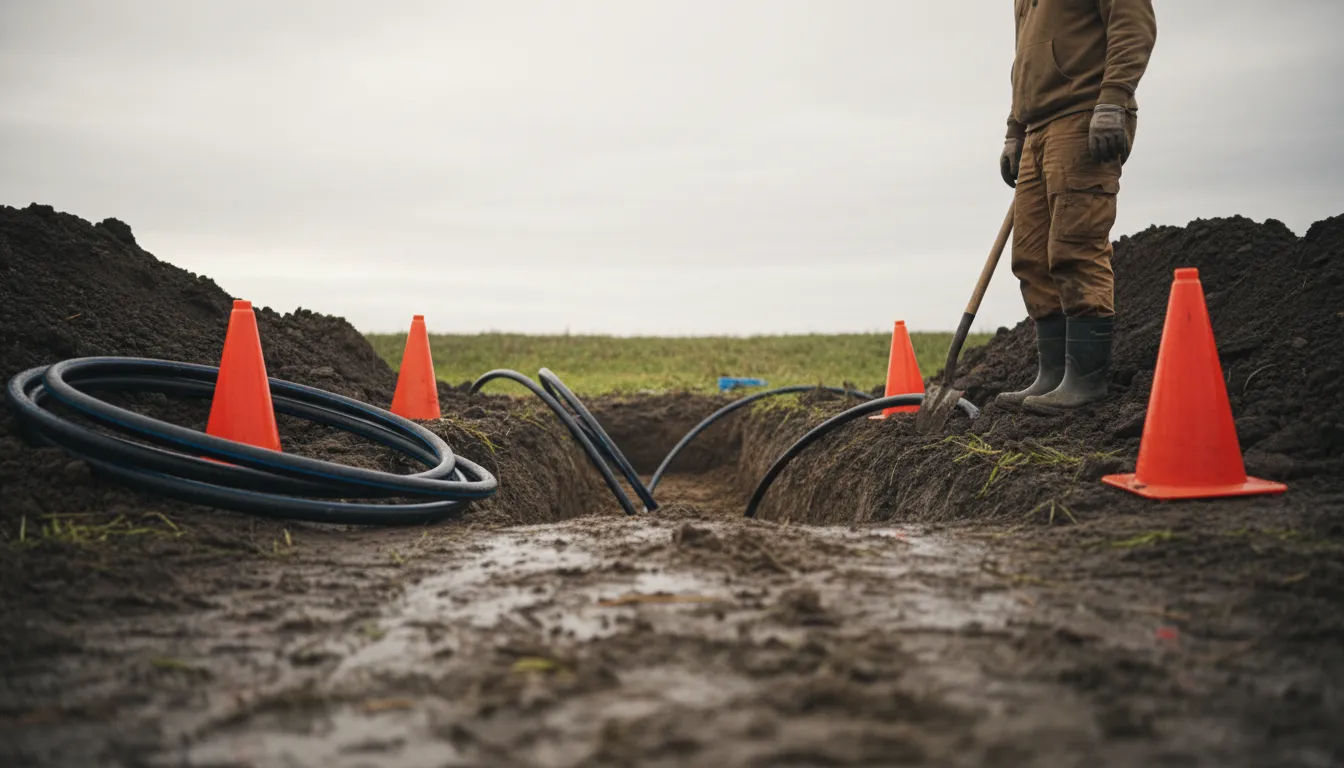
If you have more available land, a horizontal loop can be a cost-effective option. Installers dig trenches about four to six feet deep, laying pipes in a series of parallel lines or slinky coils. While the trenching is less expensive than deep drilling, it requires a significant amount of open, unobstructed land 2 3 4.
Open-Loop Systems
Less common in New Jersey, an open-loop system uses groundwater directly from a well or pond as the heat exchange fluid. After passing through the heat pump, the water is discharged back into a well, recharge trench, or surface body of water. This system is highly efficient but is heavily dependent on having an adequate supply of clean water and complying with strict local environmental regulations 5.
Find the perfect geothermal heat pump contractors for your needs
Get personalized recommendations and expert advice
The Geothermal Installation Process: What to Expect
Installing a ground-source heating and cooling system is a significant project that requires careful planning and professional expertise. Here's a general overview of the steps involved for a Bloomfield homeowner.
- Site Assessment and Design: A certified installer will evaluate your property, considering soil conditions, lot size, existing HVAC infrastructure, and your home's heating and cooling loads. This assessment determines the optimal loop type and size for maximum efficiency 6.
- Permitting: Your installer will typically handle securing the necessary local and state permits, especially for the drilling or excavation work. In New Jersey, drilling contractors must be licensed by the NJDEP.
- Loop Installation: For a vertical system, a drilling rig will create the boreholes. For a horizontal system, a backhoe will dig the trenches. The HDPE pipe is then placed, connected, and pressure-tested to ensure there are no leaks before the holes or trenches are backfilled.
- Indoor Unit Installation: The geothermal heat pump unit, which is often similar in size to a traditional furnace, is installed indoors. It is connected to the ground loop and to your home's ductwork or hydronic distribution system.
- System Startup and Commissioning: The loop is filled with the heat transfer fluid, the system is purged of air, and the heat pump is started. The installer will calibrate the system and ensure everything is operating correctly before handing it over to you.
Benefits and Financial Considerations
The decision to install a geothermal system is an investment in long-term comfort, savings, and sustainability.
- Substantial Energy Savings: By leveraging the earth's stable temperature, geothermal heat pumps can reduce energy consumption for heating, cooling, and even hot water production by up to 70% compared to conventional systems 7 8. For a Bloomfield homeowner, this could translate to saving hundreds of dollars on monthly utility bills.
- Long-Term Payback: While the upfront installation cost is higher than that of a standard air conditioner and furnace, the dramatic reduction in operating costs leads to a compelling payback period. Many homeowners see a return on their investment through energy savings within 5 to 10 years.
- Durability and Low Maintenance: The underground loop piping often carries warranties of 25 to 50 years and can last generations. The indoor heat pump unit typically lasts 20 years or more, significantly longer than conventional outdoor AC condensers. The systems also have fewer mechanical components exposed to the weather, leading to lower maintenance needs.
- Environmental Impact: Geothermal systems use electricity to move heat, not to create it by burning fossil fuels. When paired with a renewable energy source like solar panels, they can provide a nearly carbon-neutral method for conditioning your home. They also operate very quietly, with no noisy outdoor condenser unit.
Consider a Typical Bloomfield Scenario: A homeowner with a modest, landscaped yard opts for a vertical loop system. The drilling minimizes surface disruption, preserving gardens and patios. Despite the higher initial cost, the system slashes their heating and cooling bills, with the monthly savings paying for the investment within a decade, all while providing consistent comfort year-round 9 10.
Frequently asked questions
Sources
Footnotes
-
How Geothermal Heat Pumps Work - https://www.youtube.com/watch?v=XxlTnBukweI&t=37 ↩
-
Geothermal Heating and Cooling - Open Energy Information - https://openei.org/wiki/GeoBridge/Heating_and_Cooling ↩
-
Geothermal Installation Steps Explained - https://ultrageothermal.com/geothermal-installation-steps-explained/ ↩
-
How Does A Geothermal Heat Pump Work? Complete 2025 Guide - https://solartechonline.com/blog/how-does-geothermal-heat-pump-work/ ↩
-
Geothermal heating & cooling, heat pumps, heat exchange ... - https://aztechgeo.com/residential-geothermal/how-it-works ↩
-
Geothermal Heating System in Southern New Jersey - https://foleymech.com/products-services/geothermal-heating/ ↩
-
How Does a Geothermal System Work? - ClimateMaster - https://www.climatemaster.com/homeowner/side-links/how-it-works ↩
-
Geothermal Heat Pumps - Department of Energy - https://www.energy.gov/energysaver/geothermal-heat-pumps ↩
-
NJDEP| Clean Buildings | GSHP - https://dep.nj.gov/cleanbuildings/gshp/ ↩
-
Geothermal heat pumps: The ultimate guide to ground-source ... - https://termo-plus.com/blog/geothermal-ultimate-guide-to-ground-source-heat-pumps/ ↩