Find the Best Geothermal Heat Pump Contractors for Your Business
No obligation • Fast responses • Nationwide coverage

Why you can trust HVAC Firms
HVAC Firms is a leading United States resource for evaluating HVAC service providers. Our team researches companies, checks credentials, and reviews customer feedback to present clear, unbiased information. Listings and rankings are based on merit, and companies cannot pay to change our editorial content.
Search providers near you
Best Geothermal Heat Pump Contractors in Montana Ranked
A geothermal heat pump is a highly efficient heating and cooling system that uses the stable temperature of the earth to regulate your home's climate. For Montana residents, this technology is particularly valuable, offering a reliable solution to combat extreme seasonal temperatures while significantly reducing energy consumption. This resource provides clear, practical information on how geothermal systems work, their benefits for Montana's climate, and the key considerations for installation. You can use this guide to understand the process, evaluate your property's suitability, and connect with qualified local specialists for your project.
How Geothermal Systems Work in Montana's Climate
Unlike conventional systems that exchange heat with the outside air, a ground-source heat pump transfers heat to and from the earth. A series of underground pipes, called a ground loop, circulates a fluid that absorbs the earth's consistent temperature (typically 45-55°F in Montana). In winter, the fluid absorbs heat from the ground and carries it to the heat pump, which concentrates it to warm your home. In summer, the process reverses, pulling heat from your house and depositing it into the cooler ground.
This process is exceptionally well-suited to Montana's climate. While air-source heat pumps can lose efficiency during bitter cold snaps, a geothermal system's performance remains stable because it relies on the constant underground temperature, not the fluctuating air temperature. This makes it a robust, year-round solution for both heating and cooling, even in the state's harshest winters.
Key Benefits for Montana Homeowners
Installing a geothermal heating and cooling system offers several compelling advantages for properties in Montana:
- Substantial Energy Savings: Geothermal systems are 40-60% more efficient than traditional HVAC systems, which can translate to a dramatic reduction in your monthly energy bills 1. This efficiency is a major financial benefit given Montana's heating-dominated climate.
- Long-Term Reliability and Low Maintenance: The underground loop system is incredibly durable, often lasting 50 years or more. The indoor heat pump unit also has a long lifespan, typically 20-25 years. These systems generally require less frequent repair than conventional furnaces and air conditioners, though servicing should be performed by technicians specialized in geothermal technology.
- Environmental Impact: By using renewable thermal energy from the ground and electricity, geothermal systems drastically reduce your home's carbon footprint and reliance on fossil fuels.
- Quiet Operation and Comfort: With no noisy outdoor condenser unit, operation is very quiet. The systems also provide consistent, even heating and cooling without the drafts or hot/cold spots associated with some forced-air systems.
Evaluating Your Property's Suitability
Before proceeding, a site evaluation is crucial to determine if your Montana property is a good candidate for a geothermal installation. Key factors include:
- Soil Composition: Soil with high clay content transfers heat more effectively than sandy or rocky soil, which can influence the design and length of the ground loop required 2.
- Available Land: The type of loop system you can install is largely determined by your land. Horizontal loops require a significant amount of open, unobstructed land for trenching. Vertical loops are ideal for smaller lots, as they require less surface area but involve deeper drilling 3.
- Groundwater: For properties with a high water table or adequate groundwater, an open-loop system (which uses well water) may be an option, though it involves more complex water rights and permitting.
- Existing Infrastructure: The installation will integrate with your home's existing ductwork or radiant heating system. An assessment will determine if any modifications are needed.
Understanding Costs, Savings, and Payback
The upfront investment for a geothermal heat pump system is higher than for a conventional system, but significant incentives and operational savings improve the long-term value.
- Installation Cost Range: In Montana, total installed costs typically range from $15,000 to over $45,000 4 5. The final price depends heavily on your home's size, the chosen loop type (vertical drilling is more expensive than horizontal trenching), soil conditions, and labor.
- Major Financial Incentives:
- Federal Tax Credit: A 30% federal tax credit is available for qualifying geothermal heat pump installations through 2034 6. This credit directly reduces your federal income tax liability.
- Montana State Tax Credit: The state offers an income tax credit of up to $1,500 for the installation of a geothermal system in a principal dwelling 7. It's important to verify the current status of this credit with the Montana Department of Revenue or a tax professional.
- Utility Rebates: Some local utilities may offer additional rebates. Checking the Database of State Incentives for Renewables & Efficiency (DSIRE) is recommended for the most current local offers.
- Payback Period: The combination of 40-60% lower energy bills and available tax credits typically results in a payback period of 2 to 10 years8 9 10. After this period, the ongoing savings contribute directly to your household budget for the decades-long life of the system.
Find the perfect geothermal heat pump contractors for your needs
Get personalized recommendations and expert advice
Permitting and Regulations in Montana
Proper permitting is a critical step in the geothermal installation process. Working with an experienced local installer is essential, as they will navigate the required approvals. Key agencies involved include:
- State Permits: The Montana Department of Environmental Quality (DEQ) and the Department of Natural Resources and Conservation (DNRC) are the primary agencies. A DNRC Water Right may be required for open-loop systems that withdraw and return groundwater. The DEQ may also have jurisdiction over groundwater discharge.
- Federal Regulations: The U.S. Environmental Protection Agency (EPA) regulates underground injection, which can include open-loop geothermal systems. However, most residential single-family open-loop systems are often exempt from full permitting but must comply with basic guidelines.
- Local Approvals: Always check with your local city or county building department for zoning regulations, excavation permits, and any specific codes related to drilling or major ground disturbance.
Choosing the Right Loop System for Your Land
The "ground source" in ground-source heat pump refers to the loop field. The right choice for your Montana property depends on your land characteristics.
-
Closed-Loop Systems (Most Common):
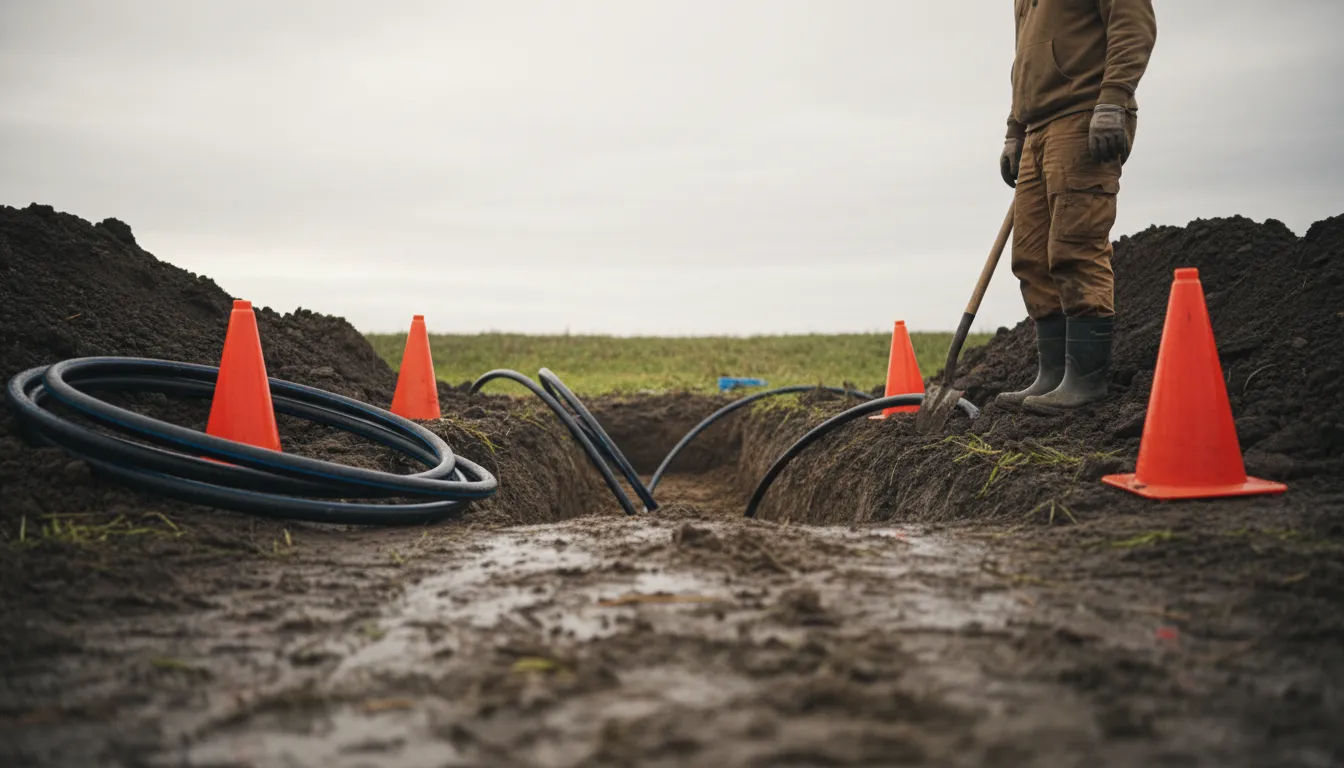
- Horizontal: Pipes are laid in trenches 4 to 6 feet deep. This is the most cost-effective option if you have ample, clear land.
- Vertical: Pipes are installed in boreholes 150 to 450 feet deep. This is ideal for smaller lots, rocky soil, or where minimizing landscape disruption is important.
- Pond/Lake: If you have a suitable water body, coils of pipe can be submerged. This is often the lowest-cost option but is entirely dependent on having an adequate pond or lake.
-
Open-Loop System: This system uses groundwater from a well as the heat exchange fluid, circulates it through the heat pump, and then discharges it to a second well or a surface body. It requires sufficient water quality and quantity and involves more regulatory oversight regarding water rights 11.
Long-Term Maintenance and Service
While geothermal systems are known for their durability, proper maintenance ensures peak efficiency and longevity. Annual or bi-annual check-ups by a qualified technician are recommended. Service typically includes checking the refrigerant charge, inspecting electrical components, cleaning coils, and ensuring the loop pump and pressure are operating correctly. It's crucial to choose a local HVAC company with specific expertise in geothermal heat pump repair and maintenance, as the technology differs from standard air-source systems 12 13.
Frequently asked questions
Sources
Footnotes
-
Cost of Buying a Geothermal Heat Pump - Carrier - https://www.carrier.com/residential/en/us/products/geothermal-heat-pumps/cost-buying-geothermal-heat-pump/ ↩
-
The Complete Guide To Geothermal Heat Pump Installation - https://ultrageothermal.com/the-complete-guide-to-geothermal-heat-pump-installation/ ↩
-
Geothermal/Ground Source Heat Pumps - https://deq.mt.gov/files/Energy/Documents/DEQ_Factsheet_120_Geothermal_GSHP.pdf ↩
-
Ground Source Heat Pump Cost: How Much Will You Pay in 2025? - https://www.energysage.com/heat-pumps/costs-benefits-geothermal-heat-pumps/ ↩
-
Geothermal - Montana Renewable Energy Association - https://montanarenewables.org/geothermal/ ↩
-
Understanding the Federal Tax Incentives for Geothermal Heat ... - https://www.waterfurnace.com/literature/collateral/br1507mw-tax-credit-residential.pdf ↩
-
Tax Incentives - Montana State Legislature - https://archive.legmt.gov/content/Committees/Interim/2019-2020/Revenue/Meetings/March-2020/Tax-Credit-Review/DEQ-Tax_Credit_Brochure_Final.pdf ↩
-
Geothermal Heat Pump Pros, Cons, and Incentives - Palmetto - https://palmetto.com/home-electrification/a-guide-to-geothermal-heat-pumps-cost-pros-and-tax ↩
-
Geothermal Heat Pumps: Cost and Installation - https://www.energyhomes.org/renewable-technology/geoinstallation.html ↩
-
Geothermal Heat Pump Guide: Installation Costs, Types And Benefits - https://modernize.com/hvac/heating-repair-installation/heat-pump/geothermal ↩
-
- Geothermal Heat Pumps - https://deq.mt.gov/files/Energy/EnergizeMT/Renewables/Geothermal%20Pub/5%20HeatPumps.pdf
-
Stevensville, & Bitterroot Valley, Montana | M&L Heating & Cooling, Inc - https://www.mandlhvac.com/geothermal-hvac ↩
-
Our Bozeman, MT Geothermal Heat Pump Repair Services - https://geothermalheatpumprepairs.netlify.app/mt/bozeman ↩