Find the Best Geothermal Heat Pump Contractors for Your Business
No obligation • Fast responses • Nationwide coverage

Why you can trust HVAC Firms
HVAC Firms is a leading United States resource for evaluating HVAC service providers. Our team researches companies, checks credentials, and reviews customer feedback to present clear, unbiased information. Listings and rankings are based on merit, and companies cannot pay to change our editorial content.
Search providers near you
Best Geothermal Heat Pump Contractors in Mississippi Ranked
Geothermal heat pumps are a highly efficient heating and cooling technology that leverages the stable temperatures underground to regulate your home's climate. For Mississippi homeowners, these systems offer a powerful way to combat high humidity and temperature extremes while significantly reducing energy bills. This guide provides clear, practical information on how geothermal systems work, their benefits, and the key steps to finding qualified local professionals for installation and service.
How Geothermal Systems Work in Mississippi's Climate
A geothermal heat pump, often called a ground-source heat pump, doesn't create heat by burning fuel. Instead, it moves heat. In the winter, it extracts heat from the ground and transfers it into your home. In the summer, the process reverses, pulling heat from your home and depositing it into the cooler earth. This exchange is managed by a network of pipes, called a ground loop, buried in your yard or installed in a water well.
Mississippi's humid subtropical climate is well-suited for this technology. While summer air temperatures soar, the ground just a few feet below the surface remains a relatively constant 55-70°F year-round. This temperature differential is what makes geothermal systems so efficient for both heating and cooling, allowing them to work less hard than conventional air-source heat pumps or air conditioners that must cope with extreme outdoor air temperatures.
Understanding Ground Loop Options
The ground loop is the heart of the system, and its design is critical. The right type for your Mississippi property depends on soil conditions, land availability, and water access.
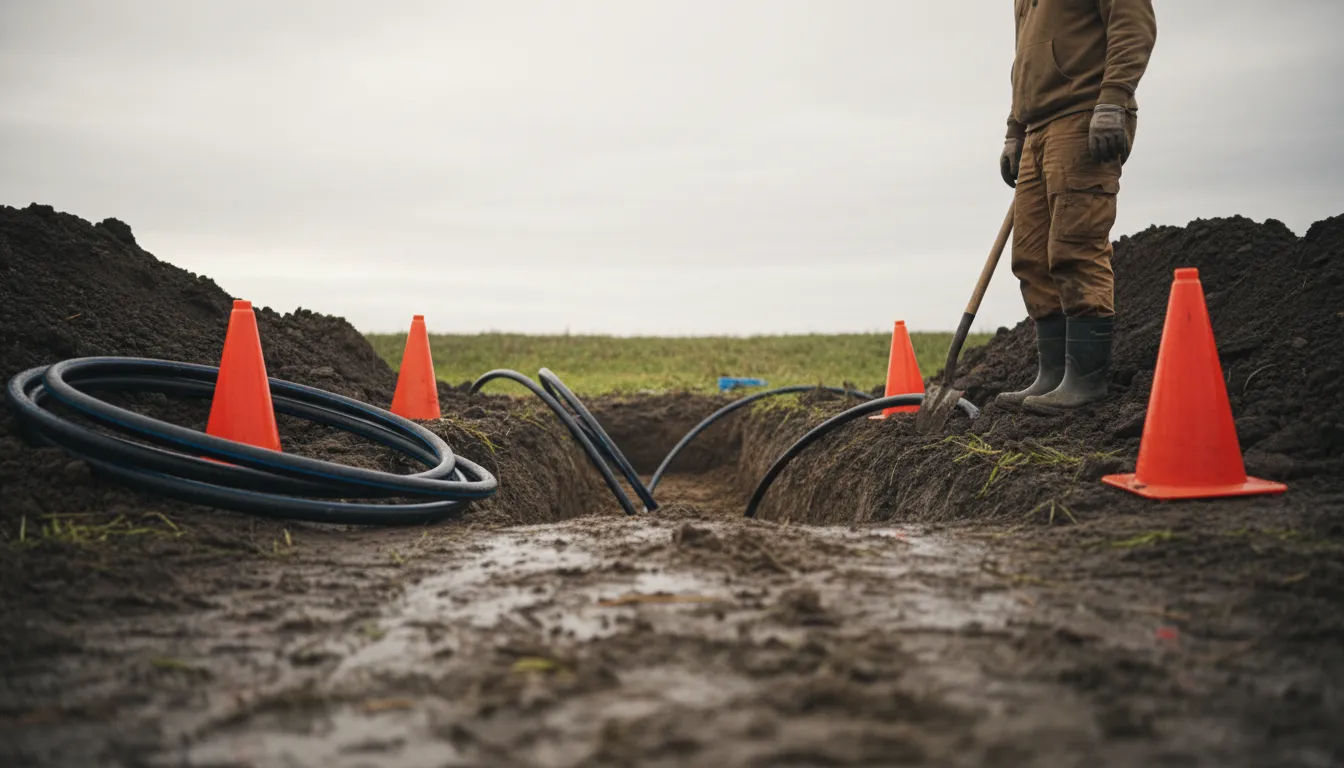
- Horizontal Loops: These are the most common for properties with ample yard space. Trenches are dug about four to six feet deep, and pipes are laid in a series of coils. This option is generally less expensive than vertical drilling if you have the land for it.
- Vertical Loops: For homes with smaller lots, vertical loops are the ideal solution. Contractors drill boreholes 150 to 450 feet deep and insert U-shaped loops of pipe. This method is more common in areas with rocky soil or limited space and is frequently used in Mississippi.
- Open-Loop Systems: If you have a sufficient supply of clean well water, an open-loop system can be highly efficient. It pumps water from a well, runs it through the heat pump to exchange heat, and then discharges it to a pond, drainage ditch, or second "return" well. This option requires approval from the Mississippi Department of Environmental Quality (MDEQ) to ensure proper water use and discharge.
Benefits for Mississippi Homeowners
Investing in a geothermal heating and cooling system offers several compelling advantages specific to the region's needs.
- Substantial Energy Savings: By using the earth's consistent temperature, geothermal heat pumps require much less electricity to operate. Homeowners can typically expect to save 30-70% on heating costs and 20-50% on cooling costs compared to conventional systems like furnaces and standard air conditioners 1.
- Excellent Dehumidification: These systems run longer, gentler cooling cycles, which removes more moisture from the air. This is a major benefit in Mississippi's humid climate, improving indoor comfort and air quality.
- Longevity and Reliability: The indoor components of a geothermal system are protected from outdoor weather and have fewer mechanical parts under stress. They often last 25 years or more. The underground loop system is even more durable, with a lifespan that can exceed 50 years with proper installation.
- Quiet Operation and Low Maintenance: With no loud outdoor condenser unit, geothermal systems operate very quietly. They also have fewer moving parts exposed to the elements, leading to lower maintenance requirements over time.
Costs, Incentives, and Return on Investment
Understanding the financial aspects is key to making an informed decision.
Upfront Installation Costs: The total installed cost for a residential geothermal system in Mississippi typically ranges from $15,000 to $40,000 or more. This wide range depends on your home's size, the chosen loop type (vertical drilling is more expensive than horizontal trenching), soil conditions, and the system's capacity 2 3. A rough estimate for the heat pump unit itself is around $2,500 per ton of capacity, with a typical home requiring a 3- to 5-ton system.
The Federal Tax Credit: The most significant financial incentive is the Residential Clean Energy Credit. This offers a 30% tax credit on the total cost of purchasing and installing a qualifying geothermal heat pump system. This credit is available for systems installed through 2032, making it a powerful tool to offset the initial investment 4.
Long-Term Value: While the upfront cost is higher than a standard HVAC system, the combination of dramatic energy savings and the federal tax credit leads to a compelling return on investment. Many homeowners find that the lower monthly utility bills allow them to recoup the additional upfront costs within 5 to 10 years. After that, you enjoy decades of significantly reduced operating costs.
Find the perfect geothermal heat pump contractors for your needs
Get personalized recommendations and expert advice
The Installation Process: Working with Professionals
A successful geothermal installation is a multi-step process that relies on certified experts.
- Home Assessment and Load Calculation: A qualified installer will first perform a detailed calculation of your home's heating and cooling needs. This ensures the system is correctly sized-not too large or too small-for optimal efficiency and comfort.
- System and Loop Design: Based on the assessment and your property evaluation, the professional will design the entire system, specifying the heat pump model and the most effective ground loop configuration.
- Permitting: Your installer will typically handle pulling the necessary local permits from your county or city for building, plumbing, and electrical work. Crucially, if an open-loop system is planned, approval from the Mississippi Department of Environmental Quality (MDEQ) is required before any drilling begins 5.
- Installation: The ground loop is installed first, followed by the connection to the indoor heat pump unit and the integration with your home's ductwork or hydronic system.
- Commissioning: Once installed, the system is charged, tested, and balanced to ensure it operates at peak efficiency from day one.
Choosing the Right Installer in Mississippi
This is the most important decision you will make. Geothermal technology is specialized, and proper design and installation are critical for performance and longevity.
- Look for Certification: Seek out installers who are certified by the International Ground Source Heat Pump Association (IGSHPA) or by major geothermal equipment manufacturers. This certification indicates specific training in geothermal system design and installation.
- Check Experience and References: Ask how many geothermal systems the company has installed locally and request references from past customers. An experienced installer will be familiar with Mississippi's soil types, climate challenges, and local permit requirements.
- Get Detailed Quotes: Obtain written proposals from at least two or three certified installers. Quotes should include a detailed breakdown of equipment, loop installation, labor, permits, and any warranty information. Compare the proposed system designs, not just the bottom-line price.
Maintenance and Repair Considerations
While geothermal systems are known for their durability, they are not maintenance-free. Annual check-ups by a qualified technician are recommended to ensure efficiency and catch small issues early. Repairs should always be handled by professionals familiar with geothermal technology. Attempting DIY repairs on the pressurized refrigerant circuits, loop system, or sophisticated controls can void warranties and lead to costly damage 6 7. A well-maintained system will provide reliable, efficient comfort for decades.
Frequently asked questions
Sources
Footnotes
-
Geothermal Heating and Cooling System In Tupelo, Mississippi - https://www.mississippigreenpower.com/geothermal-energy.html ↩
-
Ground Source Heat Pump Cost: How Much Will You Pay in ... - https://www.energysage.com/heat-pumps/costs-benefits-geothermal-heat-pumps/ ↩
-
Guide to Geothermal Heat Pumps - https://www.energy.gov/sites/prod/files/guide_to_geothermal_heat_pumps.pdf ↩
-
Understanding the Federal Tax Incentives for Geothermal Heat ... - https://www.waterfurnace.com/literature/collateral/br1507mw-tax-credit-residential.pdf ↩
-
Coupling Geothermal Heat Pumps (GHP) with Underground ... - https://s3.us-gov-west-1.amazonaws.com/sepub-demo-0001-124733793621-us-gov-west-1/s3fs-public/2024-02%2FEW18-5316%20Guidance%20Document_1.pdf ↩
-
Geothermal Energy - Mississippi Power - https://www.mississippipower.com/residential/ways-to-save/renewable-energy/geothermal.html ↩
-
Geothermal Basics | Tupelo, MS | Heat Pumps, HVAC, Cost, Modify - https://mmheatcool.net/geothermal-basics/ ↩