Find the Best Geothermal Heat Pump Contractors for Your Business
No obligation • Fast responses • Nationwide coverage

Why you can trust HVAC Firms
HVAC Firms is a leading United States resource for evaluating HVAC service providers. Our team researches companies, checks credentials, and reviews customer feedback to present clear, unbiased information. Listings and rankings are based on merit, and companies cannot pay to change our editorial content.
Search providers near you
Top Geothermal Heat Pump Contractors in Dearborn Heights, Michigan Ranked
A geothermal heat pump is a highly efficient heating and cooling system that leverages the stable temperature of the earth to regulate your home's climate. For Dearborn Heights residents, this technology offers a powerful solution to combat Michigan's variable weather while significantly reducing energy consumption and utility bills. This page provides essential information on how these ground-source systems work, their benefits, and how you can connect with qualified local professionals for installation and service.

All Things Heating & Cooling
1841 18th St, Wyandotte, MI 48192
All Things Heating & Cooling is a family-owned HVAC company based in Wyandotte, Michigan, serving Detroit and the surrounding Downriver area. They provide a range of heating and cooling services including installation, maintenance, and repair of air conditioners, furnaces, and geothermal heat pumps. The company also offers indoor air quality solutions to improve home air filtration and reduce pollution. With many years of industry experience, All Things Heating & Cooling focuses on ensuring efficient system performance and customer satisfaction.
Holiday Heating and Air Conditioning
17133 Mack Ave, Detroit, MI 48224
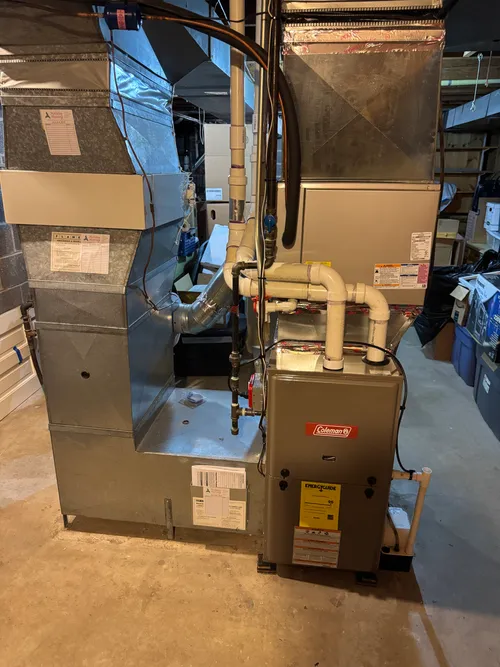
Holiday Heating and Air Conditioning is a family-owned HVAC company serving Detroit, MI, and the surrounding Tri-State County area. With 31 years of experience, they provide a wide range of heating and cooling services including installation, repair, and maintenance for air conditioners, furnaces, boilers, heat pumps, and water heaters. They also specialize in ductwork, geothermal systems, and boiler-to-furnace conversions. Their team offers 24/7 emergency HVAC repair to address urgent heating and cooling needs promptly.
Total Temp Heating and Cooling
Detroit, MI
Total Temp Heating and Cooling is an HVAC contractor based in Detroit, MI, serving the Tri-County Metro Detroit area. They specialize in the installation, repair, and maintenance of heating and cooling systems, including air conditioners, furnaces, heat pumps, mini splits, and geothermal heat pumps. As a Trane® dealer, they offer a wide range of indoor comfort equipment and focus on improving indoor air quality with products like air cleaners and ventilators. Total Temp is a licensed contractor with expertise in servicing all brands and offers service agreements to maintain system performance.
AAC Services
30029 John R Rd, Madison Heights, MI 48071
AAC Services is an HVAC company based in Detroit, MI, providing heating and cooling installation, repair, and maintenance services. They serve the Metro Detroit area with expertise in air conditioning, furnace, heat pump, boiler, mini split, and geothermal heat pump systems. Established in 1992, AAC Services has a long history of delivering professional HVAC solutions with a skilled technical staff. The company focuses on keeping customers comfortable year-round with reliable heating and cooling system support.

Superior Plumbing & Heating of LaSalle
1740 Sprucewood Ave Unit#3, LaSalle, ON N9J 0E6, Canada
Superior Plumbing & Heating of LaSalle offers a wide range of plumbing and heating services in Detroit, MI. Their expertise includes furnace, boiler, heat pump, and geothermal heat pump installation and repair. With over 20 years of experience, they handle both residential and commercial projects, providing solutions such as hydro jetting, sewer line cleaning, and plumbing camera inspections. The company emphasizes professional service backed by licensed and trained plumbers. They also offer 24/7 emergency plumbing services to address urgent issues promptly.
How a Geothermal System Works in Dearborn Heights
The core principle behind a geothermal, or ground-source, heat pump is remarkably simple: it exchanges heat with the earth, which maintains a nearly constant temperature of about 55°F just a few feet below the surface, regardless of the season above ground. This is a stark contrast to the frigid winter air and humid summer air that traditional air-source systems must work against.
The system has two main components:
- The Ground Loop: A network of pipes buried in your yard, either horizontally in trenches or vertically in deep boreholes. A water-based solution circulates through this closed loop, absorbing the earth's warmth in winter and depositing your home's excess heat in summer.
- The Heat Pump Unit: Located inside your home, this unit concentrates the thermal energy collected from the loop. In heating mode, it extracts heat from the fluid and distributes it through your ductwork or radiant floor system. In cooling mode, the process reverses, pulling heat from your home and transferring it into the ground loop.
This process of moving heat, rather than generating it through combustion, is what makes geothermal technology so extraordinarily efficient, with performance efficiencies reaching up to 400% 1.
Types of Ground-Source Heat Pump Systems
Choosing the right type of loop field is a critical decision based on your property's characteristics. The two primary closed-loop configurations are:
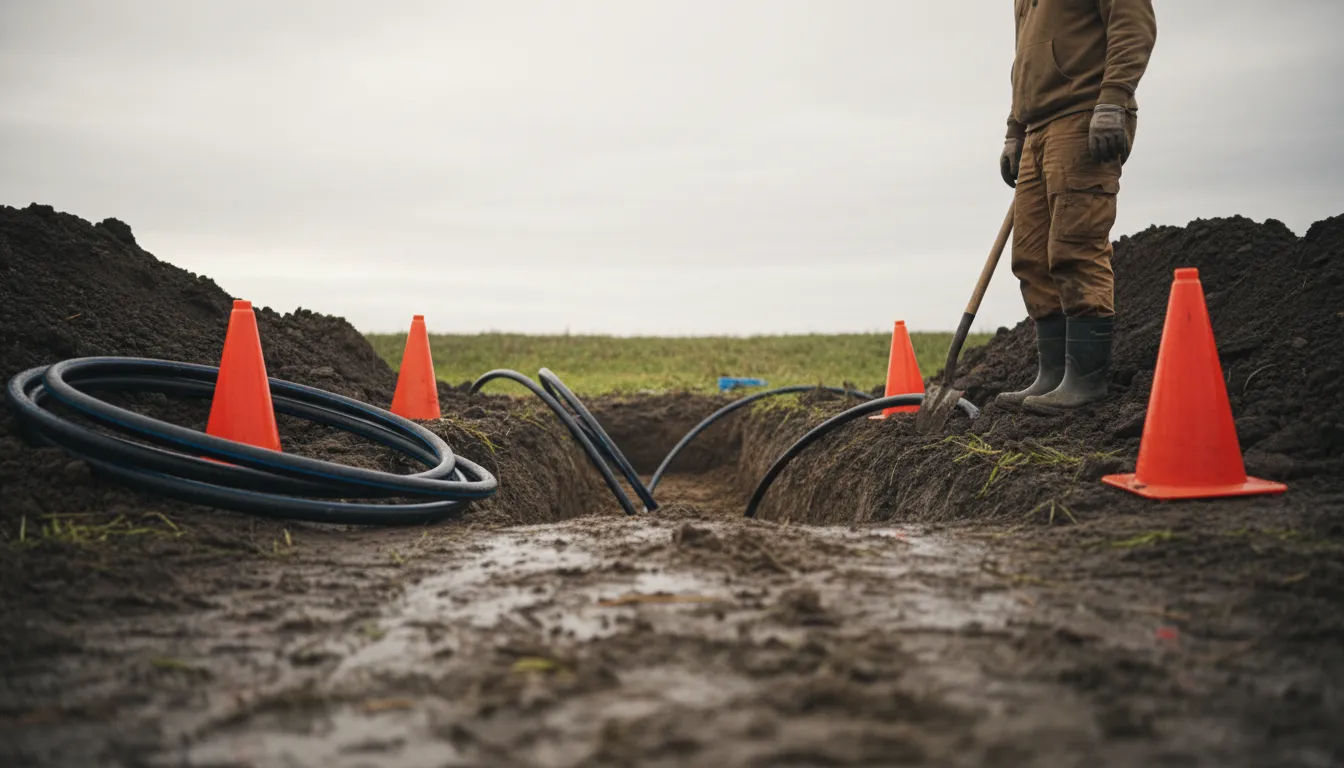
Horizontal Closed-Loop This is often the most cost-effective option if you have sufficient land. Contractors excavate long, shallow trenches-typically four to six feet deep-and lay loops of pipe horizontally. This design requires a larger plot of land but generally involves lower excavation costs than deep drilling 2 3.
Vertical Closed-Loop For properties with limited space, like many in Dearborn Heights, a vertical system is the ideal solution. Installers drill boreholes, usually between 150 to 450 feet deep, and insert U-shaped loop pipes into each hole. While the drilling process can be more expensive due to specialized equipment, it minimizes landscape disruption and is effective on smaller lots 4 5.
A less common third option is an Open-Loop System, which uses well water as the direct heat exchange fluid. It can be cheaper to install but requires an abundant, clean water source and a suitable method for discharge, making it less frequently applicable in all residential areas.
Benefits for Dearborn Heights Homeowners
Installing a geothermal heating and cooling system offers compelling advantages tailored to the local climate and long-term home ownership.
- Substantial Energy Savings: This is the most significant benefit. By tapping into the earth's stable temperature, these systems use far less electricity than conventional furnaces and air conditioners. Homeowners can see reductions of 30% to 70% on their heating, cooling, and even hot water bills 6 7 8.
- Exceptional Comfort: Geothermal systems provide consistent, even heating and cooling without the drafts or hot/cold spots common with forced-air systems. They also maintain comfortable humidity levels in summer.
- Long-Term Reliability and Durability: The underground piping loop is incredibly durable, often carrying warranties of 25 to 50 years and expected to last generations. The indoor heat pump unit also boasts a long lifespan, typically 20 to 25 years.
- Quiet Operation and Low Maintenance: With no noisy outdoor condenser unit, the system operates very quietly. It also has fewer mechanical components exposed to the elements, leading to less wear and lower maintenance requirements compared to traditional HVAC systems.
- Environmental Sustainability: By drastically reducing fossil fuel consumption or electricity draw from the grid, a ground-source heat pump significantly lowers your home's carbon footprint, making it one of the cleanest heating and cooling technologies available 9.
Find the perfect geothermal heat pump contractors for your needs
Get personalized recommendations and expert advice
Understanding Costs and Financial Incentives
The primary consideration for most homeowners is the upfront investment. Installing a complete geothermal system in Dearborn Heights is a significant project, with costs typically ranging from $20,000 to $40,000 or more, depending on your home's size, the chosen loop type, and existing infrastructure 10 11 12.
However, this initial cost must be weighed against the operational savings and available financial incentives:
- Long-Term Return on Investment (ROI): The dramatic reduction in monthly utility bills means the system often pays for itself over time. Many homeowners find the payback period falls between 5 to 10 years, after which the savings contribute directly to your household budget for the life of the system 13.
- Federal Tax Credits: The federal government offers a substantial tax credit for qualified geothermal heat pump installations, which can directly reduce your income tax liability.
- State and Local Incentives: It's essential to research current rebates or programs offered by the state of Michigan or local utility companies, which can further reduce the net installed cost.
- Increased Home Value: A permanently installed, efficient geothermal system is often viewed as a valuable upgrade that can increase your home's resale value.
The Installation Process: What to Expect
Professional installation by a certified contractor is non-negotiable for a geothermal system. The process generally follows these steps:
- Site Evaluation and Design: A contractor will assess your property's soil composition, lot size, and layout to recommend the optimal loop type (horizontal vs. vertical) and system size.
- Loop Field Installation: For a vertical system, a drilling rig will create the boreholes and insert the loops. For a horizontal system, a backhoe will dig the trenches. This is the most disruptive phase but is usually completed within a few days.
- Heat Pump Installation: The indoor unit is installed and connected to the ground loop and your home's ductwork or hydronic distribution system.
- System Charging and Testing: The loop is filled and pressurized, and the entire system is tested for performance and efficiency.
Is Your Dearborn Heights Property a Good Candidate?
Geothermal technology is versatile, but certain factors make a property particularly well-suited:
- Available Land or Drilling Access: You need adequate space for trenching or accessible areas for a drilling rig.
- Existing Ductwork: Homes with ductwork can often integrate a geothermal system more easily, though ductless options are also possible.
- Long-Term Planning: The investment makes the most financial sense if you plan to stay in your home long enough to realize the full energy savings.
- Commitment to Efficiency: Homeowners interested in maximizing comfort, reducing their environmental impact, and gaining energy independence are ideal candidates.
Frequently asked questions
Sources
Footnotes
-
Geothermal Heating & Cooling | City of Ann Arbor - https://www.a2gov.org/sustainability-innovations-home/sustainability-me/for-families-individuals/geothermal-heating-cooling/ ↩
-
Geothermal Heating and Cooling in Michigan - https://aspenheating.com/aspen-one-hour/geothermal-heating-in-michigan/ ↩
-
Ground-Source Heat Pumps | Building America Solution Center - https://basc.pnnl.gov/resource-guides/ground-source-heat-pumps ↩
-
All You Need to Know About Home Geothermal Heating & ... - https://dandelionenergy.com/all-you-need-to-know-about-home-geothermal-heating-cooling ↩
-
Geothermal Heat Pumps - EnergySmart CNY - https://www.energysmartcny.org/heat-pumps/geothermal/ ↩
-
How Does A Geothermal Heat Pump Work? Complete 2025 Guide - https://solartechonline.com/blog/how-does-geothermal-heat-pump-work/ ↩
-
5 Things You Should Know about Geothermal Heat Pumps - https://www.energy.gov/cmei/articles/5-things-you-should-know-about-geothermal-heat-pumps ↩
-
Geothermal Heat Pumps - Department of Energy - https://www.energy.gov/energysaver/geothermal-heat-pumps ↩
-
Clean Energy 101: Geothermal Heat Pumps - RMI - https://rmi.org/clean-energy-101-geothermal-heat-pumps/ ↩
-
Geothermal heat pumps: The ultimate guide to ground-source ... - https://termo-plus.com/blog/geothermal-ultimate-guide-to-ground-source-heat-pumps/ ↩
-
Exploring Geothermal Systems: Advantages and Considerations - https://dilandroandrews.com/understanding-geothermal-systems/ ↩
-
Geothermal Heat Pump Guide: Installation Costs, Types And Benefits - https://modernize.com/hvac/heating-repair-installation/heat-pump/geothermal ↩
-
Guide to Geothermal Heat Pumps - https://www.energy.gov/sites/prod/files/guide_to_geothermal_heat_pumps.pdf ↩