Find the Best Geothermal Heat Pump Contractors for Your Business
No obligation • Fast responses • Nationwide coverage

Why you can trust HVAC Firms
HVAC Firms is a leading United States resource for evaluating HVAC service providers. Our team researches companies, checks credentials, and reviews customer feedback to present clear, unbiased information. Listings and rankings are based on merit, and companies cannot pay to change our editorial content.
Search providers near you
Best Geothermal Heat Pump Contractors in Hawaii Ranked
Harnessing the Earth's stable temperature, geothermal heat pumps (GHPs) offer a remarkably efficient way to heat and cool your Hawaii home or business. These systems, also known as ground-source heat pumps, provide significant long-term energy savings and comfort by moving heat rather than creating it. This guide explains the unique considerations for installing a geothermal system in the Hawaiian Islands, from navigating local regulations to understanding site suitability, helping you connect with qualified local professionals for your project.
Why Geothermal is a Smart Choice for Hawaii
Hawaii's unique climate makes it exceptionally well-suited for geothermal heat pump technology. Unlike mainland states with extreme seasonal temperature swings, Hawaii enjoys consistent ground temperatures year-round. This stability allows a GHP system to operate at peak efficiency for both heating and cooling, delivering comfortable indoor temperatures while drastically reducing electricity consumption from the grid. For homeowners and businesses looking to lower utility bills and increase energy independence, a ground-source system is a forward-thinking investment.
Understanding Hawaii's Geothermal Installation Process
Installing a geothermal system is a detailed project that requires careful planning and expertise. The process typically follows these key steps:
- Site Evaluation: A qualified installer will assess your property's soil composition, available land area, and water table. Soil type (e.g., clay vs. sand) affects heat transfer efficiency, while land space determines the feasible loop type.
- System Design: Using a calculation like Manual J, the installer determines the heating and cooling capacity needed for your building. They will then design the ground loop system-choosing between horizontal, vertical, or pond loops-based on the site evaluation.
- Permitting: This is a critical step in Hawaii. You will need to secure permits from both state agencies, such as the Department of Health (DOH) and the Commission on Water Resource Management (CWRM) for water use, and from your county for construction and well drilling.
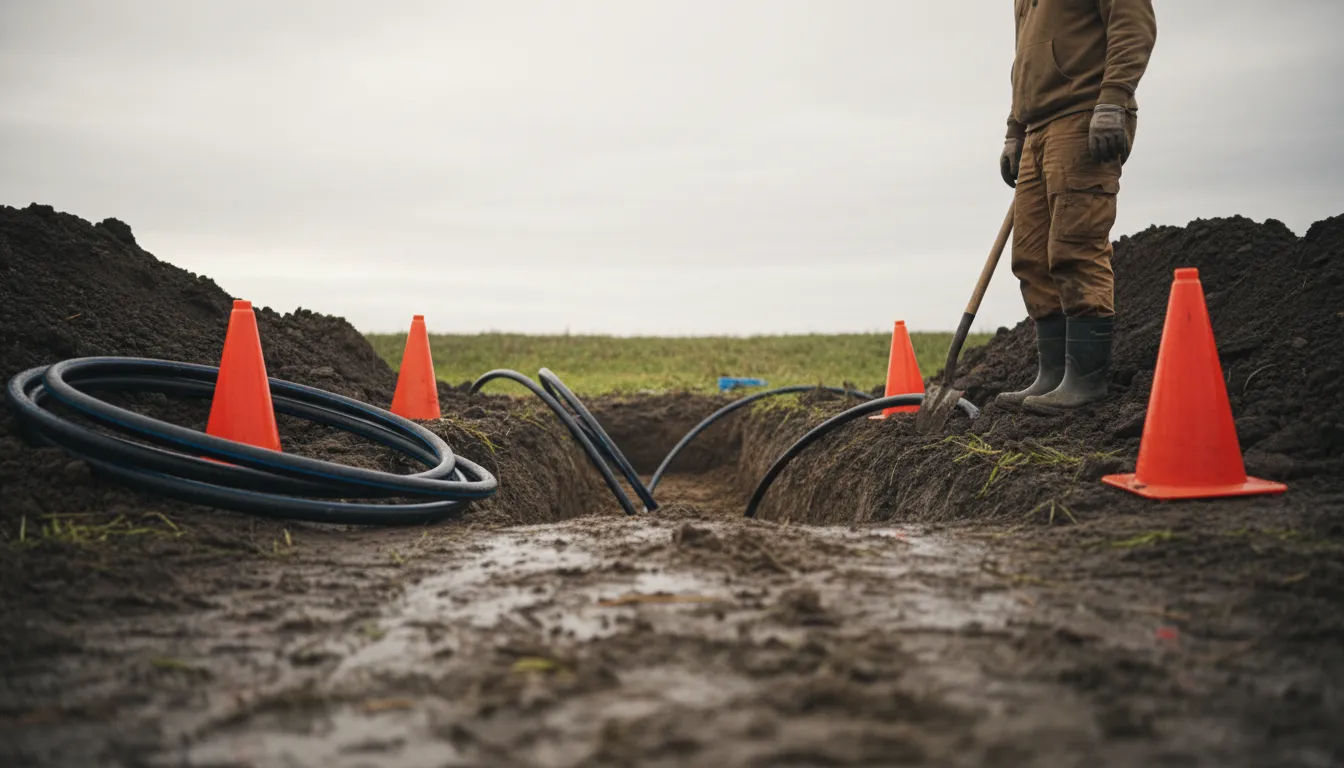
- Installation: This involves drilling or excavating for the ground loop, placing the durable piping, and installing the heat pump unit and indoor components.
- Testing & Commissioning: The system is charged, started, and tested to ensure it operates as designed for optimal performance and efficiency1.
Navigating Regulations and Incentives
Hawaii has specific regulatory pathways for geothermal installations. Being prepared for this process is essential for a smooth project.
Permitting Complexity: Hawaii requires detailed permits at multiple levels. The state provides specific guidebooks for renewable energy permits, and applications are often handled through the DOH's e-Permitting system. Your installer should be well-versed in these requirements.
Water Rights: If you are considering an open-loop system or any design that uses a significant amount of water, you must secure permits from the Commission on Water Resource Management (CWRM) 2. This is a crucial step that can impact system design and feasibility.
Financial Incentives: To offset the upfront cost, explore available incentives. Federal tax credits, such as the Residential Clean Energy Credit, can provide significant savings3. It's also important to check for any active state-specific rebate or loan programs through the Hawaii State Energy Office (energy.hawaii.gov), as these programs frequently update4.
Find the perfect geothermal heat pump contractors for your needs
Get personalized recommendations and expert advice
Evaluating Your Property's Suitability
The success of a geothermal system hinges on your property's specific characteristics.
- Land Availability: Horizontal loop systems require a larger, open area of land, while vertical loops need less surface space but involve deeper drilling. Your available land will directly influence the system design and cost5 6.
- Soil and Geology: Soil with good thermal conductivity, like clay, is ideal. Sandy soil is less efficient but can still work with proper design. A professional site analysis will determine this 7.
- Climate Advantage: As mentioned, Hawaii's mild, consistent ground temperature is a major asset, allowing geothermal systems to achieve high coefficients of performance (COPs) throughout the year.
Cost Considerations and Long-Term Value
The initial investment for a residential geothermal heat pump system in Hawaii typically ranges from about $15,000 to over $35,0008. This wide range depends on:
- The size and capacity of the system needed for your home.
- The type of ground loop (vertical loops are generally more expensive than horizontal).
- Site-specific challenges, such as drilling depth or accessibility.
While the upfront cost is higher than a conventional HVAC system, the operational savings are substantial. GHPs are incredibly efficient, often cutting heating and cooling electricity use by 25% to 50%9. This leads to significantly lower monthly utility bills, allowing the system to pay for itself over time. Maintenance is generally minimal, focusing on the indoor heat pump components; the underground piping is designed to last for decades10.
Finding the Right Professional in Hawaii
Given the technical and regulatory complexity, choosing an experienced, licensed installer is paramount. Look for professionals who:
- Have specific experience installing geothermal systems in Hawaii.
- Are familiar with state and county permitting processes, including water rights applications.
- Can provide references from past GHP projects in the islands.
- Conduct a thorough, on-site evaluation before providing a quote.
Your next step should be to contact a few local specialists for consultations. Additionally, visit the Hawaii State Energy Office website for the latest resources and guidance on renewable energy projects 11.
Frequently asked questions
Sources
Footnotes
-
How It Works: The Geothermal Installation Process - https://www.awheatingandcooling.com/blog/geothermal-service/how-it-works-the-geothermal-installation-process/ ↩
-
HAWAII - https://scholarspace.manoa.hawaii.edu/bitstreams/cd98fca6-b47d-4da0-9993-175511713873/download ↩
-
FS-2022-40, Frequently asked questions about energy efficient ... - https://www.upgradeandsavect.com/ira/IRS-FAQ-2022-40_December_2022.pdf ↩
-
Hawaii Renewable Energy Permits and Approvals Guidebooks - https://energy.hawaii.gov/wp-content/uploads/2011/11/geothermal_guidebook.pdf ↩
-
The Complete Guide To Geothermal Heat Pump Installation - https://ultrageothermal.com/the-complete-guide-to-geothermal-heat-pump-installation/ ↩
-
Geothermal Heating & Air Systems | Provo, UT - https://centralvalleygeothermal.com/geothermal-heating-air-systems/ ↩
-
Geothermal in the Midwest - Illinois Geothermal Coalition - https://geothermal.illinois.edu/wiki/ ↩
-
Geothermal Energy Installers in Hawaii - Environment Co - https://environment.co/geothermal-energy-installers/hawaii/ ↩
-
Guide to Geothermal Heat Pumps - https://www.energy.gov/sites/prod/files/guide_to_geothermal_heat_pumps.pdf ↩
-
Installation ... - Geothermal Heat Pump Repair Hawaii (HI) - https://geothermalheatpumprepairs.netlify.app/hi/ ↩
-
HI DOH e-Permitting System - Geothermal - Hawaii.gov - https://eha-cloud.doh.hawaii.gov/epermit/Home/6003f59d-fce3-4472-8315-1db800f82a27 ↩