Find the Best Geothermal Heat Pump Contractors for Your Business
No obligation • Fast responses • Nationwide coverage

Why you can trust HVAC Firms
HVAC Firms is a leading United States resource for evaluating HVAC service providers. Our team researches companies, checks credentials, and reviews customer feedback to present clear, unbiased information. Listings and rankings are based on merit, and companies cannot pay to change our editorial content.
Search providers near you
Best Geothermal Heat Pump Contractors in Alaska Ranked
A geothermal heat pump (GHP) is a highly efficient heating and cooling system that uses the stable temperatures of the earth or a water source to regulate your home's climate. In Alaska, where heating demands are high and energy costs can be significant, these systems offer a reliable, long-term solution for reducing fuel bills and increasing energy independence. This guide provides practical information for Alaskans considering this technology, helping you understand the unique requirements, benefits, and process for finding qualified local professionals to assess and install a system suited to our northern environment.
Why Consider a Geothermal System in Alaska?
While the upfront investment is higher than conventional systems, the long-term value of a ground-source heat pump in Alaska is compelling. These systems are exceptionally efficient, moving three to five times more energy than they consume, which translates directly into lower operating costs. Homeowners can see reductions of 40-60% on their heating bills, a significant saving given the state's climate and fuel prices. Furthermore, with a lifespan of 20-25 years for the indoor unit and 50+ years for the underground ground loop, a GHP is a durable, long-term investment in your property's comfort and value.
Cold Climate Design & Installation Expertise
Success with a geothermal system in Alaska hinges on working with installers who possess specific cold-climate expertise. Standard designs from milder regions will not suffice.
- Deep Frost Lines: Installers must design ground loops to be placed well below the frost line, which can exceed nine feet in many parts of the state, to ensure consistent thermal exchange year-round.
- Antifreeze Solutions: The fluid circulating in the ground loop must be a non-toxic antifreeze mixture, such as a 20% methanol and water solution, to prevent freezing in the extreme cold 1.
- Site-Specific Assessment: A professional will evaluate your property's soil conditions (rocky or frozen ground complicates drilling), available space, and access to determine the optimal loop type-vertical, horizontal, or lake-based.
Understanding Alaska's Regulations and Permitting
Permitting requirements vary across the state and depend heavily on your system design.
- General Permitting: In organized boroughs and cities, standard closed-loop systems will require local building permits. Unorganized areas typically have simpler processes for these types of installations.
- Water-Based Systems: If your design involves an open-loop system using a well or a closed-loop system submerged in a lake or pond, permitting becomes more complex. You will likely need approvals from the Alaska Department of Environmental Conservation (DEC), the Department of Natural Resources (DNR), and potentially the U.S. Army Corps of Engineers.
- Local Programs: Some municipalities, like Juneau and Sitka, have local energy programs that may offer additional guidance or incentives for homeowners.
Costs, Incentives, and Payback Period
The high efficiency of geothermal comes with a higher initial cost, but financial incentives can help offset the investment.
- Installation Costs: For a whole-home system in Alaska, installation costs typically range from $15,000 to $35,000 or more, which can be double the cost of a conventional high-efficiency furnace and air conditioner system 2. Standalone geothermal hot water heaters are a smaller-scale option, with costs ranging from $1,900 to $3,800.
- Available Incentives:
- State & Local Incentives: The Alaska Energy Authority may offer grant programs like the Emerging Energy Technology Fund. Local utilities sometimes provide rebates, so it's important to check with your energy provider 5.
- Payback and Value: Given the substantial operational savings, the payback period for a system in Alaska can range from 2 to 10 years. With a system life of 20-50+ years, the long-term financial and comfort benefits are clear.
Find the perfect geothermal heat pump contractors for your needs
Get personalized recommendations and expert advice
The Installation Process: What to Expect
A proper geothermal installation is a multi-step process that ensures system longevity and performance.
- Professional Site Assessment & Load Calculation: This is the most critical step. A qualified installer will perform a detailed analysis of your home's heating and cooling needs, insulation levels, and property characteristics to correctly size the system.
- System Design: Based on the assessment, the installer will design the ground loop configuration (vertical, horizontal, or pond) and specify all components, including the antifreeze solution.
- Securing Permits: Your installer should handle the permit application process with the relevant local and state agencies, especially for any water-source systems.
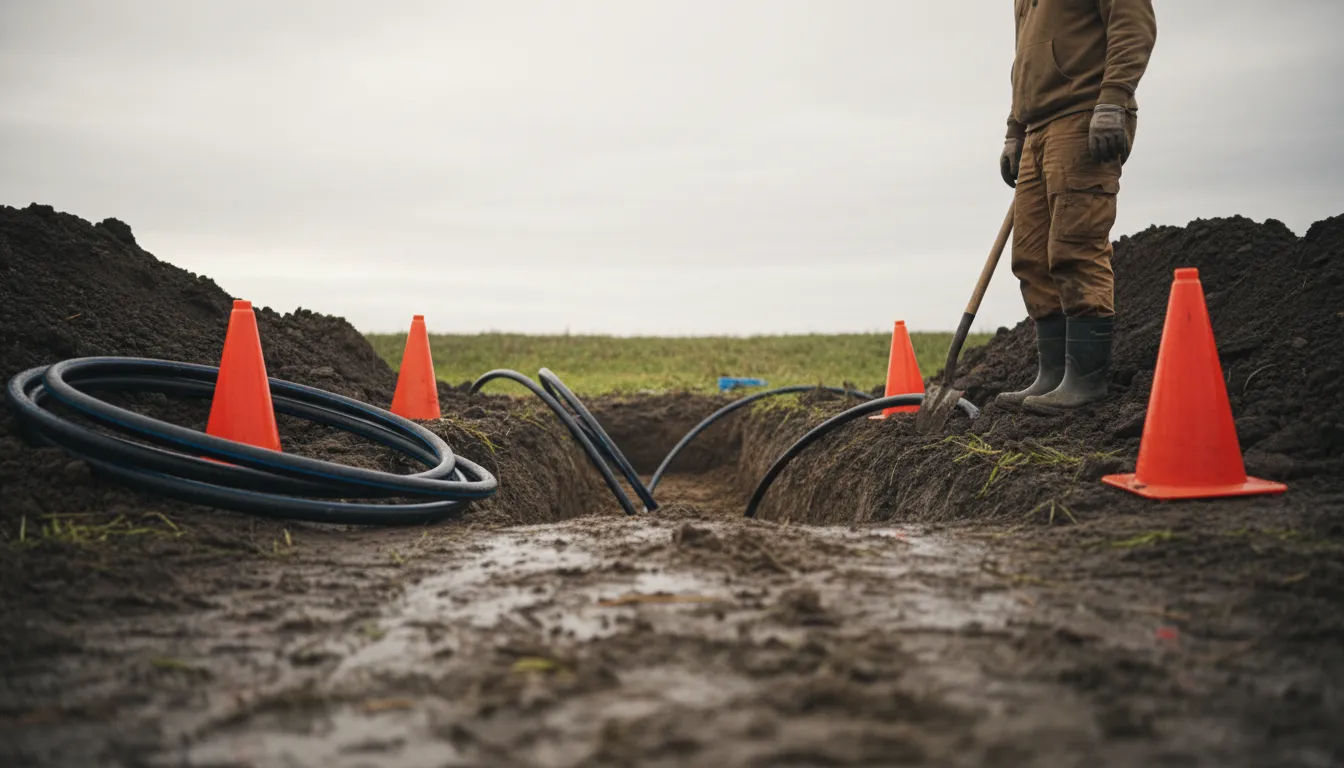
- Installation: This involves drilling or trenching for the ground loop, installing the indoor heat pump unit, and connecting it to your home's existing ductwork or radiant floor system 6 7.
- Commissioning & Orientation: Once installed, the system is tested and balanced. A good installer will walk you through the basic operation and maintenance schedule.
Operation and Ongoing Maintenance
One of the key advantages of geothermal systems is their simplicity and low maintenance requirements.
- Efficiency in Action: Your system will work quietly in the background, delivering consistent comfort by moving heat to or from the ground with remarkable efficiency.
- Minimal Maintenance: Routine maintenance is straightforward. Plan for a professional check-up of the mechanical components approximately every other year, at an average cost of around $300 per service 8 9. The buried ground loop requires no maintenance.
- Long-Term Reliability: With proper installation and basic care, you can expect decades of reliable service, making it a cornerstone of an energy-efficient home in Alaska.
Frequently asked questions
Sources
Footnotes
-
HEAT PUMPS FOR SPACE HEATING - Alaska Energy Wiki - http://energy-alaska.wikidot.com/heat-pumps ↩
-
Geothermal Heat Pump Case Study: National Laboratory of ... - https://www.energy.gov/eere/geothermal/geothermal-heat-pump-case-study-national-laboratory-rockies-alaska-campus ↩
-
Heat Pumps in Alaska - Environment America - https://environmentamerica.org/alaska/center/resources/heat-pumps-in-alaska/ ↩
-
Guide to Geothermal Heat Pumps - https://www.energy.gov/sites/prod/files/guide_to_geothermal_heat_pumps.pdf ↩
-
Using Federal and Regional Incentives to Change Household ... - https://www.sitkawild.org/energy ↩
-
HEAT PUMPS IN ALASKA - https://alaskarenewableenergy.org/wp-content/uploads/2024/10/AHFC_Heat_Pumps_In_Alaska.pdf ↩
-
Geothermal Heat Pump Costs: Your Complete Pricing Guide - ZNFU - https://znfu.com/geothermal-heat-pump-costs/ ↩
-
Ground Source Heat Pump Cost: How Much Will You Pay in 2025? - https://www.energysage.com/heat-pumps/costs-benefits-geothermal-heat-pumps/ ↩
-
Geothermal Heat Pumps: Cost and Installation - https://www.energyhomes.org/renewable-technology/geoinstallation.html ↩